

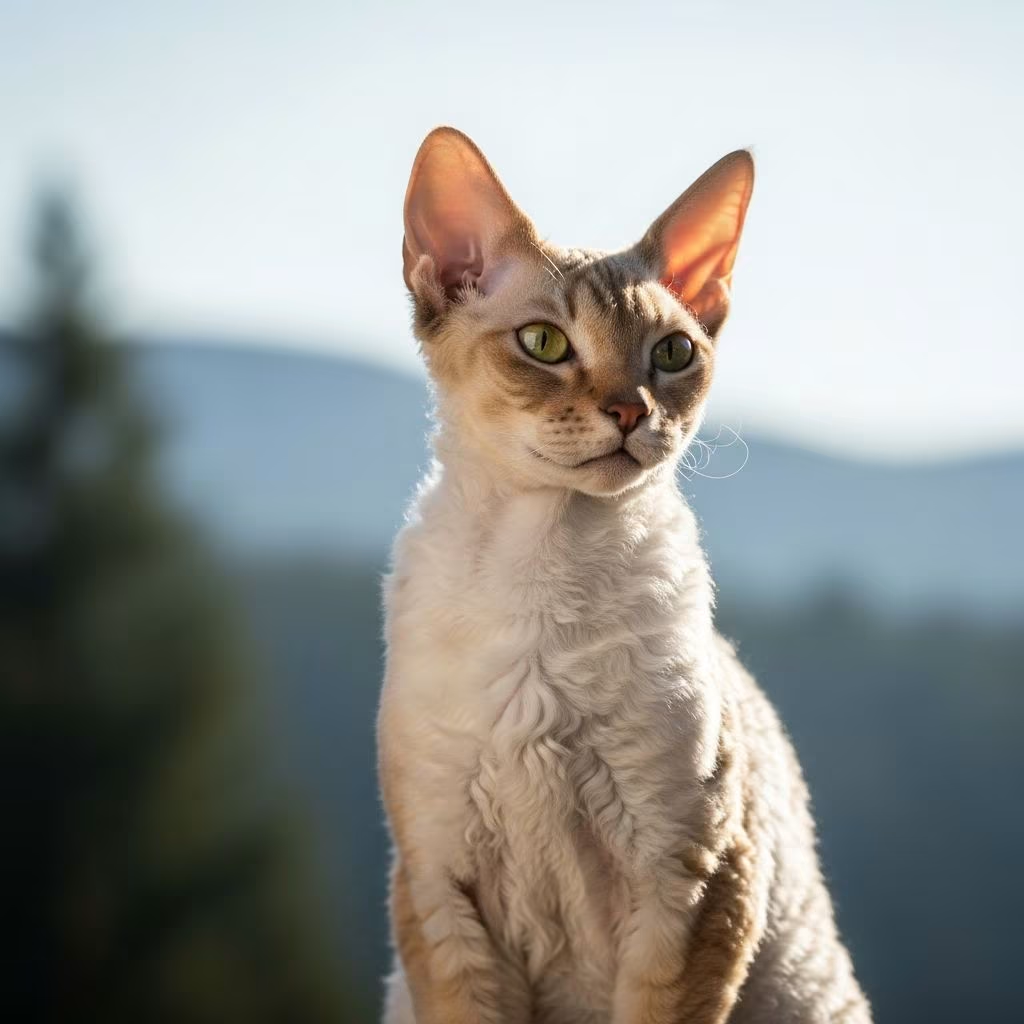
The Oregon Rex cat represented a fascinating chapter in feline breeding history, distinguished by its naturally curly coat and engaging personality. Emerging in the mid-20th century, this breed captivated enthusiasts before fading into obscurity due to interbreeding with related varieties.
Origins and Historical Background
The Oregon Rex trace their roots to a spontaneous genetic mutation discovered in 1955 on a farm near Medford, Oregon. A single kitten in a litter of straight-haired domestic cats exhibited a distinctive curly coat, marking the birth of this rexoid breed. Breeders quickly recognized the potential and began efforts to establish it as a pure line, importing Cornish Rex cats from England around the same time to refine the stock.
By the late 1950s and early 1960s, the Oregon Rex gained traction in the United States, becoming one of the popular Rex variants alongside Cornish and Devon types. Enthusiasts formed breeding programs, but challenges arose when crosses with other Rex breeds produced kittens with straight fur. Genetic analysis later confirmed the Oregon Rex mutation involved a unique recessive allele, distinct from those in Cornish or Devon Rex cats. Despite initial success, the breed’s numbers dwindled as breeders favored the more viable Cornish and Devon lines. By the 1970s, deliberate outcrossing led to its complete absorption, rendering pure Oregon Rex cats extinct today.
Physical Characteristics and Appearance
Oregon Rex cats possessed a medium-sized frame with a slender, athletic build that emphasized grace and agility. Their bodies were long and lithe, supported by elongated, fine-boned legs that ended in small, rounded paws suitable for climbing and leaping. The tail was notably slender and tapered, adding to their elegant silhouette.
The head formed a modified wedge shape, featuring a straight profile and prominent, high-set ears that were large and rounded at the tips. Eyes were medium in size, oval, and expressive, often displaying vivid colors that complemented the coat. Males typically had slightly more substantial bone structure than females, though both shared identical temperaments.
| Feature | Description |
|---|---|
| Size | Medium |
| Body Type | Slender, athletic |
| Head Shape | Wedge-shaped |
| Ears | Large, high-set, rounded |
| Eyes | Medium, oval |
| Tail | Long, thin, tapering |
The hallmark of the Oregon Rex was its coat: short, soft, and tightly curled with minimal to no guard hairs, creating a plush, velvety texture thicker than in some Rex cousins. Available in nearly any color or pattern, the fur’s loose waves or curls were most evident around the neck and flanks.
Temperament and Behavioral Traits
Known for their extroverted and people-oriented nature, Oregon Rex cats thrived on interaction and formed strong bonds with family members. Highly intelligent and affectionate, they demanded attention through playful antics and cuddling sessions, often described as dog-like in their devotion.
These cats were energetic and mischievous, excelling in games involving chasing, jumping, and puzzle toys. Their sociability extended to children and other pets, provided introductions were gradual, though their dominant streak could lead to occasional stubbornness or territorial displays. Solitude did not suit them; they preferred active households where companionship was constant.
- Affectionate: Loves lap time and physical closeness.
- Playful: High energy, enjoys interactive toys.
- Social: Gets along with kids and pets.
- Intelligent: Quick learners, anticipates routines.
- Active: Needs daily exercise to stay content.
While generally patient, their headstrong personality meant consistent training was key to managing any willful behaviors.
Care Requirements for the Oregon Rex
Maintaining an Oregon Rex involved straightforward routines tailored to their active lifestyle and unique coat. A high-quality commercial diet sufficed, with portions adjusted to prevent obesity, as they lacked breed-specific nutritional quirks. Fresh water and occasional hunting opportunities kept them stimulated.
Grooming was minimal due to the absence of guard hairs; weekly brushing distributed oils and preserved curl patterns, while infrequent baths prevented greasiness. Dental care, nail trims, and ear checks rounded out hygiene needs.
Exercise was essential—interactive play sessions mimicking hunts satisfied their athleticism. Vertical spaces like cat trees and shelves encouraged natural climbing instincts.
Health and Longevity Considerations
Oregon Rex cats enjoyed typical feline lifespans of 10-15 years without breed-exclusive conditions. Common vulnerabilities included parasites, fleas, and lifestyle-related obesity, all manageable through preventive care. Their robust genetics, derived from a natural mutation, contributed to overall hardiness.
Genetic diversity from early outcrossing likely bolstered resilience, though pure lines might have risked inbreeding if sustained. Regular veterinary check-ups monitored for standard issues like dental disease or urinary problems.
Comparing Oregon Rex to Other Rex Breeds
The Oregon Rex shared curly coats and lively dispositions with siblings like Cornish, Devon, and Selkirk Rex but differed in subtlety.
| Breed | Coat Texture | Body Size | Key Trait |
|---|---|---|---|
| Oregon Rex | Soft curls, thick awn | Medium, slender | Extinct, sociable |
| Cornish Rex | Tight waves, no guard hairs | Slim, whippet-like | Very active |
| Devon Rex | Looser waves, guard hairs | Small, sturdy | Snuggly, elf-like ears |
| Selkirk Rex | Loose curls | Medium-large | Modern relative |
Unlike the tighter curls of Cornish Rex, Oregon Rex fur was silkier with pronounced awn hairs. Their wedge head and size positioned them between the lithe Cornish and compact Devon.
The Legacy and Modern Relevance
Though extinct as a pure breed, the Oregon Rex influenced contemporary Rex varieties through foundational crosses. Their unique recessive gene persists in hybrid lines, preserving elements of their curly allure and spirited character. Today, enthusiasts appreciate them via historical records and related breeds like Selkirk Rex from nearby Montana.
Studying the Oregon Rex underscores the dynamics of breed development: innovation through mutation, challenges of genetic viability, and the drive toward standardization. Their story reminds breeders of the value in diversity and the risks of over-merging lines.
Pros and Cons of Owning an Oregon Rex (Hypothetically)
- Pros: Endearing companion, low grooming, family-friendly.
- Cons: High attention needs, potential dominance, no purebreds available.
Frequently Asked Questions (FAQs)
Are Oregon Rex cats still available?
No, pure Oregon Rex cats are extinct, absorbed into other Rex breeds by the 1970s.
What caused the curly fur in Oregon Rex?
A spontaneous recessive gene mutation unique to the breed, differing from other Rex types.
Were Oregon Rex good with children?
Yes, they were patient playmates for gentle kids but could assert boundaries with rough handling.
How did Oregon Rex compare in size to Devon Rex?
Oregon Rex were medium-sized and slender, slightly larger than the smaller, stockier Devon.
Did Oregon Rex have any major health problems?
No breed-specific issues; they shared general cat vulnerabilities like obesity and parasites.
References
- Oregon Rex | Pet Premium — Pet Premium. Accessed 2026. https://www.petpremium.com/breed/oregon-rex/
- Oregon Rex Facts for Kids — Kiddle Encyclopedia. Accessed 2026. https://kids.kiddle.co/Oregon_Rex
- All about Oregon Rex breed — Animalia.bio. Accessed 2026. https://animalia.bio/pets/oregon-rex
- The Rex Breeds — Cat Fanciers’ Association (cfa.org). Accessed 2026. https://cfa.org/cat-talk/the-rex-breeds/
- Oregon Rex — ZooBonus. Accessed 2026. https://zoobonus.ua/en/breed/oregon-rex
- Oregon Rex Cat Breed — Cats.com. Accessed 2026. https://cats.com/cat-breeds/oregon-rex



