

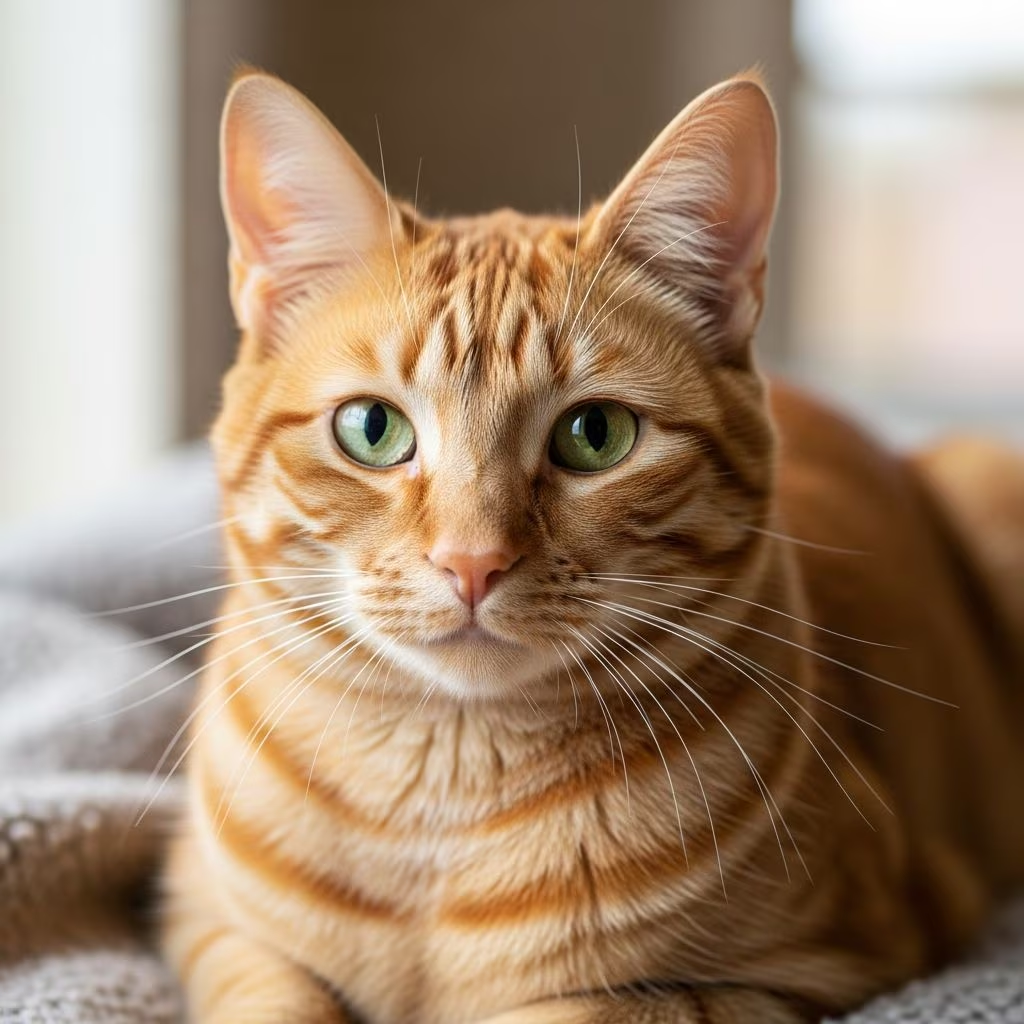
Orange tabby cats captivate with their vibrant coats, playful antics, and warm personalities. These beloved felines feature distinctive patterns and colors that make them stand out among domestic cats. Though not a specific breed, orange tabbies appear across various lineages, sharing genetic traits that influence their appearance and, anecdotally, their behavior.
What Is an Orange Tabby Cat?
An **orange tabby cat** refers to a coat color and pattern combination, not a breed. The term “tabby” describes specific markings like stripes, swirls, or spots, often accented by an “M” on the forehead. All orange cats are tabbies due to the agouti gene creating banded hairs, preventing solid orange coats.
The orange hue stems from **pheomelanin**, the pigment responsible for red tones in human hair, producing shades from pale cream to deep ginger. This pigment dominates, overriding other colors unless modified by spotting genes. Originating from ancient domesticated cats, tabby patterns mimic wild felines for camouflage, with “tabby” deriving from a striped silk fabric from Baghdad.
Orange Tabby Cat Genetics
The striking orange color links to genetics on the **X chromosome**. Males (XY) need one orange gene (O) from their mother to express it, while females (XX) require two, making orange tabbies approximately **80% male** and only 20% female.
Recent 2024 studies identified **ARHGAP36** as the key gene for orange coloration, confirming X-linkage through genomic analysis (studies pending peer review). The O gene suppresses eumelanin (black/brown pigment), allowing pheomelanin to prevail. Females with one O gene show tortie patterns (orange and black patches) due to X-inactivation mosaicism.
This sex-linked trait explains rarity in females and why calico or tortie cats (needing two X chromosomes for multi-colors) are almost always female. No solid orange female exists without tabby markings, as agouti banding is inherent.
Orange Tabby Cat Patterns
Orange tabbies display four primary patterns, each visually unique:
- Mackerel (Striped): Tiger-like narrow stripes with an “M” on the forehead, the most common pattern.
- Classic (Blotched/Marbled): Bold swirls and marbled spots resembling tie-dye.
- Spotted: Round spots instead of stripes, seen in breeds like Egyptian Mau.
- Ticked (Agouti): No stripes; hairs banded with color, giving a shimmering effect, common in Abyssinians.
All patterns feature faint “ghost” markings visible in sunlight, especially on legs and tails. The “M” forehead mark is a tabby hallmark, varying in prominence.
Orange Tabby Cat Breeds
While mixed-breed domestic shorthairs and longhairs dominate, certain pedigreed breeds frequently exhibit orange tabby coats:
| Breed | Characteristics |
|---|---|
| Maine Coon | Large, fluffy; often ticked or mackerel tabby. |
| British Shorthair | Muscular, plush coat in classic patterns. |
| American Shorthair | Adaptable, friendly with bold tabby stripes. |
| Persian | Long-haired, flat-faced; cream to orange shades. |
| Abyssinian | Ticked pattern, elegant and active. |
| Others (Bengal, Munchkin, Egyptian Mau) | Spotted or marbled variations. |
These breeds carry the orange gene more readily, blending heritage with the vibrant tabby aesthetic.
Orange Tabby Cat Personality
Owners often describe orange tabbies as **affectionate, social, playful, and goofy**. Surveys indicate they rank higher in friendliness, possibly due to 80% being male, as males tend to be more outgoing than females. Psychology Today notes this may involve confirmation bias but aligns with observed traits like sociability and reduced shyness.
These “social butterflies” thrive on interaction, turning daily routines into adventures. They’re chatty, velcro-like snugglers, and curiously eccentric—zooming, pouncing, and exploring with zest. While personality varies by breed and upbringing, the stereotype of the “derpy” orange cat persists anecdotally. No scientific consensus proves color dictates behavior, but owner reports consistently highlight their charm.
Health and Care for Orange Tabby Cats
Orange tabbies share standard feline needs: balanced diet rich in taurine, annual vet visits, vaccinations, flea prevention, and spaying/neutering. Their short-to-medium coats require weekly brushing to minimize shedding and hairballs.
Unique traits include **black freckles** (lentigo) on gums, lips, or noses, developing around age 1-2. Harmless like human freckles, monitor for changes. Provide enrichment: toys, scratching posts, perches for their active nature. Quality time through play and cuddles suits their affectionate side. Lifespan averages 12-15 years with proper care, matching domestic cats.
Fun Facts About Orange Tabby Cats
- Shades range from creamsicle to marmalade, all pheomelanin-driven.
- The “M” may stand for “Meow” or mimic ancient Egyptian cat goddess Bastet markings.
- All orange cats are tabbies; tabbies aren’t always orange (brown, gray, etc.).
- Orange gene blocks other colors—no tortie oranges without black.
- They’re often “talkative,” chirping and meowing expressively.
Frequently Asked Questions (FAQs)
What is an orange tabby cat?
A coat pattern and color, not a breed, featuring stripes/swirls in orange hues with an “M” mark.
Are orange tabby cats always male?
No, but ~80% are due to X-linked genetics; females need two copies.
What are the different orange tabby patterns?
Mackerel (striped), classic (swirled), spotted, ticked.
Do orange tabby cats have a specific personality?
Often affectionate and playful, though individual variation exists; surveys note higher friendliness.
What breeds have orange tabbies?
Maine Coon, British Shorthair, American Shorthair, Persian, Abyssinian, etc..
Do orange tabbies need special care?
Standard cat care: diet, grooming, vet checks; watch freckles.
References
- Yellow Cats Are Really Just Orange Tabbies — HowStuffWorks. 2023-05-15. https://animals.howstuffworks.com/pets/yellow-cats.htm
- 10 Orange Tabby Cat Facts — Litter-Robot. 2024-08-20. https://www.litter-robot.com/blog/8-orange-tabby-cat-facts/
- Orange Tabby Cats – Facts, Genetics & Care Guide — World’s Best Cat Litter. 2024-03-10. https://www.worldsbestcatlitter.com/blog/guide-to-orange-tabby-cats/
- Orange Tabby Cats: Facts, Lifespan & Intelligence — Cats.com. 2024-01-12. https://cats.com/orange-tabby-cats
- Why Orange Cats Are So Special, According to Science — Psychology Today. 2020-09-15. https://www.psychologytoday.com/us/blog/the-modern-heart/202009/why-orange-cats-are-so-special-according-science



