

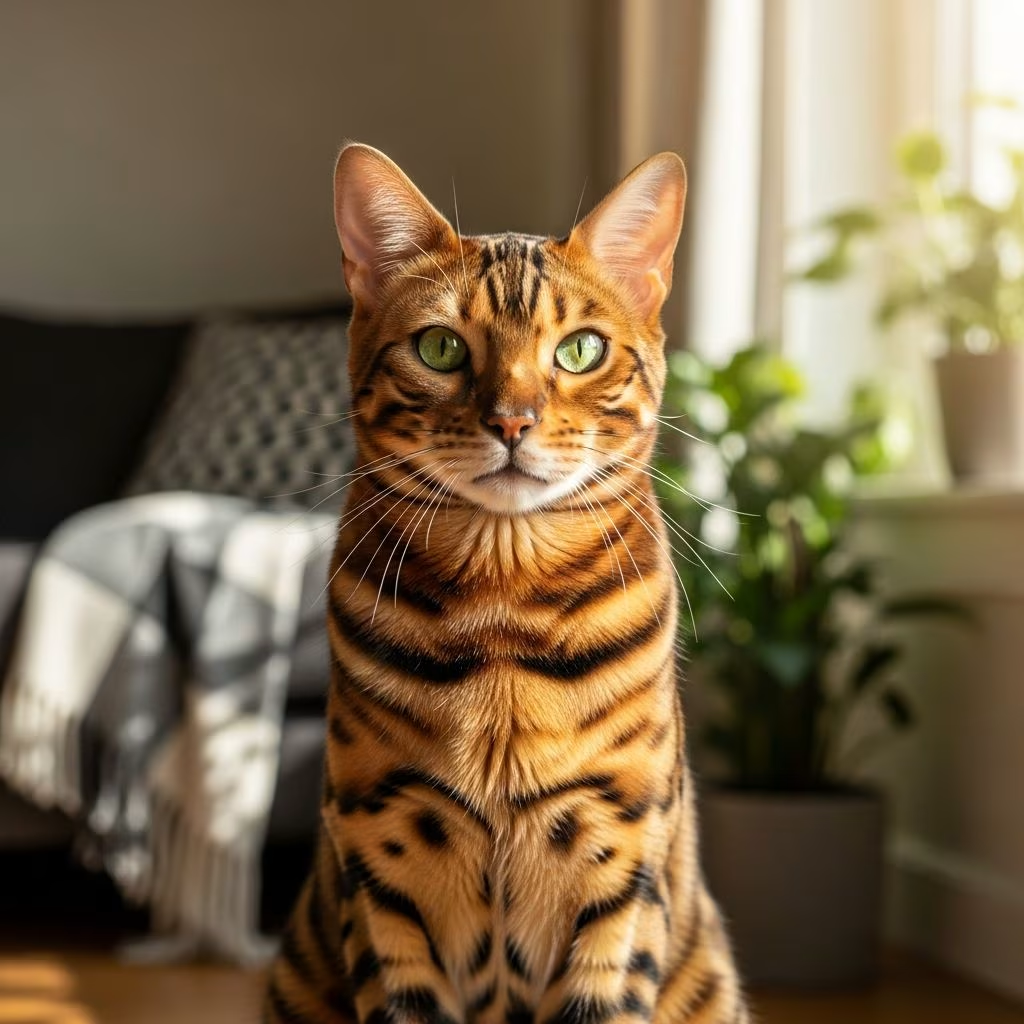
The orange Bengal cat represents one of the most captivating variants within the Bengal breed family. These striking felines showcase a combination of wild aesthetics and domesticated temperament that has made them increasingly popular among cat enthusiasts worldwide. Orange Bengals belong to the broader brown category of Bengal coloration and are distinguished by their luminous deep orange coats paired with dark rosette markings and typically green eyes. Their appearance evokes the essence of jungle wildcats, yet their ancestry consists primarily of Asian leopard cats crossed with domestic breeds, creating animals that are both visually exotic and emotionally bonded to human companions.
The Visual Distinction: Appearance and Physical Characteristics
Orange Bengal cats possess a distinctive aesthetic that immediately sets them apart from conventional domestic felines. The breed demonstrates a medium to large frame with a sleek, muscular build that conveys both power and grace. Their bodies are substantially boned, with hindquarters positioned slightly higher than the shoulders, creating a poised, athletic stance.
The facial structure of orange Bengals contributes significantly to their exotic appearance. They feature high cheekbones that enhance their wild expression, along with a large, wide nose bearing prominent whisker pads. The eyes are notably large and oval-shaped, positioned with a slight slant that amplifies their nocturnal, expressive quality. Orange Bengals typically display green eyes, though the specific hue can vary in depth and richness.
The ears represent another defining feature, appearing medium to small with a wide base and rounded tips. This ear structure contributes to the breed’s distinctive silhouette while maintaining proportion with the overall head size.
The Iconic Orange Coat
The defining characteristic of orange Bengals is their spectacular coat coloration. The ground color ranges from deep orange to buff tones, creating a warm, inviting appearance that distinguishes them from other Bengal variants. What truly sets orange Bengals apart is the contrast between their vibrant base coat and the dark rosette markings that blanket their fur. These rosettes create a spotted or marbled pattern reminiscent of their Asian leopard cat ancestors.
Bengal coats possess a uniquely luxurious texture unlike any other domestic cat breed. The short, dense coat feels plush and silky to the touch. Many orange Bengals exhibit the coveted “glitter” gene, which produces an iridescent shimmer across the fur, creating an effect as though the animal has been dusted with gold. This glittering quality becomes particularly evident in sunlight and adds an additional layer of visual appeal to these already stunning cats.
Personality and Behavioral Traits
Communication Through Vocalization
Orange Bengal cats are notably vocal animals that approach communication with remarkable enthusiasm and specificity. Unlike typical cats that confine their vocalizations to basic meowing, Bengals employ a diverse vocal repertoire including chirps, trills, and meows to interact with their human companions. What distinguishes Bengal vocalization from other breeds is their ability to associate distinct sounds with specific requests. An orange Bengal may develop particular vocalizations to indicate hunger, demand attention, or alert owners to perceived threats.
This communicative tendency reflects the breed’s high intelligence and deep bonding capacity. Bengals use their voices to establish and maintain interactive relationships with their owners, creating a form of dialogue rather than simple noise. Prospective owners should anticipate an talkative household and view this trait as a feature of their pet’s engaging personality rather than a behavioral problem.
Intelligence and Trainability
Orange Bengal cats rank among the most intelligent cat breeds, possessing cognitive abilities that exceed those of many conventional domestic cats. Their superior intelligence combines with exceptional energy levels to create animals capable of learning complex behaviors and commands.
The trainability of orange Bengals extends far beyond the typical capabilities of domestic cats. These felines can successfully learn to:
- Walk on leashes with proper conditioning and training protocols
- Respond to their names consistently and reliably
- Perform tricks such as shaking hands or other interactive behaviors
- Understand and respond to specific verbal cues and commands
Training orange Bengals requires patience, consistency, and positive reinforcement strategies. Clicker training has proven particularly effective with this breed, as the methodical reward system aligns with their problem-solving nature. Treats serve as excellent motivators, and the bond between Bengal and owner typically facilitates learning through the animal’s desire to please their human companion.
Energy Levels and Activity Requirements
Orange Bengal cats maintain high energy levels throughout their lives. The breed retains a kitten-like attitude and playful demeanor well into their senior years, meaning owners should expect their orange Bengal to remain active, curious, and engaged throughout the animal’s lifespan. This sustained energy reflects their hybrid heritage and the combination of athletic builds with keen minds.
The high energy of orange Bengals necessitates substantial environmental enrichment and interactive engagement. These cats require access to toys, climbing structures, and opportunities for both mental and physical stimulation to prevent boredom and associated behavioral issues.
Loyalty and Bonding Characteristics
Despite their wild appearance and athletic nature, orange Bengal cats are fundamentally loyal and affectionate companions. The breed bonds deeply with human family members and demonstrates this connection through interactive behavior and engagement. Bengals view their owners not as distant providers but as companions with whom they share their environment and emotions.
This loyalty manifests through constant interaction, follows owners throughout the home, and a persistent desire for engagement and attention. The mesmerizing gaze and expressive eyes of orange Bengals convey genuine affection and create moments of emotional connection that many owners find deeply rewarding.
Health Considerations and Longevity
Orange Bengal cats generally enjoy robust health, though prospective owners should understand the breed-specific health considerations that may arise. The typical lifespan for orange Bengals ranges from 12 to 16 years, providing owners with more than a decade of companionship.
The breed experiences medium health issues overall, suggesting that while serious conditions are not predominant, certain health concerns warrant awareness. Responsible breeding practices and regular veterinary care significantly influence the health outcomes of individual animals. Prospective owners should source orange Bengals from reputable breeders who conduct health screening and genetic testing of parent animals.
Grooming and Coat Maintenance
Orange Bengal cats require minimal grooming despite their spectacular coats. The short, dense fur sheds at moderate levels and does not mat or tangle easily. Regular brushing helps maintain coat health and reduces shedding, but orange Bengals do not demand the intensive grooming routines necessary for long-haired breeds.
The plush texture of their coat actually benefits from occasional grooming sessions that help distribute natural oils and maintain shine. These grooming sessions also provide opportunities for bonding and allow owners to inspect their cat’s skin for any abnormalities or health concerns.
Social Compatibility and Household Integration
Orange Bengal cats demonstrate medium sociability levels, suggesting they function well in many household environments but may require careful introduction to new situations and unfamiliar animals. These cats are confident and curious animals that approach new experiences with interest rather than fear.
The suitability of orange Bengals for multi-pet households depends significantly on individual temperament and early socialization experiences. Some orange Bengals exhibit extroverted, busy personalities that thrive in active households, while others display more introverted tendencies and prefer quieter environments. Understanding individual personality variations allows owners to make informed decisions about household composition and environmental design.
Training Methods and Enrichment Strategies
Effective Training Approaches
Training an orange Bengal cat requires understanding the breed’s intelligence and motivation patterns. Successful training relies on:
- Short, focused training sessions that maintain the cat’s attention and interest
- High-value treats and rewards that incentivize desired behaviors
- Consistent timing and clear communication of expectations
- Positive reinforcement rather than punishment or negative correction
- Clicker training techniques that mark desired behaviors precisely
Orange Bengals respond enthusiastically to owners who engage them intellectually and recognize their desire to learn and please. The bond between owner and cat facilitates learning, making training sessions opportunities for relationship deepening rather than simple behavioral modification.
Environmental Enrichment Requirements
The high energy and intelligence of orange Bengals necessitate comprehensive environmental enrichment. Appropriate enrichment includes vertical spaces for climbing and perching, puzzle toys that engage problem-solving abilities, interactive toys that simulate hunting behaviors, and opportunities for exploration within safe boundaries.
Many orange Bengals enjoy leash training and outdoor exploration when properly acclimated. This allows them to satisfy their curiosity and athletic nature while remaining under owner supervision and control. The ability to take an orange Bengal on walks or outdoor adventures significantly enhances the quality of life for both cat and owner.
Suitability as Family Pets
Orange Bengal cats can make excellent family pets for households that understand their needs and provide appropriate environments. Their intelligence, trainability, and loyalty create strong human-animal bonds. However, their vocal nature, high energy, and need for substantial interaction require owners capable of meeting these demands.
Families with children benefit from the engaging nature of orange Bengals, as the cats often enjoy interactive play and respond well to respectful handling. The breed’s playful demeanor aligns well with the energy levels of active children, creating dynamic household relationships.
Acquisition and Breeder Selection
Prospective owners should source orange Bengal cats from reputable breeders who maintain health standards, conduct genetic testing, and demonstrate knowledge of breed characteristics. The International Cat Association (TICA) recognizes Bengal cats, including the orange variant. Working with TICA-registered breeders provides assurance regarding breed standards and ethical breeding practices.
Responsible breeders can discuss individual cat personalities, predict behavioral traits based on parentage, and provide guidance for new owners regarding care, training, and environmental requirements. The investment in acquiring an orange Bengal from a quality breeder typically results in a healthier, better-socialized animal than alternatives.
Frequently Asked Questions
What makes orange Bengals different from other Bengal color variants?
Orange Bengals represent a specific subset of the brown Bengal category, distinguished by their deep orange coat color, dark rosette markings, and typically green eyes. This coloration combination creates a distinctive aesthetic that differs from silver, snow, or other Bengal variants.
Are orange Bengals suitable for apartment living?
Orange Bengals can adapt to apartment environments provided owners create vertical spaces, offer sufficient toys and enrichment, and engage in interactive play regularly. Their medium to large size and high energy require thoughtful space planning and consistent engagement to prevent behavioral issues.
How vocal are orange Bengal cats compared to other breeds?
Orange Bengals rank among the most vocal cat breeds. They use varied vocalizations including chirps, trills, and meows to communicate specific requests and maintain interaction with owners. Prospective owners should expect a talkative companion rather than a quiet pet.
Can orange Bengals be trained like dogs?
While orange Bengals cannot be trained identically to dogs, they demonstrate remarkable ability to learn commands, walk on leashes, and perform tricks. Their intelligence and desire to please make them unusually responsive to training compared to typical domestic cats.
What is the average lifespan of an orange Bengal cat?
Orange Bengal cats typically live between 12 to 16 years when maintained with proper care, nutrition, and regular veterinary attention.
Conclusion
Orange Bengal cats represent a remarkable combination of exotic beauty and domestic companionship. Their striking deep orange coats, dark rosette markings, and expressive green eyes create an unmistakable appearance that evokes their jungle ancestry. Yet their intelligence, trainability, loyalty, and vocal engagement make them genuinely affectionate family pets. Prospective owners who appreciate an active, communicative, and intellectually stimulating companion will find orange Bengals to be extraordinary additions to their households. Understanding the breed’s specific needs and personality characteristics ensures successful, rewarding long-term relationships between these captivating felines and their human families.
References
- Bengal Cat Breed: Facts, Temperament, and Care Info — Chewy. 2024. https://www.chewy.com/education/cat/general/bengal-cat-breed-facts-temperament-and-care-info
- Orange Bengal Cat: Info, Pictures, Facts & History — Catster. 2024. https://www.catster.com/cat-breeds/orange-bengal-cat/
- Bengal — The Cat Fanciers’ Association. 2024. https://cfa.org/breed/bengal/
- Bengal Cat Breed Information — Purina. 2024. https://www.purina.com/cats/cat-breeds/bengal
- Bengal — The International Cat Association (TICA). 2024. https://tica.org/breed/bengal/
- Bengal — The Governing Council of the Cat Fancy (GCCF). 2024. https://www.gccfcats.org/getting-a-cat/choosing/cat-breeds/bengal/



