

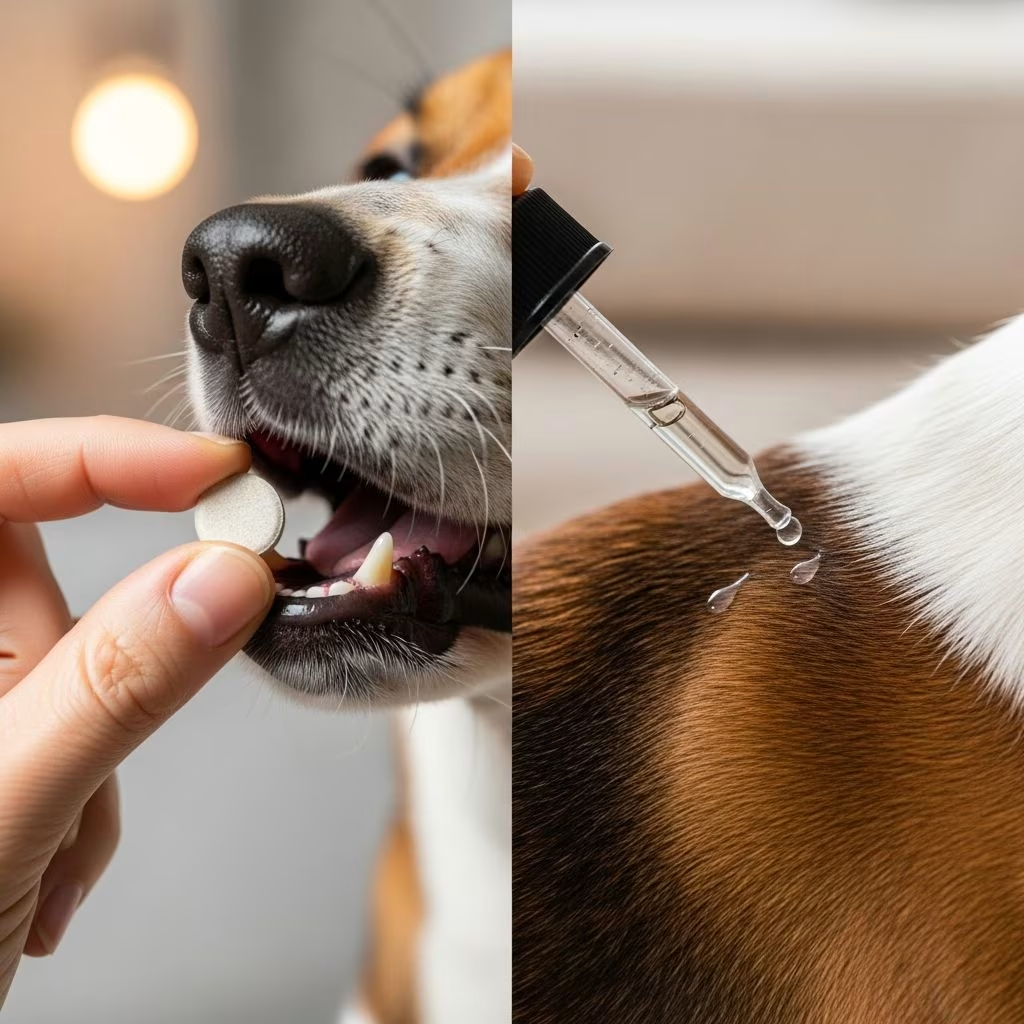
Fleas and ticks pose significant threats to pets, causing discomfort, skin issues, and potential disease transmission. Oral treatments work systemically from within the pet’s body, while topical applications provide external barriers. Selecting the appropriate method depends on your pet’s lifestyle, household dynamics, and health needs.
The Hidden Dangers of Fleas and Ticks
These parasites multiply rapidly; a single flea can produce up to 50 eggs daily, leading to infestations that trigger itching, allergies, and dermatitis in sensitive animals. Ticks transmit serious illnesses like Lyme disease, while fleas spread tapeworms. Year-round prevention is essential, especially in warmer climates or indoor environments.
Early intervention prevents escalation. Environmental factors, such as multi-pet homes or frequent outdoor access, amplify risks, making consistent protection critical.
How Oral Flea and Tick Treatments Function
Oral options, often chewable tablets, are ingested and absorbed into the bloodstream. Active ingredients target the parasites’ nervous systems upon biting, killing them quickly without residue on the fur.
These are ideal for pets resistant to topicals, swimmers, or households with young children. They distribute evenly through the body, providing broad coverage against fleas, ticks, heartworms, and sometimes intestinal worms.
Popular Oral Products and Their Coverage
- NexGard Spectra: Targets fleas, ticks, mites, heartworms, and tapeworms via monthly topical liquid, safe for breeding cats from 8 weeks.
- Bravecto: Offers 3-month flea and tick control, plus ear mites, in spot-on form but with oral equivalents for extended protection.
- Milpro or Milbemax: Primarily for worms but usable monthly for heartworm; easy-to-hide tablets for cats up to 8kg.
Oral treatments act fast, often within hours, minimizing parasite survival.
Understanding Topical Flea and Tick Applications
Topical treatments, or spot-ons, are liquids applied to the skin, typically at the neck base. They spread via oils, forming a barrier that repels or kills on contact.
Suitable for pill-averse pets, they require 24-48 hours to dry fully. Frequent bathing or swimming may reduce efficacy, and they demand caution in cat-dog homes due to toxicity risks.
Key Topical Options Compared
| Product | Protection | Duration | Notes |
|---|---|---|---|
| Revolution Plus | Fleas, ticks, heartworm, mites, lice, worms | Monthly | Liquid spot-on; not for breeding cats |
| Advocate | Fleas, heartworm, worms, mites | Monthly | Rapid flea kill; ear mite treatment |
| Advantage | Fleas | Monthly | Safe in pregnancy; bathing ok after 48h |
| Frontline | Fleas (ticks every 2 weeks) | Monthly | Water-fast; lower modern efficacy |
| Seresto Collar | Fleas | 8 months | May irritate skin; limited scope |
Topicals like K9 Advantix II and Vectra 3D excel for dogs against multiple pests but are deadly to cats if transferred.
Safety Concerns: Cats vs Dogs
Never use dog products on cats; ingredients like permethrins disrupt feline nervous systems, causing seizures or death. Surveys show misuse, such as wrong-weight dosing or inter-pet transfer, leads to frequent vet visits for cats.
In mixed households, separate animals until topicals dry. Small dogs face higher toxicity risks from permethrins due to body ratios. Always verify cat-specific labeling.
Recognizing and Responding to Toxicity
- Symptoms: Tremors, drooling, seizures within hours.
- Immediate action: Bathe pet, contact vet or poison control.
- Prevention: Read labels, consult vets for multi-species homes.
Choosing Between Oral and Topical: A Decision Guide
Consider these factors:
- Pet Behavior: Swimmers or bathers favor orals; topicals suit non-pill takers.
- Household: Orals prevent contact transfer in kid/pet-heavy homes.
- Infestation Stage: Knockdowns for active issues; preventives ongoing.
- Additional Needs: Multi-parasite coverage (e.g., heartworm) points to combos like NexGard.
Consult vets for tailored advice, especially for puppies/kittens under 8 weeks or pregnant pets.
Implementing a Complete Prevention Plan
Combine treatments with environmental control: Vacuum daily, wash bedding, treat yards. Rotate products if resistance suspected, but avoid frequent switches without guidance.
Year-round use is vital; gaps allow re-infestation. Track applications via calendars or apps.
Frequently Asked Questions
Can I use dog flea treatments on cats?
No. Dog products containing permethrins are toxic to cats, potentially fatal. Always choose species-specific options.
How soon do flea treatments kill parasites?
Many orals and topicals act within hours, but full effects take 24-48 hours. Consistent monthly use prevents eggs.
Are collars effective for ticks?
Some like Seresto offer flea protection for months, but tick coverage varies; spot-ons or orals often provide broader defense.
What if my pet swims often?
Opt for orals or water-resistant topicals applied post-bath. Check labels for swim impacts.
Is combination therapy safe?
Vets may recommend stacking (e.g., oral + collar) for tough cases, but avoid overlaps causing overdose.
Long-Term Strategies for Parasite-Free Pets
Monitor for signs like scratching or tick bumps. Annual vet checkups refine plans. Educate on resistance trends; newer isofoxolines outperform older fipronil in speed.
For multi-pet homes, synchronize treatments and isolate during application. Budget for quality; generics may underperform.
Empower your pets’ health with informed choices. Regular protection fosters happy, itch-free lives.
References
- Comparing Flea & Tick Treatments for Dogs and Cats — PetBucket. 2023. https://www.petbucket.com/c/4585053/1/comparing-flea-tick-treatments-for-dogs-and-cats.html
- The Difference Between Dog and Cat Flea and Tick Products — Northern Vet. 2023. https://www.northern-vet.com/blog/273466-the-difference-between-dog-and-cat-flea-and-tick-products
- Cat Flea, Worm & Tick Treatment Comparison — Walkerville Vet. 2024-02-17. https://www.walkervillevet.com.au/pet-care-advice/cats/flea-and-worm-protection-for-cats/
- The Complete Guide to Flea and Tick Prevention and Treatment for Dogs — PetMD. 2025. https://www.petmd.com/dog/general-health/flea-and-tick-prevention-and-treatment-dogs
- A survey for small animal veterinarians regarding flea and tick adverse effects — PMC (NCBI). 2011-09-15. https://pmc.ncbi.nlm.nih.gov/articles/PMC3174502/
- Flea Product Comparison — Mar Vista Animal Medical Center. 2024. https://www.marvistavet.com/flea-product-comparison.pml
- Cat Flea and Tick Control Comparison Chart — Valley Vet Supply. 2023. https://www.valleyvet.com/library/cat_flea_tick_control_comparison.html
- Flea and tick prevention — Cornell University College of Veterinary Medicine. 2025. https://www.vet.cornell.edu/departments-centers-and-institutes/riney-canine-health-center/canine-health-topics/flea-and-tick-prevention



