

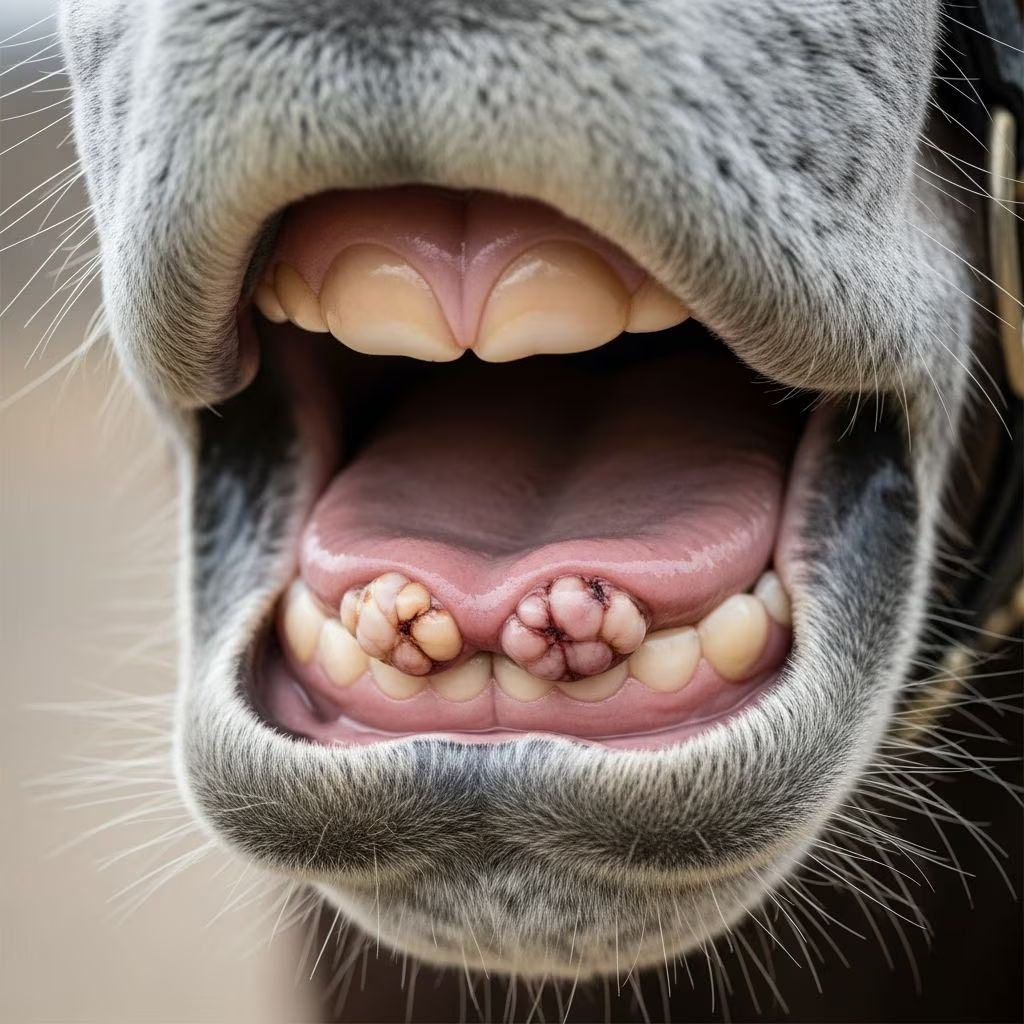
Oral tumors represent a significant health concern in large animals, including horses, cattle, sheep, and goats, often leading to eating difficulties, weight loss, and reduced quality of life if not addressed promptly. These neoplasms arise from various tissues in the mouth, ranging from benign growths to aggressive malignancies that can invade bone and soft tissues. Early identification through routine examinations is crucial for effective intervention.
Understanding the Scope of Oral Neoplasia
In veterinary practice, oral cavity tumors account for a notable portion of digestive system diseases in large animals. While less common than in small companion animals, they pose unique challenges due to the animals’ size, anatomy, and herd management contexts. Horses frequently develop squamous cell carcinomas, particularly on the lips and tongue, influenced by factors like UV exposure and viral infections. In ruminants such as cattle, fibropapillomas caused by bovine papillomavirus are prevalent, though true malignancies like sarcomas emerge in older individuals.
Benign tumors tend to grow slowly and remain localized, whereas malignant ones exhibit rapid proliferation, ulceration, and metastasis to lymph nodes or lungs. Sites like the gums, lips, tongue, and hard palate are hotspots, with gingival involvement being especially common due to chronic irritation from rough forage or dental issues.
Common Types of Oral Growths
Large animals exhibit a variety of oral neoplasms, each with distinct characteristics:
- Squamous Cell Carcinoma (SCC): The predominant malignancy in horses, often appearing as ulcerated, proliferative masses on sun-exposed areas. In cattle, it affects the hard palate or cheeks.
- Fibrosarcoma: Arises from connective tissues, presenting as firm, infiltrative swellings that erode bone; more noted in bovines.
- Osteosarcoma: Bone-origin tumors in the mandible or maxilla, causing facial deformity and tooth mobility.
- Melanosarcoma (Melanoma): Pigmented or amelanotic growths in horses with dark mucosa, highly aggressive with early spread.
- Benign Fibropapillomas: Viral-induced warts in young cattle, typically regressing but occasionally progressing to cancer.
- Ameloblastoma-like Lesions: Odontogenic tumors mimicking tooth enamel formation, locally invasive but non-metastatic.
These types vary by species; equines show higher SCC incidence, while ruminants experience more papillomatous lesions.
Recognizing Clinical Signs
Owners and veterinarians should watch for subtle early indicators that escalate over time. Initial signs include excessive salivation, foul breath (halitosis), and reluctance to chew coarse feed. As tumors enlarge, animals display dropped feed (quidding), unilateral chewing, facial swelling, loose teeth, oral bleeding, and weight loss from malnutrition.
In horses, lip or tongue lesions cause profuse drooling and head tilting. Cattle with palatal tumors may exhibit nasal discharge or respiratory noise. Advanced cases lead to anorexia, dehydration, and secondary infections. Regular mouth inspections during deworming or hoof care facilitate early detection.
Diagnostic Approaches
Accurate diagnosis combines clinical evaluation, imaging, and histopathology. A thorough oral exam under sedation reveals mass location, size, texture, and ulceration. Dental radiographs or CT scans assess bone involvement, crucial for planning surgery.
| Diagnostic Tool | Purpose | Advantages in Large Animals |
|---|---|---|
| Visual/Oral Exam | Initial assessment | Non-invasive, quick |
| Radiography | Bone lysis detection | Portable for field use |
| CT/MRI | Detailed 3D imaging | Precise tumor margins |
| Biopsy | Definitive typing | Guides therapy |
| Fine-Needle Aspiration | Preliminary cytology | Minimally invasive |
Incisional biopsies provide tissue for histopathology and grading, distinguishing benign from malignant. Staging includes lymph node palpation and thoracic radiographs to check for metastasis.
Treatment Strategies
Treatment hinges on tumor type, location, stage, and animal value (e.g., breeding stock vs. slaughter-bound). Surgical excision remains the cornerstone, aiming for clean margins.
Surgical Options:
- Local excision for small benign masses.
- Mandibulectomy or maxillectomy for jaw tumors, well-tolerated in large animals with minimal functional loss.
- Laser ablation for superficial lesions, reducing bleeding.
Adjunct therapies enhance outcomes:
- Radiation: Effective for incomplete resections, especially SCC; fractionated protocols yield local control.
- Chemotherapy: Systemic agents like cisplatin for metastatic disease.
- Cryotherapy: Freezing for accessible benign growths.
For viral papillomas, autogenous vaccines or topical imiquimod promote regression. Palliative care involves pain management with NSAIDs and softened feeds for inoperable cases.
Prognosis and Species-Specific Insights
Prognosis varies widely. Benign tumors carry excellent outlooks post-excision (90-100% cure). Malignant ones depend on early intervention: rostral SCC in horses offers 1-2 year survival with surgery, while caudal lesions or melanomas predict <6 months due to metastasis.
In cattle, papillomas often self-resolve in calves, but persistent ones warrant removal to prevent spread. Osteosarcomas have guarded prognoses despite aggressive multimodal therapy.
Preventive Measures and Owner Education
Prevention focuses on risk reduction: provide shade and fly control for horses to minimize UV and viral exposure; ensure dental health via regular floating. Herd screening detects carriers of papillomavirus. Educate owners on monthly oral checks and prompt vet reporting of anomalies.
Frequently Asked Questions (FAQs)
What causes oral tumors in large animals?
Multifactorial: UV light, viruses (e.g., papillomavirus), chronic irritation, genetics, and age play roles.
How quickly do oral tumors progress?
Benign slowly (months-years); malignant rapidly (weeks-months), with bone invasion accelerating decline.
Is surgery painful for large animals?
No, with modern anesthesia and analgesics; most resume eating within days post-maxillectomy.
Can oral tumors be detected at home?
Yes, look for swelling, drooling, bad breath; use a flashlight for gums and tongue.
What is the cost of treating oral cancer in horses?
Varries $2,000-$10,000+ depending on surgery extent and adjuncts; discuss with vet.
Integrating these practices improves outcomes, extending productive lives for valuable livestock and companions.
References
- Characteristics of canine oral tumors: Insights into prevalence, types … — PMC/NCBI. 2023-10-25. https://pmc.ncbi.nlm.nih.gov/articles/PMC10636079/
- Introduction to Oral Neoplasia in the Dog & Cat — Today’s Veterinary Practice. 2023. https://todaysveterinarypractice.com/dentistry/practical-dentistry-introduction-to-oral-neoplasia-in-the-dog-cat/
- The diagnostic approach to oral masses — dvm360. 2023. https://www.dvm360.com/view/the-diagnostic-approach-to-oral-masses
- Oral Cavity Tumors — Cornell University College of Veterinary Medicine. 2024-01-15. https://www.vet.cornell.edu/departments-centers-and-institutes/cornell-feline-health-center/health-information/feline-health-topics/oral-cavity-tumors
- Oral Tumors — Veterinary Society of Surgical Oncology (VSSO). 2023. https://vsso.org/oral-tumors



