

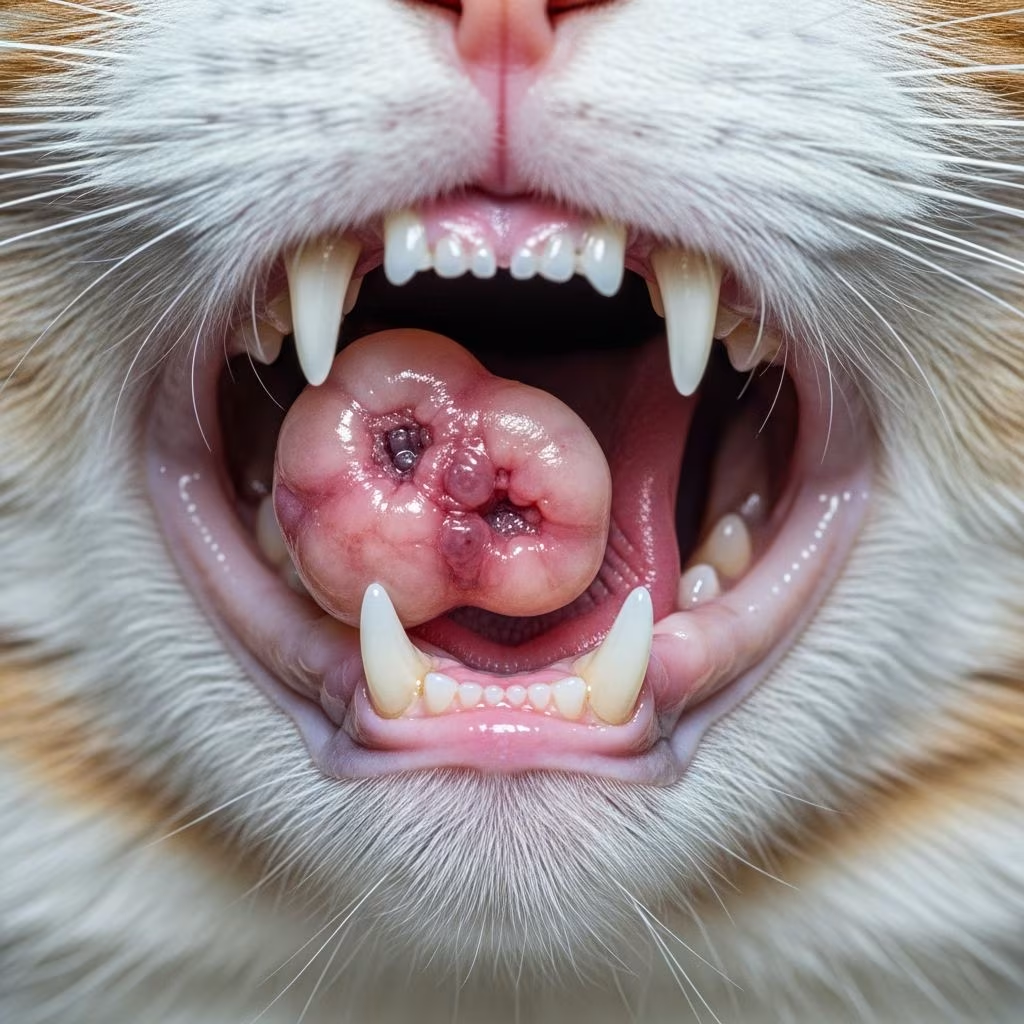
Feline oral tumors represent a serious health challenge, often manifesting as malignant growths that affect a cat’s ability to eat, groom, and interact normally. These tumors, primarily squamous cell carcinoma, invade local tissues aggressively, leading to pain and nutritional decline if not addressed promptly.
Understanding the Prevalence and Types of Feline Oral Growths
Oral tumors account for a significant portion of cancers in cats, with squamous cell carcinoma being the predominant type, arising from the lining cells of the mouth. Other less common varieties include fibrosarcomas, melanomas, and benign lesions like polyps, though malignancy dominates in older cats. These growths frequently originate in the tongue, gums, jaw, or tonsils, exploiting the moist environment of the oral cavity for rapid proliferation.
Unlike dogs, where benign tumors are more frequent, cats face a higher risk of aggressive malignancies. Factors such as chronic inflammation from dental disease or exposure to environmental carcinogens may contribute, though exact causes remain elusive. Senior cats over 10 years old are particularly susceptible, underscoring the need for routine oral examinations during wellness visits.
Recognizing Early Warning Signs
Detecting oral tumors early hinges on observing subtle behavioral and physical changes. Cats often mask pain, making vigilance essential for owners.
- Excessive drooling: Often blood-tinged, resulting from ulceration or irritation.
- Foul breath (halitosis): A hallmark due to tissue necrosis and infection.
- Appetite changes: Reluctance to eat despite hunger, leading to rapid weight loss.
- Oral bleeding or loose teeth: Tumors erode supporting structures.
- Facial asymmetry or swelling: Indicative of jaw bone involvement.
- Behavioral shifts: Reduced grooming, head shyness, or lethargy from discomfort.
These symptoms mimic dental issues, frequently leading to misdiagnosis until sedation allows visualization. Cats may paw at their mouth or drop food, further signaling distress.
Diagnostic Pathways for Accurate Identification
Diagnosis begins with a comprehensive physical exam, but sedation or anesthesia is crucial for thorough oral inspection. Advanced imaging like radiographs, CT, or MRI reveals bone invasion and tumor extent, essential for staging.
The gold standard is biopsy, extracting tissue for histopathology to confirm tumor type and grade malignancy. Fine-needle aspirates of lymph nodes check for metastasis, while bloodwork assesses overall health for treatment candidacy. Early diagnosis improves intervention success, as tumors often extend deeper than visible.
| Diagnostic Method | Purpose | Advantages |
|---|---|---|
| Physical/Oral Exam under Anesthesia | Visualize lesions | Non-invasive initial step |
| Radiographs/CT/MRI | Assess bone/tissue invasion | Precise staging |
| Biopsy/Histopathology | Confirm tumor type | Definitive diagnosis |
| Lymph Node Aspiration | Detect spread | Guides prognosis |
Surgical Interventions: The Primary Approach
Surgery offers the best chance for local control, aiming for wide excision with clean margins. For rostral mandible tumors, partial jaw resection (mandibulectomy) is feasible, allowing cats to adapt remarkably well post-recovery. However, caudal or maxillary tumors challenge surgical limits due to anatomical constraints and high recurrence risk.
Post-operative care includes feeding tubes for nutrition, pain management, and monitoring for complications like infection. Success rates improve when combined with adjunct therapies, though only about 10% of cases permit aggressive surgery owing to late presentation.
Radiation Therapy Options
Radiation targets residual microscopic disease post-surgery or serves as primary treatment for inoperable tumors. Definitive protocols deliver high doses over 15-20 fractions under anesthesia, controlling local growth but risking mucositis.
Palliative radiation, with fewer sessions, alleviates pain and slows progression with minimal side effects. Emerging stereotactic radiation (SRS) promises precision for select cases, though availability varies.
Role of Chemotherapy and Targeted Drugs
Chemotherapy stabilizes advanced disease, using agents like carboplatin, mitoxantrone, or oral toceranib (Palladia). Shrinkage is rare, but it extends quality life in stable patients. Challenges include medicating painful cats, often necessitating tubes.
Non-steroidal anti-inflammatories like piroxicam provide analgesia and modest anti-tumor effects, enhancing other modalities but contraindicated in renal compromise.
Palliative and Supportive Care Strategies
When curative intent falters, focus shifts to comfort. Multimodal pain relief combines buprenorphine, gabapentin, and anti-inflammatories. Esophagostomy or gastrostomy tubes bypass oral intake, delivering nutrition and meds.
- Appetite stimulants: Mirtazapine or cyproheptadine.
- Soft, warmed food or syringe feeding.
- Environmental enrichment to maintain mental health.
- Regular vet monitoring for quality-of-life assessments.
Owners must weigh euthanasia criteria, prioritizing pain-free existence.
Prognosis Factors and Realistic Expectations
Prognosis varies: surgical candidates with small, rostral tumors may achieve 6-18 months survival, while advanced squamous cell carcinoma averages 2-6 months despite therapy. Metastasis to lungs or nodes worsens outlook, though local invasion claims most lives.
Early detection, tumor location, and owner commitment to care profoundly influence outcomes. Multidisciplinary oncology teams optimize plans.
Preventive Measures and Routine Monitoring
No proven prevention exists, but annual dental cleanings under anesthesia facilitate early detection. Maintain oral hygiene with brushing, dental diets, and prompt abscess treatment to curb inflammation.
Owner education on symptoms empowers intervention. Spaying/neutering may indirectly reduce risks via health optimization.
Frequently Asked Questions (FAQs)
What is the most common oral tumor in cats?
Squamous cell carcinoma, aggressive and locally invasive.
Can cats live long with oral cancer?
With treatment, months to a year; palliative care extends comfort.
Is surgery always possible for mouth tumors?
No, only for accessible, small lesions; alternatives exist.
How do I know if my cat has mouth pain?
Look for drooling, weight loss, bad breath, or food aversion.
Are feeding tubes permanent?
Often temporary post-surgery, but sometimes lifelong.
References
- Oral Tumors in Cats — Texas Veterinary Dental Center. Accessed 2026. https://texasveterinarydentalcenter.com/oral-tumors-in-cats/
- Feline Oral Squamous Cell Carcinoma — NC State University College of Veterinary Medicine. Accessed 2026. https://hospital.cvm.ncsu.edu/services/small-animals/cancer-oncology/oncology/feline-oral-squamous-cell-carcinoma/
- Mouth Cancer in Cats — PetMD. Accessed 2026. https://www.petmd.com/cat/conditions/cancer/mouth-cancer-cats
- Oral Squamous Cell Carcinoma in Cats — Pet Cancer Care Consulting. Accessed 2026. https://petcancercareconsulting.com/what-is-in-my-cats-mouth-learn-about-oral-squamous-cell-carcinoma-in-cats/
- Oral Tumors in Cats — Montana Pet Dentist. Accessed 2026. https://montanapetdentist.com/oral-tumors-in-cats/
- Understanding and Treating Cat Mouth Tumors — Chimacum Valley Veterinary Hospital. Accessed 2026. https://chimacumvet.com/blog/cat-mouth-tumors/



