

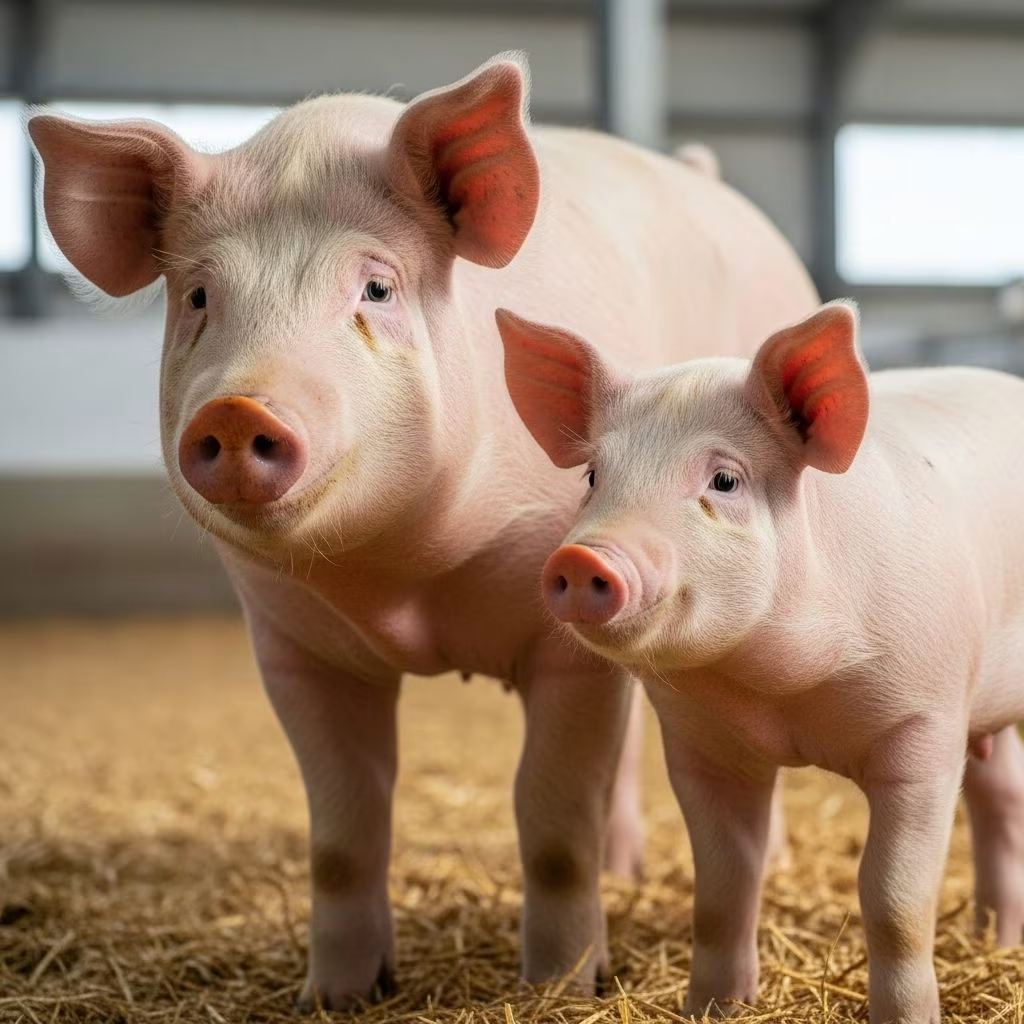
Effective management of sows and gilts is foundational to successful swine production, directly influencing herd fertility, litter sizes, and overall profitability. By focusing on nutrition, estrus synchronization, precise breeding protocols, and meticulous farrowing care, producers can achieve substantial improvements in reproductive outcomes. This article explores key strategies drawn from veterinary and extension expertise to maximize performance throughout the reproductive cycle.
Establishing a Strong Reproductive Foundation
The journey to optimal reproduction begins with selecting and preparing gilts for breeding. Gilts should reach puberty between 160 and 180 days of age, ideally weighing at least 120-140 kg, to ensure robust first litters. Delaying breeding until the second or third estrus minimizes dystocia risks and promotes larger litters. Daily boar exposure accelerates puberty onset, while increased exercise and pen changes stimulate hormonal activity.
Nutrition plays a pivotal role in gilt development. Full feeding regimens prevent undernourishment, which can impair early fertility. In regions with restricted feeding, a pre-estrus “flushing” period of 10 days with elevated energy intake boosts ovulation rates. Body condition must be monitored to avoid obesity, which complicates gestation; target a 34-75 kg weight gain during the first pregnancy.
Nutritional Strategies for Peak Fertility
Weaned sows require immediate nutritional support to resume cycling promptly. Energy-dense diets fed frequently, especially in wet form, counteract lactation losses and high ambient temperatures. Undernourished sows risk prolonged anestrus, particularly in summer or parity-one animals.
During gestation, balance energy to maintain condition without excess fat. Measure heart girth or use body condition scoring to adjust rations. Post-farrowing, lactating sows need high-density feeds to support milk production and prevent reproductive setbacks in subsequent cycles.
| Life Stage | Key Nutritional Focus | Expected Outcomes |
|---|---|---|
| Gilt Development | Full feed or flushing | Higher ovulation rates |
| Weaning to Breeding | Energy-dense diets | Shortened return to estrus |
| Gestation | Controlled energy gain | Optimal body condition |
| Lactation | Frequent high-density feeds | Better rebreeding success |
Mastering Estrus Detection and Synchronization
Accurate heat detection is critical, as pigs exhibit seasonal fertility dips linked to wild ancestry. Standing estrus, confirmed by boar response, typically occurs 4-6 days post-weaning. Group weaning synchronizes cycles, tightening the window for breeding.
Hormonal interventions enhance reliability. A single intramuscular injection of 400 IU equine chorionic gonadotropin (eCG) and 200 IU human chorionic gonadotropin (hCG) at weaning induces estrus within 7 days, ideal for parity-one sows or seasonal challenges. For gilts, progestin feeding for 14 days followed by eCG-hCG and GnRH analogues enables fixed-time insemination, reducing labor.
- Proximity to boars: Allows olfactory and visual cues to trigger heat.
- Weaning timing: Early group removal (4-6 weeks) without feed on weaning day stimulates cyclicity.
- Environmental factors: Avoid mixing 3-28 days post-breeding to minimize stress.
Advanced Breeding Techniques
Three primary methods suit varying operation scales: pen mating for small herds, hand mating for control, and artificial insemination (AI) for efficiency. Pen mating risks boar overuse with synchronized groups; hand mating allows twice-daily service during standing heat, using multiple boars if needed. AI dominates commercial settings, with semen viable for 24-48 hours if handled properly.
For daily checks, inseminate gilts within 4 hours and sows 12-16 hours of heat detection, repeating if standing persists. Fixed-time AI protocols eliminate detection needs, streamlining production.
| Method | Advantages | Disadvantages |
|---|---|---|
| Pen Mating | Low labor; natural | Boar fatigue; disease risk |
| Hand Mating | Precise timing | High labor |
| AI | Genetic spread; hygiene | Skill required |
Farrowing Synchronization and Induction
Concentrating farrowings eases management. Prostaglandin F2-alpha (PG F2-alpha) injected 72 hours pre-expected date induces labor, with oxytocin 15-24 hours later tightening the window. Premature piglets demand optimal warmth to avoid losses.
Supervised farrowing reduces stillbirths and crushing via immediate interventions like drying and nursing checks. Pre-farrowing sow vaccinations and clean environments further safeguard litters.
Post-Farrowing Care and Piglet Survival
The first 24 hours post-farrowing are vital, with ~2 piglets per litter typically lost pre-weaning. Disinfect navels with iodine, clip needle teeth, dock tails, and castrate males by day 4. Iron injections prevent anemia; creep feeding from week 1 supplements milk.
Cross-fostering equalizes litters within 3 days post-colostrum intake. Split suckling aids uniformity. Farrowing crates minimize overlay risks.
- Equalize litters early.
- Monitor for scours and parasites.
- Ensure sow nutrition to sustain lactation.
Boar Management for Breeding Success
Boars demand priority post-testing: moderate energy feeding prevents obesity while maintaining libido. Regular exercise and semen checks ensure fertility. Cull infertile or low-libido individuals promptly.
Culling Protocols for Herd Health
Remove non-performers: gilts failing two heats by 9 months, sows with <7 piglets or three conception failures, after 7 parities unless exceptional. This sustains productivity.
Seasonal and Environmental Influences
Summer heat delays estrus; mitigate with cooling, frequent feeding. Group housing requires aggression management in first 2 weeks.
FAQs
What is the ideal breeding age for gilts?
Second or third estrus, around 8-9 months, for optimal litter size and ease of farrowing.
How can estrus be synchronized in sows?
Group weaning plus eCG-hCG injection post-weaning achieves tight synchronization.
What causes high preweaning mortality?
Stillbirths, crushing, scours; addressed by supervision, processing, and nutrition.
When to cull breeding stock?
Sows after poor litters or failed conceptions; boars with low fertility.
References
- Breeding Management of Pigs — Merck Veterinary Manual. 2023. https://www.merckvetmanual.com/management-and-nutrition/management-of-reproduction-pigs/breeding-management-of-pigs
- How to Farm Pigs: Breeding — The Pig Site. 2020-08-01. https://www.thepigsite.com/news/2020/08/how-to-farm-pigs-breeding
- Swine Reproductive Herd Management — Penn State Extension. 2023. https://extension.psu.edu/swine-reproductive-herd-management
- Best Practices for Selecting and Managing Breeding Pigs — WikiFarmer (citing peer-reviewed). 2023. https://wikifarmer.com/library/en/article/best-practices-for-selecting-and-managing-breeding-pigs
- Care of Pigs From Farrowing to Weaning — University of Missouri Extension. 2023. https://extension.missouri.edu/publications/g2500



