

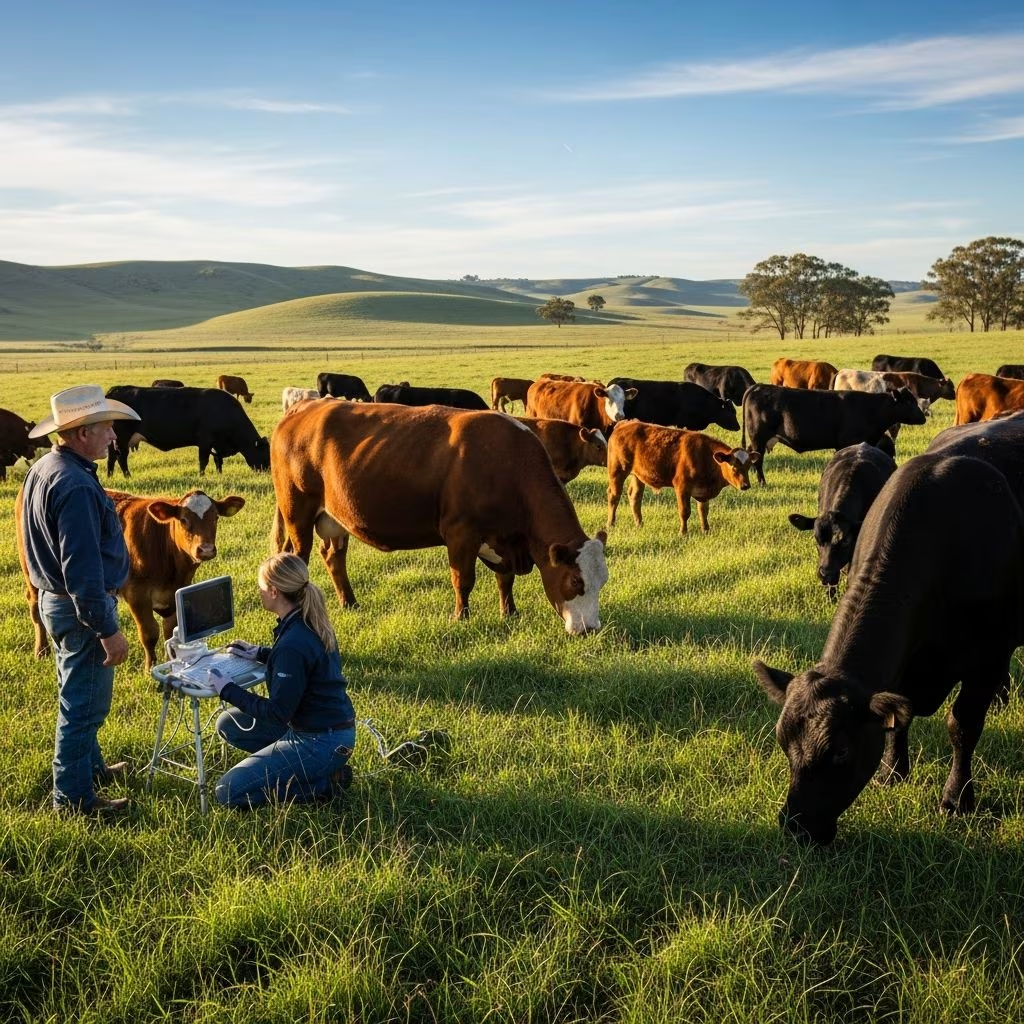
Effective reproduction management in cattle operations is essential for maximizing profitability and sustainability. Achieving a calf crop exceeding 85% per 100 cows annually stands as a key benchmark for success in beef production systems. This level of performance not only boosts revenue through higher calf numbers but also minimizes losses from culling reproductively inefficient animals.
Foundational Principles of Reproductive Success
Reproductive outcomes in cattle herds hinge on integrated management practices that address nutrition, health, genetics, and operational efficiency. Producers must prioritize proactive strategies to ensure cows cycle promptly postpartum and conceive within defined breeding windows. Key to this is maintaining optimal body condition, as nutritional deficits often underlie subfertility, particularly during challenging seasons.
Body condition scoring serves as a critical diagnostic tool. Cows in scores of 5-6 (on a 9-point scale) exhibit the highest fertility rates. Lactating females lose condition in dry periods when pasture quality declines, delaying ovarian resumption. Strategic interventions like timely weaning alleviate lactation stress, preserving reserves for rebreeding.
Nutritional Strategies for Peak Fertility
Nutrition forms the cornerstone of reproductive health across all production stages. Meeting energy and protein demands prevents anoestrus, where 25-70% of cows may fail to cycle at breeding start without intervention.
- Pre-calving supplementation: Spike feeding energy concentrates 50 days before parturition counters condition loss in heifers, enhancing conception rates.
- Lactation support: Early weaning at 6-8 months reduces dry-season milking burdens, allowing condition recovery.
- Pasture optimization: Maintain 50-70% utilization rates with even water distribution to ensure forage access.
For dairy herds, balancing high milk yields with fertility requires precise rationing. Post-calving, cows need 40 days to resume oestrus; delays signal metabolic issues.
| Production Stage | Key Nutritional Focus | Target Body Condition Score |
|---|---|---|
| Heifer Development | 60% mature weight by puberty | 6 |
| Pre-breeding | Energy surge for cyclicity | 5-6 |
| Lactation/Dry Season | Supplementation bypass | Maintain 5 |
Health Protocols to Safeguard Reproduction
Vigorous health programs prevent diseases that impair fertility. Vaccinations timed correctly avoid oestrus disruptions; modified-live vaccines in naive heifers should precede breeding by months. Core protocols target reproductive pathogens like BVDV and IBR.
- Pre-breeding boosters for cows and bulls.
- Neonatal colostrum intake within 12 hours to bolster calf immunity.
- Abortion surveillance: Test for brucellosis, leptospirosis.
Pregnancy exams at 45-60 days post-breeding identify open females for culling, curbing maintenance costs. In beef systems, this practice lifts overall efficiency by reallocating resources.
Breeding Season Design and Synchronization
Defined breeding seasons synchronize herd physiology, easing nutritional demands and enabling uniform marketing. Target 60-day windows to concentrate conceptions early, yielding heavier weaners.
Estrous synchronization protocols regress luteal tissue, recruit follicles, and trigger ovulation. Common regimens pair prostaglandins with GnRH for fixed-time AI (TAI), impregnating 50-60% on day one. Benefits include:
- Elite sire genetics via AI without natural service limits.
- Shortened calving intervals for market uniformity.
- Early pregnancy skew for weaning weight gains.
Genetic Selection and Bull Management
Strategic sire choice amplifies herd genetics. Use genomic-enhanced expected progeny differences (EPDs) for traits like calving ease and fertility. Breed heifers to proven calving-ease bulls.
Bull evaluation is non-negotiable: Breeding soundness exams (BSE) assess semen motility and morphology pre-season. Rotate bulls to avert overuse injuries; aim for 1:25 cow:bull ratios in pastures.
Record-Keeping and Performance Metrics
Data-driven decisions underpin progress. Track indices like:
- Calving percentage: Calves born per cow exposed.
- Pregnancy rate: 90%+ target.
- Weaning rate: Survival to market.
- Cull rate for failure: <10%.
Digital tools or simple spreadsheets facilitate analysis. Annual reviews pinpoint bottlenecks, such as late conceptions signaling nutrition gaps.
Heifer Development Pathways
Heifer rearing sets lifelong productivity. Puberty triggers at 60% mature weight around 12 months; target first calving at 24 months.
- Balanced growth: 0.8-1 kg/day liveweight gain.
- Pre-breeding condition: Score 6.
- AI or natural service post-puberty confirmation.
Poor development cascades into extended postpartum anoestrus, compounding losses.
Facilities and Calf Care Essentials
Infrastructure supports execution. Well-drained calving pens reduce dystocia; handling chutes enable efficient AI and exams.
Newborn protocols ensure vigor: Immediate drying, colostrum within hours (IgG >10 mg/mL serum). This halves mortality and primes future fertility.
Advanced Reproductive Technologies
Embryo transfer (ET) and sexed semen expand options for elite herds. Synchronization tightens integration; pregnancy rates match natural service when protocols adhere strictly.
Economics favor tech adoption: AI sires cost $20-50/straw versus bull purchase, with superior genetics.
Common Pitfalls and Troubleshooting
Fertility slumps often trace to multifactor issues. Diagnostic steps:
- Assess condition scores herd-wide.
- Review vaccination compliance.
- Analyze pregnancy data for patterns.
Anoestrus post-calving? Check energy balance. Low bull fertility? Repeat BSE.
FAQs
What is the ideal calf crop percentage?
Aim for over 85 calves weaned per 100 cows exposed annually.
How soon after calving should cows breed?
Target 60 days postpartum for optimal intervals.
Why use estrous synchronization?
It concentrates pregnancies early, boosting weaning weights and efficiency.
When to cull open cows?
Post-pregnancy check at 45-60 days to optimize resources.
Role of body condition in fertility?
Scores below 5 delay cyclicity; maintain 5-6 for peak rates.
References
- Overview of Management of Reproduction: Cattle — Merck Veterinary Manual. 2023. https://www.merckvetmanual.com/management-and-nutrition/management-of-reproduction-cattle/overview-of-management-of-reproduction-cattle
- Steps to Successful Reproductive Management in Beef Cattle — Clemson University Livestock-Poultry Health. 2022-10-15. https://lgpress.clemson.edu/publication/steps-to-successful-reproductive-management-in-beef-cattle/
- Managing Cow Reproduction: An Overview — FutureBeef (Meat & Livestock Australia). 2024. https://futurebeef.com.au/resources/managing-cow-reproduction-an-overview/
- Beef Cattle: Breeding and Reproduction — University of Tennessee Institute of Agriculture. 2023-05-01. https://utbeef.tennessee.edu/beef-cattle-breeding-and-reproduction/
- Fertility in Dairy Herds: Part 1 – The Basics of Reproduction — NADIS (National Animal Disease Information Service). 2022. https://www.nadis.org.uk/disease-a-z/cattle/fertility-in-dairy-herds/part-1-the-basics-of-reproduction/
- Five Factors to Manage for a Successful Reproduction Program — ABS Global. 2023. https://www.absglobal.com/five-factors-to-manage-for-a-successful-reproduction-program/



