

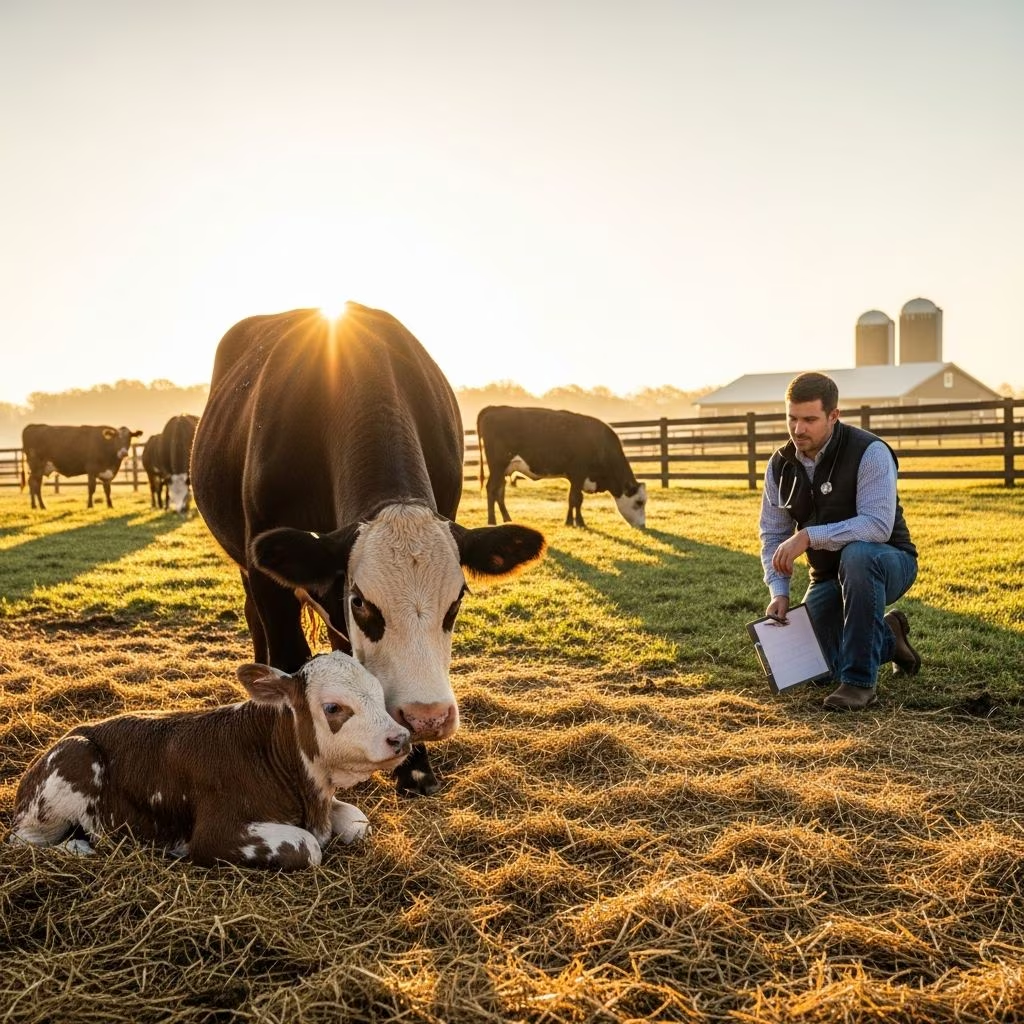
Effective calving management is crucial for cattle producers aiming to maximize calf survival rates, reduce health complications in dams, and improve overall herd efficiency. By focusing on preparation, vigilant monitoring, and timely interventions, farmers can significantly lower the risks associated with parturition. This article explores key practices drawn from veterinary expertise and field-tested strategies to support successful calving seasons.
Pre-Calving Nutritional Strategies
Maintaining optimal body condition in late gestation is foundational to uncomplicated calving. Cows and heifers entering the pre-partum phase should target a body condition score (BCS) of 5-6 on a 1-9 scale for mature animals and slightly higher for first-calf females to facilitate easier deliveries and robust lactation onset. Overconditioning, however, can lead to fat accumulation in the pelvic area and udder, increasing dystocia risk and potentially impairing milk yield.
To prevent nutritional shortfalls, test forages for nutrient content, including protein, energy, and nitrates, especially in fall-calving systems where grazing quality declines. Supplement as needed to avoid negative energy balance, which delays postpartum fertility. Late-morning and evening feedings—around 11 AM to noon and 9:30-10 PM—encourage diurnal calving patterns, aligning births with peak observation times for better assistance availability.
- Monitor BCS weekly in the final trimester.
- Provide balanced minerals and salt free-choice.
- Adjust rations to support weight maintenance without excess.
Designing Effective Calving Environments
Calving areas must prioritize cleanliness, dryness, and weather protection to curb neonatal diseases like scours and Johne’s disease. Separate high-risk groups into dedicated spaces, such as rotationally used small pastures or disinfected stalls, to limit pathogen buildup. In harsh climates, enclosed barns with good ventilation prevent chilling, while proximity to handling facilities enables rapid response to difficulties.
Modern tools enhance oversight: CCTV systems and RFID tags connected to mobile alerts allow remote monitoring without constant physical presence. For larger operations, divide herds into batches calving over 6-8 weeks to manage labor demands. Heifers, prone to longer labors, benefit from paddocks near residences for frequent checks.
| Facility Type | Advantages | Best For |
|---|---|---|
| Small Pastures | Reduces disease spread via rotation | Large herds |
| Calving Stalls | Weather protection, easy cleaning | Inclement weather |
| Open Barns | Good visibility, ventilation | Moderate climates |
Understanding and Monitoring Labor Progression
Cattle parturition unfolds in three distinct stages, each with defined timelines for normal progress. Stage 1 involves cervical dilation and uterine contractions, lasting 2-6 hours in heifers and shorter in multiparous cows, often unnoticed externally except for restlessness or mucus discharge. Stage 2, active expulsion, should complete within 1 hour for cows and up to 4 hours for heifers once the water bag appears; delays signal potential intervention.
Stage 3 entails placental expulsion within 12 hours, marking uterine involution’s start. Disruptions like premature assistance or herd social stress can prolong labor, elevating stillbirth risks. Observe cows 3-4 times daily, more for heifers, walking pens methodically to note progress without disturbing natural processes.
Adopt the Konefal method for daytime calving: evening feeds boost diurnal births to ~82%, improving detection odds. The “watch, wait, go” protocol advises intervening only after confirming no advancement in 1-2 hours for cows or 3-4 for heifers.
Recognizing and Addressing Dystocia
Dystocia, or difficult birth, affects 5-10% of calvings, disproportionately in heifers due to smaller pelvics and larger calves. Risk factors include oversized fetuses, malpresentations (e.g., breech, upside-down), or maternal exhaustion. Early detection via twice-daily checks prevents fatalities; calves undelivered within 4 hours post-water bag face high mortality.
Intervention guidelines emphasize hygiene: use shoulder-length gloves, obstetrical lubricant, and clean equipment. Follow the “rule of three”—correct position shows one head and two front feet or one tail and two hind feet—before applying chains or ropes. Pull in sync with contractions using proper angles to mimic natural forces. For viability assessment post-extraction, clear airways, rub vigorously, and administer stimulants if needed. Call veterinarians for complex cases per decision trees.
- Assess presentation before any traction.
- Limit pull attempts to avoid trauma.
- Monitor cow for uterine prolapse post-dystocia.
Newborn Calf Care and Colostrum Protocols
Vitality hinges on swift colostrum intake: aim for 3-4 liters within 2 hours of birth, as absorption efficiency plummets after 6 hours. Failure of passive transfer (FPT) multiplies illness risk 3-9 fold and mortality 5-fold. Dystocial calves, weak sucklers, or those from mastitic dams require tube-feeding harvested colostrum.
Process calves promptly: iodine navel dips, vitamin injections, and vaccinations per veterinary protocols. In Johne’s-endemic herds, isolate neonates and use pasteurized or donor colostrum to block transmission. Dry bedding and shelter aid thermoregulation, especially in cold snaps.
Postpartum Cow Recovery and Fertility
Fresh cows demand vigilant monitoring for metritis, ketosis, or displaced abomasum, particularly if dystocia occurred. Milk out dystocial dams immediately to stimulate uterine tone and provide colostrum. Maintain BCS through lactation to ensure cyclicity resumption; beef cows need BCS 5+ at breeding, forgiving minor losses if starting strong.
Fall-calvers require extra supplementation due to poor forage. Bulls for these systems should achieve BCS 6 pre-breeding, with breeding soundness exams to counter cold-induced fertility dips.
Seasonal Considerations for Calving Success
Spring calving leverages lush pastures but demands mud control; fall suits resource matching yet challenges with winter nutrition. Controlled seasons (60-80 days) streamline monitoring. Creep-feeding boosts weaning weights economically, while early weaning eases lactation stress.
Frequently Asked Questions (FAQs)
How often should I check calving cows?
Ideally 3-4 times daily, increasing to hourly for active labors in heifers.
What is the ideal colostrum volume for a newborn calf?
3-4 liters within 2 hours, via nipple or tube if necessary.
When to intervene in a calving?
No progress 1 hour post-feet/head visibility in cows; 2-4 hours in heifers.
Does body condition affect calving ease?
Yes, BCS 5-6 optimizes pelvic fat balance and energy reserves.
How to promote daytime calving?
Feed late morning and evening to shift rhythms.
References
- Management of Calving in Cattle — Merck Veterinary Manual. 2023. https://www.merckvetmanual.com/management-and-nutrition/management-of-reproduction-cattle/management-of-calving-in-cattle
- Calving Process and Stages of Delivery — Iowa Beef Center. 2022. https://www.iowabeefcenter.org/calving/processdelivery.html
- What are some Management Tips for Fall-Calving Cows? — University of Nebraska-Lincoln Beef. 2023. https://beef.unl.edu/what-are-some-management-tips-fall-calving-cows/
- Top Calf Management Resources for Beef Producers — Beef Research Canada. 2024. https://www.beefresearch.ca/blog/top-calf-management-resources-going-into-calving-season/
- Managing heifers during and after calving — Agriculture Victoria (Government of Victoria, Australia). 2023. https://agriculture.vic.gov.au/livestock-and-animals/beef/breeding/managing-heifers-during-and-after-calving
- Calving Management in Beef Cattle: Watch, Wait, Go! — Penn State Extension. 2022. https://extension.psu.edu/calving-management-in-beef-cattle-watch-wait-go/



