

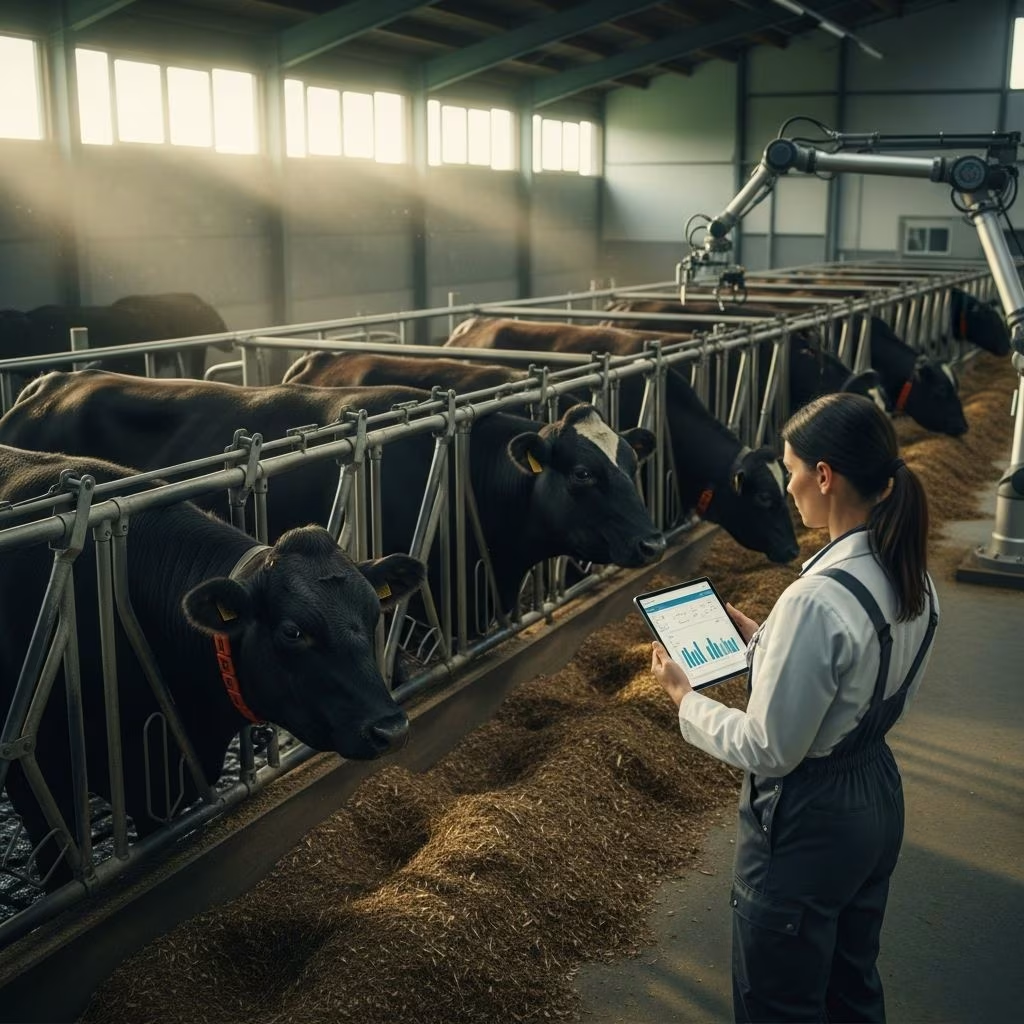
Successful cattle breeding hinges on integrating nutrition, health management, precise timing, and genetic selection to maximize conception rates and calf uniformity. This approach ensures heifers reach breeding readiness efficiently while maintaining cow fertility across seasons, leading to higher profitability through heavier weaning weights and shorter calving intervals.
Establishing Clear Breeding Objectives
Defining specific goals forms the foundation of any robust cattle breeding initiative. Producers should align objectives with operational priorities, such as increasing weaning weights, improving meat quality, or enhancing disease resistance. For instance, targeting a 95% pregnancy rate within a 45- to 90-day breeding window promotes uniform calf crops, simplifying management and marketing.
Key considerations include environmental adaptation, market demands, and resource availability. Operations in heat-stressed regions might prioritize heat-tolerant genetics, while those focused on export markets emphasize growth traits. Regularly reviewing performance data against these goals allows for adjustments, ensuring long-term genetic progress.
Nutritional Foundations for Reproductive Success
Adequate nutrition is paramount for reproductive efficiency, influencing estrus cycling, conception, and fetal development. Heifers require 60-65% of mature body weight at first breeding to support ovulation and early pregnancy maintenance.
- Heifer Development: Provide high-forage diets supplemented with minerals to achieve target weights without excess fat, promoting lifetime productivity.
- Cow Maintenance: Maintain body condition scores (BCS) of 5-6 pre-breeding, adjusting energy during lactation and late gestation for fetal growth.
- Bull Conditioning: Balance feeds to sustain fertility, incorporating shade and hydration in summer to mitigate heat stress.
Mineral supplementation, particularly selenium, zinc, and vitamin E, enhances sperm quality and oocyte viability. Pasture rotation and soil testing optimize forage quality, preventing deficiencies that impair fertility. Clean water access is non-negotiable, as dehydration directly reduces reproductive performance.
Health Protocols to Safeguard Fertility
Preventive health measures protect against reproductive losses from diseases like BVD, IBR, and leptospirosis. Collaborate with veterinarians to customize vaccination schedules based on herd risks and local pathogens.
| Stage | Recommended Vaccinations | Additional Measures |
|---|---|---|
| Pre-Breeding | BVD, IBR, Leptospirosis, Vibriosis, Trichomoniasis | Bull BSE 60 days prior |
| Pregnant Cows | Clostridial boosters | Parasite control |
| Calves | Initial doses at 4-6 weeks | Biosecurity protocols |
Biosecurity, including quarantine for new animals and vector control, minimizes introductions of pathogens via wildlife or equipment. Annual bull breeding soundness exams (BSE) verify fertility, recommending ratios of 1:15-25 bulls per cow in managed pastures.
Breeding Season Management and Synchronization
A defined 45-90 day breeding season concentrates calving, enabling focused interventions and uniform marketing. Synchronization protocols using hormones streamline AI, reducing labor while improving early pregnancy rates.
- Natural Service: Select fertile bulls with aligned genetics; limit pasture sizes to conserve energy.
- Artificial Insemination (AI): Train staff or hire experts; track heats meticulously for optimal timing.
- Embryo Transfer (ET): Multiply elite genetics by transferring embryos from top donors to recipients, accelerating herd improvement.
Separate heifer breeding 45 days ahead of cows allows tailored nutrition and calving assistance, targeting low-birthweight sires for easier deliveries.
Advanced Reproductive Technologies
Technologies like MOET/IVF boost genetic gain by shortening generation intervals and increasing progeny from superior animals. Top herds achieve 24.6% births via these methods versus 12.5% in averages, yielding 79-206% higher selection indices.
IVF enables rapid dissemination of traits like marbling or feed efficiency. However, success demands precise donor/recipient matching and skilled technicians. Integrating these with AI creates hybrid programs balancing cost and genetics.
Record-Keeping and Performance Monitoring
Detailed records drive decisions, tracking metrics like conception dates, calving intervals, and genetic EPDs. Software or logbooks reveal trends, identifying subfertile animals for culling.
- Heat and AI dates
- Pregnancy checks
- Calf vigor and weights
- Bull performance
Benchmark against peers: elite herds show 50% better selection intensity and shorter intervals, informing targeted improvements.
Challenges and Solutions in Breeding Programs
Common hurdles include postpartum anestrus (25-70% of cows), heat stress, and detection errors. Solutions: enhance pre-breeding BCS, provide cooling, and use CIDR/timed AI protocols.
Economic pressures favor cost-effective natural service, but AI/ET justify investments via premium calves. Adapt strategies to scale—heifers demand intensive management, cows benefit from pasture systems.
Future Directions in Cattle Reproduction
Genomic testing refines selections, predicting traits pre-breeding. Automation like activity monitors improves heat detection accuracy. Sustainable practices, such as rotational grazing, support ongoing fertility amid climate shifts.
Frequently Asked Questions (FAQs)
What is the ideal breeding weight for heifers?
Heifers should reach 60-65% of mature cow weight to optimize first-service conception.
How often should bulls undergo BSE?
Annually, at least 60 days before breeding season.
What role does BCS play in cow fertility?
A BCS of 5-6 ensures cycling; thin cows risk anestrus.
Is synchronization suitable for all herds?
Yes, especially for AI, yielding uniform calves.
How do ET programs accelerate genetics?
By producing multiple offspring from elites, shortening generations.
References
- How to Set Up Your Cattle Breeding Program for Optimal Success — BioZyme/VitaFerm. 2025-04-23. https://vitaferm.com/2025/04/23/cattle-breeding/
- Steps to Successful Reproductive Management in Beef Cattle — Clemson University Livestock-Poultry Health. N/A. https://lgpress.clemson.edu/publication/steps-to-successful-reproductive-management-in-beef-cattle/
- Recipe for a Perfect Cattle Breeding Program — Purina Animal Nutrition. N/A. https://www.purinamills.com/cattle-feed/education/detail/the-recipe-for-a-perfect-cattle-breeding-program
- Benchmarking in a beef cattle breeding program — PubMed/John Wiley & Sons Ltd. 2023. https://pubmed.ncbi.nlm.nih.gov/36647917/
- Five Factors to Manage for a Successful Reproduction Program — ABS Global. N/A. https://www.absglobal.com/five-factors-to-manage-for-a-successful-reproduction-program/
- 5 Ways to Improve Breeding Efficiencies in 2025 — Zoetis. N/A. https://www.zoetisus.com/news-and-media/5-ways-to-improve-breeding-efficiencies-in-2025/
- Developing Beef Cattle Breeding Objectives — University of California Davis eBEEF. 2025. https://ebeef.ucdavis.edu/sites/g/files/dgvnsk7331/files/inline-files/Factsheet1_2025.pdf



