

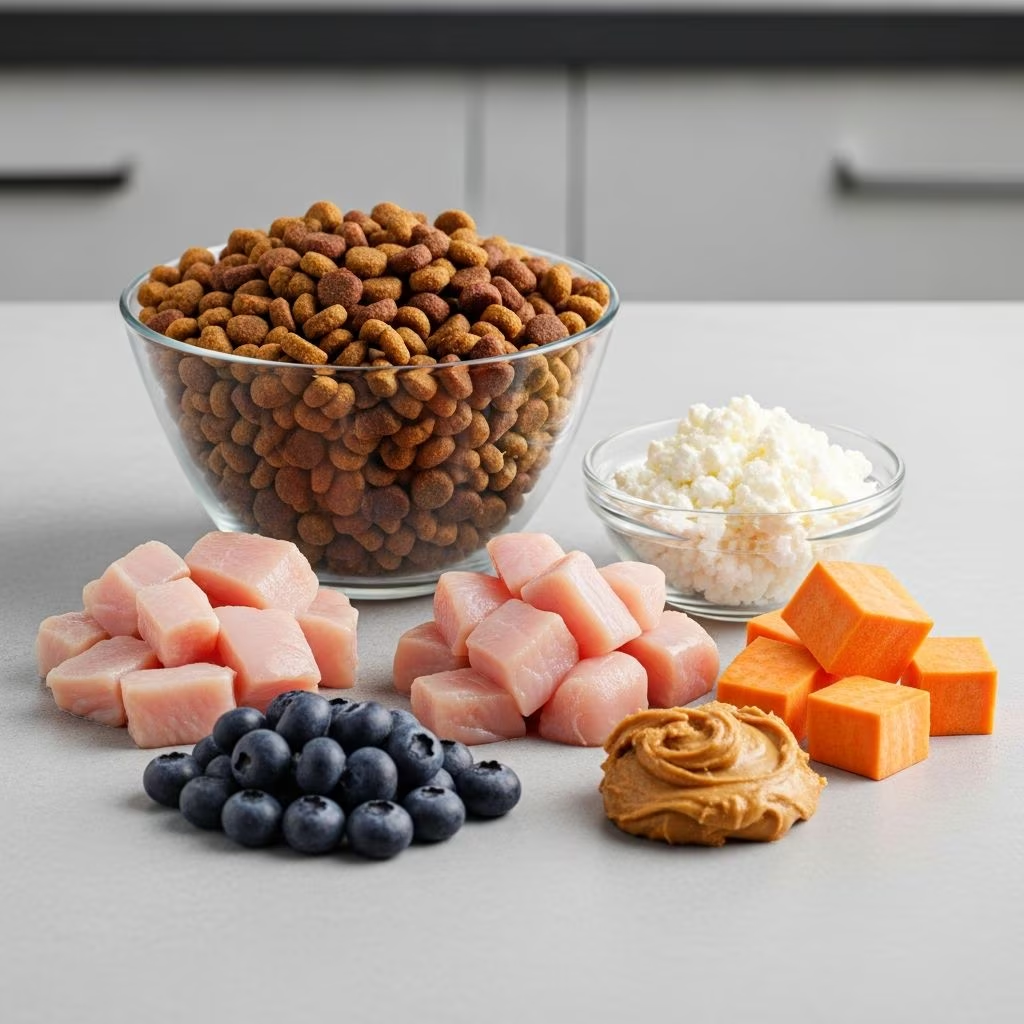
Balancing protein and fat in a dog’s diet is crucial for providing sustained energy, supporting muscle maintenance, and promoting overall health. Research indicates dogs thrive on diets where fat serves as the primary energy source, typically around 60-63% of calories from fat and 30% from protein, with minimal carbohydrates. This macronutrient profile aligns with canine evolutionary needs, prioritizing high-quality proteins for tissue repair while leveraging fat’s dense energy (8.5 kcal/g vs. 3.5 kcal/g for protein).
Why Macronutrient Ratios Matter for Canines
Dogs are adapted to derive most energy from fats, which break down into free fatty acids and glycerol for efficient fuel. Excess protein shifts metabolism toward glucose production, reducing ketosis benefits where fats produce ketones for brain and muscle energy. A well-balanced ratio prevents this, ensuring proteins focus on essential functions like enzyme production and immune support without overburdening kidneys.
AAFCO sets minimums: adult maintenance requires 18% crude protein and 5.5% fat on a dry matter (DM) basis, while growth/reproduction needs 22.5% protein and 8.5% fat. These are baselines; optimal ratios exceed them for peak performance, especially in active or working dogs.
Understanding AAFCO Nutrient Standards
The Association of American Feed Control Officials (AAFCO) provides foundational guidelines for commercial dog foods. For adults, protein must be at least 18% DM or 45g per 1,000 kcal metabolizable energy (ME), rising to 22.5% DM or 56.3g/1,000 kcal for puppies, lactating, or gestating dogs. Fat minimums ensure energy density without excess, as fats deliver 2.25 times more calories than proteins or carbs.
| Life Stage | Min Protein (DM %) | Min Protein (g/1,000 kcal ME) | Min Fat (DM %) |
|---|---|---|---|
| Adult Maintenance | 18% | 45g | 5.5% |
| Growth/Reproduction | 22.5% | 56.3g | 8.5% |
Exceeding 30% protein offers no benefit and may strain metabolism in healthy dogs. Always verify labels for AAFCO compliance, but aim higher for quality sources like meat over fillers.
Decoding the Fat-to-Protein Ratio (FPR)
The FPR helps evaluate meat quality: divide crude fat % by crude protein % and multiply by 100. Average FPR is 55-60%; dry foods often 70% or lower, wet up to 90%. Ratios above 80% signal fatty, low-value meats; over 90% warrants caution.
- Low FPR (<50%): Protein-heavy, ideal for low-fat needs like seniors.
- Moderate (50-80%): Balanced for most adults.
- High (>80%): Energy-dense but check for quality.
For example, a food with 30% protein and 20% fat yields FPR = (20/30)*100 = 67%, typical for premium dry kibble.
Ideal Ratios Backed by Nutritional Geometry
Studies using nutritional geometry reveal dogs self-select diets at roughly 30% protein, 63% fat, and 7% carbs by energy. This mirrors ancestral patterns: high-fat prey sustains endurance hunts. Aim for diets where fat provides twice the energy of protein—about 2:1 caloric ratio.
On DM basis, this translates to high-protein (35-45%) with fat at 15-25%, minimizing carbs to avoid glucose dominance. Puppies need slightly higher protein (25-30% energy) for growth, tapering to 20-25% in adults.
Tailoring Ratios to Life Stages and Activity
Puppies and Growing Dogs
High growth demands elevate protein to 22.5-30% DM, with fat at 8.5-20% for brain development and energy. Ratios lean 1:1 to 1.5:1 fat-to-protein energy to fuel play without obesity.
Adult Maintenance
Active adults benefit from 25-35% protein DM, 12-18% fat, targeting 30% protein energy and 60% fat energy. Sedentary dogs drop fat to 8-12%.
Seniors and Less Active Dogs
Reduce to 18-25% protein, 5.5-10% fat to ease digestion and joint strain. Moderate FPR (50-70%) supports lean mass.
Working or Performance Dogs
Boost fat to 20-30% for endurance, maintaining 30% protein energy. Ratios up to 2:1 fat favor ketone production.
Quality Sources: Beyond Just Ratios
Named meat meals (e.g., chicken meal) outperform “meat” for digestibility. Avoid low biologic value proteins like collagen. Fats should include omega-3s; ideal omega-6:3 ratio is 4:1, not the 20:1 in grain-heavy foods.
- Prime fats: Fish oil, chicken fat, flaxseed.
- Protein heroes: Deboned meats, organs, eggs.
Practical Tips for Reading Labels and Choosing Foods
- Check guaranteed analysis for crude protein/fat minima.
- Calculate DM: (nutrient % / (100 – moisture %)) * 100.
- Compute FPR and compare to averages.
- Scan ingredients: First five should be proteins/fats, not grains.
- Test for palatability and stool quality post-trial.
Raw or home-cooked? Target 2-3% body weight daily, split 40-50% protein, 30-40% fat, rest organs/veggies.
Common Pitfalls in Dog Food Selection
High-carb fillers inflate calories without nutrition, skewing ratios. Wet foods often hit high FPR from broths. Excess protein (>30% energy) risks deamination for fuel. Monitor weight: Adjust fat down for gainers, up for thin dogs.
Health Impacts of Imbalanced Diets
Low-fat diets cause lethargy; high-fat without exercise leads to pancreatitis. Protein deficits weaken immunity; surpluses stress kidneys in predisposed breeds. Balanced ratios enhance coat shine, energy, and longevity.
Frequently Asked Questions (FAQs)
What is a good protein-to-fat ratio for adult dogs?
Aim for 30% energy from protein and 60% from fat, or FPR 60-70%.
How do I calculate dry matter for comparisons?
DM % = (crude % / (100 – moisture %)) * 100.
Is high protein bad for dogs?
Over 30% DM offers no gain and may convert to energy unnecessarily.
Can I feed higher fat for active dogs?
Yes, up to 2:1 fat-to-protein energy for endurance.
What about omega fatty acids?
Target 4:1 omega-6 to omega-3 for anti-inflammation.
Monitoring and Adjusting Your Dog’s Diet
Weigh monthly, track energy/stools. Consult vets for breed-specific needs (e.g., labs prone to fat gain). Rotate proteins for variety, ensuring consistent ratios.
References
- Is there an ideal protein to fat ratio? — First Light USA / Dr. Mark Roberts, PhD. Accessed 2026. https://www.firstlight.farm/us/is-there-an-ideal-protein-to-fat-ratio/
- Fat-to-Protein Ratio Helps Detect Inferior Meat Content in Dog Food — Dog Food Advisor. Accessed 2026. https://www.dogfoodadvisor.com/choosing-dog-food/fat-protein-ratio/
- Geometric analysis of macronutrient selection in breeds of the domestic dog — PMC / NIH. 2012-12-05. https://pmc.ncbi.nlm.nih.gov/articles/PMC3518205/
- What AAFCO Protein Standards Mean for Dog Food — Loyal Saints. Accessed 2026. https://www.loyalsaintspets.com/post/what-aafco-protein-standards-mean-for-dog-food
- Dog Nutrition: Guide to Dog Food Nutrients — PetMD. Accessed 2026. https://www.petmd.com/dog/nutrition/evr_dg_whats_in_a_balanced_dog_food
- Essential Fats for my Dog’s Diet: The Ultimate Guide — My Pet Nutritionist. Accessed 2026. https://mypetnutritionist.com/post/essential-fats-for-my-dogs-diet-the-ultimate-guide/
- AAFCO Dog and Cat Food Nutrient Profiles — AAFCO. 2015-07-02. https://www.aafco.org/wp-content/uploads/2023/01/Model_Bills_and_Regulations_Agenda_Midyear_2015_Final_Attachment_A.__Proposed_revisions_to_AAFCO_Nutrient_Profiles_PFC_Final_070214.pdf



