

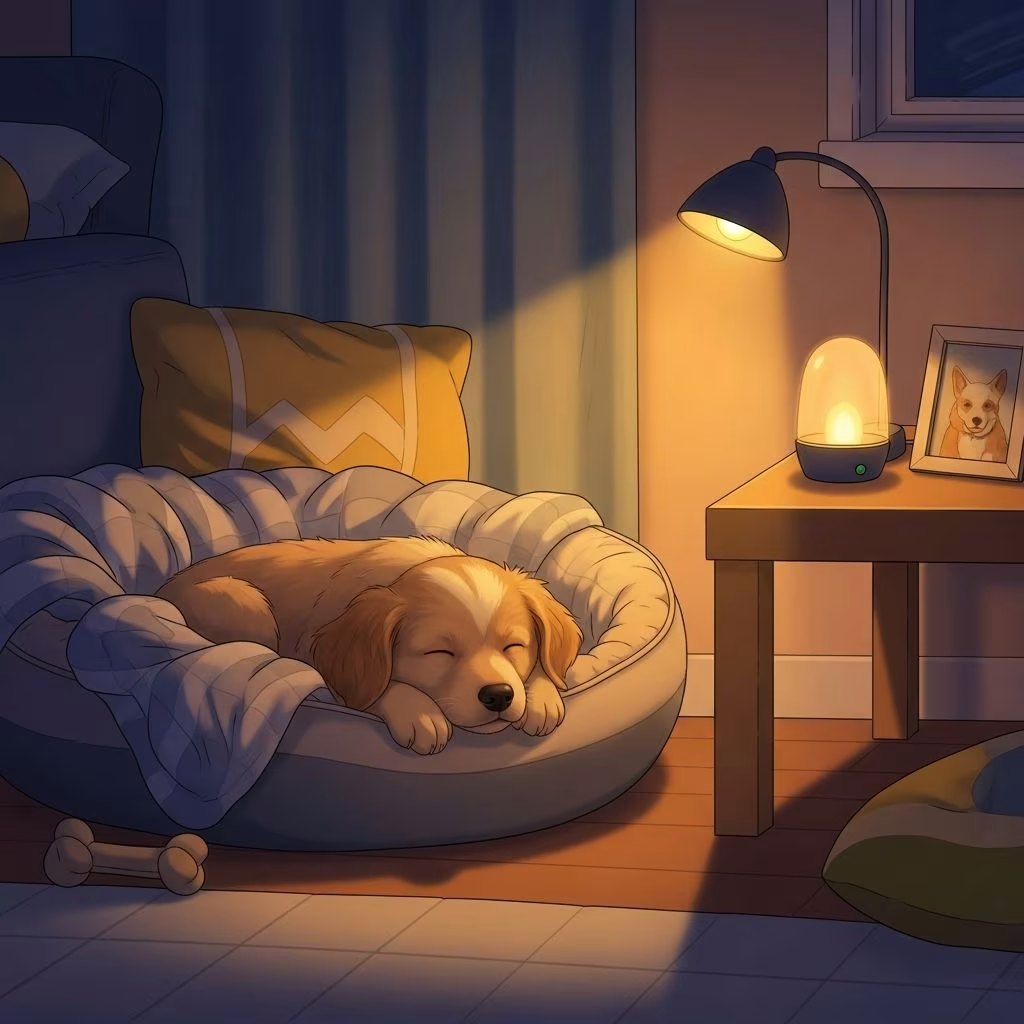
Puppies generally sleep best in dark or dimly lit environments that mimic natural conditions, promoting healthy circadian rhythms and melatonin production essential for growth and rest.
The Science Behind Puppy Sleep Cycles
Young dogs, much like human infants, depend on consistent light-dark cycles to regulate their internal clocks. Darkness triggers the release of melatonin, a hormone that facilitates deep sleep and supports physical development, including muscle growth, bone strengthening, and immune function. During sleep, puppies process daily experiences, consolidate memories, and clear brain waste, all critical for cognitive health.
Research indicates that artificial light exposure at night disrupts these processes. A study in Veterinary Behavior found dogs in total darkness exhibited higher sleep efficiency compared to those under light, with reduced awakenings. Similarly, prolonged light can impair REM sleep phases, leading to restlessness. Puppies require 18-20 hours of sleep daily in their first months, making optimal lighting non-negotiable for proper development.
Why Darkness Benefits Most Puppies
In the wild, puppies nest in dimly lit dens with their packs, where low light levels signal safety and bedtime. Domestic puppies benefit similarly: a dark room minimizes distractions, reduces nighttime stirring, and aligns with their enhanced low-light vision via the tapetum lucidum, a reflective eye layer.
Complete darkness supports melatonin surges, which peak in low-light conditions, enhancing sleep quality. Puppies in darker settings wake 34% less frequently, per sleep routine studies, fostering stronger immunity and fewer behavioral issues like anxiety or destructiveness.
When Dim Light Might Be Necessary
Not all puppies adapt instantly to darkness, especially those recently separated from litters. Sudden blackout can provoke whining or pacing due to unfamiliarity, as young pups rely on scents, sounds, and faint visuals for security.
- Newly adopted puppies often feel isolated in pitch black, triggering separation responses.
- Those with early trauma or high anxiety may need gradual adjustment.
- Puppies under 8 weeks might startle easily without subtle orientation cues.
A soft, warm-toned night light (under 5 watts, non-blue spectrum) provides comfort without suppressing melatonin. Position it distant from the crate to avoid glare.
Potential Risks of Incorrect Lighting
Bright or constant lights interfere with hormone balance, causing fragmented sleep, heightened alertness, and long-term issues like weakened defenses against infections. Overstimulated puppies may develop habits such as excessive barking or chewing from poor rest.
| Lighting Type | Effects on Puppies | Recommendation |
|---|---|---|
| Pitch Dark | Optimal melatonin; deep sleep; fewer awakenings | Ideal for adjusted pups |
| Dim Night Light | Reduces anxiety; maintains some rhythm | Best for nervous or new puppies |
| Bright/Blue Light | Disrupts hormones; increases restlessness | Avoid entirely |
Creating the Perfect Sleep Environment
Beyond lighting, integrate routines for success. Establish fixed bedtimes with dimming lights over 30 minutes, paired with calming activities like gentle play or massages.
- Use cozy crates in quiet areas with familiar bedding.
- Maintain daytime brightness and activity to reinforce cycles.
- Avoid screens or sudden noises near bedtime.
- Motion-sensor lights activate only when needed, preventing overstimulation.
Consistency trumps perfection: puppies with predictable dark periods settle faster, even if starting with light.
Special Cases: Puppies Needing Extra Support
High-Anxiety Puppies
Pups showing persistent distress in dark may benefit from proximity cues, like your covered bed nearby or heartbeat toys simulating littermates. Transition by shortening light use over weeks.
Very Young or Health-Challenged Pups
Puppies under 12 weeks or with vision issues navigate better with faint glows. Consult vets for those with conditions like canine cognitive concerns, rare in youth but possible.
Shelter studies show light doesn’t always disrupt experienced dogs, but puppies in novel homes respond best to owner-tailored setups.
Practical Tips for Nighttime Success
- Observe reactions: Test dark vs. dim over 3-5 nights, noting sleep duration and mood.
- Choose quality lights: Warm LED, silent, low-heat models.
- Build routines: Dinner, potty, dim lights, crate time.
- Monitor progress: Reduce aids as confidence grows.
- Seek pro advice: Vets or behaviorists for ongoing issues.
Long-Term Health Impacts of Good Sleep
Quality rest bolsters everything from growth hormones to emotional stability. Well-rested puppies learn faster, exhibit fewer fears, and form stronger bonds. Neglect here risks chronic fatigue, behavioral woes, and stunted immunity.
Owners sleeping better alongside rested pups report higher satisfaction, creating harmonious homes.
Frequently Asked Questions
Do all puppies need a night light?
No, most thrive in darkness, but anxious or adjusting ones benefit from dim light temporarily.
Can too much darkness harm puppies?
Rarely; their night vision suffices, and nature supports it. Anxiety is behavioral, not physiological harm.
How long until a puppy adjusts to dark sleeping?
Typically 1-2 weeks with consistency; some need a month.
What if my puppy cries regardless of light?
Check crate comfort, potty needs, or separation anxiety. Professional training helps.
Does breed affect lighting needs?
Indirectly via anxiety levels; sight hounds may prefer dark, while velcro breeds need more reassurance.
References
- Should Puppies Sleep in the Dark? How Light Affects Young Dogs — Nelson Equestrian. 2023. https://nelsonsequestrian.co.uk/should-puppies-sleep-in-the-dark-how-light-affects-young-dogs
- Should Puppies Sleep in the Dark? Vet-Approved Facts & FAQ — Dogster. 2023. https://www.dogster.com/dog-health-care/should-puppies-sleep-in-the-dark
- Should I Turn Off the Light for My Dog at Night? Vet Insights — Pet Care Shed. 2023. https://petcareshed.com.au/blogs/pet-supplies/should-i-turn-off-the-light-for-my-dog-at-night
- Lights On or Off? How Lighting Affects Your Dog’s Sleep — Dog Friendly Co. 2023. https://www.dogfriendlyco.com/blogs/articles/lights-on-or-off-how-lighting-affects-your-dog-s-sleep
- Why Sleep Is So Important For Puppies — My Pet Nutritionist. 2023. https://mypetnutritionist.com/post/why-sleep-is-so-important-for-puppies/
- More Than a Nap: The Essential Role of Sleep in Canine Health — Canine Evolutions. 2023. https://www.canineevolutions.com/news/more-than-a-nap-the-essential-role-of-sleep-in-canine-health-and-happiness
- The Sleep of Shelter Dogs Was Not Disrupted by Overnight Light — PMC (NCBI). 2019-10-11. https://pmc.ncbi.nlm.nih.gov/articles/PMC6826762/



