

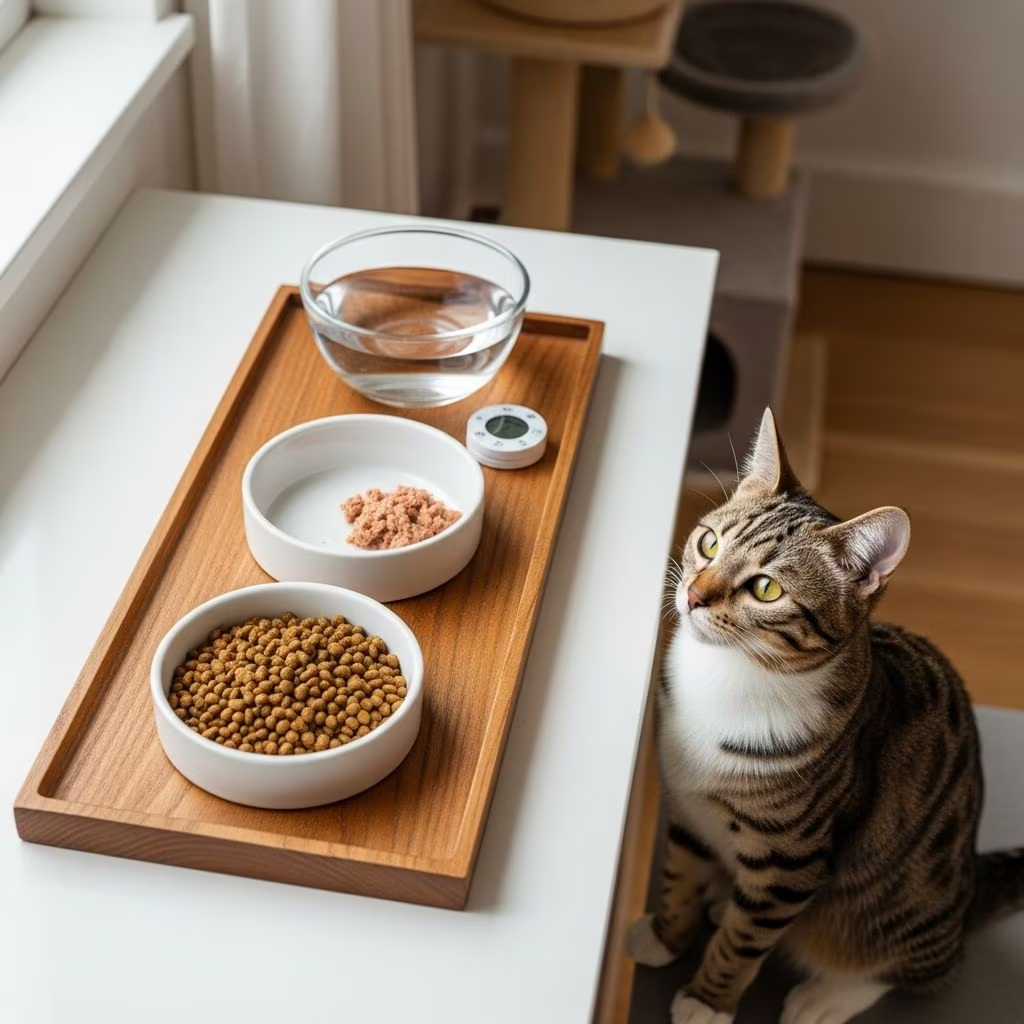
Proper nutrition forms the foundation of your cat’s health, influencing everything from energy levels to longevity. Understanding how to balance portions, select quality foods, and tailor schedules to life stages ensures your feline thrives. This guide draws on veterinary insights to help you navigate feeding decisions with confidence.
Essential Nutrients for Feline Health
Cats are obligate carnivores, requiring high levels of animal-based proteins, fats, and specific vitamins like taurine to maintain heart function and vision. Adult cats need diets that support tissue repair and energy demands, typically met through complete and balanced commercial foods. Kittens demand even richer formulas for rapid growth, with 80-90% of their intake from specialized kitten products by weaning age.
Key components include:
- Protein: At least 26-30% for adults, higher for growth phases, primarily from meat sources.
- Fats: Provide concentrated energy and aid nutrient absorption.
- Taurine: Essential amino acid absent in plant proteins; deficiency leads to serious conditions.
- Moisture: Varies by food type, critical for hydration.
Always verify AAFCO statements on labels confirming nutritional completeness for life stages.
Determining Daily Food Portions
Portion control prevents obesity, a common issue in cats. Base amounts on weight, activity, neuter status, and food calorie density. An average 8-12 lb adult requires 200-300 kcal daily, adjustable per product guidelines.
Use this reference table for dry food (24-hour totals; consult labels):
| Weight (lbs) | Dry Food (cups) |
|---|---|
| 5-9 | 1/3 – 2/3 |
| 10-14 | 3/4 – 1 | Note: Varies by kcal/cup; e.g., standard kibble ~400 kcal/cup. Adjust for wet mixes. |
For wet food, aim for 7-11 oz daily for average adults, split into meals. Calculate precisely: if 260 kcal needed and food is 73 kcal/can, feed ~3.5 cans/day, divided as 1.75/meal for twice-daily. Monitor body condition—ribs palpable but not visible indicate ideal weight.
Ideal Feeding Schedules by Age
Cats prefer multiple small meals mimicking wild hunting patterns. Free-feeding dry works for some but risks overeating; measured portions twice daily suit most.
Newborn to Weaning Kittens
From 4 weeks, introduce gruel: moisten kitten kibble with milk replacer. Gradually thicken over weeks; by 8-10 weeks, transition to dry with water available. Feed 4-7 times daily initially, reducing to 3-4 by 3 months.
Junior Cats (4-12 Months)
Support growth with frequent meals: 3-4 daily, focusing on high-protein kitten food until 1 year.
Adults (1-7 Years)
Twice daily is standard, 8-12 hours apart, promoting digestion and preventing begging. Active cats may benefit from 3-6 smaller portions.
Senior Cats (7+ Years)
Slower metabolism demands fewer calories; opt for senior formulas. Maintain 2 meals but monitor for dental issues favoring wet food.
Consistency builds security; use timers for automatic dispensers with wet food to simulate grazing safely.
Wet Food vs. Dry Food: Pros, Cons, and Combinations
Choose based on hydration needs, dental health, and lifestyle. No single type is superior universally.
| Food Type | Benefits | Drawbacks | Daily Example (10 lb Cat) |
|---|---|---|---|
| Wet | 75%+ moisture aids urinary health; highly palatable; soft for seniors. | Spoils quickly; pricier; less dental abrasion. | 7-11 oz |
| Dry | Convenient; promotes dental scraping; economical for free-feeding. | Low moisture risks crystals; calorie-dense. | 1/2 – 2/3 cup |
| Mix | Balances hydration and convenience; customizable calories. | Requires math for totals. | 1/4 cup dry + 5 oz wet. |
Wet excels for picky or dehydrated cats; dry suits multi-cat homes. Raw/freeze-dried options (3/4-1.25 cups) boost nutrition but transition slowly.
Navigating Special Dietary Needs
Health conditions alter requirements:
- Obesity: Reduce to 80-90% maintenance calories; increase play.
- Diabetes: Consistent low-carb meals; vet-prescribed.
- Urinary Issues: Wet/high-moisture diets.
- Sterilized Cats: 20-30% fewer calories due to lowered metabolism.
Treats cap at 10-15% daily calories to avoid imbalance.
Transitioning Diets Smoothly
Abrupt changes cause digestive upset. Over 7-10 days:
- Days 1-2: 25% new, 75% old.
- Days 3-4: 50/50.
- Days 5-7: 75% new, 25% old.
- Days 8+: 100% new.
Monitor stool and appetite; slower for sensitive stomachs.
Water: The Unsung Hero of Cat Nutrition
Cats often under-drink, risking kidney strain. Wet food provides ~75% hydration; fountains or flavored water encourage intake. Always fresh water near food.
FAQs
How many calories does my cat need?
200-350 kcal/day for most adults, scaled by weight/activity. Use food labels and vet advice.
Can I free-feed my cat?
Possible with dry for self-regulating cats, but portion control twice daily reduces obesity risk.
What’s best for kittens?
4-7 meals/day of kitten-specific food, transitioning from gruel.
Wet or dry for weight loss?
Wet often better due to satiety from volume; combine for variety.
How to handle picky eaters?
Rotate flavors/textures; warm wet food; avoid hand-feeding dependency.
References
- Cat Nutrition Tips — ASPCA. 2023. https://www.aspca.org/pet-care/cat-care/cat-nutrition-tips
- How Much to Feed Your Cat — Stella & Chewy’s. 2024. https://www.stellaandchewys.com/blogs/articles/how-much-to-feed-cats
- How Much Should I Feed My Cat? — Purina US. 2024. https://www.purina.com/articles/cat/feeding/guides/how-much-should-i-feed-my-cat
- How Much to Feed a Cat: Portions, Calories, and More — Chewy. 2024. https://www.chewy.com/education/cat/food-and-nutrition/how-much-should-i-feed-my-cat
- Nutrition – General Feeding Guidelines for Cats — VCA Animal Hospitals. 2023. https://vcahospitals.com/know-your-pet/nutrition-feeding-guidelines-for-cats
- Feeding Your Cat — Cornell University College of Veterinary Medicine. 2024. https://www.vet.cornell.edu/departments-centers-and-institutes/cornell-feline-health-center/health-information/feline-health-topics/feeding-your-cat
- Kitten Feeding Guide: How Much to Feed a Kitten — SHEBA. 2024. https://www.sheba.com/lifestyle/how-much-to-feed-a-kitten



