

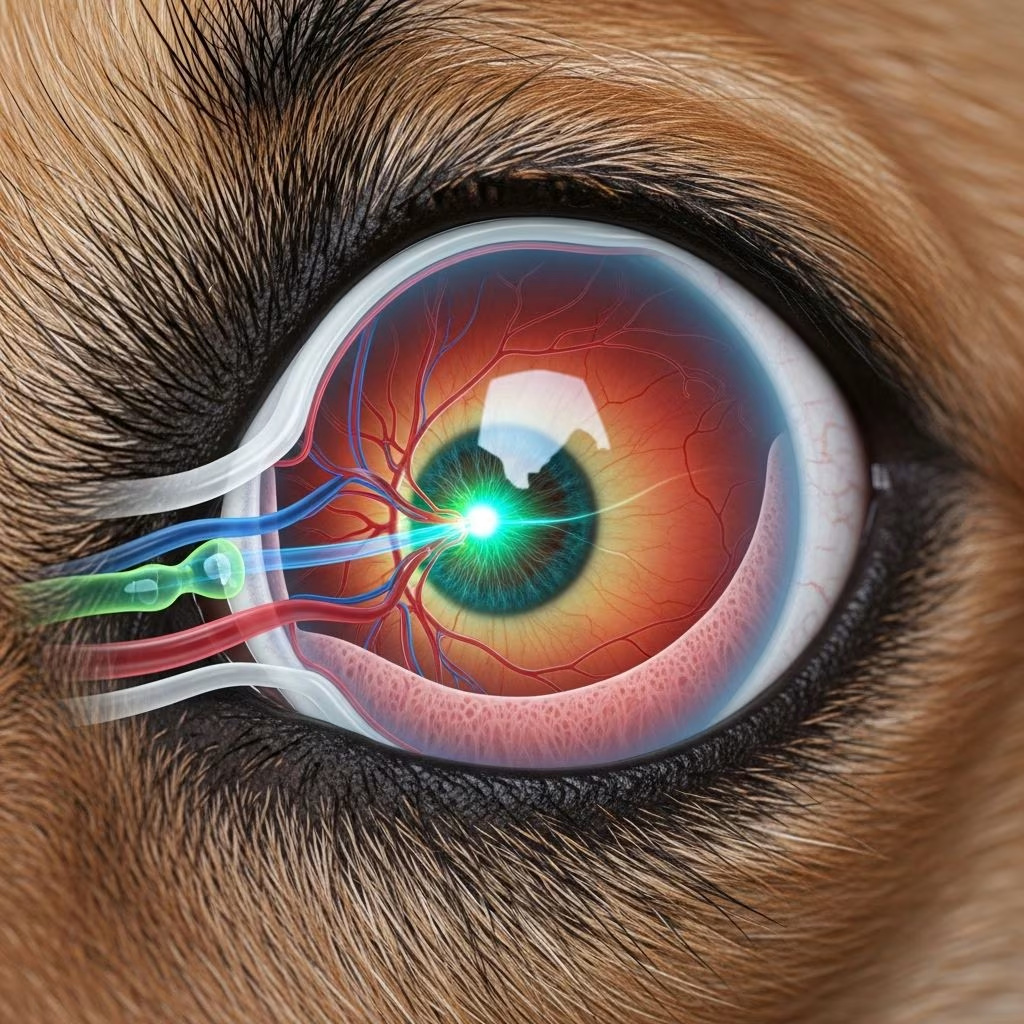
The optic nerve serves as the critical neural pathway connecting the eye to the brain, enabling visual perception in animals. Unlike peripheral nerves, the optic nerve represents an extension of the central nervous system, originating from the visual cortex and traversing through multiple anatomical structures before reaching the ocular globe. Understanding its anatomy and function is essential for veterinarians diagnosing and managing eye disorders in companion animals, livestock, and wildlife.
Fundamental Composition and Structure
The optic nerve is fundamentally composed of axons derived from retinal ganglion cells, which collect visual information from photoreceptors and transmit it centrally. These ganglion cells represent the output neurons of the retina, converting light stimuli into electrical signals that travel along the optic nerve toward the brain. The structural organization of the nerve involves multiple layers and components that work synergistically to maintain neural integrity and facilitate signal transmission.
The nerve fiber layer represents the innermost retinal layer, containing the unmyelinated axons of ganglion cells before they coalesce to form the optic nerve proper. As these axons extend posteriorly through the optic nerve head and into the orbital portion of the nerve, myelin sheaths gradually develop, insulating the axons and accelerating neural conduction. This developmental process occurs gradually, with myelin formation extending from the brain outward and typically reaching the eye within weeks after birth.
Vascular Supply Patterns Across Species
The blood supply to the optic nerve exhibits remarkable variation among animal species, reflecting evolutionary adaptations and anatomical differences. Understanding these vascular patterns is crucial for comprehending how different species maintain optic nerve health and respond to ischemic insults.
Domestic Carnivores: Dogs and Cats
Dogs and cats demonstrate distinctive vascular arrangements that differentiate them from primates. Unlike humans and other primates, neither species possesses a single central retinal artery supplying the optic nerve and retina. Instead, the blood supply originates from the short posterior ciliary arteries, which derive from anastomosis between the large external ophthalmic artery and the smaller internal ophthalmic artery. This branching network creates a plexus of cilioretinal arteries that supplies both the optic nerve head and surrounding retinal tissue.
The vascular supply in dogs and cats involves pial vessels in direct contact with the cilioretinal vascular plexus, supplemented by choroidal vessel contributions. This arrangement means that central retinal arteries play no role in supplying the optic nerve head region in these species, contrasting sharply with the primate vascular pattern. The circulus arteriosus, a vessel circle formed around the optic nerve, generates multiple choroidoretinal arteries from which branches enter the optic nerve head at the scleral level, running laterally toward the retina.
Equine and Other Species
Horses present yet another vascular configuration, with the optic nerve head typically appearing as a horizontally oriented oval structure featuring a well-developed lamina cribrosa. Rabbits rely predominantly on smaller vessels with direct arterial and venous connections to the choroid, supplemented by branches from the arterial circle and single branches from the central retinal artery within the optic nerve head.
Avian species, including chickens and quails, possess completely avascular retinas, receiving oxygen through a unique structure called the pecten—a specialized vitreal blood vessel aggregation. The vessels supplying the pecten contain characteristic tight-junction barriers similar to those found in retinal and brain vasculature. A specialized peripapillary glia barrier prevents these vessels from entering the retinal tissue itself.
Myelination Patterns and Optic Nerve Head Appearance
Myelin distribution varies significantly among species, creating distinctive appearances of the optic nerve head that clinicians must recognize as normal variations rather than pathological changes.
Canine Myelination Characteristics
In dogs, myelination of retinal ganglion cell axons initiates at the optic chiasm and extends toward the optic nerve head. Variable myelination may extend into the peripapillary nerve fiber layer, resulting in the highly irregular optic nerve head appearance observed in many canine patients. This anatomical feature means that the canine optic disc often appears less distinct and more variable in shape than in cats or horses, which clinicians must account for when evaluating for pathology.
Feline Myelination Characteristics
Cats demonstrate a distinctly different myelination pattern, with myelin typically halting at the lamina cribrosa and not extending into the eye. This architectural arrangement results in a relatively small, dark, and round optic nerve head appearance in feline patients. The absence of intraocular myelin extension contributes to the more uniform appearance of the feline optic disc compared to dogs.
The Optic Chiasm and Axonal Decussation
The optic chiasm represents a crucial anatomical junction where optic nerve axons partially cross to the contralateral side before projecting to the lateral geniculate nuclei as optic tracts. This crossing, or decussation, varies substantially among species and has important implications for visual field representation and binocular vision.
The percentage of axons that decussate varies considerably: approximately 50% in primates, 65% in cats, 75% in dogs, and 100% in avian species. This variation reflects differences in visual field overlap between the two eyes, with species possessing greater binocular field overlap showing lower decussation percentages, allowing for stereoscopic depth perception. In birds and other species with minimal or absent visual field overlap, complete decussation ensures that each eye’s input projects to the contralateral hemisphere.
The partial decussation observed in mammals with binocular vision enables fusion of visual fields from both eyes, facilitating stereopsis and depth perception. During development, this precise axonal routing is guided by molecular cues including netrin, slit, semaphorin, and ephrin, with morphogens such as sonic hedgehog and Wnt playing regulatory roles.
Intracranial Course and Central Connections
Following the optic chiasm, the optic nerve continues as the optic tract, projecting to the lateral geniculate nucleus of the thalamus—the primary relay station for visual information in the brain. The intracranial optic nerve represents only a small portion of the complete pathway, yet it serves critical functions in routing visual information and integrating it with other neural systems.
The dura mater and arachnoid membrane of the brain extend along the optic nerve, eventually blending into the posterior sclera. This anatomical continuity reflects the optic nerve’s status as a central nervous system structure rather than a peripheral nerve, explaining why inflammation or pathology affecting the optic nerve can have intracranial consequences.
Pathological Considerations and Clinical Significance
Understanding normal anatomical variations is essential for recognizing pathological changes. Optic nerve aplasia, though rare, provides insight into the nerve’s developmental complexity. In affected cases, no optic nerve tissue is detectable on gross or microscopic examination except for rare vestigial remnants of glial tissue. The retina becomes stretched across the posterior lens surface without contacting the posterior globe, and retinal tissue becomes entirely devoid of ganglion cells with complete disorganization of retinal layers. Additionally, affected retinal tissue becomes totally avascular.
These pathological changes illustrate how dependent normal retinal development is on optic nerve formation and the critical role of ganglion cell development in establishing normal retinal architecture. Recognition of these severe developmental abnormalities helps clinicians distinguish true optic nerve pathology from normal species variations.
Comparative Anatomy Summary
| Species | Vascular Supply Pattern | Myelination Distribution | Optic Disc Appearance | Decussation Percentage |
|---|---|---|---|---|
| Dog | Cilioretinal plexus | Extends into nerve fiber layer | Irregular, variable | 75% |
| Cat | Cilioretinal plexus | Stops at lamina cribrosa | Small, dark, round | 65% |
| Horse | Species-specific pattern | Variable | Horizontal oval | Variable |
| Avian species | Pecten (avascular retina) | Myelinated fibers in nerve fiber layer | Variable | 100% |
Clinical Implications for Practitioners
Veterinary ophthalmologists must recognize that optic nerve anatomy varies substantially among species and even among individuals within species. The irregular appearance of the canine optic disc should not automatically trigger concerns about pathology, as this variation is normal. Similarly, the small dark feline disc represents normal anatomy rather than evidence of disease.
Vascular supply differences have implications for understanding how different species respond to vascular insufficiency or systemic conditions affecting blood flow. Dogs and cats lacking central retinal arteries may show different patterns of ischemic changes compared to primates with single central retinal arteries.
Understanding myelination patterns aids in interpreting fundoscopic findings and helps clinicians avoid misdiagnosis based on species-specific anatomical variation. The presence of myelin in the canine peripapillary region, for instance, should not be confused with pathological changes.
Frequently Asked Questions
Why do dogs and cats lack a central retinal artery?
Dogs and cats evolved a cilioretinal vascular plexus system derived from short posterior ciliary arteries instead of a single central retinal artery. This arrangement provides equally effective blood supply while reflecting anatomical differences in eye development among carnivores compared to primates.
How does optic nerve myelination affect vision quality?
Myelin sheaths insulate axons, accelerating neural impulse conduction and improving signal transmission speed. The pattern and extent of myelination do not necessarily affect final visual acuity but rather reflect normal species-specific development. Complete myelination throughout the optic pathway ensures optimal neural efficiency.
What does optic chiasm decussation accomplish?
Partial decussation in mammals allows binocular visual field integration, enabling stereoscopic depth perception. Complete decussation in birds, lacking binocular vision, ensures each eye’s input projects to the contralateral brain hemisphere for independent processing.
Can optic nerve vascular patterns affect disease susceptibility?
Yes, vascular supply architecture influences how different species respond to systemic vascular disease, hypertension, or local vascular insufficiency. Species with cilioretinal plexuses may show different ischemic patterns compared to those with single central retinal arteries.
Conclusion
The optic nerve represents a sophisticated neural structure whose anatomy varies substantially across animal species. From vascular supply patterns to myelination distribution and axonal decussation percentages, each anatomical feature reflects evolutionary adaptations to species-specific visual requirements and ecological niches. Veterinary practitioners who understand these normal variations can more accurately distinguish pathological changes from species-typical features, improving diagnostic accuracy and clinical decision-making for animals with ophthalmic disorders.
References
- The Optic Nerve — Veterian Key. Accessed 2026. https://veteriankey.com/the-optic-nerve/
- Comparative Anatomy of the Optic Nerve Head and Inner Retina in Different Laboratory Animals — PubMed Central, National Institutes of Health. 2009. https://pmc.ncbi.nlm.nih.gov/articles/PMC2694605/
- Optic Nerve – Veterinary Histology — Ohio State University Pressbooks. Accessed 2026. https://ohiostate.pressbooks.pub/vethisto/chapter/14-optic-nerve/
- Eye Structure and Function in Dogs — Merck Veterinary Manual. Accessed 2026. https://www.merckvetmanual.com/dog-owners/eye-disorders-of-dogs/eye-structure-and-function-in-dogs
- Optic chiasm — Wikipedia. Accessed 2026. https://en.wikipedia.org/wiki/Optic_chiasm
- Cranial Nerves – A Reference for Vetrehabbers — Onlinepethealth. Accessed 2026. https://onlinepethealth.com/cranial-nerves-a-reference-for-vetrehabbers/



