

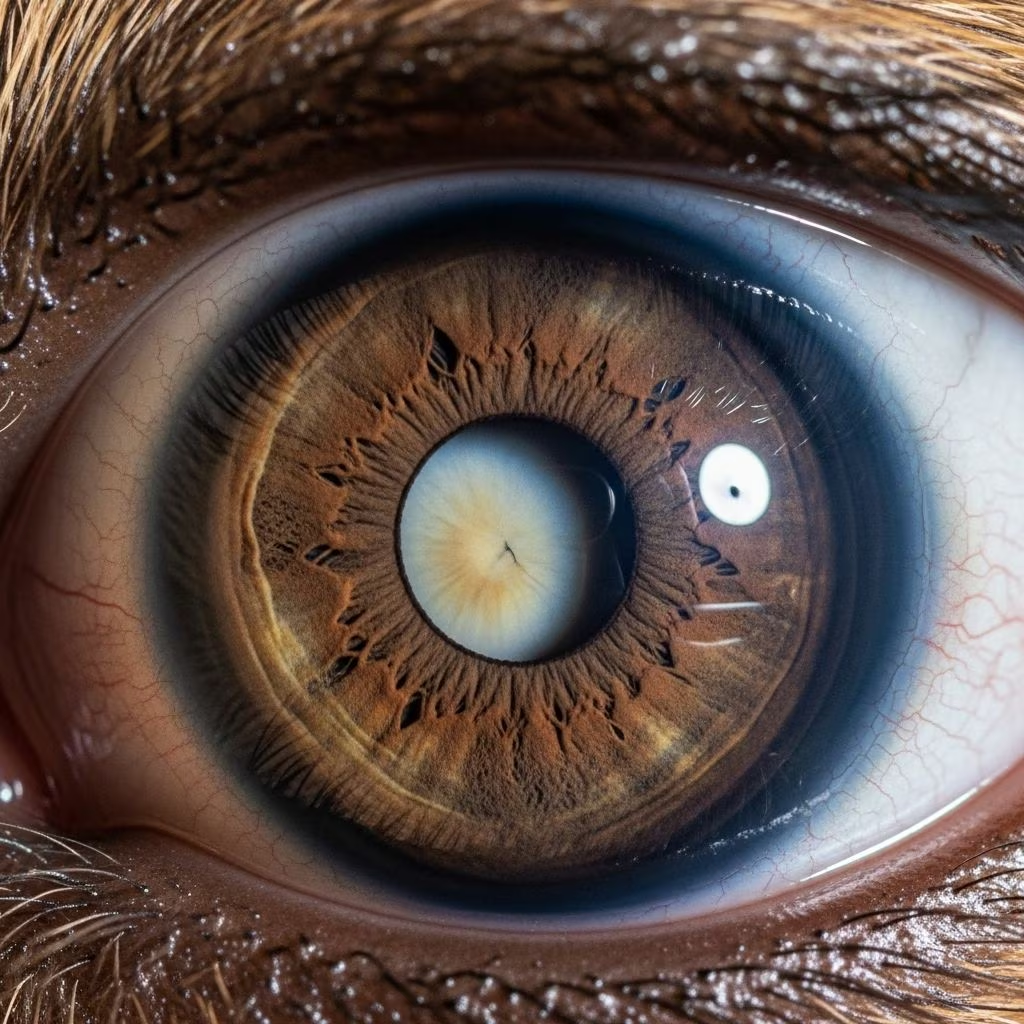
Optic nerve colobomas represent a congenital anomaly in animals, characterized by incomplete closure of the embryonic optic fissure, resulting in missing tissue within the optic nerve head. This defect disrupts the transmission of visual signals from the retina to the brain, potentially leading to varying degrees of vision impairment in dogs and cats. While not curable, early detection and tailored management can significantly improve affected pets’ quality of life.
Understanding the Anatomy and Development of the Optic Nerve
The optic nerve serves as the vital conduit for visual information, comprising over a million axons from retinal ganglion cells that relay images to the brain. In embryonic development, around weeks 5-7 of gestation in mammals, the optic fissure must fully close to form a seamless structure. Failure here creates a coloboma—a keyhole-shaped gap typically located inferiorly in the optic disc.
In pets, this malformation manifests as a bowl-shaped excavation with sharp edges, distinguishing it from progressive conditions like glaucoma. Unlike human counterparts, veterinary cases often appear in specific breeds, highlighting genetic underpinnings. The excavation may involve peripapillary sclera, choroid, and retina, altering the nerve’s structural integrity and fluid dynamics.
Common Breeds Affected and Genetic Factors
Certain dog breeds show higher incidence due to hereditary traits. Breeds like Australian Shepherds, Collies, Labrador Retrievers, and Shetland Sheepdogs frequently present with optic nerve colobomas, often linked to merle coat color genetics. The merle gene mutation disrupts neural crest cell migration, impairing ocular development. Cats, though less commonly documented, may exhibit similar issues in breeds like Siamese or those with white coat patterns.
- Australian Shepherds: High risk from double merle breeding, leading to bilateral colobomas and associated microphthalmia.
- Collies: Classic presentation with inferior disc excavation and potential retinal involvement.
- Labrador Retrievers: Occasional unilateral cases with milder vision effects.
- Shetland Sheepdogs: Frequently paired with iris colobomas, compounding photophobia.
Genetic counseling for breeders is crucial; avoiding matings of two merle carriers reduces incidence by over 90%. Environmental teratogens like maternal infections during pregnancy may contribute, though genetics dominate.
Recognizing Clinical Signs in Dogs and Cats
Symptoms vary by coloboma size and location but commonly include reduced visual acuity, blind spots (scotomas), and peripheral field defects. Pets may bump into furniture, hesitate on stairs, or show reluctance in low-light conditions. Nystagmus—involuntary eye oscillations—affects up to 30% of cases, complicating visual fixation.
| Symptom | Dogs | Cats | Impact |
|---|---|---|---|
| Blurry Vision | Common in bilateral cases | Frequent with optic pit involvement | Depth perception loss |
| Blind Spots | Upper field defects | Central scotomas | Navigation challenges |
| Light Sensitivity | Mild if isolated | Severe with iris co-involvement | Squinting in bright light |
| Nystagmus | 33% prevalence | Less common | Head tilting for compensation |
Owners often notice signs by 8-12 weeks of age during weaning, as puppies or kittens explore. Strabismus (misaligned eyes) or anisocoria (unequal pupils) may accompany, signaling broader ocular involvement. In severe spectra like morning glory disc anomaly or peripapillary staphyloma, central vision plummets, risking legal blindness (20/200 or worse).
Diagnostic Approaches for Veterinary Confirmation
Veterinary ophthalmologists employ multimodal imaging for precise diagnosis. Fundoscopic examination reveals the characteristic excavated disc, often decentered inferiorly without central glial tuft—key differentiators from optic pits or papilledema.
- Optical Coherence Tomography (OCT): Visualizes retinal thinning and subretinal fluid, essential for maculopathy detection.
- Ultrasound B-Scan: Assesses excavation depth and posterior staphyloma.
- Electroretinography (ERG): Evaluates retinal function, ruling out detachment risks.
- Visual Evoked Potentials (VEP): Quantifies optic nerve conduction deficits.
Slit-lamp biomicroscopy checks for concurrent iris or lens colobomas. Genetic testing for merle alleles confirms hereditary etiology in at-risk breeds. Differential diagnoses include colobomatous cysts, retinal dysplasia, or congenital glaucoma, necessitating comprehensive pupillary light reflex and menace response tests.
Potential Complications and Associated Risks
Beyond primary vision loss, complications arise from structural weaknesses. Serous retinal detachment occurs in 10-20% of cases, with subretinal fluid leaking from peripapillary sources into the macula, causing transient blurring. Retinal tears or rhegmatogenous detachment heightens in extensive colobomas involving choroid absence.
Amblyopia (lazy eye) develops in 33% of unilateral cases due to suppressed input from the defective eye. Microphthalmia or anophthalmia coexists in severe syndromes like CHARGE, amplifying neurological deficits. Long-term, glaucoma risk elevates from altered aqueous dynamics, demanding intraocular pressure monitoring.
Systemic associations include feline leukemia virus in cats or PAX6 mutations in dogs, warranting full panels. Transient vision fluctuations from disc contractions underscore the need for serial exams.
Veterinary Treatment and Management Strategies
No surgical cure exists for the core defect, but interventions mitigate secondary issues. Laser photocoagulation seals leakage points in serous maculopathy, preserving central vision. Cryotherapy ablates peripheral detachments, while vitrectomy addresses vitreoretinal traction.
Supportive care emphasizes environmental adaptation:
- Consistent home layouts to memorize obstacle positions.
- Bright, glare-free lighting for photophobic pets.
- Harness training over collars to aid mobility.
- High-contrast toys and feeding stations.
Anti-inflammatory drops manage episodic uveitis. Prosthetic tinted lenses reduce iris-related glare in co-affected cases. Regular ophthalmology rechecks—every 6 months—track progression, with antioxidants like lutein supporting retinal health.
Living with an Optic Nerve Coloboma: Daily Care Tips
Pets adapt remarkably via heightened senses. Enrich environments with scent markers and textured paths. Avoid sudden rearrangements; use verbal cues for orientation. For working breeds like herding dogs, retrain to auditory commands, maintaining purpose without visual reliance.
Nutritional supplements with omega-3s and vitamin A bolster nerve resilience. Monitor weight to prevent joint strain from altered gait. Emotional support via puzzle feeders combats boredom-induced anxiety. Many coloboma pets thrive as companions, with vision loss rarely curtailing affection or play.
FAQs About Optic Nerve Colobomas in Pets
Is optic nerve coloboma painful for my pet?
Typically painless unless complicated by detachment or glaucoma, which causes redness and tearing.
Can coloboma worsen over time?
The primary defect is static, but secondary retinal issues may progress without intervention.
Should I breed a dog with coloboma?
No, especially merle carriers; spay/neuter prevents hereditary transmission.
How do I test my puppy’s vision at home?
Observe menace response (blink to threat), obstacle navigation, and pupil reactions in dim light.
What’s the prognosis for vision?
Varies: mild cases retain functional sight; severe ones lead to blindness, but pets compensate well.
Prevention Through Responsible Breeding Practices
Eradicate hereditary colobomas via genetic screening. Breed registries advocate merle dilution limits. Prenatal care—folic acid supplementation and toxin avoidance—lowers sporadic risks. Public education on coat color pitfalls empowers owners.
Research into gene therapies, like CRISPR editing of PAX6 loci, promises future cures. Veterinary trials monitor longitudinal outcomes, refining protocols.
References
- Optic Nerve Coloboma Spectrum — EyeWiki (American Academy of Ophthalmology). 2023-10-15. https://eyewiki.org/Optic_Nerve_Coloboma_Spectrum
- Optic Nerve Coloboma — StatPearls (NCBI Bookshelf, NIH). 2023-07-17. https://www.ncbi.nlm.nih.gov/books/NBK532877/
- Coloboma — All About Vision. 2024-05-22. https://www.allaboutvision.com/conditions/coloboma/
- Understanding Coloboma Eye: Symptoms, Causes, and Treatments — Northwest Eye Clinic. 2023-11-08. https://nweyeclinic.com/understanding-coloboma-eye-symptoms-causes-and-treatments/
- What Is a Coloboma? Types, Symptoms, and Treatments — WebMD. 2024-02-14. https://www.webmd.com/eye-health/what-is-a-coloboma



