

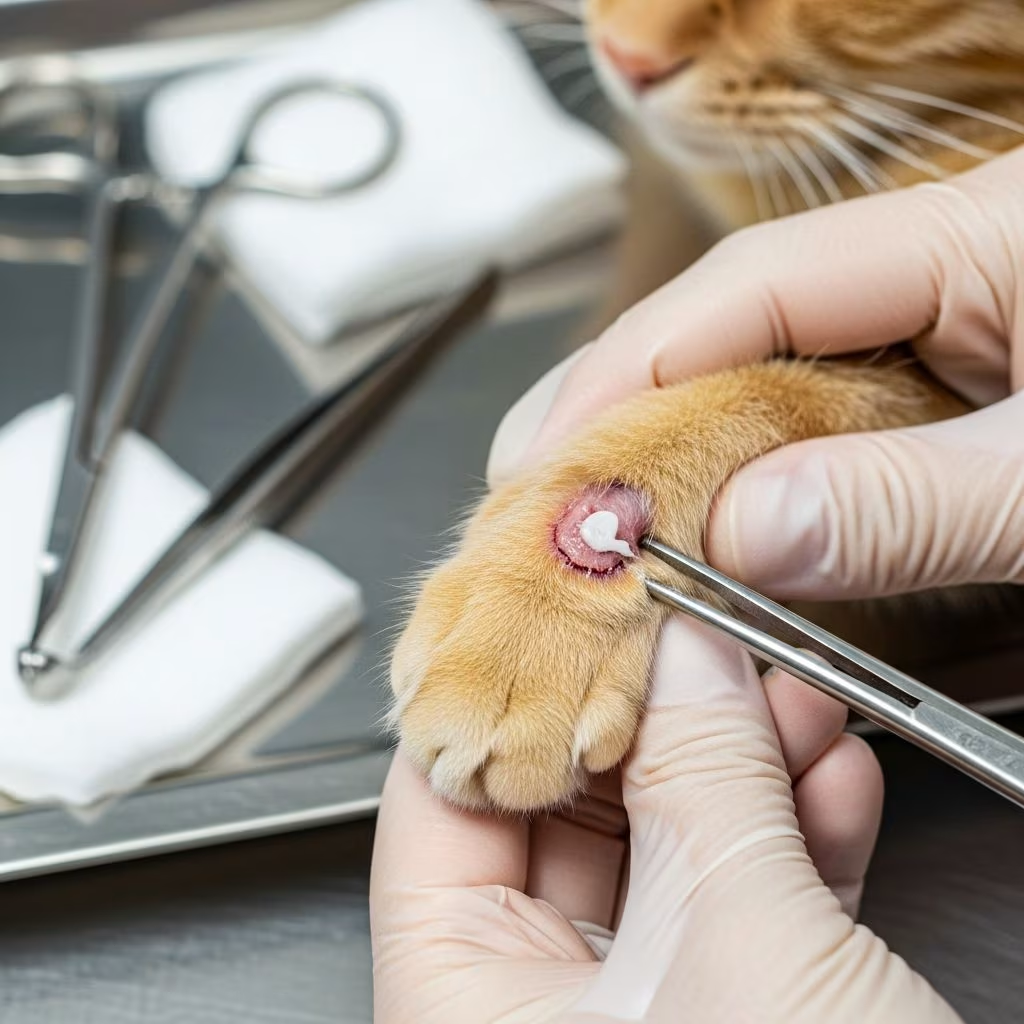
Understanding Open Wounds in Cats
Open wounds in cats can result from various incidents including fights with other animals, accidents, falls, or trauma. While some wounds may appear minor, proper care is essential to prevent infection and promote healing. Understanding how to manage your cat’s wound at home and knowing when professional veterinary care is necessary can significantly impact the outcome and recovery time.
Initial Assessment and Emergency Response
When you discover an open wound on your cat, the first priority is to remain calm and assess the severity. Contact your veterinarian immediately, as each type of wound requires specific first aid measures tailored to its depth, location, and contamination level. Your veterinarian will provide guidance on whether the wound needs immediate professional treatment or can be managed at home with careful monitoring.
Determining Wound Severity
Evaluating the seriousness of your cat’s wound involves examining several factors. Look at the wound’s depth, size, and location. Wounds that are deep, bleeding profusely, located on sensitive areas like the face or eyes, or those showing signs of bone or internal organs require immediate emergency veterinary attention. If your cat’s wound requires stitches, a cast, or surgery, take your cat to the nearest emergency veterinary clinic without delay.
Managing Bleeding
Stopping bleeding is typically the first step in wound care. If your cat’s wound is bleeding, you should attempt to control it by applying direct pressure with absorbent dressing, such as dry gauze, followed by a layer of bandage material or a clean, dry cloth. These protective layers will help stop bleeding during transport to the veterinary clinic and prevent further contamination of the injury.
Techniques for Controlling Hemorrhage
When applying pressure to the wound, maintain firm, steady contact for approximately 10 to 15 minutes to allow a blood clot to form. If possible, try to raise the affected area above the level of the heart to help reduce blood flow to the bleeding site. Do not remove the initial dressing to check if bleeding has stopped; instead, add additional layers if blood soaks through. If bleeding continues despite these efforts or if you cannot achieve hemostasis within 15 minutes, seek emergency veterinary care immediately.
Cleaning and Preparing Wounds
Recommended Cleaning Solutions
Warm tap water is the recommended solution for cleaning most feline wounds. Warm saline, or salt solution, may also be used effectively. You can prepare saline at home by adding approximately one level teaspoon (5 mL) of salt or Epsom salt to two cups (500 mL) of water. In some cases, your veterinarian may recommend using a dilute cleansing solution of chlorhexidine, a surgical soap, or an iodine solution to help remove debris and bacteria from the wound.
What NOT to Use on Open Wounds
It is critically important to avoid certain substances when cleaning open wounds. Do not use soaps, shampoos, rubbing alcohol, hydrogen peroxide, herbal preparations, tea tree oil, or any other product to clean an open wound unless specifically instructed by your veterinarian. Some of these products are toxic if taken internally by your cat during grooming, while others can delay healing or damage delicate tissue formation. Additionally, do not apply ointments, creams, disinfectants, or other chemicals to the wound unless directed by your veterinarian, as they can interfere with the natural healing process.
Professional Wound Treatment Options
Surgical Closure
Wherever possible, a veterinarian will close and suture a wound to speed healing. However, if there is gross contamination or deep infection present, the wound will be left open for topical treatment and to ensure proper drainage. Your veterinarian may need to anesthetize your cat to remove foreign material and dead tissue from the wound—a process called surgical debridement. This step is particularly important for contaminated wounds that are more than a few hours old, as closing such wounds without proper cleaning can result in serious complications.
Treatment for Abscesses
Abscesses, which are collections of pus from infection, may be lanced and cleaned under heavy sedation or anesthesia. A latex drain will typically be placed to prevent the wound from closing too quickly and to allow proper drainage while preventing further buildup of infection. This drainage system is essential for ensuring the infection resolves completely.
Why Some Wounds Are Left Open to Heal
Sometimes, the wound location or the amount of skin loss prevents surgical closure or bandaging. For example, wounds on the face or high on the leg may be left open intentionally. Puncture wounds or other trauma can force bacteria deep into the tissues. A contaminated wound that is more than a few hours old should never be closed without surgical debridement because trapping bacteria inside can lead to serious systemic infection. In some cases, closing the wound may result in more permanent damage than treating the wound medically and leaving it open to heal through a process called healing by second intention.
Bandaging and Protective Care
If your cat’s wound cannot be surgically closed, your veterinarian may apply a protective bandage when possible. For wounds left open to heal, daily bandage changes may be required. Your veterinarian will demonstrate the proper technique for changing bandages to ensure you can maintain the wound properly at home. Protect the bandaged area from moisture and contamination, and watch for signs of slipping or soiling that would require replacement.
Preventing Self-Trauma
Cats often lick or chew at their wounds, which can cause serious complications. Do not allow your cat to lick or chew the open wound. Some cats require a protective collar, known as an Elizabethan collar or e-collar, to prevent them from injuring the site. Other protective options, depending on the location of the wound, include covering the wound with a bandage, a stockinette, a cat coat, or a t-shirt. Your veterinarian will recommend the most appropriate option for your cat’s specific situation.
Home Care and Maintenance
Daily Wound Care Routine
Gently clean the wound and surrounding area daily to remove any debris. This maintenance will keep the wound edges clean, reduce the potential for re-infection, and allow new healthy tissue to develop. When cleaning the wound, gently massage the surrounding skin to open the wound and promote drainage. You may see some discharge or bleeding when you do this—this is normal. Make note of whether the discharge is thick or colored (which may indicate infection) or a clear, thin fluid (which suggests healthy healing). Remove any discharge or allow it to drain away naturally.
Monitoring for Infection
Pay close attention to the nature of the drainage. If the discharge continues to be bloody, green, or yellow for several consecutive days, contact your veterinarian for instructions. These color changes may indicate infection or improper healing. Additionally, watch for increased swelling, warmth around the wound, foul odor, or signs of pain or discomfort in your cat.
Medication Administration
Antibiotic Treatment
Your veterinarian may prescribe antibiotics or antibiotic cream to apply to the wound. Administer all medications as prescribed without exception. Do not discontinue antibiotics for any reason unless you have been explicitly instructed to do so by your veterinarian. Stopping antibiotics prematurely can allow bacteria to proliferate and create more serious infection or antibiotic resistance.
Pain Management and Healing Support
Pain medication may be prescribed for your cat’s comfort and to support the healing process. Controlling pain can help your cat rest properly and reduce stress-related behaviors that might interfere with wound healing. No topical treatments should be used unless specifically directed by your veterinarian, as some seemingly harmless chemicals can damage tissues and delay healing.
Advanced Wound Healing Therapies
Modern veterinary medicine has introduced advanced techniques for treating complex open wounds. Negative pressure wound therapy (NPWT) has shown significant promise in increasing the healing rate of open wounds in cats. This specialized therapy can be particularly effective for extensive trauma, polytrauma cases, chronic non-healing wounds, and burns. Research indicates that NPWT significantly reduces the time to wound closure compared to traditional interactive dressings. While availability varies by location, this therapy represents an important option for challenging cases that your veterinarian may recommend.
Preventing Early Wound Closure
For certain types of open wounds being treated medically, preventing premature closure is important to ensure complete healing from the inside out. Your veterinarian will guide you on techniques to maintain proper wound openness. Regular gentle cleaning and massage, as described above, helps maintain proper drainage and prevents the wound edges from sealing too quickly while infection or debris remains inside.
When to Seek Veterinary Care
Contact your veterinarian immediately if you notice any of the following: bleeding that does not stop after 15 minutes of pressure, signs of deep infection such as fever or lethargy, discharge that becomes increasingly thick or colored, increasing swelling or warmth, foul odor from the wound, or if your cat shows signs of pain, limping, or behavioral changes. Do not wait to see if these signs resolve on their own, as prompt treatment can prevent serious complications.
Frequently Asked Questions
Q: How often should I clean my cat’s open wound?
A: Your veterinarian will provide specific instructions based on the wound type and severity. Many open wounds benefit from daily cleaning, though some may require more frequent care. Follow your veterinarian’s recommendations precisely for optimal healing.
Q: Can I use hydrogen peroxide to clean my cat’s wound?
A: No, hydrogen peroxide is not recommended for open wounds unless specifically directed by your veterinarian. It can delay healing and damage healthy tissue. Warm tap water or saline solution are the preferred cleaning solutions.
Q: How long does it take for a cat’s open wound to heal?
A: Healing time varies significantly depending on wound size, depth, location, and whether it was surgically closed or left open. Minor wounds may heal within 7-10 days, while more serious wounds can take several weeks. Your veterinarian can provide a more specific timeline for your cat’s situation.
Q: Is it normal for my cat’s wound to have discharge?
A: Some discharge is normal during healing, particularly clear or light fluid. However, thick, colored, or foul-smelling discharge may indicate infection and requires immediate veterinary attention.
Q: What should I do if my cat removes their bandage?
A: If the bandage is only slightly soiled or loosened, you may re-apply it using clean technique or contact your veterinarian for guidance. If the bandage is significantly damaged or contaminated, contact your veterinarian, as you may need to bring your cat in for professional bandage replacement to prevent infection.
Q: Can I apply over-the-counter wound ointments to my cat’s open wound?
A: No, unless specifically prescribed by your veterinarian. Many common wound ointments can interfere with healing or be harmful to cats if ingested during grooming. Always check with your veterinarian before applying any topical product.
References
- Care of Open Wounds in Cats — VCA Animal Hospitals. 2025. https://vcahospitals.com/know-your-pet/care-of-open-wounds-in-cats
- Filling the Vacuum: Role of Negative Pressure Wound Therapy in Small Animal Wounds — National Center for Biotechnology Information. 2021. https://pmc.ncbi.nlm.nih.gov/articles/PMC8392764/
- Wound Management — Merck Veterinary Manual. 2025. https://www.merckvetmanual.com/special-pet-topics/emergencies/wound-management
- Cat Wound Care 101: The Complete Guide — PetVet Care Centers. 2022. https://www.petvetcarecenters.com/site/blog/2022/05/15/cat-wound-care-101-complete-guide



