

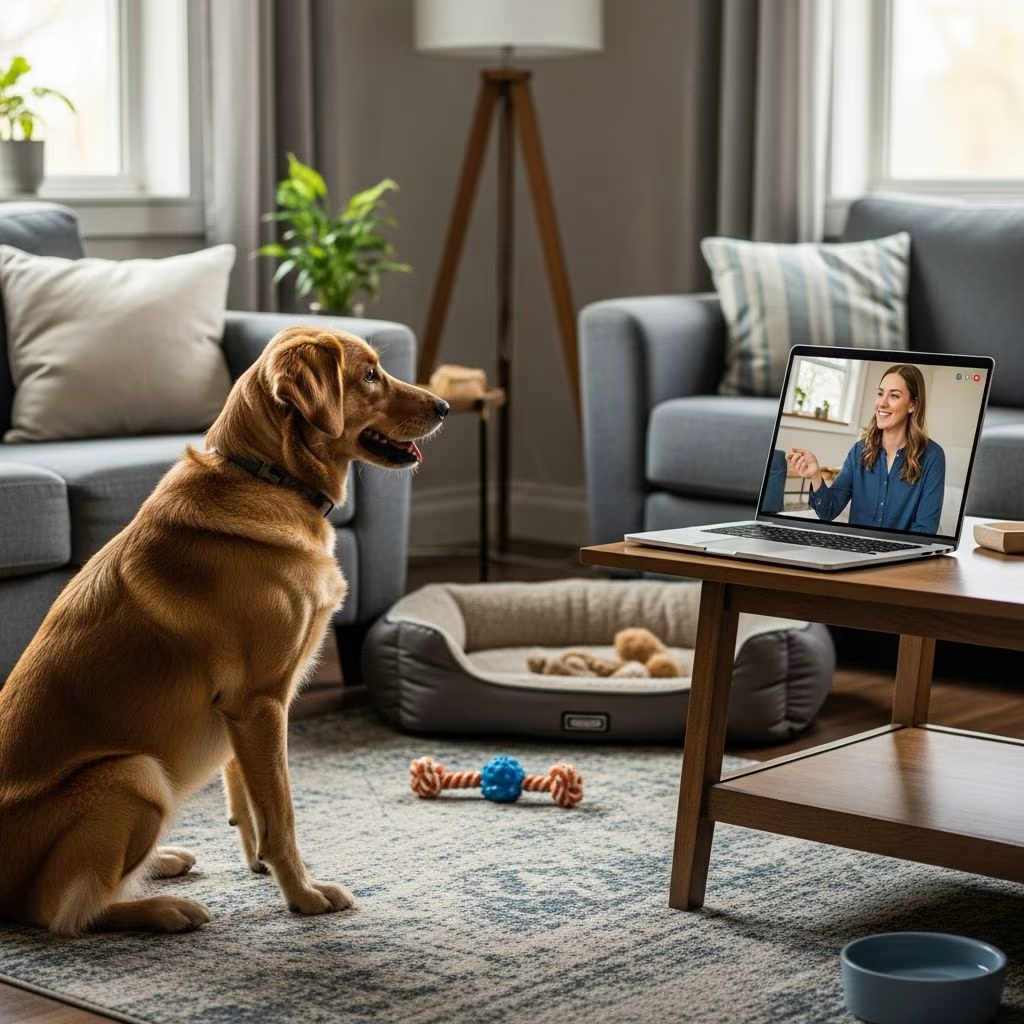
Separation anxiety can turn every departure from home into a stressful event for both you and your dog. Online separation-anxiety coaching has emerged as a powerful, humane way to help dogs learn that being alone is safe, using individualized plans delivered virtually.
What Is Online Separation Anxiety Coaching?
Online separation anxiety coaching is a form of virtual dog training where a certified trainer works with you remotely to help your dog feel calm when left alone. Instead of visiting your home, the trainer connects via video platforms, observes your dog in real time, and builds a customized training protocol for gradual alone-time practice.
Unlike general obedience classes, these programs focus specifically on:
- Reducing your dog’s fear and panic when you leave
- Teaching your dog that absences are predictable, safe experiences
- Guiding you step by step so you know exactly what to do each day
This approach is grounded in behavior modification methods such as systematic desensitization and counterconditioning, which are widely recommended in veterinary behavior research for separation-related problems.
Why Trainers Are Moving Online for Separation Anxiety
Many trainers who specialize in separation anxiety now work almost exclusively online. This shift is not just about convenience; it solves several core challenges in treating this condition.
1. Real-Time Observation in a Natural Environment
Separation anxiety occurs when the dog is alone, not when a stranger (like a trainer) is present. In-person visits can distort what the dog would actually do when left solo. Online coaching allows the trainer to:
- Watch live video of your dog as you step outside for controlled absences
- See early, subtle signs of stress such as pacing, yawning, lip-licking, or whining
- Adjust the training plan instantly when your dog looks worried or relaxed
Real-time observation makes it easier to keep sessions below your dog’s stress threshold, which is essential for effective desensitization.
2. Avoiding the Disruption of a Visitor
For a dog who panics when left alone, simply having another person in the home can change their behavior. Bringing a professional into the environment might:
- Distract or excite the dog, masking true anxiety levels
- Create an artificial situation that doesn’t reflect normal departures
Online coaching removes this variable so the trainer can see your dog’s genuine reaction to your absence.
3. Efficient Use of Time and Energy
Virtual sessions allow trainers to:
- Work with clients in different cities or countries
- Schedule shorter, more frequent check-ins as needed
- Review and annotate recorded video clips in between live sessions
This creates flexibility for you and provides more continuous support over the weeks or months that separation-anxiety training often requires.
How Online Separation Anxiety Training Works Day to Day
Although every coaching program is tailored to the individual dog, most follow a similar structure grounded in evidence-based behavior modification.
Initial Assessment and Baseline
The process usually begins with an in-depth assessment. Your trainer will typically:
- Gather history about your dog’s behavior, routine, health, and environment
- Ask for or conduct a short monitored absence to see how your dog responds
- Identify your dog’s threshold—the maximum time they can be left alone without showing anxiety
For some dogs, this threshold might be only a few seconds at first. Starting at or below that threshold is critical for preventing setbacks.
Building a Customized Training Plan
After establishing a baseline, the trainer designs an individualized plan focused on systematic desensitization—a gradual increase in alone time that stays within your dog’s comfort zone.
A typical plan may include:
- Daily or near-daily training sessions where you leave for carefully timed intervals
- Clear instructions on when to leave, when to return, and how to track progress
- Adjustments to cues (like picking up keys or putting on shoes) so they no longer trigger panic
Many online coaches provide shared documents or spreadsheets outlining each day’s steps. This helps you stay organized and avoid guessing or pushing too fast.
Using Video and Technology
Video is central to online separation-anxiety coaching. You might:
- Set up a laptop, tablet, or camera pointing at your dog before you leave
- Use a video-call app so the trainer can watch live while you step outside
- Share recorded videos between sessions for detailed review of your dog’s body language
Trainers can pause, replay, and zoom in on moments where your dog shows early signs of stress. This makes it easier to adjust the training plan and helps you learn to recognize subtle signals—before anxiety escalates to barking, howling, or destruction.
Tracking Progress and Making Adjustments
One of the advantages of online coaching is the ability to adapt swiftly based on your dog’s responses. Over time, you and your trainer will:
- Monitor how long your dog remains relaxed during absences
- Gradually stretch that duration as your dog succeeds
- Scale back temporarily if your dog struggles on a particular step
Research on separation-related problems consistently supports gradual increases in absence length while avoiding situations that push the dog into full-blown panic.
Why Online Coaching Is Especially Suited to Separation Anxiety
Separation anxiety is a unique behavior problem because it appears only when the dog is alone. Online coaching aligns particularly well with this challenge.
| Aspect | In-Person Training | Online Separation-Anxiety Coaching |
|---|---|---|
| Observation | Trainer is physically present, which can change the dog’s behavior | Trainer watches dog alone via video, capturing true anxiety patterns |
| Environment | Dog may focus on visitor instead of owner’s absence | Dog is in normal home setting with only household members |
| Flexibility | Fewer sessions due to travel and scheduling limits | More frequent, shorter touchpoints and easy plan updates |
| Owner Involvement | Trainer may handle more of the hands-on work during visits | Owner becomes primary trainer, increasing consistency at home |
Creating an Individualized Separation Anxiety Plan
No two dogs share exactly the same history, household, or stress signals. An effective online program tailors the plan to your dog’s specific needs, pace, and personality.
Finding Your Dog’s Starting Point
Your dog’s starting point—sometimes just seconds of calm alone time—sets the foundation for the entire protocol. To find it, you and your trainer will typically:
- Set up a camera to watch your dog when you step out of the door
- Time how long your dog remains relaxed before showing any concern (e.g., moving to the door, pacing, whining)
- Use that duration as the first training interval, or even a bit shorter, to ensure success
From there, the plan incrementally increases absence time. A dog who starts at 10 seconds might gradually work up to 30 seconds, then a minute, then several minutes, and eventually longer periods.
Ensuring Safety and Managing Real-Life Absences
During active treatment, many trainers recommend avoiding leaving the dog alone beyond their current tolerance outside training sessions. This prevents big setbacks and protects welfare.
Common management strategies include:
- Arranging pet sitters, friends, or family to stay with your dog
- Bringing your dog to work when possible
- Using daycare for dogs who are comfortable in that setting (and not more stressed)
Meanwhile, the training sessions are structured and brief, gradually building toward the length of absence needed for daily life.
Focusing on Calm, Not Just Quiet
Effective separation-anxiety plans focus on your dog’s emotional state, not just whether they make noise. A dog may be silent but extremely distressed. Trainers look for signs of genuine relaxation, such as:
- Settling on a bed or mat
- Loose body posture instead of tense muscles
- Normal breathing and engagement with toys or chews
By prioritizing calm, the training helps your dog truly feel safe alone, not merely appear quiet.
Behavior Science Behind Online Separation Anxiety Training
Online coaching for separation anxiety is not a shortcut or gimmick; it applies established behavior science using modern communication tools.
Systematic Desensitization and Counterconditioning
Veterinary behaviorists consistently highlight systematic desensitization—gradually increasing exposure to being alone without triggering fear—as a core treatment for separation-related problems. This is often paired with counterconditioning, which changes the dog’s emotional response by pairing alone time with positive experiences (such as food or calm routines).
Key principles include:
- Starting at levels of exposure that do not cause anxiety
- Progressing in very small, manageable steps
- Never forcing the dog to “tough it out” through full-blown panic
Online programs are well suited to this method because trainers can carefully calibrate each step via live or recorded video feedback.
Owner-Led, Trainer-Guided Approach
In practice, you become your dog’s main trainer, with professional guidance on what to do and when. Research suggests that behavior-modification programs implemented by owners can be effective when instructions are clear and structured, especially for separation-related problems.
Virtual coaching supports this by:
- Breaking down complex treatment plans into clear, daily actions
- Offering ongoing support and troubleshooting
- Helping you stay consistent, which is critical to success
The Role of Veterinary Support
Some dogs with severe separation anxiety may benefit from a combined approach of behavior modification and veterinary-prescribed medication, especially in the early stages. Medication does not replace training but can reduce overall anxiety, making it easier for the dog to learn.
Good online trainers will often recommend that you consult your veterinarian or a board-certified veterinary behaviorist if:
- Your dog’s distress is intense or long-lasting
- Your dog is at risk of self-injury or destroying the home
- Previous training attempts have not improved the problem
Broader Benefits: Confidence Beyond Being Alone
Helping a dog overcome separation anxiety often leads to improvements in other fearful or reactive behaviors. As your dog learns that one major source of fear (being alone) is predictable and safe, their overall resilience can grow.
Owners commonly report that, over time, dogs:
- Startle less at household noises or unexpected sounds
- Recover more quickly from everyday stressors
- Show more relaxed body language in new situations
This is consistent with the idea that reducing chronic anxiety in one area can have positive ripple effects on a dog’s general emotional well-being.
Is Online Separation Anxiety Coaching Right for You and Your Dog?
Online coaching can be an excellent option if:
- Your dog shows clear signs of stress when left alone, such as barking, howling, destruction, or attempts to escape
- You are willing to commit to regular, structured training sessions
- You can arrange temporary alternatives so your dog is not frequently pushed beyond their limit outside of training
- You are comfortable using basic technology like video calls and recording devices
While there is no overnight cure, many guardians find virtual programs more convenient, precise, and sustainable than traditional in-person approaches for this specific issue.
Frequently Asked Questions (FAQs)
Q: How long does online separation anxiety training usually take?
A: The timeline varies widely. Some dogs may improve within a few months, while others need longer. Progress depends on the severity of anxiety, how strictly you can avoid stressful absences, and how consistently you follow the plan. Because treatment is based on gradual desensitization, it is measured in small, steady gains rather than quick fixes.
Q: Do I need special equipment for online coaching?
A: You generally need a reliable internet connection, a device with a camera (such as a laptop, tablet, or phone), and a way to position it so your dog is visible while you leave. Some owners also use pet cameras for recording or live monitoring, but simple setups are often enough.
Q: Can treats or toys alone fix my dog’s separation anxiety?
A: Food-stuffed toys or chews can be helpful, but for true separation anxiety they are rarely sufficient on their own. Many anxious dogs are too stressed to eat once their guardian leaves. Research supports structured behavior modification—especially systematic desensitization—as the main treatment, sometimes supplemented by medication and environmental management.
Q: Is punishment ever helpful for separation anxiety?
A: No. Punishing a dog for behaviors linked to panic or fear (such as barking or chewing during absences) can increase anxiety and damage trust. Veterinary behavior guidelines strongly advise against punishment for separation-related problems, recommending positive, fear-free methods instead.
Q: What if I work full-time and can’t avoid leaving my dog alone?
A: Many people in this situation combine training with creative management: arranging sitters, dog-friendly workplaces, or help from friends and family. A qualified online coach can help you design a realistic plan that acknowledges your schedule while still protecting your dog’s emotional welfare and allowing gradual progress.
References
- Separation Anxiety in Dogs—What to Do About It — Kinship. 2023-05-10. https://www.kinship.com/dog-behavior/separation-anxiety-in-dogs
- Canine separation anxiety: strategies for treatment and management — Casey RA et al., Irish Veterinary Journal. 2014-09-19. https://pmc.ncbi.nlm.nih.gov/articles/PMC7521022/
- Online Coaching Could Be the Solution for Your Dog’s Separation Anxiety — Kinship. 2022-08-15. https://www.kinship.com/dog-behavior/online-dog-training-separation-anxiety
- Separation Anxiety in Dogs: How To Stop Dog Barking When Left Alone — Adopt a Pet. 2023-02-14. https://www.adoptapet.com/blog/behavior-training/separation-anxiety-dogs
- How to Ease Your Dog Into Alone Time Without Stress — Kinship (YouTube/Article). 2023-04-01. https://www.youtube.com/watch?v=uWY5aqBNTOQ



