

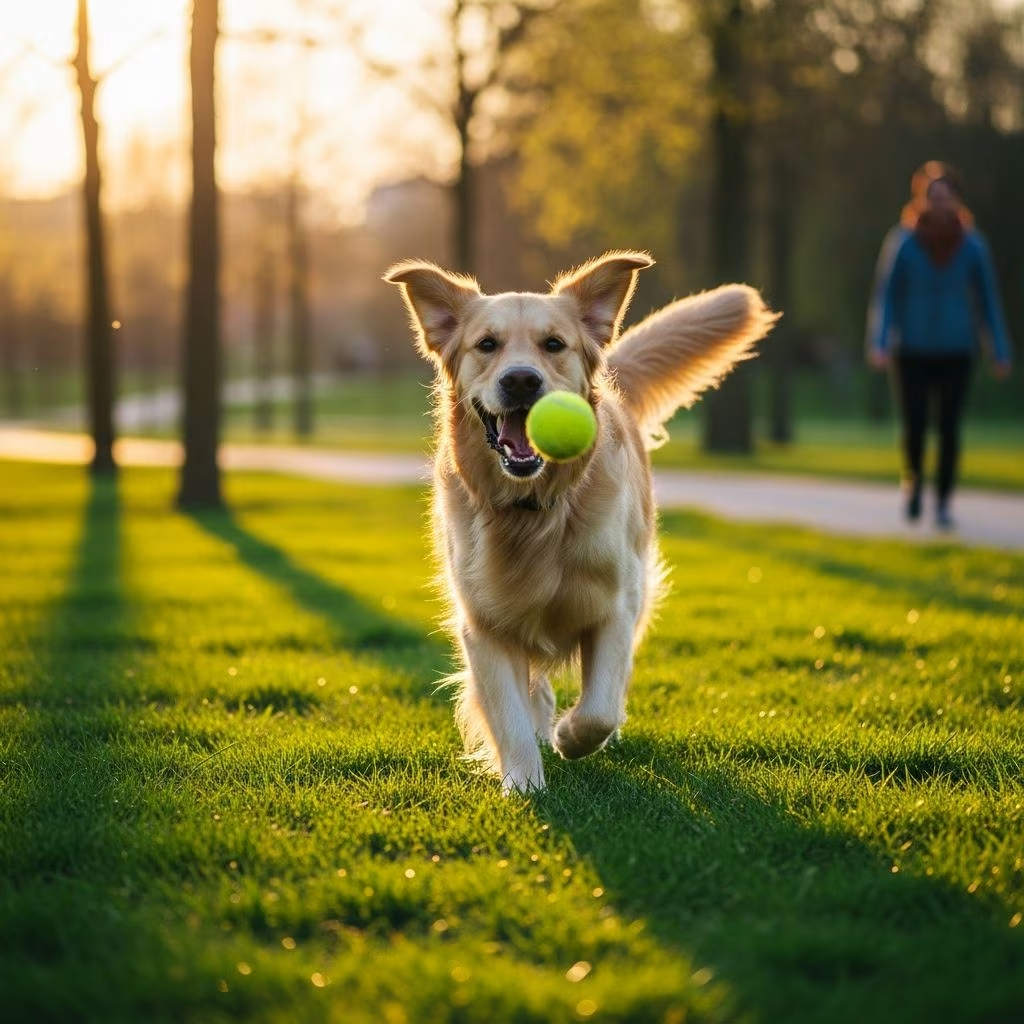
Teaching your dog to come when called is one of the most important skills you can train. A reliable recall keeps your dog safe, gives them more freedom, and strengthens your bond. The good news: with one simple, reward-focused trick — and a bit of practice — you can turn coming when called into your dog’s favorite habit.
Why a Strong Recall Matters So Much
Recall (your dog coming immediately when you call) is more than just a party trick. It is a life-saving safety skill that can protect your dog from traffic, loose dogs, wildlife, and other hazards. A well-trained recall also means you can safely enjoy off-leash time in appropriate, legal areas.
Animal welfare organizations emphasize recall as a core behavior for safe off-leash privileges and responsible ownership, because it lets guardians call dogs away from dangerous situations quickly.
- Safety: Call your dog away from roads, conflicts with other dogs, or hazardous objects.
- Freedom: More opportunities for off-leash exercise where it is allowed and safe.
- Better behavior: Dogs with strong recall are easier to manage around distractions.
- Stronger bond: Coming when called becomes part of a trusting relationship.
To get that level of reliability, you need more than just repeating their name. You need a clear cue, consistent rewards, and a training strategy built around positive reinforcement.
The Core Trick: Make Coming to You the Best Part of Their Day
The “secret” recall trick is simple: train your dog to believe that coming to you is always worth it. That means pairing your recall cue with rewards your dog truly loves, delivered quickly and generously.
Behavior science shows that behaviors followed by rewarding consequences become more frequent. This is the foundation of positive reinforcement training, where you reward desired behaviors to increase the chance your dog will repeat them.
Step-by-Step: The Basic Recall Game Indoors
Start in a quiet, low-distraction space, like your living room or hallway, so your dog can focus and win easily.
- Choose your recall cue.
- Use a word like “come,” “here,” or a cheerful phrase.
- Keep it short, clear, and only use it for recall.
- Load up on rewards.
- Prepare small, soft treats your dog loves, or a favorite toy.
- Have them ready in a pocket or treat pouch.
- Get your dog’s attention.
- Say their name once in a friendly tone.
- When they look at you, take a few steps backward.
- Give the cue while moving away.
- Say your recall word (“Come!”) one time.
- Move backward, clapping or patting your legs to invite them in.
- Reward generously as they arrive.
- As soon as they reach you, praise warmly.
- Deliver several treats in a row or a short play burst.
- Release them back to fun.
- Use a release word like “OK!” or “Free!” to let them go explore again.
- This teaches that coming to you does not always end the fun.
At this stage, reward every single successful recall. Early on, continuous reinforcement (a reward for every correct response) helps dogs learn new behaviors faster and creates a strong association between the cue and the reward.
Building a Rock-Solid Recall: From Easy to Challenging
Once your dog races toward you indoors, it’s time to strengthen the behavior using distance, distractions, and gradual changes in how often you reward.
Stage 1: Short-Distance, Low Distraction
Stay close and keep distractions low:
- Practice in different rooms of your home.
- Call your dog from a few steps away, then from the next room.
- Always reward quickly and generously.
Stage 2: Longer Distances and Mild Distractions
Now add more challenge without overwhelming your dog:
- Use a hallway or yard with a long line (a long leash) attached for safety.
- Let your dog wander, then call them once using your recall cue.
- If they hesitate, gently guide them with the long line, then reward when they arrive.
Using a long line outdoors lets you keep control while your dog learns to respond even when the environment is more interesting. Always pair coming to you with praise and something they want, so they build a positive recall habit.
Stage 3: Practicing Around Bigger Distractions
After success on a long line, gradually increase the difficulty:
- Practice in quiet parks before busy ones.
- Try recall when there are mild distractions (distant dogs, people, smells).
- Only move to a tougher situation after your dog is consistently successful at the easier level.
Avoid calling your dog if you suspect they will ignore you in a very distracting situation. Instead, move closer, shorten the line, or simply go get them.
Using Variable and Differential Rewards
As your dog becomes reliable, you can start to vary how often and how much you reward to keep the behavior strong and exciting:
| Training Phase | Reward Pattern | Goal |
|---|---|---|
| Early learning | Reward every recall | Teach the meaning of the cue |
| Intermediate | Reward randomly (some, not all recalls) | Keep recall exciting and durable |
| Advanced | Big rewards for the fastest, most enthusiastic recalls | Encourage quick, focused responses |
This kind of variable and quality-based reward schedule is a core strategy in positive-reinforcement training and helps maintain strong, reliable responses even when rewards are not provided every time.
The Magic Combo: Cue, Reward, and Release
A great recall is not just one word. It is a three-part routine your dog can understand clearly:
- Recall cue: The signal that means “run to me now.”
- Reward: The good stuff your dog gets for coming while the cue is still active.
- Release cue: The signal that means “you’re free to go back to what you were doing.”
Teaching a release cue helps your dog learn that coming to you does not always mean the fun is over, which makes them more willing to respond, especially outdoors.
Common Recall Mistakes (and How to Avoid Them)
Many people accidentally weaken their dog’s recall without realizing it. Avoid these frequent errors so your training stays strong.
1. Calling When You Cannot Enforce the Cue
If you repeatedly call your dog and they do not come — and nothing happens — your dog learns that your recall cue is optional. Instead:
- Use a long line until your dog is very reliable.
- Move closer if needed rather than repeating the cue.
- Set up training sessions in easier environments so they can succeed.
2. Using the Recall to End All the Fun
If “come” always means going home, losing playtime, or getting something unpleasant (like a bath or nail trim), your dog may start to avoid coming to you. To fix this:
- Call your dog, reward, and then release them back to play frequently.
- When you must end something fun, occasionally walk up to them quietly and clip the leash instead of calling.
- Pair recall with good things: treats, toys, or a chance to sniff something interesting.
3. Scolding a Dog After They Finally Come
If your dog is slow to respond and you react by yelling or punishing once they arrive, they learn that coming to you predicts something unpleasant. This can severely damage recall and your relationship. Instead:
- Always reward or at least warmly praise a dog who eventually comes, even if they were slow.
- Work later on why they were slow (too distracted, rewards too low, environment too hard) instead of punishing.
- Keep your recall cue paired only with positive outcomes.
4. Overusing Their Name as a Punishment
If your dog often hears their name followed by “no,” yelling, or corrections, their name can become associated with stress. Then, when you say their name before your recall cue, they may hesitate or avoid you. To prevent this:
- Use your dog’s name to mean “attention please,” not “you’re in trouble.”
- Pair their name with good things: treats, praise, play.
- Use a neutral word or sound for corrections instead of their name.
5. Moving Too Fast with Distractions
If you jump straight from living-room training to a busy dog park off leash, your dog is likely to fail. Success in recall training depends on gradual progression:
- Increase difficulty one step at a time: distance, distractions, new locations.
- Go back a step if your dog struggles.
- Think of recall as a long-term habit, not a quick fix.
Fun Recall Games to Keep Training Engaging
Making recall training playful and rewarding helps your dog stay excited to respond. Here are a few simple games that fit the same core trick.
Ping-Pong Recall (Two-Person Game)
- Two people stand 10–20 feet apart.
- Person A calls the dog using the recall cue, rewards when the dog arrives, then releases.
- Person B calls the dog next, rewards, and releases.
- Gradually increase the distance or move into different rooms or areas.
Hide-and-Seek Recall
- Hide behind a doorway, sofa, or tree.
- Call your dog once using your cue.
- When they find you, celebrate and reward with multiple treats or a short play session.
- This builds speed and enthusiasm, as seeking you out becomes a fun challenge.
Chase-and-Reward Game
- Call your dog, then jog or run a few steps away as they approach.
- Let them “catch” you and pay with treats or a tug toy.
- Use short bursts so your dog does not get overexcited or jumpy.
Short, playful sessions (just a few minutes at a time) done many times each week will keep your dog’s recall sharp and fun.
Adapting the Trick for Different Dogs
Every dog is an individual. The basic recall trick — make coming to you incredibly rewarding — stays the same, but you can customize the details.
- Food-motivated dogs: Use tiny, soft treats with high value (cheese, cooked meat, or commercial training treats).
- Toy-driven dogs: Reward with a quick game of tug or fetch when they arrive.
- Sniffing enthusiasts: Use a recall, reward, then release them back to sniff as their “jackpot.”
- Shy or anxious dogs: Keep your body language soft and inviting, and use calm praise plus gentle treats.
Understanding what your dog finds motivating is key. Research on dog learning and welfare consistently shows that rewards tailored to the animal’s preferences improve training outcomes and reduce stress.
How Recall Fits with Other Basic Cues
Recall becomes even more useful when it works alongside other basic cues like sit, stay, watch, and a release word. These skills work together to help you manage your dog in everyday situations.
- Watch: Teach your dog to look at your face when asked, so you can grab their attention before calling them.
- Sit: Ask for a sit when they arrive to prevent jumping and help them settle.
- Stay or wait: Use when you want your dog to pause before you call them or before releasing them.
- Release: Tell your dog when they are “off duty” and free to move again.
Combining these cues gives you a flexible toolkit to keep your dog safe, polite, and engaged at home and outdoors.
Frequently Asked Questions (FAQs)
Q: How long does it take to teach a reliable recall?
A: Many dogs learn the basics in a few weeks of consistent practice, but a truly reliable recall around heavy distractions can take months of gradual training. Plan on short, frequent sessions over the long term.
Q: Should I use a whistle for recall instead of a word?
A: You can. Whistles produce a clear, consistent sound that can carry farther than your voice. The training process is the same: pair the whistle with great rewards until your dog learns it means “come to me now.”
Q: What if my dog ignores me at the park?
A: Go back a step in difficulty. Use a long line for safety, move to a quieter area, and practice with higher-value rewards. Avoid calling if you know your dog will ignore you; instead, get closer and rebuild the habit with easier wins.
Q: Can older dogs learn to come when called, or is recall just for puppies?
A: Dogs of any age can learn recall. Adult and senior dogs may have longer-established habits, but positive reinforcement and patient, step-by-step training work at all life stages.
Q: Do I always have to use food to reward recall?
A: Food is very effective, especially early on, but you can also use play, praise, access to sniffing, or other activities your dog loves. Over time, you can vary rewards and sometimes use life rewards like being allowed to go back to play.
References
- Eight Basic Training Commands to Teach Your Dog — Kinship. 2020-09-15. https://www.kinship.com/dog-behavior/basic-training-cues-dog
- How to Use Positive Reinforcement to Train Your Dog — Kinship. 2020-09-21. https://www.kinship.com/dog-behavior/positive-reinforcement-dog-training
- AVSAB Position Statement on Humane Dog Training — American Veterinary Society of Animal Behavior. 2021-10-01. https://avsab.org/wp-content/uploads/2021/10/Humane-Dog-Training-Position-Statement-2021.pdf
- Teaching Your Dog Recall — RSPCA (Royal Society for the Prevention of Cruelty to Animals). 2022-06-10. https://www.rspca.org.uk/adviceandwelfare/pets/dogs/training/recall
- Using Rewards in Dog Training — PDSA (People’s Dispensary for Sick Animals). 2022-03-01. https://www.pdsa.org.uk/pet-help-and-advice/looking-after-your-pet/puppies-dogs/reward-based-dog-training
- Dog Training Methods: Their Use, Effectiveness and Interaction with Behaviour and Welfare — J.C. Blackwell et al., Journal of Veterinary Behavior. 2008-01-01. https://doi.org/10.1016/j.jveb.2007.10.008



