

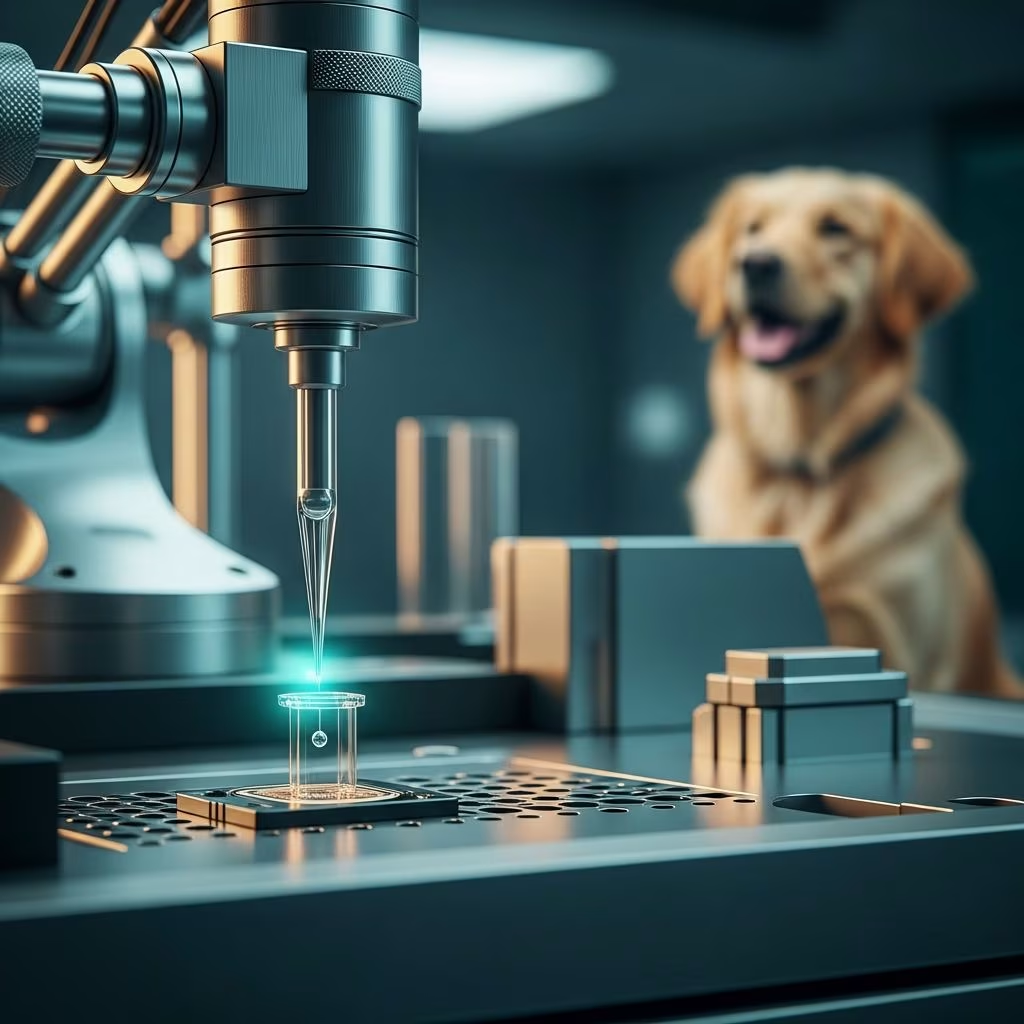
One in four dogs will develop cancer in their lifetime, making it a leading cause of death among pets. Early detection dramatically improves treatment success, yet traditional methods like biopsies and imaging are invasive, expensive, and stressful. Oncotect changes this paradigm with a non-invasive, urine-based screening test that leverages the extraordinary sense of smell in microscopic nematodes called C. elegans to identify cancer-associated metabolites.
Developed by a team of veterinarians, scientists, and pet advocates, Oncotect offers pet parents and vets a proactive tool for routine screening. With over 3,000 dogs clinically tested and 90% accuracy (83% sensitivity, 96% specificity), it detects the four most common canine cancers: melanoma, lymphoma, mast cell tumors, and hemangiosarcoma.
What is Oncotect?
Oncotect is the world’s first at-home cancer screening test for dogs, providing a simple, affordable way to assess cancer risk without needles or vet visits. The kit requires just 2 mL of urine, which is analyzed for volatile metabolites produced by cancer cells. Results deliver a risk score: low-risk values (e.g., -0.044) indicate benign conditions, while high-risk scores prompt further diagnostics.
Unlike blood tests, Oncotect is non-invasive and costs 80% less than competitors, making semi-annual or annual screening feasible for all dogs. It’s recommended for healthy seniors (7+ years), high-risk breeds like Golden Retrievers and Boxers, and any dog with suspicious symptoms.
How Does Oncotect Work?
The magic lies in C. elegans, roundworms with over 1,300 olfactory receptors—far more sensitive than a dog’s nose. These nematodes naturally migrate toward cancer-specific scents in urine samples. Oncotect’s patented process quantifies this response to generate a precise risk assessment.
- Collect Sample: Use the at-home kit to gather 2 mL of urine mid-stream.
- Ship to Lab: Mail the sample; no vet appointment needed, though results are shared with your veterinarian.
- Get Results: Receive a risk score within days, guiding next steps like ultrasounds or biopsies if positive.
This approach has been validated in over 3,000 dogs, outperforming some blood-based tests in convenience and comfort.
C. elegans: The Tiny Heroes Detecting Cancer
C. elegans nematodes are microscopic roundworms renowned for their chemosensory prowess. In Oncotect, they are exposed to a dog’s urine; if cancerous metabolites are present, the worms exhibit a measurable behavioral response. This quantifies cancer risk with high fidelity.
“These little creatures have an incredible sense of smell… they can actually detect cancerous metabolites when exposed to urine that contains them.” — Dr. Steve Shaw, Oncotect Veterinary Oncologist
Clinical trials confirm 83% sensitivity (true positives) and 96% specificity (true negatives) for target cancers, rivaling advanced diagnostics while avoiding stress.
Which Cancers Does Oncotect Detect?
Oncotect targets the most prevalent and treatable canine cancers:
- Melanoma: Aggressive skin/oral tumors common in older dogs.
- Lymphoma: Lymph node cancer affecting multiple breeds.
- Mast Cell Tumors (MCT): Skin lumps, often in Boxers and Retrievers.
- Hemangiosarcoma: Deadly vascular tumors, especially in spleen/heart of large breeds like Golden Retrievers.
Ongoing research expands detection to more types, positioning Oncotect as a multi-cancer screener.
Who Should Use Oncotect?
Screening benefits all dogs, but prioritize:
| Group | Reason | Frequency |
|---|---|---|
| All dogs | Proactive prevention | Every 12 months |
| Seniors (7+ years) | Cancer risk triples with age | Every 6 months |
| High-risk breeds (e.g., Goldens, Rottweilers, Bernese) | Genetic predisposition | Every 6-12 months |
| Suspicious masses/lumps | Rule out cancer pre-biopsy | As needed |
With 33% of dogs facing cancer and 6 million diagnoses yearly, routine Oncotect use empowers early intervention.
Real-Life Case Studies: Oncotect in Action
Brody: The Labrador with a Suspicious Spleen Mass
9-year-old Labrador Brody had a splenic mass on ultrasound. Oncotect returned a low-risk score (-0.044), avoiding unnecessary surgery. Splenectomy confirmed benign—peace of mind achieved.
Cassie: Schnoodle’s Liver Mass Mystery
A large liver mass prompted Oncotect testing pre-biopsy. Low-risk (-0.043) result guided conservative care, biopsy-confirmed non-cancerous. Early screening saved stress and cost.
Lucy: Terrier Mix and Mast Cell Suspicion
12-year-old Lucy’s side bump was aspirated as MCT. Oncotect confirmed high risk, but due to age, owners opted for monitoring over aggressive treatment.
These stories highlight Oncotect’s role in informed decision-making.
Benefits of Oncotect Over Traditional Tests
- Non-Invasive: Urine-only, no blood draws or sedation.
- Affordable: 80% cheaper than imaging/biopsies.
- Fast Results: Days, not weeks.
- High Accuracy: 90% overall, validated in 3,000+ dogs.
- Convenient: At-home or in-clinic, vet-integrated.
Dr. Shaw notes: “If negative, skip costly invasives; if positive, prioritize diagnostics.”
Oncotect vs. Other Canine Cancer Tests
| Test Type | Method | Accuracy | Invasiveness | Cost |
|---|---|---|---|---|
| Oncotect | Urine + Nematodes | 90% (83% sens, 96% spec) | Low | Affordable |
| Blood Tests (e.g., Nucleosomics) | Blood draw | ~85% | Medium | High |
| Imaging (Ultrasound/CT) | Machine scan | Varies | High | Very High |
| Biopsy | Tissue sample | Gold std | Very High | High |
Oncotect excels as a first-line screen.
Frequently Asked Questions (FAQs)
What is the accuracy of Oncotect?
90% overall, with 83% sensitivity and 96% specificity for melanoma, lymphoma, mast cell tumors, and hemangiosarcoma.
Is Oncotect suitable for all dogs?
Yes, especially seniors, high-risk breeds, and those with symptoms. Screen every 6-12 months.
How do I get Oncotect results?
Ship urine sample; get risk score via email, shared with your vet.
Does a positive test mean my dog has cancer?
No—it’s a risk indicator prompting further tests like biopsy.
Where can I buy Oncotect?
Online at oncotect.co or select vets; at-home kits ship nationwide.
The Future of Canine Cancer Detection
Oncotect, founded in 2019 by Chris Namgong, is expanding access with online sales and refined detection for more cancers. As canine cancer affects 6 million dogs yearly, tools like this promise longer, healthier lives. Pet parents report relief: “It gave peace of mind to skip surgery” and “Detected early—now she’s thriving.”
Integrate Oncotect into wellness routines for proactive care. Early detection isn’t just screening—it’s extending playtime with your best friend.
References
- Oncotect | The World’s First At-home Cancer Screening Test for Dogs — Oncotect.co. 2024. https://oncotect.co
- Oncotect At-Home Cancer Screening Test Kit for Dogs — 1-800-PetMeds. 2024. https://www.1800petmeds.com/dog/first-aid-recovery-test-kits/product/oncotect-athome-cancer-screening-test-kit/prod14230.html
- Oncotect is Revolutionizing Canine Cancer Screenings — Kinship. 2024. https://www.kinship.com/dog-health/oncotect
- Cancer Screen for Dogs – Oncotect — Oncotect.co. 2024. https://oncotect.co/products/cancer-screening-test-kit-2
- New Canine Cancer Screening Tests — CCR Alliance. 2024-06-13. https://www.ccralliance.org/post/cancer-screening-tests-webinar-june-13-2024



