

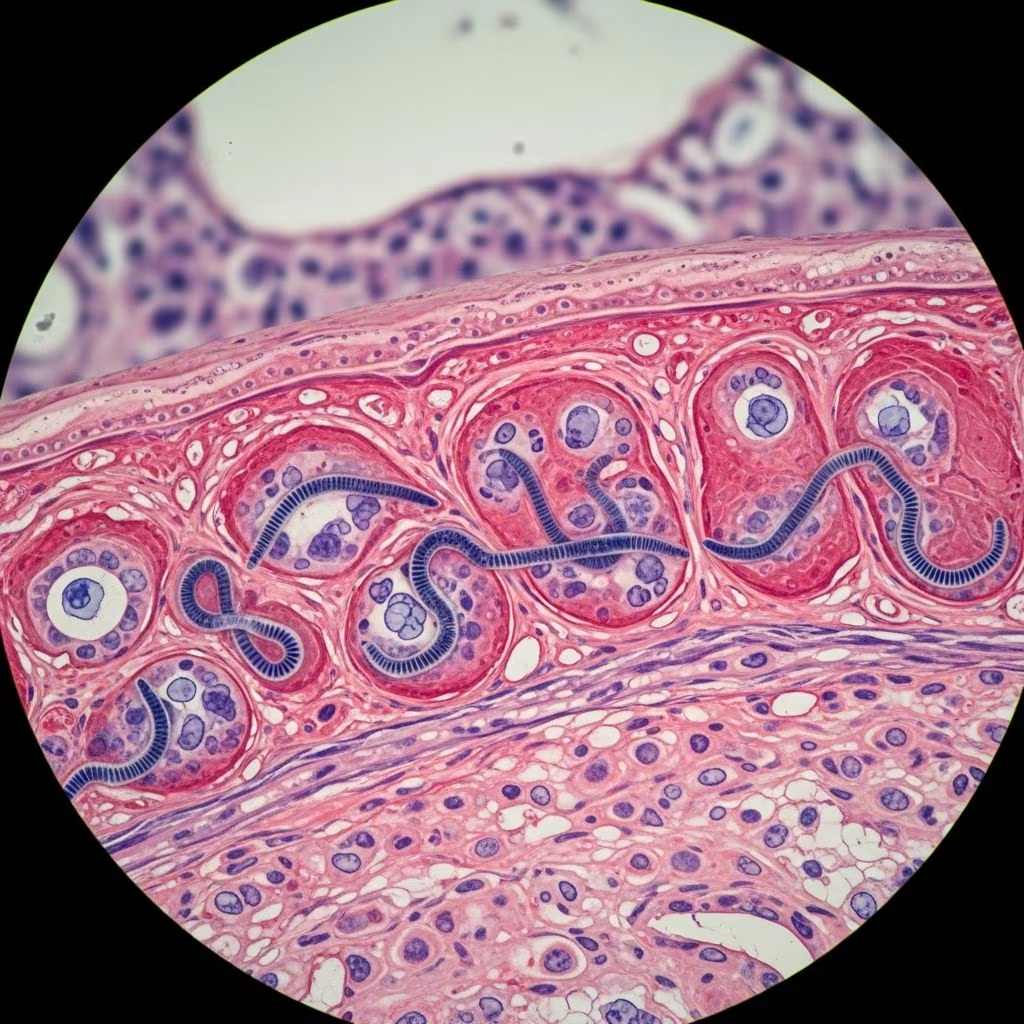
Onchocerciasis, caused by filarial nematodes of the genus Onchocerca, represents a significant parasitic concern in veterinary medicine, particularly affecting the skin, eyes, and connective tissues of various animal species. These worms lead to a range of clinical issues from dermatitis to severe ocular pathology, with implications for animal welfare and zoonotic potential. Understanding the biology, transmission, and management strategies is crucial for veterinarians dealing with endemic regions.
Biological Foundations of Onchocerca Parasites
The Onchocerca genus includes species adapted to specific hosts, such as O. lupi in dogs and O. cervicalis in horses. Adult worms reside in subcutaneous nodules or ocular tissues, producing microfilariae that migrate through skin and eyes, eliciting inflammatory responses. These microfilariae depend on insect vectors like blackflies (Simulium spp.) for transmission, with larvae developing within the vector before infecting new hosts during blood meals.
Key to the parasite’s survival are endosymbiotic Wolbachia bacteria, essential for worm fertility and development. Disrupting these bacteria offers a novel therapeutic avenue, as they are susceptible to antibiotics like doxycycline.
Species-Specific Manifestations
Canine Onchocerciasis: Focus on Ocular Involvement
In dogs, particularly breeds like German Shepherds in the southwestern US, O. lupi causes ocular onchocerciasis. Common signs include unilateral or bilateral episcleral nodules, periorbital swelling, lacrimation, photophobia, corneal edema, and nictitating membrane elevation. Subconjunctival masses, often non-painful and pink-tan, are hallmark features, with bilateral cases progressing over months.
Advanced cases may show scleral indentation, retinal detachment, chemosis, and conjunctival hyperemia. Histologically, thread-like nematodes (up to 1.4 cm) are embedded in granulomas, sometimes leading to corneal perforation or exophthalmos.
Equine Onchocerciasis and Dermatitis
Horses infected with O. cervicalis typically exhibit ventral midline dermatitis, with microfilariae provoking pruritus, alopecia, and crusting. Ocular signs are less common but can include conjunctivitis. Unlike canines, equine cases respond well to microfilaricide treatments, yielding over 99% efficacy.
Diagnostic Strategies for Accurate Identification
Diagnosis integrates clinical assessment with confirmatory tests. Skin snip biopsies, ideally full-thickness (≥6 mm), involve mincing tissue in saline, concentrating microfilariae, and staining with new methylene blue. Microfilariae from O. cervicalis are distinguished from blood parasites like Setaria by lacking a sheath.
For ocular cases in dogs, conjunctival biopsies or excisional samples under sedation reveal nematodes grossly or via histopathology. PCR assays on ethanol-fixed tissues provide species confirmation, positive in most cases even without visible worms.
| Method | Species Applicability | Advantages | Limitations |
|---|---|---|---|
| Skin Snip Biopsy | Horses, Dogs | Direct microfilariae visualization | Invasive; misses adults |
| Conjunctival Biopsy | Dogs (ocular) | Identifies adults grossly | Requires anesthesia |
| PCR | All | High sensitivity/specificity | Lab-dependent |
| Histopathology | Dogs | Confirms nematode morphology | Time-consuming |
Therapeutic Approaches and Protocols
Treatment targets both microfilariae and adults, though adults are notoriously resistant. No single agent eradicates adults reliably, necessitating multimodal strategies.
Microfilaricide Therapy
- Ivermectin: 200 mcg/kg PO once in horses; 50 mcg/kg SC in dogs post-surgery. Clears microfilariae effectively (>99%) and improves dermatitis.
- Moxidectin: 400 mcg/kg PO once, highly efficacious in equines.
Adulticide and Adjunctive Treatments
For canine ocular cases, surgical excision of granulomas under general anesthesia is cornerstone, often revealing coiled nematodes. Adjuncts include:
- Melarsomine: 2.5 mg/kg IM q24h for 2 days as adulticide.
- Doxycycline: 5 mg/kg PO BID for 1 month targets Wolbachia, reducing worm viability and inflammation.
- Prednisone: 0.5 mg/kg PO BID for 10-14 days manages uveitis and immunomodulation.
- Topical/subconjunctival corticosteroids for initial ocular relief.
Post-surgical ivermectin (1 month later) prevents recurrence. Medical management alone (tetracyclines + prednisone) sustains responses in non-surgical candidates, though recurrence rates reach 67% with ivermectin monotherapy.
Feline Considerations
Rare feline cases present with blepharospasm, mucopurulent discharge, conjunctivitis, corneal ulcers, and anterior chamber opacities. Surgical removal combined with melarsomine and ivermectin is recommended.
Epidemiology and Geographic Distribution
Canine O. lupi is endemic in the US Southwest (New Mexico, California, Texas), with cases in 44-56% bilateral. Equine O. cervicalis is widespread in vector-rich areas. Zoonotic spillover to humans via O. lupi raises public health concerns.
Prevention and Vector Control
Prevent microfilariae uptake by vectors using macrocyclic lactones monthly. Blackfly control in endemic zones reduces transmission. Regular ophthalmic exams in at-risk dogs aid early detection.
Challenges and Future Directions
Recurrent infections post-ivermectin highlight adulticide gaps. Ongoing research into Wolbachia-targeted therapies promises improved outcomes. Veterinary awareness in endemic areas is vital for timely intervention.
Frequently Asked Questions (FAQs)
What are the first signs of onchocerciasis in dogs?
Episcleral nodules, periorbital swelling, lacrimation, and photophobia are initial indicators, especially in southwestern US dogs.
Is surgery always necessary for canine cases?
No, but it’s primary for ocular granulomas; medical therapy with doxycycline and prednisone offers alternatives for inoperable cases.
Can horses be treated effectively?
Yes, ivermectin or moxidectin clears microfilariae with excellent clinical improvement in dermatitis cases.
Is onchocerciasis zoonotic?
O. lupi has zoonotic potential, with human ocular cases linked to canine infections.
How do you differentiate Onchocerca microfilariae?
Microscopy shows sheath absence vs. Setaria; PCR confirms species.
References
- Canine Ocular Onchocerciasis — Eye Specialists for Animals. Accessed 2026. https://www.eyespecialistsforanimals.com/patient-resources/common-animal-eye-conditions/conditions/canine-ocular-onchocerciasis
- Onchocerciasis in Animals — MSD Veterinary Manual. Accessed 2026. https://www.msdvetmanual.com/integumentary-system/helminths-of-the-skin/onchocerciasis-in-animals
- Canine ocular onchocerciasis: a retrospective review — PMC (NIH). 2017-02-24. https://pmc.ncbi.nlm.nih.gov/articles/PMC5348283/
- Rare case of ocular onchocerciasis in a dog from south Texas — Texas A&M Veterinary Medical Diagnostic Laboratory. Accessed 2026. https://tvmdl.tamu.edu/case-studies/rare-case-of-ocular-onchocerciasis-in-a-dog-from-south-texas/
- Onchocerca lupi — Companion Animal Parasite Council. Accessed 2026. https://capcvet.org/guidelines/onchocerca-lupi/
- Zoonotic Ocular Onchocercosis by Onchocerca lupi — PMC (NIH). 2021-06-24. https://pmc.ncbi.nlm.nih.gov/articles/PMC8223538/



