
Omega Fatty Acids For Pet Skin Health: Expert Guide
Discover how omega-3 and omega-6 fatty acids support skin health in dogs and cats, reducing inflammation and improving coat quality.
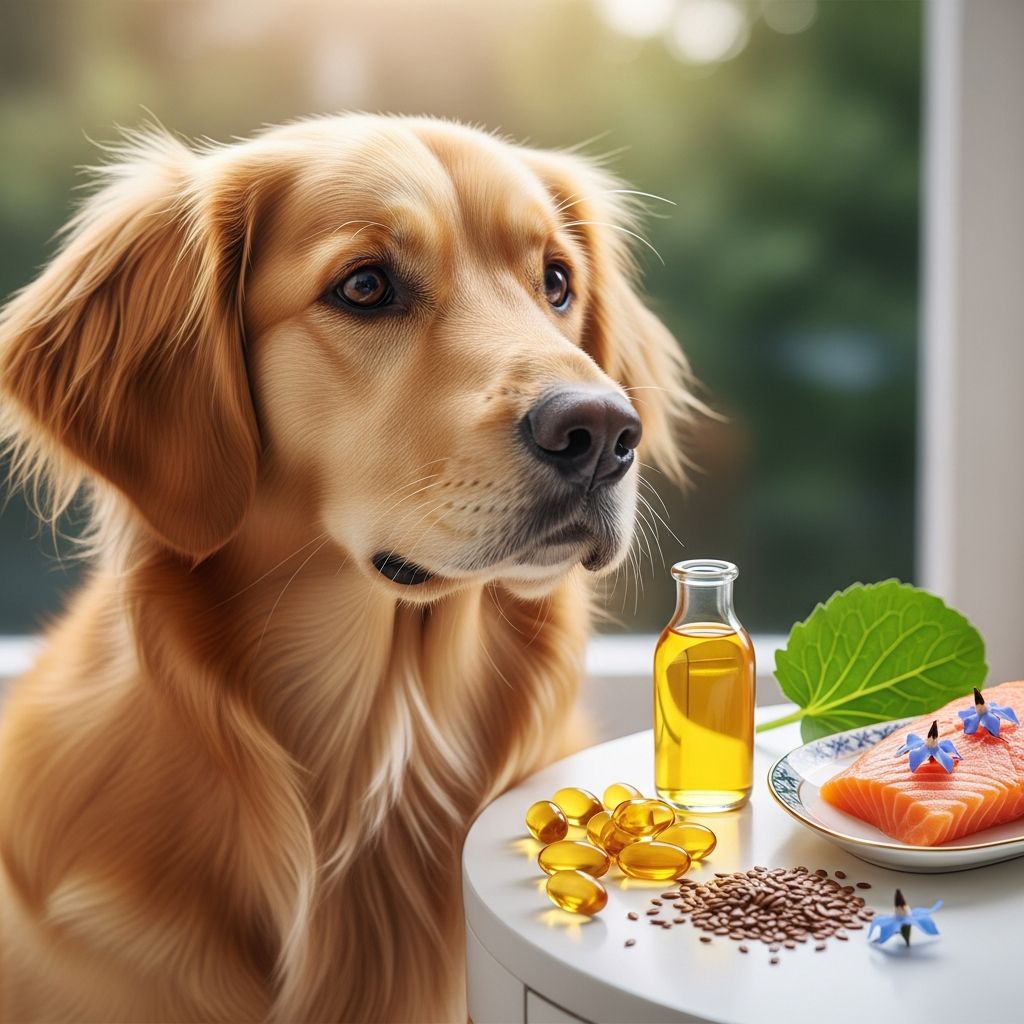
Essential fatty acids, particularly omega-6 and omega-3 types, play a crucial role in maintaining healthy skin and coats in dogs and cats by modulating inflammation and supporting barrier function. These nutrients cannot be synthesized by pets in sufficient quantities, making dietary inclusion vital for preventing and treating integumentary disorders.
The Science Behind Essential Fatty Acids in Pets
Omega-6 fatty acids like linoleic acid (LA, 18:2n-6) and arachidonic acid (AA, 20:4n-6) are fundamental for cell membrane structure, energy provision, and eicosanoid production that influences immune responses. Dogs require LA, while cats need both LA and AA due to their limited delta-6 desaturase enzyme activity, which hinders conversion from LA to AA.
Omega-3 fatty acids include alpha-linolenic acid (ALA, 18:3n-3) from plants, and long-chain forms eicosapentaenoic acid (EPA, 20:5n-3) and docosahexaenoic acid (DHA, 22:6n-3) primarily from marine sources. These compete with omega-6 pathways, producing resolvins and protectins that promote anti-inflammatory effects, countering the pro-inflammatory prostaglandins from AA.
In companion animals, an imbalanced n-6:n-3 ratio exacerbates skin issues like atopic dermatitis and pruritus. Studies show diets with ratios of 5:1 to 10:1 reduce inflammatory markers in canine skin compared to higher ratios like 24:1. Lower ratios, such as 1.4:1, further decrease eicosanoid production in stimulated cells.
Key Benefits for Skin and Coat Conditions
- Anti-inflammatory Action: EPA and DHA shift eicosanoid profiles toward resolution, alleviating pruritus and erythema in atopic dogs.
- Barrier Enhancement: Fatty acids strengthen the epidermal lipid barrier, reducing transepidermal water loss and allergen penetration.
- Immune Modulation: Optimal ratios improve immune status in young and senior dogs, with diets at 5:1 showing better outcomes than 25:1.
- Coat Quality: Supplementation promotes glossy coats and reduces scaling in animals with fatty acid deficiencies.
Clinical evidence supports 60-70 mg/kg/day of combined EPA+DHA for reducing skin inflammation and improving barrier function in dogs.
Dietary Requirements and Recommendations
Nutrient guidelines from the National Research Council (NRC) and Association of American Feed Control Officials (AAFCO) mandate minimum levels of essential fatty acids in pet foods. For dogs, LA minimum is 0.8% dry matter for growth, with ALA recommended but not strictly required for adults. Cats need higher AA (0.2% DM) alongside LA (0.5% DM growth). EPA+DHA are now essential, with AAFCO listing minima for growth/reproduction stages.
| Fatty Acid | Dogs (Growth, % DM) | Cats (Growth, % DM) |
|---|---|---|
| Linoleic Acid (LA) | 1.0 (min), 1.8 (recommend) | 0.5 (min) |
| Arachidonic Acid (AA) | Not required | 0.2 (min) |
| Alpha-Linolenic Acid (ALA) | 0.5 (recommend) | Not required (adults) |
| EPA + DHA | 0.05 (min, combined) | 0.05 (min, combined) |
Table adapted from NRC and AAFCO profiles; values ensure basic health but therapeutic levels exceed these for skin disease.
Sources of Omega Fatty Acids
Plant oils provide LA (corn, soybean, safflower) and ALA (flaxseed, camelina, chia). Animal fats supply AA, while fish oil, krill, and algae deliver EPA/DHA. Sustainability concerns with overfished marine sources push for ALA-rich plants, as dogs convert ALA to EPA (5-15%) and minimally to DHA.
| Source | Key Fatty Acids | Typical Content (%) |
|---|---|---|
| Flaxseed Oil | ALA | 50-60 |
| Fish Oil | EPA, DHA | 20-40 combined |
| Soybean Oil | LA | 50-55 |
| Chicken Fat | LA, AA | 20-25 LA |
Blends like menhaden fish, flax, and safflower oils achieve ideal ratios.
Optimal n-6:n-3 Ratios for Therapeutic Use
Modern diets often exceed 10:1 n-6:n-3 due to vegetable oils, promoting inflammation. Therapeutic targets: 5:1 to 10:1 for skin health in dogs, with 1.4:1 showing superior eicosanoid reduction. Horses and dogs benefit from ALA supplementation for endogenous conversion.
- High-ratio diets (>24:1): Increase skin inflammation markers.
- Balanced (5-10:1): Enhance anti-inflammatory markers, immune function.
Supplementation Strategies and Dosing
For skin conditions, supplement beyond basal diet: Dogs 50-75 mg/kg EPA+DHA; cats 30-50 mg/kg. Veterinary formulas simplify dosing; start low to avoid GI upset (flatulence, diarrhea), rare pancreatitis.
Adjust for diets high in omegas (e.g., dermatologic prescriptions); exceeding NRC upper limits risks harm. Combine with top-dress oils for precise ratios.
Sustainable and Practical Options
Fish oil dominates but strains fisheries; plant ALA sources like flaxseed offer eco-friendly alternatives with direct benefits beyond conversion. Camelina oil provides balanced profiles. Pet food industry integrates these for complete nutrition.
Potential Risks and Monitoring
Over-supplementation causes loose stools or bleeding risks from anti-platelet effects. Monitor via clinical signs, fatty acid profiles in blood. Cats tolerate less due to metabolism differences.
Clinical Applications in Veterinary Practice
EFAs adjunct therapy for atopic dermatitis, reducing steroid needs. Combine with topicals for synergy. Long-term use improves quality of life.
Frequently Asked Questions (FAQs)
What are the best omega supplements for dogs with itchy skin?
Fish or algal oils providing 60-70 mg/kg EPA+DHA daily, ensuring n-6:n-3 <10:1.
Do cats need arachidonic acid supplements?
Yes, as they can’t convert LA efficiently; include in diets at 0.2% DM.
Can plant oils replace fish oil entirely?
For dogs, ALA-rich oils like flax support ratios and conversion, promoting sustainability.
How long until skin improvements from EFAs?
4-8 weeks for noticeable pruritus reduction and coat shine.
Are there side effects to high-dose omegas?
GI upset common; pancreatitis rare at excessive doses.
References
- The balance of n-6 and n-3 fatty acids in canine, feline … – PMC – NIH — National Institutes of Health. 2024. https://pmc.ncbi.nlm.nih.gov/articles/PMC11161904/
- Role of Dietary Fatty Acids in Dogs & Cats — Today’s Veterinary Practice. 2023. https://todaysveterinarypractice.com/nutrition/role-of-dietary-fatty-acids-in-dogs-cats/
- Essential Fatty Acid Supplementation — Clinician’s Brief. 2022. https://www.cliniciansbrief.com/article/essential-fatty-acid-supplementation
- The Skinny on Fat: Part 2 – Essential fatty acids and inflammation — Tufts University. 2018. https://sites.tufts.edu/petfoodology/2018/04/02/essential-fatty-acids-and-inflammation/
- A to Z of Pet Food: Oils & Omegas — Pet Food Institute. 2023. https://www.petfoodinstitute.org/pet-food-institute-a-to-z-of-pet-food-oils-omegas/
Similar Articles








Read full bio of medha deb


