

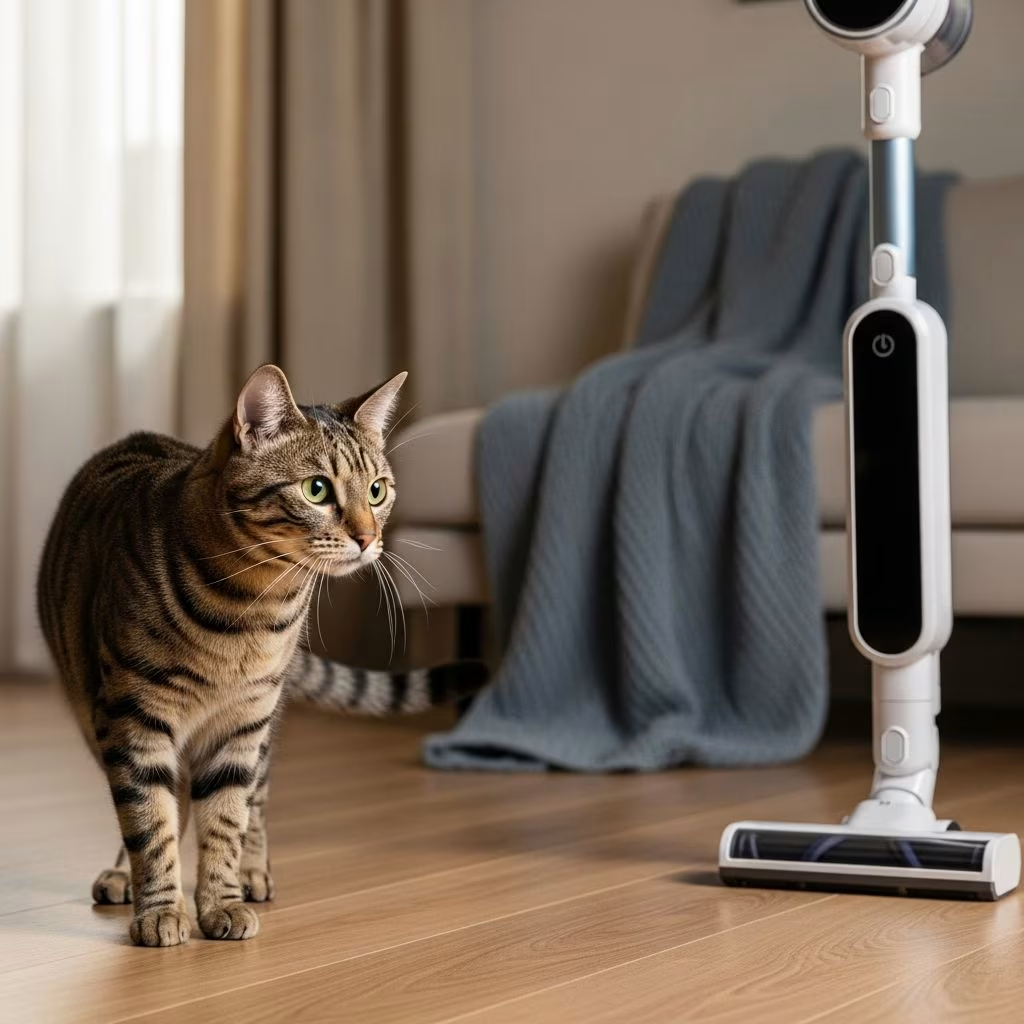
Every cat owner knows the drill: pull out the vacuum cleaner, and your feline friend vanishes faster than a shadow in sunlight. For Olga, a fluffy tabby with a personality bigger than her paws, the vacuum wasn’t just scary—it was the embodiment of doom. But Olga’s story is one of triumph, humor, and invaluable lessons for cat parents everywhere. This article dives deep into why cats dread vacuums, shares Olga’s step-by-step journey to bravery, and equips you with practical tools to turn your home’s biggest monster into a manageable hum.
Why Do Cats Fear Vacuum Cleaners? The Science Behind the Terror
Cats’ aversion to vacuum cleaners isn’t mere quirkiness; it’s rooted in their evolutionary biology and heightened senses. Vacuum cleaners assault multiple feline senses simultaneously, triggering primal fight-or-flight responses.
- Loud Noise: Cats hear frequencies up to 64 kHz, far beyond human limits of 20 kHz. The vacuum’s roar, often exceeding 70-80 decibels, feels like a deafening assault, mimicking predator roars or thunder.
- Erratic Movements: The unpredictable lunging and swerving mimic a stalking predator, invading the cat’s territory and disrupting their need for control.
- Vibrations and Airflow: Floor-shaking vibes and sucking air unsettle cats, who feel the ground literally moving under them—a rare and terrifying event in nature.
- Unfamiliar Smells: Dust, debris, plastic fumes, or cleaning agents create alien odors that overwhelm their 14 times more sensitive noses than humans.
- Size and Novelty: Towering over most cats, vacuums appear as giant intruders, especially if rarely used, shattering routine predictability cats crave.
Studies from veterinary behaviorists confirm this sensory overload leads to acute anxiety, with some cats experiencing prolonged stress post-exposure. Olga’s initial reaction? Ears flat, back arched, and a sprint to the highest shelf, hissing like a cornered wildcat.
Olga’s First Encounter: The Day the Monster Arrived
It started innocently enough. Olga, a 2-year-old rescue with a penchant for sunny windowsills and laser pointers, was napping on the living room rug when her owner, Sarah, decided it was time for a deep clean. The vacuum’s first whirr sent Olga bolting upright, pupils dilated to saucers. As Sarah pushed the beast closer, Olga unleashed a fury of spits and swats, treating it like a rival tomcat invading her domain.
For weeks, vacuum day meant chaos: Olga under the bed, refusing food, and shooting dirty looks for hours after. Sarah felt guilty—cleaning was essential with Olga’s shedding fur everywhere, but at what cost to her cat’s peace? This common plight affects 80% of cat households, per pet behavior surveys, highlighting the need for intervention.
Understanding Feline Anxiety: Territorial Instincts and Trauma
Cats are territorial masters, marking and patrolling their realms with scent and presence. A vacuum disrupts this sacred space, perceived as an intruder challenging their sovereignty. Olga’s fear intensified from early conditioning; her shelter history included noisy environments, imprinting vacuums as trauma triggers.
Behavior experts note that past negative experiences create Pavlovian responses: sight/smell/sound = danger. Defensive postures—hissing, growling, puffing up—aim to ward off the threat, while flight seeks safe havens. Chronic exposure risks generalized anxiety, affecting appetite and litter habits.
| Reaction | Trigger | Intensity Level |
|---|---|---|
| Flight (hiding) | Movement + Noise | High |
| Fight (hissing/swatting) | Territorial Invasion | Medium-High |
| Freeze (staring) | Sudden Onset | Low-Medium |
| Post-Stress (lethargy) | Adrenaline Crash | Variable |
Olga displayed all these, cycling through panic modes that left Sarah determined to help.
Step-by-Step Desensitization: Olga’s Road to Recovery
Desensitization and counter-conditioning (DS/CC) are gold-standard veterinary techniques to rewire fear responses gradually. Sarah followed a structured plan, starting slow over 4 weeks. Here’s how it unfolded—and how you can replicate it:
- Week 1: Introduction Phase
Leave the vacuum off in a neutral room (e.g., garage) for days. Place treats/toys nearby. Olga sniffed curiously by day 3, associating it with positivity. - Week 2: Sound Acclimation
Plug in but don’t run. Play vacuum recordings at low volume from afar, pairing with meals/praise. Olga’s tail twitched less, ears perked instead of flattening. - Week 3: Proximity Building
Run vacuum on lowest setting in another room, rewarding calm behavior. Gradually move closer over sessions (5-10 mins daily). Distractions like wand toys helped Olga ignore the hum. - Week 4: Full Exposure
Vacuum near Olga with her in a carrier or high perch for safety. High-value treats (tuna) for staying relaxed. Olga watched impassively by end.
Key tips: Sessions short (avoid fatigue), always positive (no punishment), progress at cat’s pace. Consistency yielded results—Olga now lounges during cleans!
Tools and Tricks for Success: Making Vacuums Cat-Friendly
- Quiet Vacuums: Opt for models under 65 dB, like robotic ones that move predictably.
- Calming Aids: Pheromone diffusers (Feliway) or L-theanine treats reduce reactivity.
- Safe Spaces: Provide elevated beds or boxes away from cleaning paths.
- Timing: Vacuum when cat naps or is out; use play to tire them pre-session.
- Robot Vacuums: Many cats adapt faster to their steady paths vs. human-controlled chaos.
Sarah combined these with DS/CC, transforming Olga from fugitive to fearless.
Olga’s Victory Lap: Life After the Vacuum
Today, Olga grooms nonchalantly as the vacuum roars. No more hiding, just mild curiosity. This shift boosted her confidence, spilling into better litter use and cuddles. Sarah’s home is cleaner, stress-free—a win-win proving patience pays off.
Owners report 70-90% improvement with DS/CC, per behavior clinics. Olga’s tale inspires: even the mightiest fears are conquerable.
Frequently Asked Questions (FAQs)
Why do cats hate vacuums so much?
Cats fear vacuums due to overwhelming noise (louder to their sensitive ears), erratic movements resembling predators, strange smells, and territorial disruption.
Do vacuums damage cats’ ears?
No permanent damage, but prolonged loud exposure overwhelms their superior hearing, causing stress. Limit time and use quieter models.
Will my cat ever get used to the vacuum?
Yes, with gradual desensitization and positive reinforcement. It takes weeks, not days—patience is key.
Are robot vacuums less scary for cats?
Often yes, due to predictable paths and lower noise, but initial intro still needed.
What if my cat attacks the vacuum?
Redirect with toys/treats; never punish. Build positive associations slowly.
Preventing Future Fears: Proactive Cat Parenting
Expose kittens early to household noises. Maintain routines to minimize surprises. Monitor for anxiety signs like over-grooming or hiding. Consult vets for severe cases—meds like fluoxetine aid extreme phobias.
Olga’s saga reminds us: cats aren’t defiant; they’re wired for survival. With empathy and science, harmony awaits.
References
- Why Do Cats Fear Vacuum Cleaners? — Cat Tree UK. 2023-05-15. https://cattree.uk/why-do-cats-fear-vacuum-cleaners/
- Why Are Cats Scared of Vacuums? Here’s What We Know — Cats.com. 2024-08-20. https://cats.com/why-are-cats-scared-of-vacuums
- Why Vacuum Cleaners Are the Devil — Drool.pet. 2023-11-10. https://www.drool.pet/blogs/the-tips/why-vacuum-cleaners-are-the-devil
- Why Cats Hate the Vacuum Cleaner — Way of Cats. 2022-06-12. https://www.wayofcats.com/blog/why-cats-hate-the-vacuum-cleaner/1719
- Why Cats Fear Vacuums — and 4 Gentle Ways to Help — Narwal. 2024-03-05. https://ca.narwal.com/blogs/robot-vacuum/cat-scared-of-vacuum



