

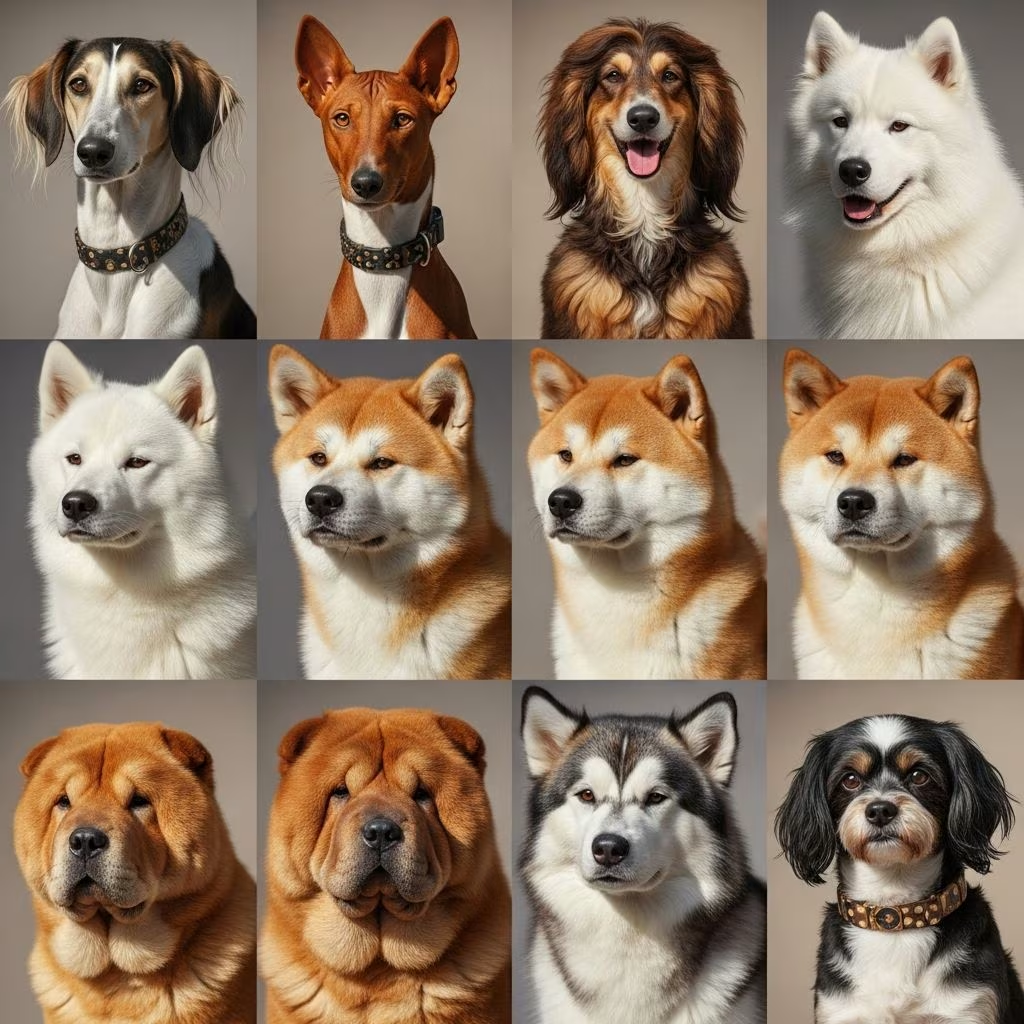
The Ancient Legacy of Dog Breeds: Understanding Our Oldest Canine Companions
Throughout human history, dogs have served as loyal companions, working partners, and valued members of families across civilizations. While modern dog breeds like Labrador Retrievers and Poodles are relatively recent creations, some dog breeds have remained virtually unchanged for thousands of years, maintaining their original characteristics and purpose. These ancient breeds offer us a fascinating window into the deep connection between humans and dogs, revealing how certain canine lineages have survived and thrived across millennia. Understanding these oldest dog breeds provides insight into both canine genetics and the evolution of human societies that depended on these remarkable animals.
The Greenland Sled Dog: The World’s Oldest Known Breed
The Greenland Sled Dog, known as Qimmeq in Greenlandic, holds the distinction of being the world’s oldest known dog breed, with a traceable history extending back approximately 9,500 years to Zhokhov Island in Eastern Siberia. Recent genetic studies have revolutionized our understanding of ancient dog breeds, with researchers sequencing 92 whole dog genomes spanning from ancient times to the present day. These findings reveal that Greenland Sled Dog genetics have remained remarkably consistent throughout their long history, demonstrating an extraordinary level of genetic stability across nearly ten millennia.
Originally developed to work alongside Arctic populations, the Greenland Sled Dog served as an essential transportation breed. Archaeological evidence, including pieces of sledges discovered alongside dog bones, confirms their role as working transport animals for early Arctic communities. From their Siberian origin point, scientists have traced Qimmeq movement with people across the Arctic ice into Alaska, then across the Canadian Arctic to the northwest of Greenland. The breed has maintained a distinct and relatively isolated genetic group for approximately 1,000 years of their long history, making them not only the oldest but also one of the most genetically stable dog breeds on Earth.
The Akita Inu: Ancient Japanese Guardian
With a history spanning approximately 10,000 years, the Akita Inu represents one of the oldest documented dog breeds in human history. This large, powerful breed originated in the mountainous regions of Japan, where it was primarily used for hunting large game and serving as a guardian to Japanese nobility. The Akita Inu’s distinctive appearance and temperament have remained largely unchanged throughout the centuries, making it one of the most recognizable ancient breeds in modern times.
Akita Inus are known for their loyalty, independence, and strong protective instincts. These traits reflect their original purpose as both hunting companions and guardians. Their thick double coat, powerful build, and alert demeanor have made them valued family protectors throughout Japanese culture for thousands of years. Today, Akita Inus continue to embody these ancient qualities, serving as beloved family companions while maintaining the dignified and independent nature that has defined the breed for millennia.
The Afghan Hound: Desert Hunter of Antiquity
The Afghan Hound boasts a remarkable history dating back approximately 8,000 years, with origins in the mountainous regions of Afghanistan and its neighboring areas rather than in Egyptian deserts as some early theorists believed. This elegant sighthound was originally developed by the nomadic peoples of the Afghan region, who bred these dogs for hunting purposes in their challenging terrain.
Afghan Hounds were prized for their exceptional speed and power, originally used to hunt game including antelopes and, according to historical accounts, even leopards. Eyewitnesses from ancient times described the Afghan’s hunting prowess, noting that the breed would grab its dangerous prey by the neck, reportedly “severing the leopards’ spines in their jaws.” This remarkable hunting ability, combined with the breed’s distinctive long, silky coat and graceful appearance, has made the Afghan Hound one of the most recognizable ancient dog breeds in contemporary times. Their elegant physique and independent nature continue to reflect their proud heritage as hunters of one of the world’s most challenging environments.
The Greyhound: Speed and Elegance Through the Ages
Closely related to the sighthounds depicted in temple drawings from 6,000 BC discovered in present-day Turkey, the Greyhound stands as one of the oldest dog breeds in the world, with a documented history of approximately 8,000 years. While scholars debate whether the dogs portrayed in ancient tomb paintings and inscriptions were indeed Greyhounds or related breeds like the Basenji or Saluki, the evidence strongly suggests the Greyhound’s presence in ancient civilizations.
Greyhounds were depicted in ancient art throughout various civilizations, and their exceptional speed has been valued for hunting and sport for millennia. Known for their sleek, aerodynamic build and gentle temperament, Greyhounds have remained virtually unchanged in form and function since ancient times. These dogs continue to embody the grace and speed that made them prized companions to ancient rulers and hunters, making them truly one of the most continuous dog breeds in human history.
The Saluki: The “Hound of the Pharaohs”
The Saluki currently holds the Guinness World Record for being the oldest breed of dog in the world, with archaeological evidence confirming its existence at least 4,000 years ago in the Fertile Crescent of the Middle East. Ancient Egyptian royalty considered Salukis to be exceptionally valuable and honored companions, and remains of this breed have been discovered in tombs throughout the Upper Nile region. Archaeologists have uncovered golden pendants depicting Salukis that dated back to 3,300 BCE, providing tangible evidence of this breed’s ancient prominence.
Salukis were particularly valued by Egyptian pharaohs for their speed and hunting prowess, functioning as both hunting companions and beloved pets of royal households. The breed’s slender, elegant frame and exceptional sight enabled them to hunt game across the deserts and plains of ancient Egypt and the Middle East. While recent genetic research may have challenged some of Saluki’s historical supremacy claims, the archaeological evidence supporting their ancient origins remains undeniable, and they continue to represent one of the most treasured ancient dog breeds in human civilization.
The Tibetan Mastiff: Protector of the Himalayas
The Tibetan Mastiff holds the distinction of being the oldest known Mastiff breed, with a documented history spanning approximately 5,000 years. Mastiffs of all types have existed for thousands of years, but the Tibetan variety is believed to represent the earliest known Mastiff lineage. A phylogenetic analysis performed in 2008 revealed fascinating genetic information about this ancient breed, concluding that “the approximate divergence time between Tibetan Mastiff and the gray wolf was 58,000 years before the present (YBP), and the approximate divergence time between other domestic dogs and the gray wolf was 42,000 YBP.”
The Tibetan Mastiff was developed by the people of the Tibetan Plateau to guard livestock and provide protection against predators in one of the world’s most challenging environments. These powerful dogs are known for their size, strength, and intense loyalty to their families. While some historians have suggested that Mastiffs descended from the war dogs of ancient Rome, there is little genetic evidence to support this theory. Nevertheless, ancient Mastiffs do share certain characteristics with the legendary Molossus, which Aristotle described as being larger than other dogs “and more fierce in their attack on wild beasts.”
The Basenji: The “Barkless” Ancient Hunter
For a long time, researchers believed the Basenji was the oldest dog breed, pointing to Libyan cave paintings that depict a hunting dog dating back to approximately 6,000 BC. However, recent genetic studies conducted by international teams of researchers have indicated that other breeds, particularly the Greenland Sled Dog, predate the Basenji. Despite this revised timeline, the Basenji remains one of the oldest documented dog breeds, with strong archaeological evidence supporting its ancient origins in Africa.
The Basenji is renowned for its unique characteristic of being unable to bark in the traditional sense, instead producing a distinctive yodel-like sound. Originally developed as a hunting dog by African peoples, the breed was highly valued for its speed, intelligence, and ability to hunt game across African terrain. These ancient hunting dogs have maintained their distinctive characteristics for thousands of years, representing an unbroken lineage of canine evolution.
The Chinese Shar Pei: Guardian of Imperial Palaces
The Chinese Shar Pei breed is believed to have originated around 200 BC in the area around Tai Li in China, making it approximately 2,200+ years old. Originally bred to guard royal palaces and protect the royal family, this distinctive breed features unique loose skin that was specifically designed to protect them during dogfights, allowing them to break loose from an opponent’s grip without sustaining mortal wounds to their internal organs.
Known for their regal, independent nature, Chinese Shar Peis are famous for their intelligence and loyalty to their families. Their strong and tenacious guarding behaviors, combined with their suspicious attitude toward strangers and other dogs, made them ideal palace guardians throughout Chinese history. Today, these ancient dogs remain calm and serene companions while maintaining the protective instincts that have defined the breed for over two millennia.
The Chow Chow: Ancient Temple Guardian of China
The Chow Chow has been documented for between 2,000 to 3,000 years, originating in northern China where the breed is recognized for its distinctive bear-like appearance and its characteristic blue-black tongue. Depictions of the breed have been found on sculptures and Chinese pottery dating back to the Hun dynasty (206 BC until 22 AD). The breed was primarily used as a temple guard in Asia, serving the spiritual and protective needs of religious communities throughout Chinese history.
Although the true origin of the breed remains somewhat mysterious, historical records suggest they were bred as guard dogs and, according to some sources, as a gastronomic delicacy in ancient China. Some scholars propose that the name “Chow Chow” may be derived from the Chinese word ‘chou’ meaning edible, though this etymology remains debated. Today’s Chow Chows are known for their loyalty to their families and their reserved, aloof demeanor with strangers, traits that reflect their ancient purpose as vigilant temple guardians.
The Alaskan Malamute: Arctic Companion and Worker
The Alaskan Malamute has a documented history spanning 2,000 to 3,000 years, with the breed developing in the Arctic regions when the forebears of this powerful dog crossed from Siberia into Alaska thousands of years ago. The breed name was specifically taken from the Mahlemuts, an Inuit tribe that settled along the Kotzebue Sound in northwestern Alaska, establishing an intimate historical connection between this indigenous people and their valued canine companions.
Used to pull sleds, hunt seals, and defend against polar bears, the Alaskan Malamute was absolutely essential to the survival of Arctic peoples, making the breed highly valued within these communities. These friendly and loyal dogs worked and lived with the Inuit native tribes, who depended on these remarkable animals for their very survival. Today, Alaskan Malamutes continue to embody the strength, loyalty, and hardiness that enabled their ancestors to thrive in one of Earth’s most challenging environments.
The Samoyed: Nordic Companion of Siberia
The Samoyed breed has a documented history of more than 3,000 years, with origins in Asia where this breed is recognized as one of 14 dog breeds with direct genetic ties to ancient wolves. These beautiful white or nearly-white dogs are members of the Nordic spitz canine group and have a long, rich history as central figures in Siberian culture. Samoyeds joined Siberian families in their dwellings to provide critical warmth and companionship during the harsh Arctic winters, making them invaluable members of household communities.
The breed’s thick, white double coat and gentle temperament reflected their dual purpose as both working dogs and beloved family companions. Samoyeds’ reputation for friendliness and sociability, combined with their remarkable hardiness, has made them valued companions across centuries and continents. Today, these ancient dogs continue to embody the warmth and loyalty that made them cherished members of Siberian communities for thousands of years.
The Xoloitzcuintli: Ancient Dog of the Americas
The Xoloitzcuintli, pronounced “show-low-itz-QUEENT-ly” or “show-low” for short, represents one of the most ancient dog breeds of the Americas, with researchers believing this breed accompanied early migrants from Asia to Mexico at least 3,500 years ago. This distinctive hairless dog was revered in Aztec culture and mythology, with the name itself being an Aztec designation for this unique breed.
The Xoloitzcuintli’s hairless or coated varieties demonstrate remarkable adaptation to the tropical climates of Mesoamerica. These ancient dogs held spiritual significance in Aztec culture and were often depicted in artwork and religious ceremonies. Their presence in the Americas for over 3,500 years makes them one of the oldest documented dog breeds in the Western Hemisphere, representing an independent line of dog domestication that developed parallel to Old World dog breeds.
Understanding Ancient Dog Breed Characteristics
Ancient dog breeds tend to display certain behavioral and genetic characteristics that distinguish them from modern breeds. These dogs are genetically closer to wolves and maintain certain wolf-like traits, including strong independence and stubbornness. According to research from the Nature study, ancient dog breeds possess DNA originating from before modern popular breeds like Labrador Retrievers and Poodles were developed. This genetic continuity explains many of the distinctive personality traits and physical characteristics that have remained consistent in ancient breeds throughout millennia.
Many ancient breeds share common traits including strong guarding instincts, independence, and a direct lineage to wild canines. These characteristics reflect their original purposes as hunters, guardians, and working companions, roles that shaped their genetic and behavioral development over thousands of years. Understanding these traits helps modern owners appreciate the deep historical significance of ancient dog breeds and their unique place in canine evolution.
The Genetic Evidence Behind Ancient Dog Breeds
Modern genetic analysis has revolutionized our understanding of ancient dog breeds, providing scientific confirmation of historical and archaeological evidence. The Canine Genome Project, combined with research published in Nature and Science Magazine, has enabled researchers to trace the genetic lineages of ancient breeds and confirm their relationships to modern dogs and even to wolves. These genomic studies have revealed that certain breeds have maintained remarkable genetic consistency over thousands of years, while others have experienced gradual genetic changes reflecting their domestication and selective breeding.
DNA sequencing of ancient dog remains from archaeological sites has provided unprecedented insights into the movement of dog breeds across ancient civilizations and the development of trade routes and human migration patterns. By examining the genetics of ancient dog remains and comparing them to contemporary breed genetics, scientists can trace the development and dispersal of dog breeds across continents and through centuries. This genetic evidence confirms that many breeds we consider ancient today have indeed maintained their essential characteristics for thousands of years.
Why Ancient Dog Breeds Matter Today
Ancient dog breeds represent more than just historical curiosities; they provide valuable genetic diversity within dog populations and offer insights into canine health, behavior, and evolution. These breeds often possess greater genetic diversity than many modern breeds, having developed naturally over thousands of years rather than through intensive selective breeding programs. Many ancient breeds also demonstrate remarkable disease resistance and longevity, qualities that breeders and veterinarians increasingly recognize as valuable in modern dog populations.
Furthermore, ancient dog breeds maintain important cultural and spiritual significance for the peoples from whom they originated. For indigenous Arctic peoples, Greenland Sled Dogs remain central to traditional ways of life. For Middle Eastern and African peoples, breeds like the Saluki and Basenji hold profound cultural meaning. By preserving and respecting ancient dog breeds, we maintain living connections to human history and honor the cultural heritage of the civilizations that developed these remarkable animals.
Frequently Asked Questions (FAQs)
Q: What makes a dog breed considered ancient or one of the oldest?
A: A dog breed is considered ancient based on archaeological evidence, genetic research, and documented historical records. Breeds with origins traceable back thousands of years, supported by cave paintings, artifacts, or genetic analysis, are classified as ancient dog breeds.
Q: How do scientists determine the age of ancient dog breeds?
A: Scientists use multiple methods including archaeological discoveries, DNA sequencing of ancient dog remains, genetic comparison with modern breeds, and historical documentation. Genomic analysis comparing ancient and contemporary dog genetics provides particularly reliable dating information.
Q: Are ancient dog breeds more healthy than modern breeds?
A: Ancient breeds often have greater genetic diversity because they developed naturally over millennia rather than through intensive selective breeding. This genetic diversity can contribute to better health outcomes and fewer hereditary conditions in some ancient breeds compared to heavily bred modern breeds.
Q: Can I own an ancient dog breed as a pet?
A: Yes, many ancient dog breeds are available today and make wonderful pets. However, potential owners should understand that ancient breeds often retain independent, strong-willed temperaments and may require experienced, committed owners who understand their unique needs and characteristics.
Q: Which is truly the oldest dog breed in the world?
A: The Greenland Sled Dog currently holds the scientific distinction of being the world’s oldest known dog breed, with genetic evidence tracing its lineage back approximately 9,500 years. However, the Akita Inu is documented at around 10,000 years old, and determining which is definitively “oldest” depends on the criteria used.
Q: Do ancient dog breeds have special care requirements?
A: Ancient breeds often have specific needs related to their original purpose and geographic origins. For example, Arctic breeds like Alaskan Malamutes require significant exercise and cold-weather tolerance, while Middle Eastern sighthounds like the Afghan Hound need regular grooming and space to run. Consulting breed-specific information is important.
References
- The 12 Oldest Dog Breeds — SpiritDog Training. https://spiritdogtraining.com/breeds/oldest-dog-breeds/
- 11 Most Ancient Dog Breeds on Earth — Canine Campus. https://www.caninecampus.us/11-most-ancient-dog-breeds-on-earth
- Oldest known dog breed reveals hidden human history — Popular Science. https://www.popsci.com/environment/greenland-sled-dog-oldest-dog-breed/
- Infographic: 10 of the World’s Oldest Dog Breeds — Nylabone. https://www.nylabone.com/dog101/10-of-the-worlds-oldest-dog-breeds



