
Old World Chameleon Care: Complete Guide
Master Old World chameleon care with expert guidance on housing, diet, temperature, and health.
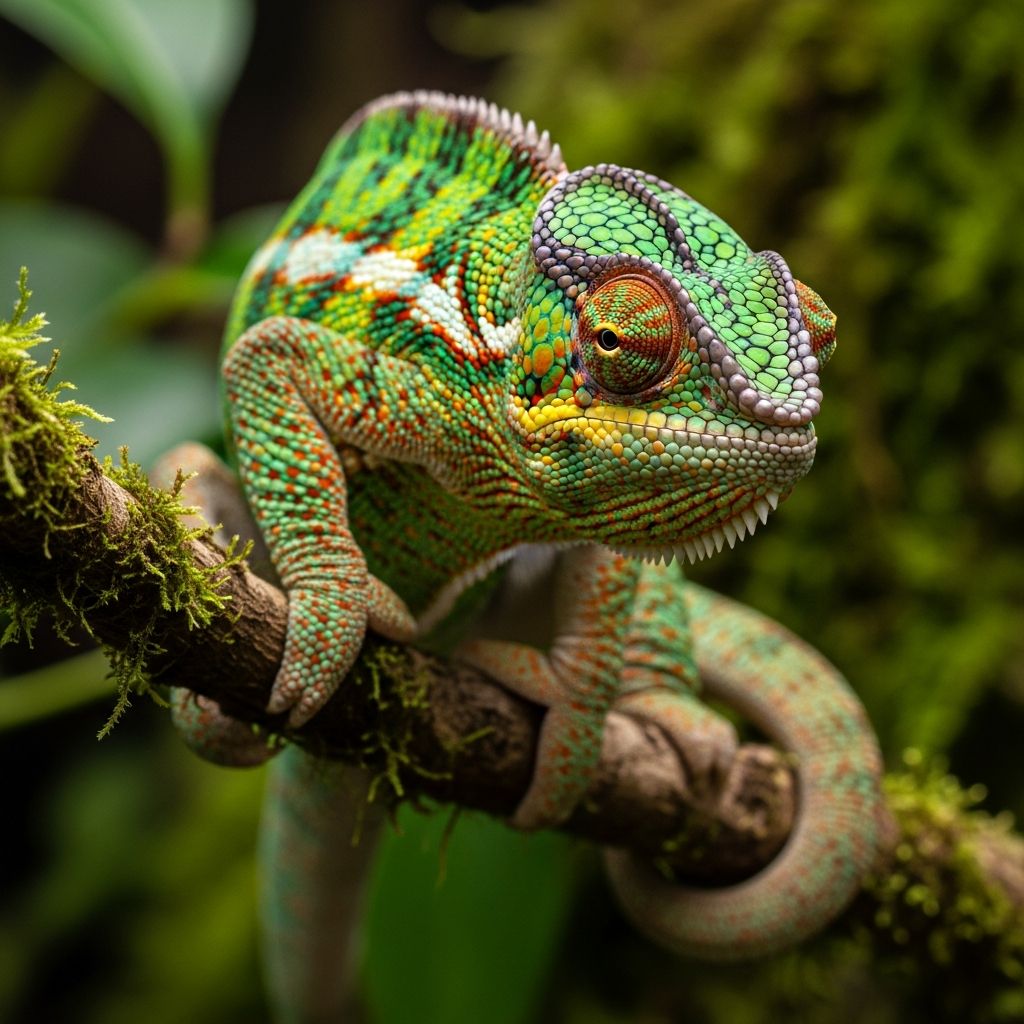
Old World Chameleon Care: A Comprehensive Guide
Old World chameleons represent a diverse group of over 150 species of true chameleons, with the most commonly kept species being the veiled chameleon, panther chameleon, and Jackson’s or three-horned chameleon. These fascinating reptiles have specific care requirements that differ significantly from other reptile species, making proper husbandry essential for their health and longevity in captivity. Understanding the nuances of their environmental, dietary, and behavioral needs is crucial for anyone considering these remarkable animals as pets.
Introduction to Old World Chameleons
Old World chameleons are native to Africa, Madagascar, and the Middle East, and they have evolved unique adaptations that make them distinctly different from other lizards. Their independent eye movement, prehensile tails, and color-changing abilities make them popular in the exotic pet trade. However, these characteristics also indicate that they have highly specialized requirements for thriving in captivity. Successful chameleon keeping requires dedication to detail and a commitment to maintaining precise environmental conditions.
Caging Requirements and Enclosure Setup
The foundation of proper chameleon care begins with appropriate housing. Old World chameleons require tall mesh cages rather than traditional glass enclosures. Mesh cages allow for proper airflow and ultraviolet light penetration, both essential for chameleon health. The cage dimensions should be as large as practical, with vertical space being particularly important since chameleons are arboreal creatures that spend most of their time climbing.
Cage Specifications
Mesh flooring is essential for chameleon enclosures, allowing waste to fall through and maintaining cleanliness while reducing bacterial growth. The cage should include multiple branches or twigs of varying diameters to accommodate different age groups and foot sizes. Live potted plants such as Ficus benjamina or hibiscus provide both visual security and climbing surfaces. These plants serve the dual purpose of creating a more naturalistic environment and reducing stress in these solitary animals.
Plastic plants may be incorporated to facilitate cleaning and maintenance, though live plants are generally preferred for aesthetic and psychological enrichment. All cage furniture and plants must be verified as non-toxic, as chameleons may inadvertently consume plant material or have contact with potentially harmful substances.
Environmental Enrichment
The overall cage design should provide natural flow with distinct basking areas, shaded zones, water access points, and feeding locations. This design prevents stress and allows chameleons to thermoregulate effectively. Branches should be positioned to create multiple levels and hiding spots, mimicking the natural canopy environments where these reptiles evolved.
Temperature Gradient and Thermal Management
Maintaining an appropriate temperature gradient is critical for Old World chameleon health. A temperature gradient of 70-95°F (20-35°C) should be established using an overhead radiant heat source, with the warmest area located at the basking site. This allows chameleons to move between temperature zones based on their thermoregulatory needs throughout the day.
Nighttime temperature drops are important for natural circadian rhythms and metabolic health. A 10-15°F (5-8°C) reduction at night helps simulate natural day-night cycles. This cooling period is crucial for maintaining proper physiology and preventing heat-related stress.
When placing chameleons outside for natural sunlight exposure, temperature must be carefully monitored to prevent thermal stress. A shade cloth or towel can be placed over one portion of the outdoor enclosure, allowing chameleons to thermoregulate by moving between sun and shade as needed. This outdoor exposure provides unfiltered UVB radiation, which is superior to artificial sources, though careful supervision is necessary.
Humidity and Water Management
Old World chameleons require specific humidity levels to maintain proper hydration and respiratory health. A relative humidity range of 40-60% is generally recommended, though this may vary slightly by species. Monitoring humidity with a hygrometer is essential for maintaining these parameters accurately.
Water provision is most naturally accomplished through misting plants and cage surfaces. Chameleons in the wild drink morning dew drops and raindrops that collect on leafy surfaces. Replicating this behavior requires misting the cage plants two to four times daily. Regular misting not only provides water but also maintains appropriate humidity levels and supports respiratory health.
Alternatively, automatic watering systems or drip systems can be employed to provide continuous water droplets. Visual signs of drinking, such as a chameleon’s tongue extending to catch water droplets, indicate successful hydration. Some keepers supplement misting by carefully directing water droplets onto a chameleon’s tongue using a pipette or spray bottle when visual confirmation of drinking is desired.
Lighting and Ultraviolet Radiation
Proper lighting is fundamental to chameleon health, particularly for calcium absorption and bone mineralization. A full-spectrum light source, specifically UVB lighting, must be provided for normal dietary calcium absorption. UVB bulbs such as T5 HO (high-output) fluorescent bulbs should be positioned to allow adequate exposure without causing burns or excessive heat.
A separate basking light with low wattage should be employed to prevent thermal burns, which can occur if chameleons contact bulbs emitting excessive heat. Proper positioning and fixture selection minimize burn risk while maintaining necessary basking temperatures. The lighting system should operate on a regular photoperiod, typically 10-12 hours of light daily, to support natural circadian rhythms.
Diet and Nutrition
Old World chameleons are primarily insectivorous, requiring a varied diet of appropriately-sized prey items. The foundational staple insects include crickets and dubia roaches, which should be supplemented with occasional offerings of other prey such as waxworms, phoenix worms, and other appropriately-sized insects.
Feeding Frequency and Portion Control
Adult chameleons should be fed three to four times weekly, with juvenile chameleons requiring more frequent feeding to support growth and development. Neonatal chameleons may require daily feeding of appropriately-sized insects. The size of prey items should be adjusted based on the chameleon’s size, with general guidelines suggesting prey items no larger than the chameleon’s head width.
Insects can be provided directly by hand-feeding individual insects or placing them in opaque containers within the cage. Hand-feeding offers the advantage of monitoring consumption and reducing stress associated with live insects in the enclosure. Opaque containers should remain clean and sized appropriately so chameleons can easily access prey items at the bottom without difficulty.
Gut-Loading and Dietary Supplementation
Insects should be gut-loaded prior to feeding whenever possible. This involves feeding insects a nutritious diet consisting of rolled oats, ground legumes, cornmeal, fresh greens, carrots, and sweet potatoes at least 24-48 hours before being offered to chameleons. Gut-loading significantly increases the nutritional value of prey items.
Dietary supplementation with calcium and vitamins is essential for proper bone development and metabolic function. Calcium supplements, preferably calcium carbonate or calcium gluconate, should be dusted onto insects once weekly for non-breeding adults. Calcium supplements must be free or low in phosphorus, with a minimum calcium-to-phosphorus ratio of 2:1. Products containing vitamin D should be avoided as they can lead to toxicity.
General vitamin and mineral supplements may be offered once weekly to non-breeding adults. Breeding females and juveniles require more frequent supplementation, typically two to three times weekly for adult females and three to four times weekly for juveniles. Multivitamin supplements should be offered once weekly for juveniles and twice monthly for adult chameleons.
Plant Material Consumption
Some Old World chameleon species, particularly adult veiled chameleons, may supplement their diet with plant material. Adult male veiled chameleons may accept small dishes of leafy greens and vegetables, similar to the feeding behavior observed in adult iguanas. This plant consumption can contribute to hydration as well as providing micronutrients and fiber.
Wild-Caught Insects
If wild-caught insects are fed to chameleons, they must be collected from areas where chemicals, pesticides, or insecticides have not been applied. Residues from these substances can bioaccumulate and harm chameleons. Insects collected from untreated natural areas should be thoroughly inspected before feeding.
Behavior and Social Structure
Old World chameleons are predominantly solitary animals with strongly territorial tendencies, particularly in males. Understanding their behavioral nature is crucial for preventing stress and aggression in captive settings.
Solitary Housing
Adult male chameleons must be housed individually, as they are highly aggressive toward other males and will engage in combat if confined together. Single-species housing prevents injuries and stress-related health problems. While some sources suggest that a mixed pair or two females can coexist in large cages with visual barriers, such arrangements require careful monitoring and should only be attempted with species and individuals known to tolerate proximity.
Handling Considerations
Handling does not inherently harm chameleons; however, individual chameleons vary in their stress response to physical contact. Some chameleons become stressed when handled, and if an individual is debilitated or suffering from disease, handling stress can exceed their physical capacity to cope. Sick chameleons should be handled minimally to prevent additional physiological stress.
Wild-caught chameleons typically are not acclimated to handling and may resist contact initially. With these individuals, handling should be limited to necessary occasions initially, with frequency and duration gradually increased to allow acclimation. Most captive-bred chameleons handle relatively well, though some may resist handling initially regardless of captive origin. Gentle, quick handling minimizes stress responses.
Reproduction and Gravidity
Female chameleons exhibit characteristic behavioral and physiological changes associated with gravidity (pregnancy). Understanding these signs is essential for providing appropriate care to reproductive females.
Signs of Gravidity
One to two weeks before egg-laying, gravid females typically increase in weight and body girth due to developing eggs. Appetite decreases noticeably as egg mass occupies space within the body cavity. Gravid females begin displaying digging behavior, attempting to create suitable substrate tunnels for egg deposition.
Egg-Laying Substrate
Providing appropriate substrate for egg-laying is critical. A specialized lay box filled with sand or potting soil allows females to deposit eggs naturally. An alternative method involves placing the gravid female in a standard five-gallon bucket containing several inches of sand or potting soil with an overhead light source. This contained environment facilitates egg-laying and makes egg collection manageable.
Post-Laying Care
Following egg deposition, females become noticeably thin and lethargic as their body redistributes resources. Careful monitoring of the post-gravid female is necessary, with particular attention to ensuring adequate nutrition and hydration during recovery. Females may require several weeks to fully recover physiologically from reproduction.
Neonatal Care
Neonatal chameleons present unique care challenges due to their small size and specific requirements. Understanding proper neonatal husbandry is essential for raising healthy juvenile chameleons.
Size and Initial Requirements
Neonatal chameleons are approximately 1 to 1.5 inches long at hatching, making them extremely delicate and vulnerable. They require stable, temperate environments maintained at approximately 77°F with minimal temperature fluctuation. Higher humidity levels, typically greater than 60%, should be maintained through periodic misting with water.
Housing Options
Neonates can be housed individually or in small groups of six to ten, though individual housing minimizes competition and disease transmission risk. Enclosures may consist of glass or plastic containers with screen tops and adequate lighting. Modest decoration with climbing branches and potted plants such as ficus provides enrichment and security for developing chameleons.
Feeding and Growth
Neonatal chameleons require appropriately-sized prey items, typically small crickets or other tiny insects. Feeding frequency should be high, often daily or multiple times daily to support rapid growth during early development. Calcium and vitamin supplementation should follow juvenile guidelines, typically three to four times weekly.
Preventive Medicine and Health Monitoring
Maintaining optimal health in captive Old World chameleons requires regular preventive care and vigilant health monitoring. Early detection of health problems significantly improves treatment outcomes.
Regular Examinations
Regular physical examinations should be conducted to detect early signs of disease or health problems. Visual assessment of body condition, eye clarity, respiratory function, and movement patterns provides valuable baseline data for identifying problems early.
Parasite Monitoring
Fecal parasite testing is recommended to identify parasitic infections before they cause clinical disease. Early detection and treatment prevent parasitic burden from becoming clinically significant. Annual or bi-annual fecal testing is appropriate for established captive chameleons.
Quarantine Protocols
Quarantine procedures should be implemented for any new chameleons before introduction to established collections. A minimum quarantine period of 30-60 days allows time for detection of parasites or latent diseases. Separate enclosures, care equipment, and hygiene protocols during quarantine prevent disease transmission.
Medication Considerations
Ivermectin, commonly used for parasite treatment in reptiles, should be used cautiously in chameleons. Toxicity has been reported in this species, and use should be avoided in debilitated animals where adverse reactions are more likely. Alternative antiparasitic agents may be preferable depending on the specific parasite and individual chameleon condition.
Venipuncture and Blood Collection
Veterinary assessment of chameleon health often requires blood collection for laboratory analysis. Proper venipuncture technique ensures diagnostic samples while minimizing patient trauma.
The ventral tail or coccygeal vein serves as the primary site for blood collection in chameleons. This location provides reliable vascular access with minimal risk of damage to vital structures. The ventral abdominal vein is not easily accessible and is generally avoided as a collection site due to anatomical complexity.
Frequently Asked Questions
Q: How often should I mist my Old World chameleon’s enclosure?
A: Misting should occur two to four times daily to maintain appropriate humidity levels and provide drinking opportunities. Observe your chameleon for visual signs of drinking to confirm adequate water intake.
Q: Can Old World chameleons be housed together?
A: Adult males must be housed individually as they are highly territorial and aggressive. Mixed pairs or two females may coexist in large cages with visual barriers, but such arrangements require careful monitoring and are not recommended for beginners.
Q: What is the ideal temperature for my chameleon?
A: Maintain a temperature gradient of 70-95°F with a basking spot at the warm end. Provide a 10-15°F drop at night to support natural circadian rhythms and metabolic health.
Q: How often should adult chameleons be fed?
A: Adult chameleons should be fed three to four times weekly. Juveniles require more frequent feeding to support growth and development.
Q: Is handling harmful to chameleons?
A: Handling itself does not harm healthy chameleons, though some individuals become stressed. Sick chameleons should be handled minimally. Most captive-bred chameleons tolerate handling well when accustomed gradually.
Q: What supplementation does my chameleon need?
A: Calcium supplements dusted on insects once weekly for non-breeding adults, general vitamin supplements once weekly, and more frequent supplementation for breeding females and juveniles (2-3x weekly for calcium, 3-4x for juveniles).
Q: How can I tell if my female chameleon is gravid?
A: Gravid females display increased weight and body girth, decreased appetite, and digging behavior one to two weeks before egg-laying. Provide appropriate substrate for egg deposition when these signs appear.
References
- Basic Information Sheet: Veiled Chameleon — Lafeber Company Veterinary Division. 2024. https://lafeber.com/vet/basic-information-for-veiled-chameleon/
- Old World Chameleon Care — Chicago Exotics Animal Hospital. Accessed 2025. http://www.exoticpetvet.com/old-world-chameleon-care.html
- Chameleon Care Guide Basics — Lafeber Company. 2024. https://lafeber.com/vet/
- Chameleons: General Care Information — Arbor View Animal Hospital. 2021. https://arborviewah.com/exotic-animal-care/chameleons/
- Old World Chameleon Care Client Education Handout — Lafeber Company Veterinary Division. 2024. https://lafeber.com/vet/old-world-chameleon-care/
Similar Articles








Read full bio of medha deb


