

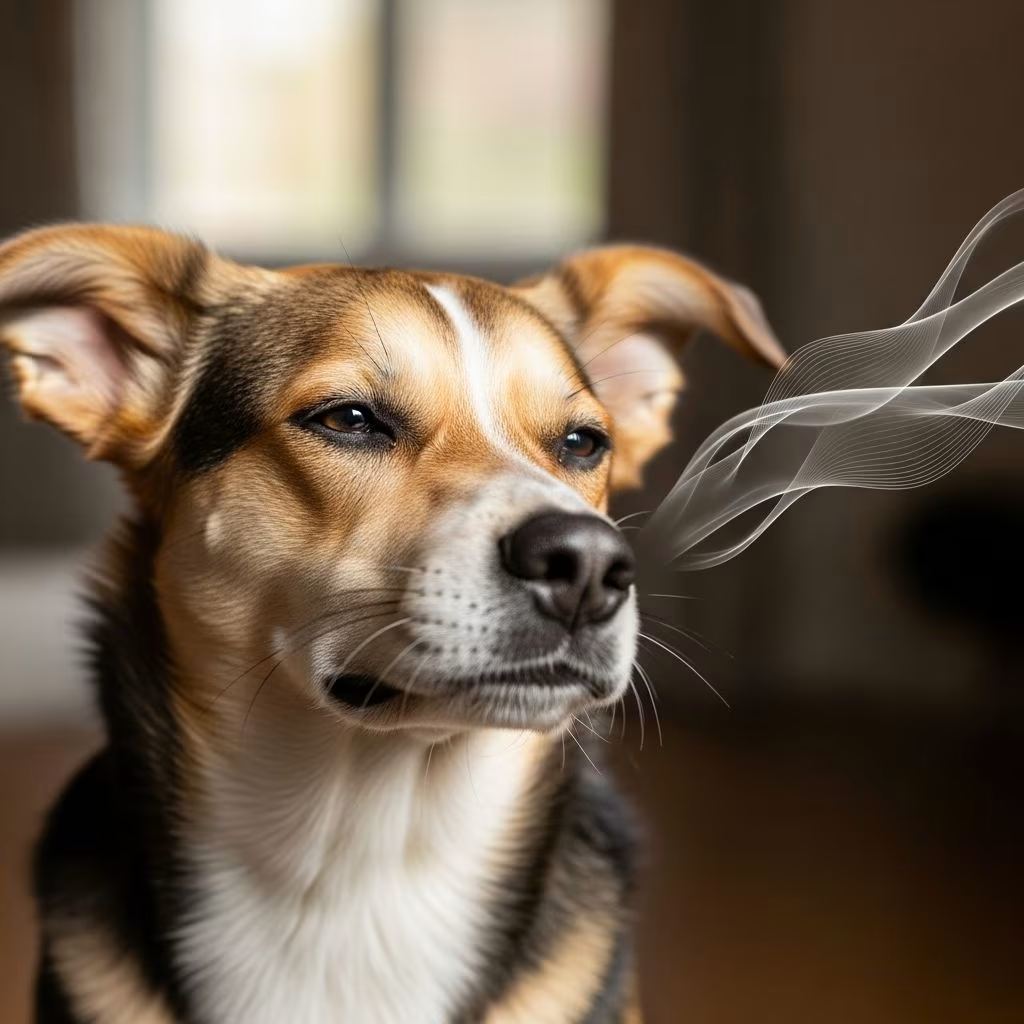
Dogs possess an extraordinary sense of smell, far surpassing human capabilities, with up to 300 million olfactory receptors compared to our mere 6 million. This heightened olfaction allows them to detect scents at concentrations 1,000 to 10,000 times lower than humans can perceive. However, this sensitivity also means certain common odors trigger strong negative reactions in dogs, often leading to avoidance behaviors. These aversions stem from the physiology of their nasal structures, including the main olfactory epithelium and vomeronasal organ, which process both everyday smells and pheromones.
Environmental factors like humidity enhance odor trapping in a dog’s moist nasal passages, amplifying both pleasant and unpleasant scents. Understanding these dislikes not only explains quirky behaviors but also offers practical applications in training, household management, and deterrence. This article delves into the science behind canine smell perception and highlights key odors that dogs actively avoid.
The Marvel of Canine Olfaction: Why Smells Matter So Much
A dog’s nose is a biological marvel, equipped with specialized turbinates that increase surface area for scent capture. During inhalation, nasal airflow patterns direct odor molecules precisely to olfactory receptors, enabling source localization and intensity comparison between nostrils. The vomeronasal organ (VNO), or Jacobson’s organ, further refines this by detecting pheromones and low-volatile compounds undetectable by standard olfaction.
Brain imaging studies confirm that familiar scents activate reward centers like the caudate nucleus more strongly than unfamiliar ones, influencing emotional responses. Wet noses, maintained by mucus and licking, optimize particle adhesion, ensuring no vital information is missed. Breeds vary slightly—brachycephalic dogs may have reduced efficiency due to airway constraints—but all rely heavily on smell for navigation, communication, and safety.
This olfactory dominance explains why dogs recoil from overpowering or irritating scents: their system is wired for precision, not tolerance of irritants that overwhelm receptors or mimic threats.
Common Household Scents That Drive Dogs Away
Many everyday items emit odors intolerable to dogs due to their chemical intensity or trigeminal stimulation, which evokes discomfort akin to burning or stinging sensations.
- Citrus Extracts: The sharp terpenes in lemon, orange, and grapefruit peels irritate nasal passages, prompting immediate retreat. These natural compounds disrupt odor binding without harm.
- Vinegar Acidity: White or apple cider vinegar’s pungent acetic acid vapor overwhelms receptors, making treated areas unappealing for chewing or marking.
- Ammonia Sting: Mimicking urine, ammonia activates trigeminal nerves painfully, deterring dogs from soiled spots effectively.
These scents leverage dogs’ humidity-enhanced detection, where moist air traps molecules efficiently. Safe dilution prevents harm while exploiting aversion.
Natural Plant-Based Repellents for Canine Control
Plants offer eco-friendly options, their essential oils targeting olfactory overload.
| Plant | Active Compound | Dog Reaction | Usage Tip |
|---|---|---|---|
| Peppermint | Menthol | Nostril flaring, avoidance | Sprays for furniture |
| Eucalyptus | Cineole | Head shaking, fleeing | Potpourri in yards |
| Rosemary | Camphor | Sniffing pauses, retreat | Garden borders |
These volatiles interfere with normal scent processing, as dogs’ cilia-covered receptors bind them preferentially. Studies on nasal cycles show alternating turbinate congestion aids detection but heightens sensitivity to strong plants.
Spicy and Hot Odors: Nature’s Warning Signals
Capsaicin from chili peppers and mustard oils trigger intense trigeminal responses, far beyond human perception. Dogs paw at their noses and flee, as these mimic danger signals evolutionarily wired for avoidance.
- Black pepper scatters cause sneezing fits.
- Hot sauce dilutions protect cables from gnawing.
- Mustard plasters repel garden intruders.
Unlike humans, dogs process these solely via olfactory epithelium, amplifying irritation without taste involvement.
Chemical Cleaners and Industrial Smells to Avoid
Bleach, alcohol rubs, and pine-sol unleash chlorine or ethanol vapors that saturate receptors. These disrupt the nasal moisture balance critical for clear smelling.
In training, diluted alcohol marks boundaries; bleach cleans deter repeat accidents by overwhelming residual pheromones. Brachycephalic breeds suffer most due to airflow issues.
Unpleasant Human and Animal Scents
Perfumes, lotions, and tobacco smoke clog olfactory pathways with synthetic mixes. Cat urine’s felinine or other animals’ musk signals territory rivalry, provoking avoidance or aggression. Sweat amines reveal human emotions, but heavy cologne masks them unpleasantly.
How to Safely Use Smell Aversions in Training
- Dilute Properly: Mix with water to avoid burns; test small areas.
- Combine with Positives: Pair repellents with rewards for association learning.
- Monitor Reactions: Watch for distress; respect breed/age sensitivities.
- Rotate Scents: Prevent habituation via varied applications.
Humidity boosts efficacy—apply in damp conditions for better trapping.
Health Considerations: When Aversions Signal Issues
Sudden smell dislikes may indicate dental pain, infections, or nasal tumors disrupting airflow. Older dogs lose receptor acuity, heightening irritant reactions. Consult vets if behaviors change abruptly.
FAQs
Why do dogs hate citrus smells?
Citrus terpenes irritate their abundant receptors, causing overwhelming stimulation.
Is vinegar safe for repelling dogs?
Yes, diluted 1:1 with water; it evaporates quickly without residue harm.
Do all dogs react the same to bad smells?
No, breed, age, and health influence responses; scent hounds tolerate more.
Can smell training replace fences?
Partially, for boundaries, but pair with physical barriers for safety.
How does weather affect smell aversions?
High humidity intensifies odors, enhancing repellency.
Practical Applications in Daily Life
From protecting gardens with chili borders to stopping trash raiding with ammonia sprays, these aversions empower humane control. Training leverages brain reward pathways—familiar positives override negatives.
In multi-pet homes, targeted scents prevent conflicts without separation. Professional trainers note 94% detection accuracy in scent tasks, underscoring precision.
References
- Canine Olfaction: Physiology, Behavior, and Possibilities for Practical Applications — Jezierski T, et al. PMC. 2021-08-25. https://pmc.ncbi.nlm.nih.gov/articles/PMC8388720/
- How Dogs Use Smell to Perceive the World — VCA Animal Hospitals. Accessed 2026. https://vcahospitals.com/know-your-pet/how-dogs-use-smell-to-perceive-the-world



