

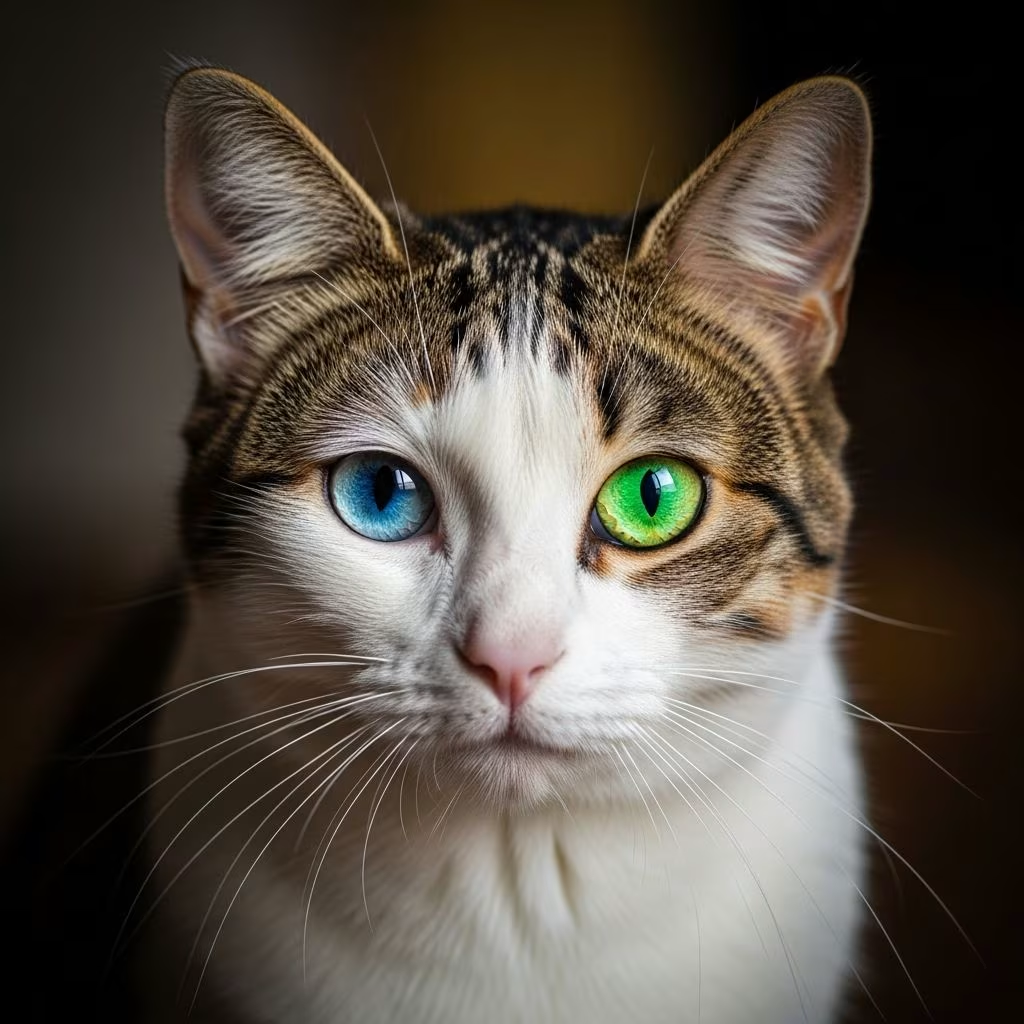
Cats with one blue eye and one eye of a different color, known as heterochromia iridis, captivate pet owners worldwide. This striking trait arises primarily from genetic factors influencing pigment distribution during early development, making it more common in certain coat patterns than others.
The Science of Feline Iris Pigmentation
Eye color in cats stems from melanin, the pigment responsible for hues ranging from blue to copper. Kittens emerge with blue eyes due to limited melanin at birth; over weeks, melanocytes deliver pigment to the irises. Uneven delivery results in heterochromia, where one eye retains blue while the other darkens.
Genetic regulation involves multiple genes. The dominant white gene (W) and white spotting gene (S) disrupt melanocyte migration, often yielding blue eyes in white or bicolor cats. Approximately 15-40% of solid white cats exhibit at least one blue eye, heightening heterochromia odds in those with partial spotting.
Genetic Foundations of Mismatched Eyes
Heterochromia is largely congenital, tied to genes controlling melanocyte activity. Mutations or mosaicism—where cells carry varying genetic info—lead to asymmetric pigmentation. In cats lacking white genes, it’s rarer, as uniform melanin distribution prevails.
- Dominant White (W/W): Produces all-white coats and frequently blue eyes due to blocked pigment.
- White Spotting (S): Creates bicolor patterns; partial interference causes one eye to lack pigment.
- O Gene Influence: Modulates orange pigmentation but interacts with white genes for odd eyes.
Breeding pairs carrying these traits increase kitten heterochromia likelihood, though exact probabilities vary by lineage.
Breeds Prone to This Unique Trait
Certain breeds show elevated heterochromia rates due to selective breeding for white or spotted coats. Turkish Van and Turkish Angora top the list, often displaying one blue and one amber eye alongside their signature patterns.
| Breed | Coat Pattern | Heterochromia Prevalence | Notable Feature ||——-|————–|————————-|—————|| Turkish Van | Bicolor/Van | High | Swimming affinity, white with colored head/tail || Turkish Angora | Solid white | High | Elegant, long-haired, playful || Japanese Bobtail | Bicolor | Moderate | Short tail, energetic || Khao Manee | Solid white | Moderate | Siamese relative, ruby points possible || British Shorthair | White variants | Low-Moderate | Stocky build, supermeowdel fame |
Non-purebred cats with white spotting also display this trait, emphasizing genetics over pedigree.
Distinguishing Congenital from Acquired Cases
Not all heterochromia is innate. Acquired forms develop postnatally from injury, inflammation, or disease. Trauma alters iris structure; conditions like uveitis or glaucoma shift pigment via melanin clumping or loss.
- Signs of acquired: Sudden color change after 12 weeks, vision issues, squinting.
- Congenital indicators: Stable from kittenhood, no discomfort.
Owners noting changes should consult vets promptly, as underlying issues like Horner’s syndrome may contribute.
Health Considerations for Odd-Eyed Cats
Congenital heterochromia poses no inherent vision threats; affected cats see normally. Blue eyes may signal deafness risk in white cats, linked to the W gene affecting inner ear melanocytes—up to 65-85% bilateral deafness in double blue-eyed whites, lower unilaterally.
Vision sensitivity arises if albinism-related, causing photophobia. Routine exams monitor for secondary issues like cataracts from chronic inflammation.
Care Tips for Cats with Mismatched Eyes
These felines thrive with standard care, plus extras:
- Protect blue eyes from UV with shaded environments.
- Monitor for tearing or cloudiness signaling infection.
- Balanced diet supports coat and eye health.
- Annual vet checks, especially for white breeds prone to deafness.
Grooming prevents debris in eyes; toys stimulate despite any hearing variance.
Myths and Facts About Cat Eye Heterochromia
| Myth | Fact |
|---|---|
| Heterochromia means blindness | Vision intact; cosmetic variation |
| Only white cats have it | Common in bicolors; rare in solids |
| Always genetic | Can be injury-induced |
| Inherited 100% | Probabilistic, breed-dependent |
Cultural Fascination with Odd-Eyed Felines
From Turkish lore venerating Van cats as divine gifts to modern social media stars, odd-eyed cats symbolize rarity and luck. Their allure transcends pets, appearing in art and folklore worldwide.
Breeding Strategies for Heterochromia
Ethical breeders pair white or spotted carriers, prioritizing health. Avoid overbreeding deafness-prone lines. Genetic testing identifies carriers, ensuring kittens without exaggerated risks.
Probability rises with parental traits: white dam x colored sire yields potential odd-eyed offspring.
FAQs on Cats with Different Eye Colors
Is heterochromia painful for cats?
No, congenital cases cause no discomfort. Acquired may signal treatable issues.
Can any cat develop odd eyes later?
Rarely; post-kitten changes warrant vet evaluation for disease or trauma.
Are odd-eyed cats more intelligent?
No evidence; personality ties to breed/individual, not eyes.
How to test for deafness in these cats?
BAER testing confirms hearing; observe responses to sounds.
Does diet affect eye color?
No, genetics dictate; nutrition prevents deficiencies mimicking issues.
Conclusion: Embracing Feline Uniqueness
Odd-eyed cats blend beauty and biology, their mismatched gazes a testament to genetic diversity. Understanding heterochromia empowers owners to cherish these special companions fully.
References
- Heterochromia: Causes, Types, Risks & more — Rolf Spectacles. 2023. https://www.rolf-spectacles.com/heterochromia/
- Understanding Cats with Different Colored Eyes — CatTree.uk. 2024. https://cattree.uk/understanding-cats-with-different-colored-eyes/
- Odd Eyes in Cats (Heterochromia) — Basepaws. 2023. https://basepaws.com/blog/odd-eyes-in-cats-heterochromia
- Heterochromia In Cats (Cats With Different Colored Eyes) — Cats.com. 2025. https://cats.com/heterochromia-in-cats
- Odd-eyed cat — Wikipedia (referencing genetics studies). 2025. https://en.wikipedia.org/wiki/Odd-eyed_cat



