
Ocular Diagnostic Tests in Veterinary Medicine
Essential diagnostic procedures for assessing eye health in animals, from tear production to retinal function.
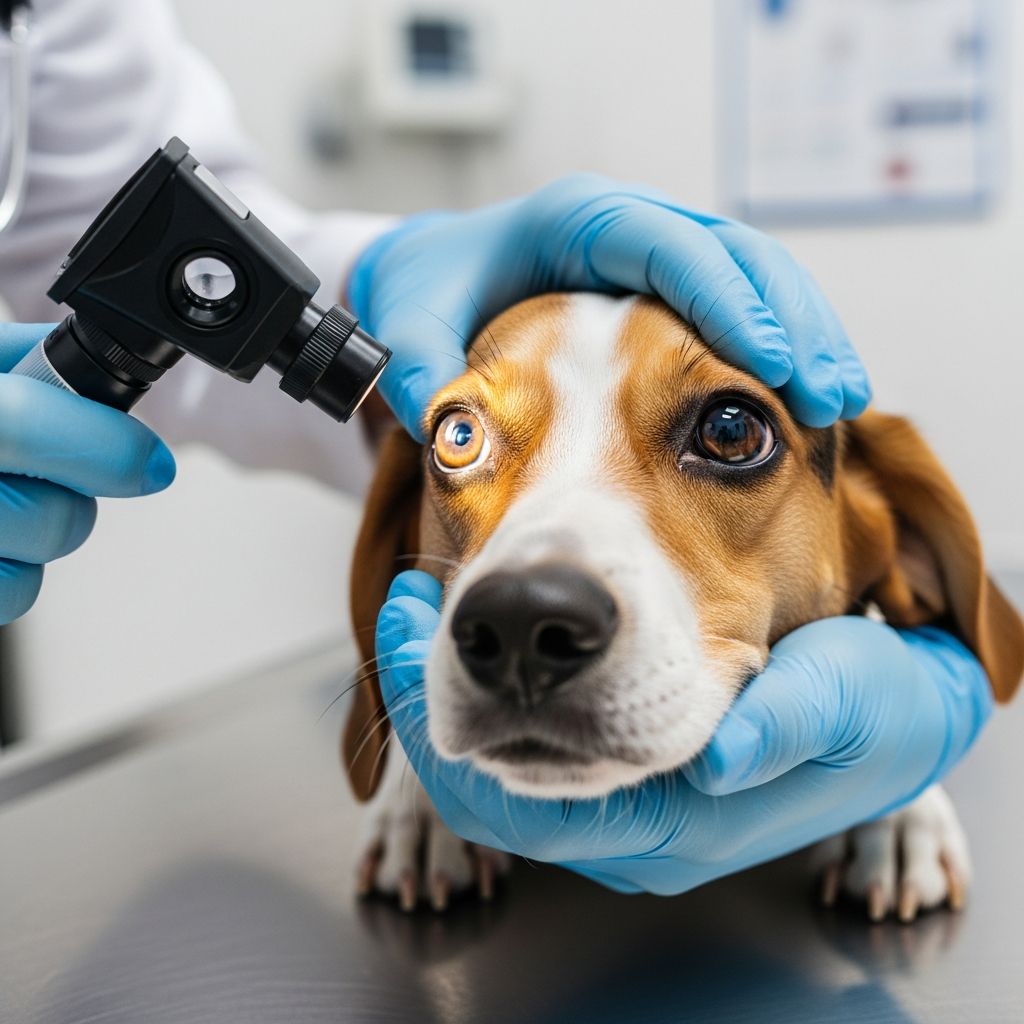
Veterinary ophthalmology relies on a series of targeted diagnostic tests to identify and manage eye disorders in animals. These procedures evaluate tear production, corneal integrity, intraocular pressure, visual function, and deeper ocular structures, enabling precise diagnoses for conditions like glaucoma, dry eye, and retinal degeneration.
Foundational Principles of Eye Examinations
A systematic approach to ocular assessments begins with patient history, breed predispositions, and age considerations. Breeds such as Cocker Spaniels, Basset Hounds, and Bulldogs are prone to specific issues like glaucoma or keratoconjunctivitis sicca (KCS). Initial observations include symmetry, discharge, and gross abnormalities before proceeding to specialized tests.
Examinations should occur in controlled lighting: bright for initial vision tests and dim for pupil evaluations. Essential tools encompass tonometers, Schirmer tear test strips, fluorescein dye, topical anesthetics, and mydriatics like tropicamide for pupil dilation.
Evaluating Tear Film and Production
Tear production is a critical first step, as deficiencies lead to dry eye syndromes. The Schirmer Tear Test (STT) involves placing a standardized strip in the lower conjunctival sac for one minute to measure wetting distance.
- Dogs: Normal >15 mm/minute
- Cats: Typically >10 mm/minute
- Rabbits: >2-3 mm/minute
Perform STT before manipulation or bright lights, as these can artificially elevate readings. Low values indicate KCS, common in breeds like West Highland White Terriers.
The phenol red thread test offers an alternative, especially for cats, with normals around 23 mm/15 seconds in felines and 34 mm/15 seconds in dogs. Tear breakup time assesses mucin and lipid layers, aiding in diagnosing unstable tear films.
Assessing Corneal Health
Fluorescein staining detects epithelial defects, ulcers, or foreign bodies by applying dye that adheres to exposed stroma under cobalt blue light. This non-invasive test is routine and performed bilaterally.
Observe for retention patterns: linear uptake suggests indolent ulcers in Boxers, while diffuse staining indicates deeper erosions. Always rinse excess dye to avoid false positives.
Intraocular Pressure Measurement
Tonometry quantifies intraocular pressure (IOP) to screen for glaucoma or uveitis. Applanation tonometers like the TonoPen are versatile, requiring topical anesthesia and calibration.
| Species | Normal IOP (mmHg) |
|---|---|
| Dog | 16.7 ± 4.0 |
| Cat | 19.7 ± 5.6 |
| Horse | 17-28 |
Measure before dilation, as mydriatics can elevate IOP. Elevated readings (>25 mmHg in dogs) warrant immediate intervention. Rebound tonometers minimize anesthesia needs in fractious patients.
Vision and Reflex Testing
Visual pathways are evaluated through behavioral and reflex tests. The menace response mimics a threat gesture; absence suggests cortical or retinal deficits. Test in lit and dark rooms to detect night blindness in progressive retinal atrophy-prone breeds like Labradors.
Pupillary light reflex (PLR) assesses subcortical pathways: direct (ipsilateral constriction) and indirect (consensual). Perform in dim light with a bright source. The dazzle reflex, a strong squint to intense light, confirms retinal function even with opaque media.
Palpebral reflex tests facial nerve integrity via eyelid touch. Obstacle courses gauge functional vision.
Anterior Segment Examination
Using slit-lamp biomicroscopy, inspect eyelids, conjunctiva, cornea, anterior chamber, iris, and lens. Magnification reveals vascularization, edema, or cells/flare in uveitis.
Evert third eyelids post-anesthesia to check for follicles or neoplasms. Lens evaluation post-dilation distinguishes nuclear sclerosis from cataracts via retroillumination.
Fundus and Posterior Segment Analysis
Direct ophthalmoscopy provides magnified views of the tapetal fundus, vessels, and optic disc. Indirect methods offer wider fields but less magnification.
Practice is key for recognizing variations; routine exams build proficiency. Look for hemorrhages, detachments, or colobomas.
Advanced Diagnostic Modalities
Electroretinography (ERG) measures retinal electrical responses post-dark adaptation. A contact lens electrode captures signals to light flashes, diagnosing outer retinal diseases like progressive retinal atrophy. Dogs adapt for 15 minutes; it’s invaluable for breeding screening.
Jones test evaluates nasolacrimal patency by flushing dye from the puncta to nares. Delays indicate obstructions. Cytology and cultures guide infectious therapies.
Common Pitfalls and Best Practices
Avoid sequencing errors: STT and tonometry precede dilation. Account for breed, age, and artifacts like proptosis-induced STT reductions. Bilateral testing ensures symmetry detection.
FAQs
What is the first test in a veterinary eye exam?
Schirmer tear test to measure production, followed by fluorescein staining.
How accurate is tonometry for glaucoma screening?
Highly reliable with species-specific norms; perform pre-dilation.
Can ERG detect early retinal disease?
Yes, it identifies dysfunction before clinical vision loss.
Why test vision in both light and dark?
To differentiate night blindness from total deficits.
Is anesthesia always needed for tonometry?
Topical only; rebound devices often skip it.
Integrating Tests for Comprehensive Care
Combine these into a minimum database: STT, fluorescein, tonometry, menace/PLR/dazzle, and ophthalmoscopy. Tailor advanced tests like ERG for suspected retinal issues. Early detection preserves vision and quality of life.
References
- Ophthalmology examinations – an easy, step-by-step guide — Vet Times. 2023. https://www.vettimes.com/news/vets/small-animal-vets/ophthalmology-examinations-an-easy-step-by-step-guide
- Ocular diagnostic testing: what, when, how? (Proceedings) — dvm360. 2022-10-01. https://www.dvm360.com/view/ocular-diagnostic-testing-what-when-how-proceedings
- Physical Examination of the Eye in Animals — Merck Veterinary Manual. 2024. https://www.merckvetmanual.com/eye-diseases-and-disorders/ophthalmology/physical-examination-of-the-eye-in-animals
- Diagnostic Testing — Animal Eye Associates. 2023. https://animaleyegroup.com/diagnostic-testing/
- Your Pet’s Eye Health: A Guide to Eye Exams and Care — MedVet. 2024. https://www.medvet.com/what-to-expect-during-your-pets-eye-exam/
- Common Ocular Tests — ACVO.org. 2023. https://www.acvo.org/tips-treatments-tricks/common-ocular-tests
Similar Articles








Read full bio of medha deb


