

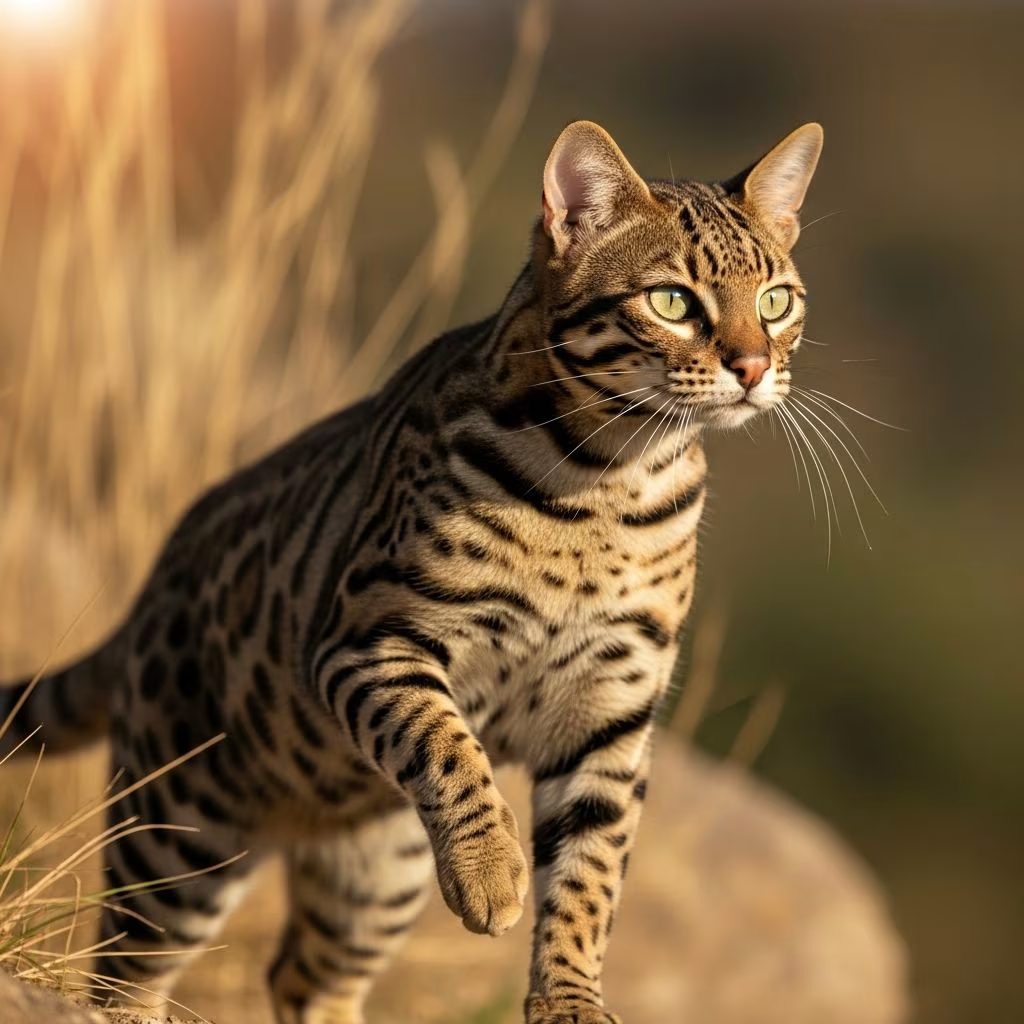
The Ocicat represents a unique achievement in feline breeding—a cat that captures the dramatic spotted aesthetic of wild jungle cats while maintaining the gentle, predictable temperament of a fully domestic companion. This breed has gained increasing recognition among cat enthusiasts worldwide, though it remains relatively uncommon outside specialized breeding circles. The breed’s story combines intentional genetic planning with accidental discovery, resulting in one of the most visually striking and behaviorally engaging domestic cat breeds available today.
The Unexpected Creation of a Spotted Icon
The Ocicat’s origin story begins with a single breeder’s ambitious vision and an element of fortunate chance. Virginia Daly, an American cat enthusiast from Michigan, initiated a deliberate breeding program in 1964 with a specific goal in mind: to create a Siamese cat displaying the characteristic ticked coloring pattern found in Abyssinian cats. This combination would produce what breeders referred to as an “Aby-pointed” Siamese—a cat with the oriental body type and personality of the Siamese but adorned with the warm, agouti-ticked coat of the Abyssinian.
Daly began by crossing a ruddy Abyssinian male with a seal-pointed Siamese female. The initial litter of kittens resembled Abyssinians in appearance but carried the genetic heritage of both parent breeds. Recognizing the potential in her first-generation cats, Daly selected a female from this litter and bred her back to a chocolate-pointed Siamese male. This second generation produced kittens much closer to her original vision, displaying the pointed coloration pattern she sought.
However, the breeding program yielded an unexpected treasure. Among the planned pointed kittens in one litter emerged a distinctly different kitten—an ivory-colored male with striking golden spots. This serendipitous appearance captured the imagination of Daly’s family. Her daughter observed that the spotted kitten bore a striking resemblance to an ocelot, a wild spotted cat species from Central and South America. This observation inspired both the kitten’s name, Tonga, and ultimately the breed name itself: Ocicat.
Foundation Breeds and the Role of Strategic Outcrossing
The development of the Ocicat breed required careful genetic planning beyond Virginia Daly’s initial vision. While the breed’s foundation rested on the Siamese and Abyssinian crosses, a significant development occurred during the breed’s registration process. When the Cat Fanciers’ Association (CFA) officially registered the Ocicat breed, an administrative error listed the American Shorthair as one of the foundational breeds rather than acknowledging that the breed emerged purely from Siamese and Abyssinian genetics.
Despite this registration mistake, breeders embraced the inclusion of American Shorthair genetics in their breeding programs. This decision proved transformative for the breed’s development. The American Shorthair contributed several valuable traits that enhanced the breed standard. Most notably, this outcross introduced the silver color variety, which became one of the breed’s most sought-after characteristics. Additionally, the American Shorthair infused stronger musculature and larger bone structure into the breed, creating a more substantial and athletic cat compared to what would have resulted from Siamese-Abyssinian crosses alone.
The introduction of American Shorthair genetics also contributed to more uniform spotting patterns, refining the breed’s visual consistency. These strategic outcrosses transformed the Ocicat from a cat that would have maintained a slender, oriental body type to the medium-to-large, muscular feline recognized in modern breed standards.
Recognition and International Expansion
Formal breed recognition evolved gradually across different cat registries. The CFA granted initial recognition to the Ocicat in 1966, with championship status following in 1987. The International Cat Association (TICA) acknowledged the breed’s development by awarding championship status in August 1986, preceding the CFA’s championship recognition.
European recognition came later. The Ocicat first arrived in the United Kingdom in 1988 when two cats from the Catoninetail cattery were imported from the United States. Additional imports followed, with four more cats arriving in 1989. The Fédération Internationale Féline (FIFe) formally recognized the breed in 1992 after the first European specimens arrived in Budapest.
The Governing Council of the Cat Fancy (GCCF) extended preliminary recognition to the breed in 1997, provisional status in 2001, and full championship status in October 2004. This timeline reflects the breed’s gradual acceptance within the international cat fancy, with the breed remaining relatively uncommon in European countries compared to more established breeds.
Physical Characteristics and Coat Patterns
Modern Ocicats embody a striking combination of exotic appearance with entirely domestic genetics. The breed achieves a medium-to-large size with a muscular, athletic build that conveys strength and agility. The distinctive spotted coat pattern forms the breed’s signature characteristic, though Ocicats can display various recognized patterns beyond the classic spotted appearance.
The breed exhibits four primary coat patterns: Spotted Tabby, Classic Tabby, Ticked Tabby, and Solid/Self with Smoke variations. The Spotted Tabby pattern, featuring discrete spots distributed across the body, represents the most recognizable and originally intended pattern. Recently, breeders have identified the presence of the Burmese Color Restriction (BCR) allele in some Ocicats, occasionally resulting in pointed kittens reminiscent of Siamese coloration.
Color varieties include twelve recognized options, with the silver colorway particularly valued among breeders and enthusiasts. The breed can display tawny, cinnamon, fawn, blue, chocolate, and other variations, providing visual diversity within the breed.
Personality and Behavioral Traits
The Ocicat’s temperament defies the assumption that exotic appearance correlates with aloof or challenging behavior. Despite their wild appearance, Ocicats demonstrate profound affection and strong attachment to their human families. Breeders and owners consistently describe the breed as exceptionally loving and devoted, with a particular tendency toward forming close bonds with individual family members.
These cats display high intelligence combined with playful energy and curiosity. Their active nature manifests in enthusiastic engagement with toys, climbing structures, and interactive play sessions. Unlike some more reserved cat breeds, Ocicats are notably vocal and enjoy communicating with their owners through various vocalizations. Their social nature makes them poor candidates for solitary households or situations where they will spend extended periods alone.
Ocicats thrive in family environments and develop strong group dynamics with multiple household members. Males, in particular, demonstrate tender and nurturing behavior, extending their affectionate nature toward kittens and other family members. The breed’s social intelligence allows them to read human emotions and respond with appropriate comfort and companionship.
Health Considerations and Longevity
The Ocicat’s diverse genetic background—drawing from three distinct breeds—contributes to robust health and strong genetic vigor. The breed does not require specialized medical care beyond standard feline health maintenance. Their genetic diversity provides natural protection against many hereditary conditions that plague more genetically narrow breeds.
Ocicats typically enjoy lifespans of 15 to 18 years, reflecting the breed’s overall good health and vitality. This longevity allows owners to develop extended relationships with their feline companions, often spanning multiple human life phases.
Living with an Ocicat: Care and Environmental Needs
Ocicats adapt well to various living situations, though their active, social nature requires appropriate environmental enrichment. These cats benefit from vertical climbing space, interactive toys, and regular engagement with their owners. Their intelligence means they respond well to training and can learn to walk on leashes, engage in fetch games, and participate in interactive play sessions beyond typical cat behavior.
The breed’s short, spotted coat requires minimal grooming compared to long-haired breeds. Regular brushing maintains coat health and reduces shedding, while routine nail trimming and ear cleaning constitute standard feline care practices.
Ocicats thrive when provided with stimulating environments that challenge their intelligence and athletic abilities. Puzzle feeders, window perches for bird watching, and interactive play sessions prevent boredom and associated behavioral problems. Their vocal nature means they will communicate their needs and desires, making them engaging household companions for owners who appreciate feline conversation.
Selecting an Ocicat: Considerations for Prospective Owners
Potential Ocicat owners should recognize this breed’s rarity and relatively limited availability. Unlike common domestic shorthairs or established popular breeds, Ocicats require contact with specialized breeders, often necessitating waiting lists and travel considerations. This scarcity reflects both the breed’s recent establishment and ongoing development work by dedicated breeders.
The breed’s high energy level and social requirements make them suitable for active households where owners can provide regular interaction and environmental stimulation. Ocicats are not ideal for owners seeking independent, low-maintenance cats. Instead, they thrive with families or individuals who view cats as interactive companions deserving of dedicated attention and engagement.
Prospective owners should research breeders thoroughly, ensuring they prioritize health testing, genetic diversity, and appropriate socialization of kittens. Responsible breeding practices maintain the breed’s health and stable temperament while preventing the genetic problems that plague irresponsible breeding operations.
The Ocicat’s Place in the Feline World
The Ocicat represents a remarkable achievement in selective breeding—the creation of a visually exotic cat that remains entirely domestic in genetics, health, and behavior. This breed demonstrates how strategic genetic planning can produce dramatic aesthetic results while maintaining genetic health and desirable personality traits. The breed’s development from an accidental discovery to an internationally recognized and championship-status breed reflects the dedication of breeders worldwide who recognized and cultivated Tonga’s unique potential.
For cat enthusiasts seeking an extraordinary companion that combines striking visual appeal with genuine affection and engaging personality, the Ocicat offers a compelling choice. The breed’s relative rarity ensures that Ocicat ownership carries a certain distinction, appealing to those who appreciate distinctive and uncommon animals. As the breed continues to develop and gain recognition internationally, more individuals have the opportunity to experience the unique rewards of living with this remarkable domestic cat.
References
- History of Ocicat Cats — Cat Breeds Info. Retrieved from https://www.cat-breeds-info.com/ocicat-cats.html
- The History of the Ocicat — Thor’s Oak Ocicats. Retrieved from https://thorsoak-ocicats.com/histories-for-thors-oak-ocicats/ocicat-history
- History & Character — World of Ocicat. Retrieved from https://www.worldofocicat.com/ocicat/history-and-character/
- Ocicat — Wikipedia. Retrieved from https://en.wikipedia.org/wiki/Ocicat
- Ocicat & Ocicat Classic — The Governing Council of the Cat Fancy. Retrieved from https://www.gccfcats.org/getting-a-cat/choosing/cat-breeds/ocicat/
- Ocicat — Fédération Internationale Féline. Retrieved from https://fifeweb.org/cats/breeds/ocicat/
- Ocicat — The Cat Fanciers’ Association. Retrieved from https://cfa.org/breed/ocicat/
- Ocicat Cats: History, Personality, Care and Special Needs — My Pacha. Retrieved from https://my-pacha.com/blogs/pacha/ocicat-cat-breed-guide



