

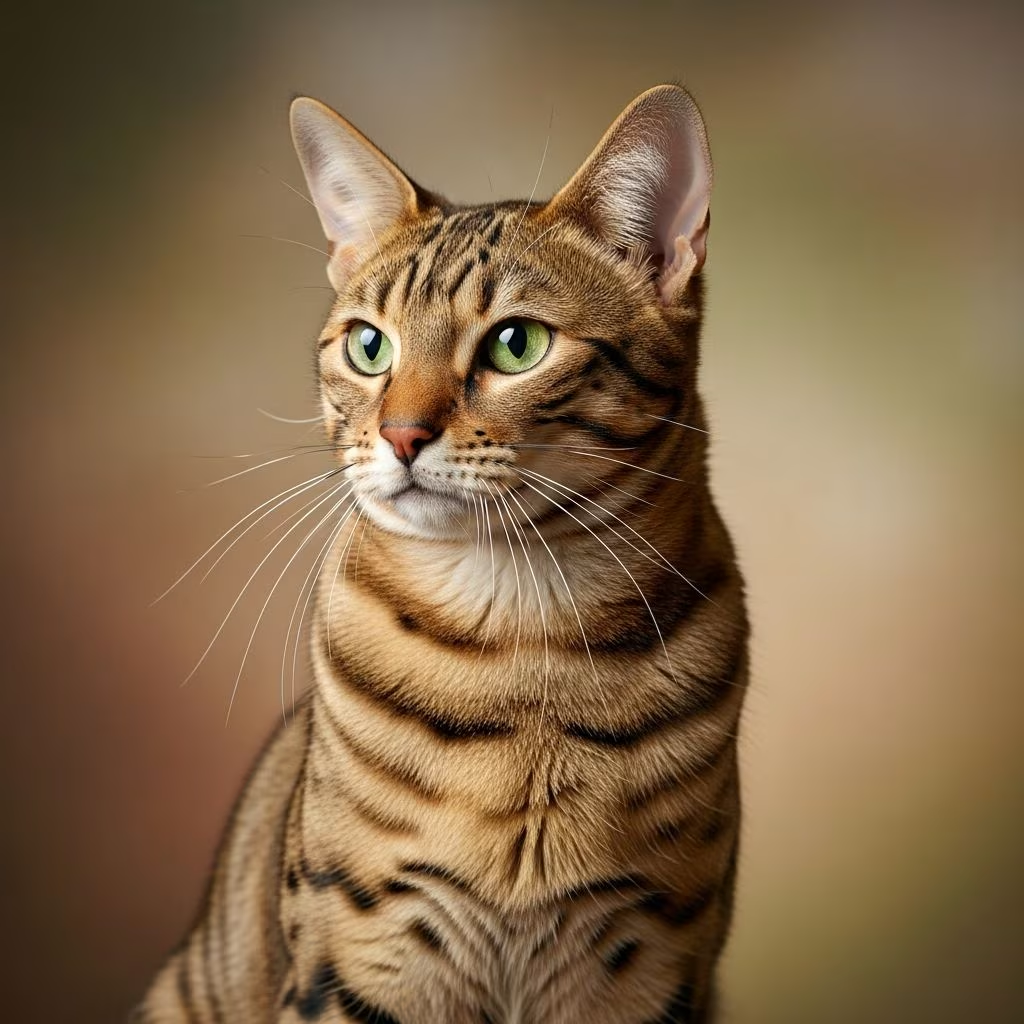
The Ocicat stands out as a captivating domestic cat breed, celebrated for its bold spotted coat that mimics wild felines like the ocelot, paired with a vibrant, people-loving personality. Despite its jungle-inspired appearance, this breed traces its roots entirely to household cats, making it a safe, trainable companion for modern homes.
Origins and Development of the Ocicat
The story of the Ocicat begins in 1964 in Michigan, where breeder Virginia Daly aimed to produce Siamese cats with Abyssinian-style pointed coats. She mated a ruddy Abyssinian male, Dalai Teta Tim of Selene, with a seal-point Siamese female, Dalai Tomboy Patter. The first litter resembled Abyssinians, and Daly kept a female named Dalai She for further breeding.
In the next generation, pairing Dalai She with a chocolate-point Siamese named Champion Whitehead Elegante Sun yielded kittens including an unexpected ivory male with golden spots and copper eyes. Dubbed Tonga for his ocelot-like look, he was neutered and sold as a pet. Inspired by geneticist Dr. Clyde Keeler’s interest in recreating extinct spotted cats like the Egyptian Fishing Cat, Daly repeated the cross, producing more spotted kittens, including the tawny Dalai Dotson.
A registration error by The Cat Fanciers’ Association (CFA) listed American Shorthairs as parents alongside Abyssinians, prompting breeders to incorporate them. This addition broadened color options, including silvers, and shifted the body type toward a sturdier build with heavier bones, distinguishing it from the slimmer Siamese frame.
Early names like Accicat and Ocellete gave way to Ocicat. CFA registered it in 1966 for breeding stock, granting championship status in 1987. The International Cat Association (TICA) recognized it in 1986, and Europe’s Governing Council of the Cat Fancy followed in 2006. Imports to the UK started in 1988, with FIFe approval in 1992.
Distinctive Physical Traits
Ocicats boast a medium-to-large, athletic build weighing 6-15 pounds, with males typically larger. Their bodies are long and muscular, supported by strong legs and oval paws. The head is modified wedge-shaped with wide-set ears, bold whisker pads, and almond-shaped eyes in shades of gold, copper, green, or blue.
The short, smooth coat features a unique spotted tabby pattern: large, rounded spots distinct on the sides, transitioning to rosettes on the flanks, with barring on legs and tail. Colors include tawny, chocolate, cinnamon, blue, lavender, fawn, silver in those tones, ebony silver, and a rare amber.
| Color Variant | Base Coat | Spot Color |
|---|---|---|
| Tawny | Ivory/cream | Brown/black |
| Chocolate Silver | Silver/white | Chocolate brown |
| Blue | Ivory | Blue-gray |
| Amber | Light tan | Orange-gold |
This pattern, governed by the spotted tabby gene from American Shorthair and agouti from Abyssinian/Siamese, creates a wild aesthetic without hybrid wild blood.
Temperament and Behavior
Ocicats embody a “dog-like” charisma: outgoing, intelligent, and trainable. They greet guests warmly, play fetch, walk on leashes, and obey voice commands, adapting easily to household rules. Their sociable nature suits families, other pets, and even travel, though they dislike prolonged solitude.
Inherited from Siamese and Abyssinian roots, they are active, curious explorers who chirp or trill rather than yowl excessively. Loyal to one primary person yet affectionate with all, males especially dote on kittens. They thrive in stimulation-rich environments, excelling at puzzle toys and agility games.
- Playful Energy: High activity levels demand daily interactive play.
- Affectionate: Seeks laps and cuddles without clinginess.
- Social: Bonds with dogs, kids, and strangers.
- Intelligent: Learns tricks rapidly.
Grooming and Daily Care
The low-maintenance coat requires weekly brushing to distribute oils and reduce shedding. Baths are rare; a rubber curry brush or chamois cloth enhances sheen. Dental care, nail trims every 10-14 days, and weekly ear checks prevent issues.
Provide climbing trees, window perches, and toys mimicking prey. A diet rich in high-quality protein supports their muscular frame; measure portions to prevent obesity in less active adults.
Health Considerations and Lifespan
Robust genetics yield a 12-18 year lifespan. Common concerns mirror parent breeds: hypertrophic cardiomyopathy (HCM) from American Shorthair, pyruvate kinase deficiency (PKD) from Abyssinian, and progressive retinal atrophy (PRA). Responsible breeders screen via DNA tests and cardiac ultrasounds.
Annual vet visits, vaccinations, and parasite control are essential. Monitor for dental disease and obesity. Early socialization and enrichment mitigate stress-related behaviors.
Ideal Homes and Lifestyle Fit
Best for active households with time for engagement. They flourish with children, dogs, and fellow cats but may overwhelm timid pets. Apartments work if exercise is ample; rural settings offer hunting outlets.
- Pros: Trainable, low-shed, hypoallergenic potential.
- Cons: Needs companionship, not fully independent.
Bringing Home an Ocicat
Source from CFA/TICA breeders emphasizing health testing. Kittens cost $800-$2,500; rescues occasionally available. Prepare with scratching posts, litter boxes per cat plus one, and vertical space. Gradual introductions ease multi-pet homes.
Frequently Asked Questions (FAQs)
Are Ocicats hypoallergenic?
No, but their short coat sheds minimally, benefiting allergy sufferers.
Do Ocicats get along with dogs?
Yes, their confident, dog-like traits foster easy friendships.
How much exercise do Ocicats need?
30-60 minutes daily of play, plus free roam.
Can Ocicats be left alone?
Preferably not for long; they crave interaction.
What is the rarest Ocicat color?
Amber, with its golden hues on tan.
Ocicats offer an irresistible blend of visual drama and devoted companionship, proving that wild style thrives in domestic bliss.
References
- Ocicat Cats History — Cat Breeds Info. Accessed 2026. https://www.cat-breeds-info.com/ocicat-cats.html
- The Ocicat — Pet Health Network. Accessed 2026. https://www.pethealthnetwork.com/cat-health/cat-breeds/ocicat
- Ocicat — Wikipedia. Accessed 2026. https://en.wikipedia.org/wiki/Ocicat
- Ocicat Cat Breed — Cats.com. Accessed 2026. https://cats.com/cat-breeds/ocicat
- History & Character — World of Ocicat. Accessed 2026. https://www.worldofocicat.com/ocicat/history-and-character/
- Ocicat — Fédération Internationale Féline (FIFe). Accessed 2026. https://fifeweb.org/cats/breeds/ocicat/
- Ocicat Breed Standard — The Cat Fanciers’ Association (CFA). Accessed 2026. https://cfa.org/breed/ocicat/



