
Flies Causing Obligatory Myiasis in Animals
Discover the life cycles, impacts, and control strategies for flies whose larvae infest living animal tissues, posing serious threats to livestock and pets.
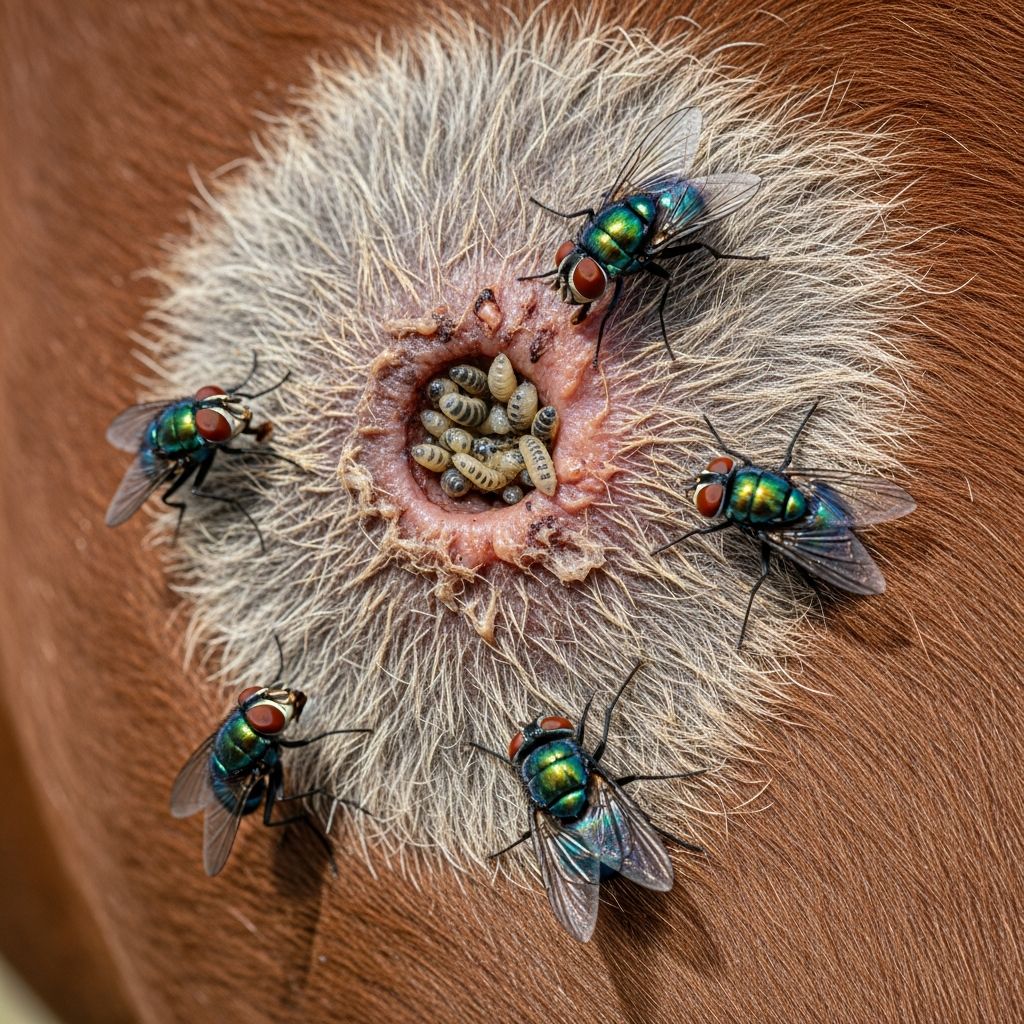
Obligatory myiasis refers to infestations where fly larvae must develop within the living tissues of a host animal to complete their life cycle. Unlike opportunistic flies, these species depend entirely on host invasion for larval survival, leading to severe tissue damage in livestock, pets, and occasionally wildlife.
Understanding Obligatory Myiasis
Obligatory myiasis differs from facultative or accidental types because the larvae are obligate parasites, requiring live host tissue from the start. These flies target wounds, natural body openings, or intact skin, burrowing deeply and feeding voraciously on blood and flesh. This behavior distinguishes them from facultative myiasis flies, which opportunistically infest soiled or necrotic areas, or accidental cases where larvae are ingested harmlessly.
In animals, such infestations can escalate rapidly, causing extensive lesions, secondary infections, and even death if untreated. Common in tropical and subtropical regions, these parasites thrive in warm climates but can persist in pupal stages through colder periods.
Key Species Involved
Several fly genera dominate obligatory myiasis cases in veterinary practice. Understanding their morphology and preferences aids in targeted control.
- New World Screwworm (Cochliomyia hominivorax): Native to the Americas, this fly’s larvae invade fresh wounds, even tiny ones like tick bites. Adults are metallic blue-green, and females deposit egg masses near openings. Larvae feature screw-like body segments for burrowing.
- Old World Screwworm (Chrysomya bezziana): Prevalent in Asia, Africa, and the Middle East, these larvae target wounds in cattle, sheep, and goats. Their caudal ends show black peritremes, visible at lesion surfaces during feeding.
- Bot Flies (Cuterebra spp.): Rodent and rabbit bots occasionally affect dogs, cats, and other mammals. Larvae enter via orifices or skin punctures, forming warbles under the hide.
- Wohlfahrtia vigil: Flesh flies causing dermal myiasis in young animals, including occasional human infants. Larvae penetrate skin, creating inflamed cavities.
- Wolfhahrtia magnifica: Similar to Wohlfahrtia, infesting livestock with single larvae per lesion.
These species exhibit specialized larval adaptations, such as strong oral hooks and spiracular plates for breathing in deep tissues.
Life Cycles of Myiasis-Producing Flies
The reproductive strategies of these flies are finely tuned for host dependency. Adult females larviposit—depositing live larvae directly—or oviposit eggs that hatch rapidly on the host.
| Species | Egg/Larva Deposition | Development Time | Pupation Period |
|---|---|---|---|
| Cochliomyia hominivorax | 300+ eggs per mass on wounds | 5-7 days to maturity | 11-18 days |
| Chrysomya bezziana | 6-16 larvae at a time | Variable, up to weeks | Prolonged in cold |
| Cuterebra spp. | Eggs on vegetation; larvae enter orifices | 4-10 weeks | 10-20 days |
| Wohlfahrtia vigil | Larvae directly into skin | 7-15 days | Variable |
Adults emerge, mate, and females seek hosts within days. Lifespans vary: females up to 40 days, males shorter. Pupae overwinter, ensuring persistence.
Host Range and Clinical Signs
Affected animals span livestock (cattle, sheep, goats), pets (dogs, cats), and exotics (rabbits, rodents). Even humans face risks in endemic areas.
- Cattle and sheep: Deep, foul-smelling wounds in navels, vulvas, or surgical sites.
- Dogs/cats: Cuterebra warbles on necks, heads; screwworm in ears, anus.
- Young animals: Exhaustion, toxemia from larval secretions.
Signs include restlessness, wound enlargement, serosanguinous discharge, and anemia from blood-feeding larvae—up to 300 per lesion. Inflammation worsens with self-trauma.
Diagnosis Methods
Confirming obligatory myiasis relies on larval morphology, geography, and lab analysis. Extracted maggots reveal species-specific traits: peritremes, spines, spiracles.
- Field ID: History of endemic exposure; visible caudal ends in wounds.
- Lab Confirmation: Submit to entomologists; differentiate from facultative larvae (e.g., blowflies).
- Imaging: Ultrasound for deep Cuterebra bots.
Report suspect cases to authorities to prevent spread.
Treatment Protocols
Immediate intervention saves lives and limits spread. Steps include:
- Manual Removal: Clip hair, sedate animal, extract larvae with forceps. Kill removed maggots to halt pupation.
- Pharmacotherapy: Ivermectin (200 mcg/kg SC/oral) kills screwworms, provides 2-3 weeks protection. Spinosad/milbemycin for dogs expels maggots rapidly.
- Wound Care: Debride necrotic tissue, flush with antiseptics, apply healing topicals. Antibiotics for secondary bacteria.
- Follow-up: Monitor for reinfestation; quarantine if needed.
Surgical excision for bots; avoid crushing larvae to prevent anaphylaxis from bodily fluids.
Prevention and Control Strategies
Proactive measures curb outbreaks, especially in high-risk areas.
- Sanitation: Clean wounds promptly; remove feces/urine to deter egg-laying.
- Insecticides: Pour-ons, sprays on at-risk animals; sterile insect technique for screwworms.
- Barriers: Screens in barns; ear tags for flies.
- Eradication Programs: Mass sterile male releases eradicated screwworms from the US.
- Quarantine: Inspect imports; report detections.
For pets, regular grooming and prompt wound care suffice.
Economic and Public Health Impacts
Obligatory myiasis costs billions in losses: treatment, hides devaluation, mortality. Eradication efforts, like USDA’s screwworm program, saved industries. Zoonotic risks exist, with larval migration to humans rare but serious.
FAQs
What is the difference between obligatory and facultative myiasis?
Obligatory requires live hosts; facultative opportunistically infests wounds or soiled areas.
How quickly does screwworm infestation progress?
Larvae mature in days, potentially killing untreated animals rapidly via tissue destruction.
Can myiasis affect indoor pets?
Yes, via open wounds or poor hygiene; Cuterebra common in cats chasing rodents.
Is ivermectin safe for all animals?
Dosage-specific; consult vets, avoid in collies sensitive to it.
How to prevent myiasis in livestock?
Wound treatment, sanitation, insecticides, and surveillance.
Advanced Research Insights
Recent studies emphasize integrated pest management, combining genetics (sterile releases) and vaccines against fly antigens. Climate change may expand ranges, urging vigilance.
References
- Obligatory Myiasis-producing Flies of Animals — Merck Veterinary Manual. 2023. https://www.merckvetmanual.com/integumentary-system/flies/obligatory-myiasis-producing-flies-of-animals
- Managing Maggots & Bots in Dogs & Cats — Clinician’s Brief. 2022-01-15. https://www.cliniciansbrief.com/article/managing-maggots-bots-dogs-cats
- Myiasis – Livestock Veterinary Entomology — Texas A&M University. 2024. https://livestockvetento.tamu.edu/insectspests/myiasis/
- Myiasis — PMC – NIH. 2011-12-01. https://pmc.ncbi.nlm.nih.gov/articles/PMC3255963/
- Cochliomyia hominivorax — Companion Animal Parasite Council. 2023. https://capcvet.org/guidelines/cochliomyia-hominivorax/
Similar Articles








Read full bio of Sneha Tete


