
Nutrition for Cats with Chronic Kidney Disease
Essential dietary guidelines to manage feline CKD and improve quality of life.
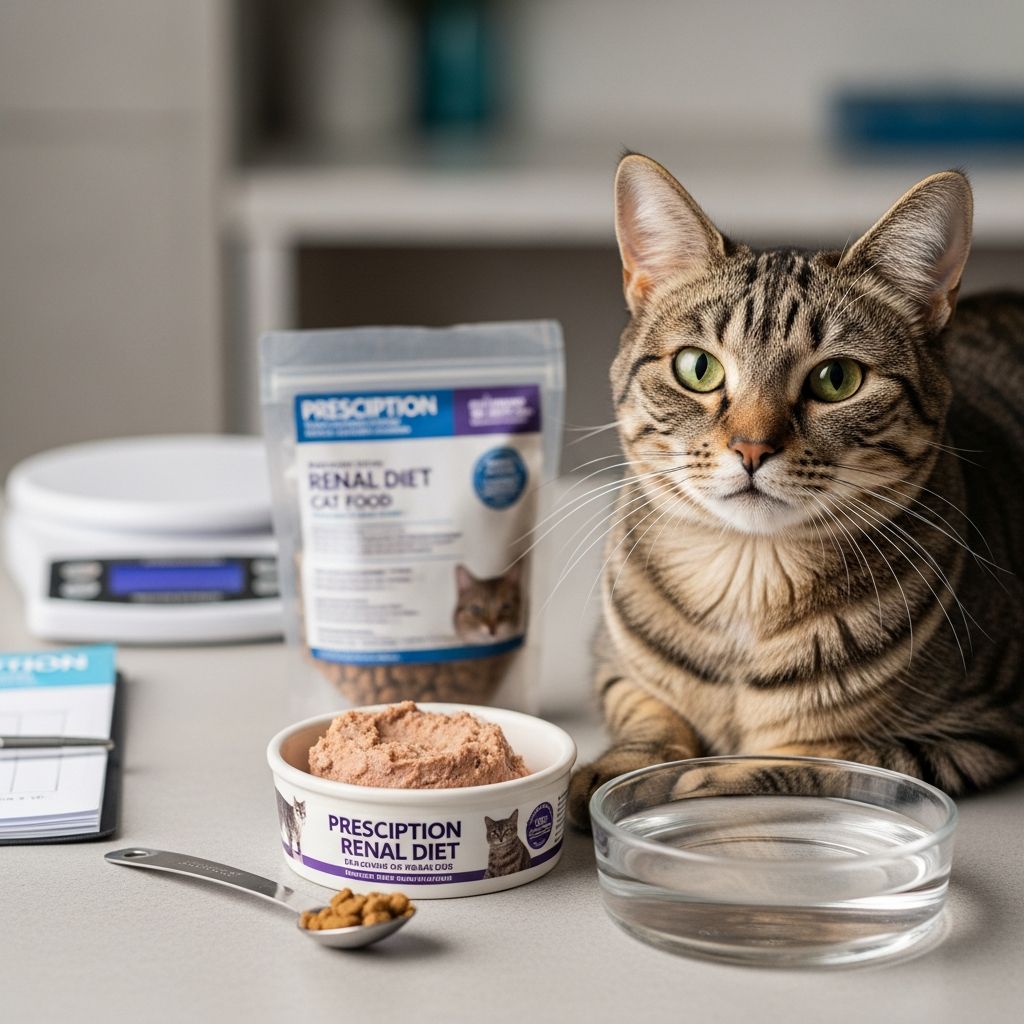
Understanding Chronic Kidney Disease in Cats
Chronic kidney disease (CKD) is a progressive condition that affects many cats, particularly as they age. When a cat’s kidneys lose their ability to filter waste products effectively, specialized nutritional management becomes essential to maintaining quality of life and slowing disease progression. Proper nutrition is one of the most important factors in managing this condition, and veterinary therapeutic diets have been specifically designed to address the unique nutritional needs of cats with CKD.
The kidneys play a crucial role in filtering waste products from the blood and regulating fluid and mineral balance throughout the body. When kidney function declines, waste products accumulate in the bloodstream, leading to various clinical signs and complications. Through carefully formulated kidney-support diets, it is possible to reduce the burden on the failing kidneys while maintaining your cat’s overall health and nutritional status.
Four Main Goals for Managing CKD in Cats
Effective management of chronic kidney disease in cats requires a comprehensive approach. The primary objectives of nutritional therapy include:
- Control clinical signs associated with the build-up of waste products in the blood, including reducing symptoms of uremia and azotemia
- Minimize problems with fluid and mineral balance to prevent complications such as hypokalemia and electrolyte imbalances
- Sustain adequate nutrition to keep your cat at a stable body weight and maintain muscle mass
- Slow the progression of CKD through targeted dietary modifications that reduce stress on the kidneys
What Are Kidney-Support Diets?
Veterinary therapeutic diets, commonly referred to as “kidney support” or “kidney friendly” products, have been scientifically formulated to meet the specific nutritional needs of cats with CKD. These specialized diets are distinctly different from standard over-the-counter cat foods designed for healthy adult cats. Kidney-support diets are available in multiple formats to accommodate different feeding preferences and dietary needs:
- Kibble (dry food)
- Canned (wet food)
- Liquid formulations
Research has demonstrated that cats with CKD who consume kidney-support diets are often better able to avoid metabolic acidosis and can experience slowed disease progression. This makes dietary intervention one of the most valuable tools in managing chronic kidney disease in feline patients.
Key Nutritional Components of Kidney-Support Diets
Reduced Phosphorus Levels
One of the most critical nutritional modifications in kidney-support diets is the reduction of phosphorus content. When kidney function declines, the organs lose their ability to eliminate phosphorus efficiently through the urine, leading to hyperphosphatemia—elevated phosphorus levels in the blood. Limiting dietary phosphorus in cats with CKD appears to help delay disease progression significantly.
Since phosphorus content in the diet is inherently linked to protein content, achieving lower phosphorus levels typically requires some reduction in dietary protein as well. Veterinary therapeutic diets are typically marketed in two categories based on disease stage. Products labeled for early kidney disease have reduced phosphorus and moderately reduced protein levels, while those formulated for advanced kidney disease have more significantly restricted phosphorus content.
It is important to note that dietary modification may take several weeks to demonstrate an effect on phosphorus status in the body. Your veterinarian should monitor phosphorus levels regularly, and if diet alone fails to achieve the phosphorus targets, an intestinal binding agent may be recommended to further reduce phosphorus absorption.
Controlled Protein Levels
Protein management is essential in kidney-support diets, though the approach requires careful balance. While protein intake must be controlled to limit the production of harmful nitrogenous wastes, it remains crucial to provide high-quality proteins in adequate quantities to meet your cat’s minimum nutritional requirements. This approach helps reduce the accumulation of nitrogenous waste products that contribute to uremic symptoms while maintaining muscle mass, immune function, and overall body condition.
High-quality proteins with excellent digestibility and balanced amino acid profiles are preferred in kidney-support formulations. This ensures that your cat receives the nutritional benefits of protein while minimizing the metabolic burden on compromised kidneys.
Reduced Sodium
Sodium content is another important consideration in kidney-support diets. These specialized formulations contain lower levels of sodium compared to standard cat foods, which helps manage blood pressure and fluid balance in cats with CKD. The sodium content in therapeutic kidney diets typically ranges from 0.5 to 1 gram per 1000 kilocalories for cats.
Increased Potassium
Cats with CKD frequently experience hypokalemia, or low potassium levels in the blood. This occurs because the kidneys lose their normal filtering capacity, and excessive potassium is lost through the urine. This potassium depletion can worsen the progression of CKD and lead to decreased appetite and muscle weakness. To counteract this problem, kidney-support diets contain elevated levels of potassium supplementation beyond what is found in maintenance diets. The potassium content in therapeutic kidney diets for cats typically ranges from 1.4 to 2.6 grams per 1000 kilocalories.
Your cat’s potassium status should be assessed regularly through blood work, and additional supplementation may be recommended by your veterinarian if dietary potassium alone is insufficient.
Enhanced Omega-3 Fatty Acids
Kidney-support diets contain increased levels of omega-3 fatty acids, particularly EPA (eicosapentaenoic acid) and DHA (docosahexaenoic acid). These long-chain omega-3 fatty acids provide multiple benefits for cats with CKD. A high nutritional intake of EPA and DHA promotes blood fluidity, enhances glomerular filtration, and supports proper vascularization of the kidneys. A standard dosage of 40 mg/kg EPA plus 25 mg/kg DHA per day is recommended for cats with CKD.
When omega-3 fatty acids are supplemented at sufficient concentrations in the diet, this intake is associated with improved life expectancy in cats suffering from kidney disease. It is important to note that alpha-linolenic acid, while sometimes included in pet foods, is insufficiently converted to EPA and DHA in cats, making direct supplementation of these long-chain fatty acids essential.
Additional Nutritional Enhancements
Beyond the primary nutritional modifications, many kidney-support diets include:
- Increased antioxidants such as vitamins C and E to reduce renal oxidative stress and protect kidney tissue
- Added soluble fiber to promote colonic bacterial growth and utilization of nitrogen and urea, potentially reducing uremic toxins and supporting cats with constipation—a common complication of CKD
- Essential vitamins and minerals including vitamin A, D3, E, and B-complex vitamins to support overall health
Hydration and Moisture Content
Adequate hydration is absolutely essential for cats with chronic kidney disease, as proper fluid intake helps facilitate the elimination of waste products through the kidneys. Cats with CKD are particularly prone to dehydration, which can accelerate disease progression and worsen clinical signs. Therefore, wet food is strongly recommended over dry kibble for cats with kidney disease.
Canned and liquid kidney-support diets provide significantly higher moisture content than dry foods, encouraging greater water consumption and maintaining proper hydration status. When wet food is combined with low phosphorus content, controlled protein levels, and high EPA and DHA intake, it represents the most appropriate dietary choice for cats with renal insufficiency. Additionally, providing multiple bowls of fresh water throughout the home can further encourage adequate fluid intake. Some cats may also be enticed to drink more if offered low-sodium broth or tuna juice mixed with water.
Making Nutritional Choices for Your Cat with CKD
Working with Your Veterinarian
Your veterinarian will help you select an appropriate kidney-support diet formulation tailored to your cat’s specific stage of disease and individual nutritional needs. There are numerous commercial therapeutic diets marketed for both early and advanced kidney disease, available in kibble, canned, and liquid formats. These products are specifically designed to be palatable and encourage adequate food consumption, which is critical for maintaining stable body weight and body condition in cats with CKD.
Enhancing Palatability
If your cat is reluctant to eat the prescribed kidney-support diet, there are several safe strategies to improve palatability and encourage consumption. You may add water, tuna juice, or low-sodium broth to the food to enhance its flavor and appeal. Warming the food slightly can also increase its aroma, making it more enticing to your cat. However, any additions should be discussed with your veterinarian to ensure they do not compromise the nutritional balance of the therapeutic diet.
Monitoring Body Condition
Maintaining appropriate body condition is crucial in cats with CKD. Your veterinarian will assess your cat’s weight and body condition regularly to ensure the current diet is providing adequate nutrition. If your cat is losing weight or becoming too thin, dietary adjustments or additional nutritional support may be necessary. Conversely, overweight cats may benefit from portion control while maintaining the therapeutic diet formulation.
Dietary Considerations by Disease Stage
Kidney-support diets are formulated differently depending on whether your cat has been diagnosed with early or advanced chronic kidney disease. Early kidney disease diets contain moderately reduced protein and phosphorus levels, suitable for cats in the initial stages of CKD. Advanced kidney disease diets have more significantly restricted phosphorus content and more carefully controlled protein levels to manage the more severe metabolic complications that occur as kidney function declines further.
Your veterinarian will recommend the most appropriate formulation based on your cat’s bloodwork results, including serum creatinine, blood urea nitrogen (BUN), and phosphorus levels, as well as the stage of kidney disease according to International Renal Interest Society (IRIS) guidelines.
Frequently Asked Questions
Q: Can I feed my cat a regular diet if they have chronic kidney disease?
A: No, regular adult cat foods are not formulated to address the specific needs of cats with CKD. Standard diets contain higher levels of phosphorus, sodium, and protein that can accelerate kidney disease progression. Kidney-support diets are specifically formulated to slow disease progression and manage clinical signs.
Q: How long does it take for a kidney-support diet to show results?
A: Dietary modification may take several weeks to demonstrate measurable effects on blood phosphorus levels and other markers. Your veterinarian will monitor your cat’s bloodwork regularly to assess the effectiveness of the dietary intervention and make adjustments if needed.
Q: My cat won’t eat the kidney-support diet. What should I do?
A: Try enhancing palatability by adding water, tuna juice, or low-sodium broth to the food, or warming the food slightly. Transition gradually to the new diet by mixing increasing amounts with your cat’s current food. If your cat continues to refuse the diet, consult your veterinarian for alternative formulations or feeding strategies.
Q: Are there different types of kidney-support diets available?
A: Yes, kidney-support diets are available as kibble, canned (wet), and liquid formulations. Canned and liquid options are generally preferred because they provide higher moisture content, which encourages hydration—an essential component of CKD management.
Q: Can supplements help my cat with CKD?
A: Kidney-support diets are formulated to provide all necessary nutrients, but your veterinarian may recommend additional supplementation of omega-3 fatty acids, potassium, or other compounds based on your cat’s individual bloodwork and clinical response to the diet.
Q: How often should my cat’s bloodwork be monitored while on a kidney-support diet?
A: Your veterinarian will determine an appropriate monitoring schedule based on your cat’s stage of kidney disease and response to dietary management. Regular monitoring helps ensure the diet is effectively managing phosphorus levels, potassium balance, and other key parameters.
Conclusion
Nutritional management through kidney-support diets is one of the most effective strategies for managing chronic kidney disease in cats. By providing reduced levels of phosphorus, sodium, and carefully controlled protein, while supplementing with potassium and omega-3 fatty acids, these specialized diets address the complex metabolic needs of cats with failing kidneys. Working closely with your veterinarian to select the appropriate diet, monitor your cat’s response, and make adjustments as needed will help optimize your cat’s quality of life and potentially slow the progression of kidney disease. With proper nutrition and consistent veterinary care, many cats with CKD can maintain good health and comfort for extended periods.
References
- The best diet for a cat living with chronic kidney disease — Ziggy Family. 2025. https://ziggyfamily.com/en/blogs/cats/the-best-diet-for-a-cat-living-with-chronic-kidney-disease
- Nutrition for Cats with Chronic Kidney Disease — VCA Animal Hospitals. 2025. https://vcahospitals.com/know-your-pet/nutrition-for-cats-with-chronic-kidney-disease
- Nutritional Management of Chronic Kidney Disease in Cats & Dogs — Today’s Veterinary Practice (American College of Veterinary Nutrition). 2024. https://todaysveterinarypractice.com/nutrition/acvn-nutrition-notesnutritional-management-of-chronic-kidney-disease-in-cats-dogs/
- Nutritional Management of Chronic Kidney Disease in Cats — VET Specialists. 2024. https://www.vetspecialists.com/vet-blog-landing/animal-health-articles/2024/02/08/ChronicKidneyDisease-in-cats
- IRIS Guidelines — International Renal Interest Society. 2025. https://www.iris-kidney.com/iris-guidelines-1
Similar Articles








Read full bio of medha deb




