

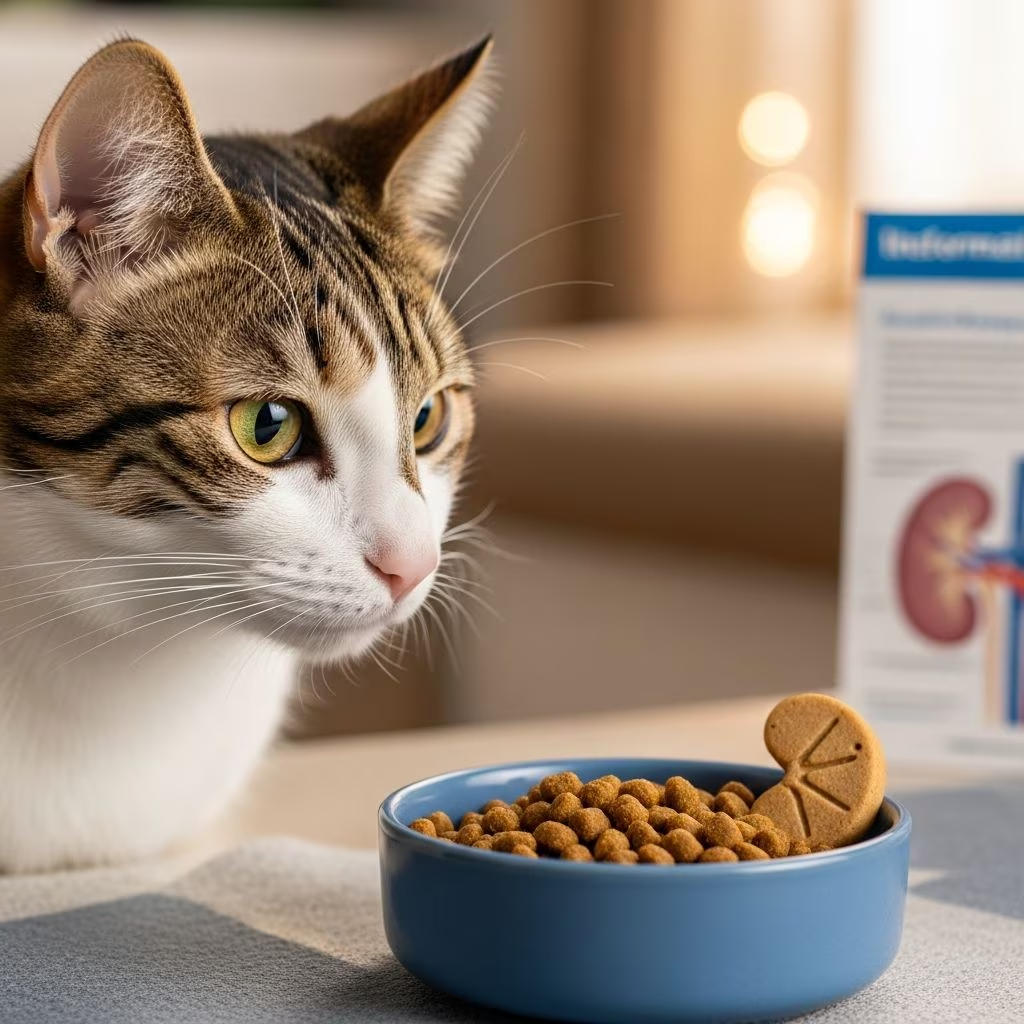
Understanding Chronic Kidney Disease in Cats
Chronic kidney disease (CKD) is one of the most common conditions affecting senior cats, significantly impacting their quality of life and longevity. As the kidneys progressively lose their ability to filter waste products and maintain proper electrolyte balance, cats require specialized nutritional support to manage the disease effectively. The cornerstone of managing CKD in cats is implementing a carefully formulated kidney-support diet that addresses the specific metabolic changes occurring in their bodies.
When cats develop chronic kidney disease, their kidneys become less efficient at eliminating phosphorus, a mineral that would normally be filtered through the urine. This accumulation of phosphorus in the bloodstream triggers a cascade of metabolic complications that can accelerate disease progression. By implementing dietary modifications early in the disease process, veterinarians can help slow the advancement of CKD and improve clinical outcomes for affected cats.
The Role of Kidney-Support Diets
Kidney-support diets are specifically formulated therapeutic foods designed to address the unique nutritional requirements of cats with chronic kidney disease. Unlike commercial foods designed for healthy adult cats, kidney-support diets contain carefully balanced levels of key nutrients that help minimize the burden on compromised kidneys while supporting overall health and well-being.
Research has demonstrated that cats with CKD who consume kidney-support diets often experience improved outcomes compared to those fed standard commercial foods. One of the primary benefits is the prevention or reduction of a serious condition called metabolic acidosis, which commonly develops as kidney disease progresses. Additionally, cats maintained on appropriate kidney-support diets often experience a slowing of disease progression, allowing them to maintain their quality of life for extended periods.
Key Nutritional Components of Kidney-Support Diets
Kidney-support diets are engineered to provide reduced levels of three critical minerals and nutrients:
– Phosphorus: Significantly reduced to prevent hyperphosphatemia- Sodium: Moderately reduced to support cardiovascular health- Protein: Carefully controlled quantity while maintaining high quality- Potassium: Supplemented to counteract urinary losses- Omega-3 Fatty Acids: Increased to support renal blood flow and function
Phosphorus Management in CKD
Phosphorus management represents one of the most critical aspects of dietary therapy for cats with chronic kidney disease. As kidney function declines, the organs lose their ability to effectively filter phosphorus from the blood, leading to elevated serum phosphorus levels, a condition known as hyperphosphatemia. This mineral imbalance triggers secondary hyperparathyroidism, which further accelerates kidney damage and systemic complications.
Limiting dietary phosphorus in cats with CKD has been shown to help delay disease progression significantly. The relationship between phosphorus and protein content in food is important to understand: since phosphorus is naturally present in protein-containing ingredients, achieving lower phosphorus levels requires some reduction in overall dietary protein. However, this protein reduction must be carefully managed to prevent muscle wasting and maintain essential body functions.
Veterinary therapeutic diets are available in two categories based on disease severity. Products labeled for early kidney disease contain reduced phosphorus levels with moderately reduced protein, making them suitable for cats in earlier stages of CKD. Products marketed for advanced kidney disease feature slightly more restricted phosphorus levels, accommodating cats with more severe renal dysfunction.
It’s important to note that dietary modification typically requires several weeks to meaningfully impact phosphorus status in the body. During this period, your veterinarian should monitor blood phosphorus levels regularly. If dietary adjustment alone fails to achieve target phosphorus values, your veterinarian may recommend adding an intestinal phosphorus-binding agent to further reduce phosphorus absorption.
Protein Considerations in Kidney Disease
Protein management in feline CKD requires careful balance and professional guidance. While some dietary protein restriction is necessary to manage phosphorus levels and reduce the production of nitrogenous wastes, complete protein elimination is neither possible nor desirable. Cats require adequate high-quality protein to maintain muscle mass, immune function, and other essential physiological processes.
The rationale for moderating protein intake in CKD is multifaceted. Protein metabolism produces nitrogen-containing waste products that accumulate when kidney function declines. These nitrogenous wastes can contribute to clinical signs associated with azotemia and uremia, conditions that significantly impact a cat’s quality of life. Additionally, reducing nitrogenous waste can improve polyuria (excessive urination) and polydipsia (excessive thirst) by decreasing the solute load requiring filtration by the kidneys.
High-quality protein sources are essential in kidney-support diets. The protein must have an optimal amino acid profile and high digestibility to minimize the production of nitrogenous waste while providing the amino acids cats need to maintain health. This focus on quality over quantity ensures that cats receive adequate nutrition without overwhelming their compromised kidneys.
Omega-3 Fatty Acids and Renal Support
Omega-3 fatty acids, particularly EPA (eicosapentaenoic acid) and DHA (docosahexaenoic acid), play an important role in supporting kidney function in cats with chronic kidney disease. These long-chain fatty acids promote blood fluidity, enhance glomerular filtration, and support healthy blood vessel function in the kidneys.
A standard dosage recommendation for cats with CKD is 40 mg/kg of EPA plus 25 mg/kg of DHA administered daily, which approximates to 1.16–1.18 grams of combined EPA and DHA per 1,000 kilocalories of diet. When omega-3 fatty acids are present at sufficient concentrations in therapeutic kidney diets, this supplementation is associated with improved life expectancy for cats suffering from kidney disease.
It’s important to distinguish between different omega-3 sources when selecting kidney-support diets. While some manufacturers add alpha-linolenic acid (an plant-based omega-3), this form is insufficiently converted to EPA and DHA in cats. Therefore, when evaluating kidney-support diets, ensure that the product lists adequate levels of EPA and DHA specifically, rather than relying solely on general omega-3 claims.
Potassium Supplementation
Hypokalemia, or low blood potassium levels, is a common complication in cats with chronic kidney disease due to increased urinary losses of this essential mineral. Low potassium levels can result in decreased food intake, muscle weakness, and other serious health complications. Therapeutic kidney-support diets specifically formulated for cats with CKD typically include supplemental potassium to counteract these urinary losses.
The typical potassium content in therapeutic kidney diets for cats ranges from 1.4 to 2.6 grams per 1,000 kilocalories of diet. However, individual cats may require different amounts depending on their specific blood potassium levels and disease severity. Regular monitoring of potassium status through blood work is essential, as some cats may require additional supplementation beyond what the diet provides. Your veterinarian can determine the appropriate potassium level for your individual cat based on laboratory results and clinical response.
Sodium Management and Other Considerations
Sodium content in therapeutic kidney diets is typically moderated to support cardiovascular health in cats with chronic kidney disease. The sodium content of therapeutic renal diets generally ranges from 0.5 to 1 gram per 1,000 kilocalories for cats. This reduction helps minimize stress on the cardiovascular system, which is often compromised in cats with advanced CKD.
Additionally, kidney-support diets often contain increased levels of antioxidants such as vitamins C and E to reduce renal oxidative stress and slow disease progression. Many therapeutic kidney diets also include added soluble fiber to promote beneficial colonic bacterial growth and enhance the utilization of nitrogen and urea, reducing the systemic burden of nitrogenous wastes. For cats experiencing constipation—a common complication of CKD—these fiber additions can provide additional health benefits.
Body Condition and Weight Management
Maintaining appropriate body condition is crucial in managing chronic kidney disease in cats. Cats with CKD require regular assessment of their body weight and condition score, as both obesity and excessive weight loss can complicate disease management. Overweight cats may experience additional metabolic stress, while underweight cats may suffer from muscle wasting and reduced immune function.
Working with your veterinarian to establish appropriate feeding portions and monitoring your cat’s weight regularly ensures that your pet maintains optimal body condition while consuming adequate calories and nutrients from their kidney-support diet.
Choosing Between Wet and Dry Foods
Both wet and dry kidney-support diets are available for cats with chronic kidney disease, each with distinct advantages. Wet food generally provides higher water content, which supports hydration—a critical consideration for cats with CKD, as these patients are prone to dehydration and decreased water intake. The increased moisture content in canned foods can encourage greater overall fluid consumption, reducing the solute concentration requiring kidney filtration.
Dry kidney-support diets can be convenient and may support dental health through the mechanical action of chewing. However, wet food is often recommended as the primary diet for cats with CKD due to the hydration benefits and enhanced palatability for many cats, particularly those experiencing appetite changes associated with kidney disease. Many veterinarians recommend providing fresh water in multiple locations throughout the home and ensuring your cat has constant access to water bowls, as good hydration is essential for managing CKD.
Transitioning to Kidney-Support Diet
When transitioning your cat to a kidney-support diet, gradual introduction is important to minimize gastrointestinal upset and increase acceptance of the new food. Most veterinarians recommend a gradual transition over 7-10 days, slowly increasing the proportion of the new kidney-support diet while decreasing the previous food.
Some cats may be particular about food changes, particularly if they have been eating the same food for extended periods. Adding small amounts of warm water or low-sodium broth to the kidney-support diet can enhance palatability and encourage consumption. Your veterinarian can provide specific transition recommendations based on your individual cat’s preferences and tolerance.
Monitoring Progress and Adjusting Therapy
Regular veterinary monitoring is essential for cats with chronic kidney disease on kidney-support diets. Blood work should be performed regularly to assess kidney function (through creatinine and blood urea nitrogen measurements), electrolyte levels (particularly potassium and phosphorus), and other relevant parameters. These lab values guide adjustments to the diet and any supplementation that may be necessary.
Your veterinarian may recommend blood work every 3-6 months initially, then annually once your cat’s condition stabilizes. This regular monitoring allows for early detection of disease progression and ensures that the kidney-support diet remains appropriate for your cat’s changing needs as the disease progresses.
Frequently Asked Questions
Q: When should I start feeding my cat a kidney-support diet?
A: Kidney-support diets should be started as soon as chronic kidney disease is diagnosed. Starting dietary therapy early can help slow disease progression and prevent complications. Your veterinarian will recommend the appropriate formulation (early or advanced stage) based on your cat’s kidney function tests.
Q: Can I prepare homemade kidney-support meals for my cat?
A: Homemade diets for cats with CKD are possible but require careful formulation to ensure proper nutrient balance and appropriate phosphorus, protein, and other mineral levels. This approach should only be undertaken under veterinary guidance, and many veterinarians recommend using commercial therapeutic diets to ensure consistent nutrient profiles and quality control.
Q: How long does it take to see improvement after starting a kidney-support diet?
A: Dietary modifications typically require several weeks to meaningfully impact blood phosphorus levels and other parameters. Some cats may show clinical improvement in appetite and energy levels within 2-4 weeks, while changes in laboratory values may take longer to manifest.
Q: What if my cat refuses to eat the kidney-support diet?
A: Gradual transition, mixing with warm broth, and trying different formulations or flavors can help. Work closely with your veterinarian, as they may suggest appetite stimulants or other strategies. Some cats do better with specific brands or food temperatures.
Q: Should I give my cat additional supplements beyond the kidney-support diet?
A: Additional supplementation should only be given under veterinary recommendation. Your veterinarian may suggest potassium supplementation, phosphorus binders, or other medications based on your cat’s blood work and clinical condition. Over-supplementation of certain nutrients can be harmful.
References
- The Best Diet for a Cat Living with Chronic Kidney Disease — Ziggy Family. 2025. https://ziggyfamily.com/en/blogs/cats/the-best-diet-for-a-cat-living-with-chronic-kidney-disease
- Feeding Guide for Cats with Advanced Kidney Disease — VNG Pets. 2025. https://www.vngpets.com/pages/feeding-guide-for-cats-with-advanced-kidney-disease
- Nutritional Management of Chronic Kidney Disease in Cats & Dogs — Today’s Veterinary Practice. 2024. https://todaysveterinarypractice.com/nutrition/acvn-nutrition-notesnutritional-management-of-chronic-kidney-disease-in-cats-dogs/
- Nutrition for Cats with Chronic Kidney Disease — VCA Animal Hospitals. 2025. https://vcahospitals.com/know-your-pet/nutrition-for-cats-with-chronic-kidney-disease
- Nutritional Management of Chronic Kidney Disease in Cats — Vet Specialists. 2024-02-08. https://www.vetspecialists.com/vet-blog-landing/animal-health-articles/2024/02/08/ChronicKidneyDisease-in-cats



