

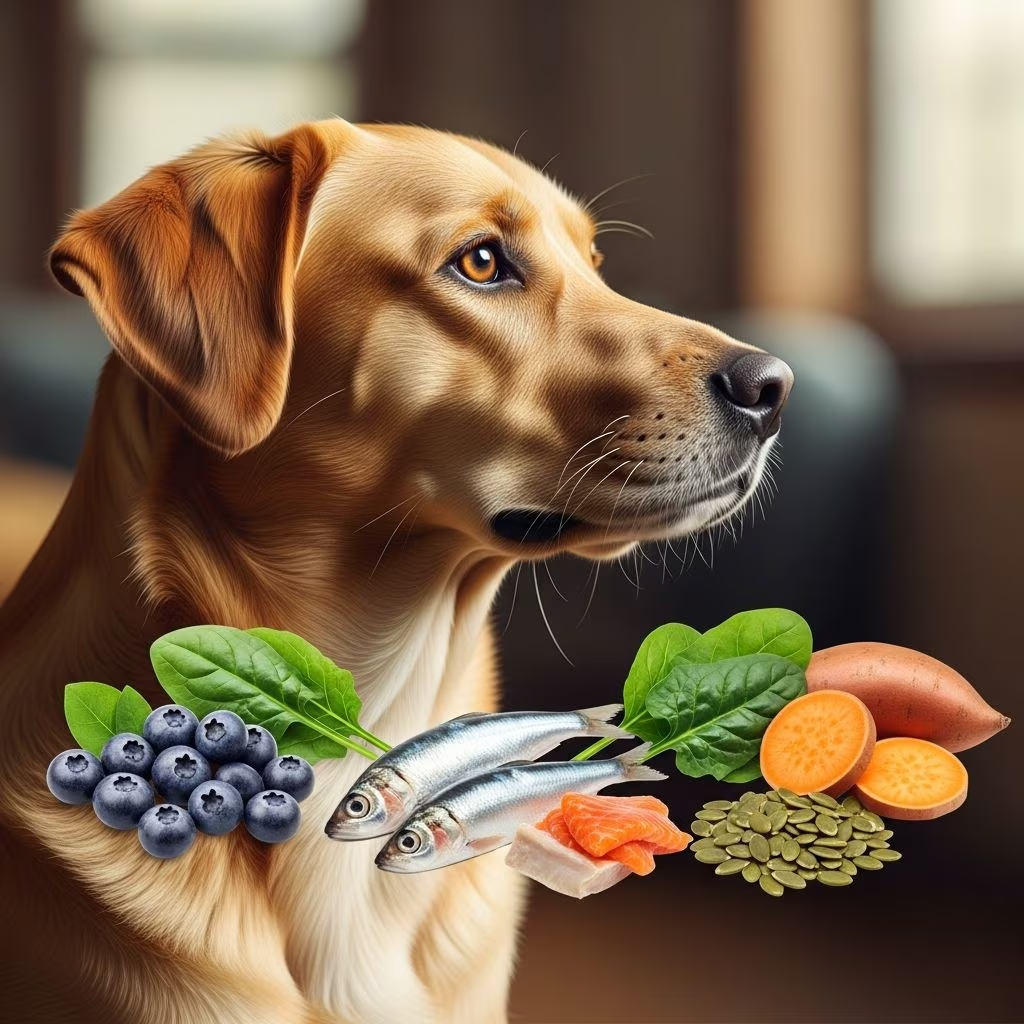
Supporting brain health in dogs becomes increasingly vital as they age. Cognitive decline, often manifesting as disorientation, sleep disturbances, house soiling, altered interactions, and reduced activity, affects many senior dogs. Strategic nutrition can mitigate these issues by providing alternative energy sources, reducing inflammation, and combating oxidative stress. Research demonstrates that specific dietary components enhance learning, memory, and overall mental acuity in aging canines.
Understanding Cognitive Challenges in Aging Dogs
Canine cognitive dysfunction syndrome (CDS) mirrors human Alzheimer’s disease in pathology, including amyloid-beta accumulation, tau protein issues, and neuronal loss. These changes impair glucose metabolism in the brain, leading to energy deficits that hinder cognitive tasks. Studies show senior dogs experience reduced neurogenesis and brain atrophy, correlating with poorer performance in spatial memory and attention tests.
Early intervention through diet targets multiple risk factors simultaneously. Unlike single-nutrient approaches, comprehensive blends address energy supply, inflammation, and oxidative damage, yielding synergistic benefits. Clinical trials confirm improvements in CDS symptoms within weeks of dietary changes.
Medium-Chain Triglycerides: An Alternative Brain Fuel
Medium-chain triglycerides (MCTs), primarily from sources like coconut oil, metabolize rapidly into ketone bodies. These ketones bypass impaired glucose pathways, supplying direct energy to brain cells. In senior dogs, MCT-supplemented diets improved spatial learning, memory, and discrimination tasks within one month.
A study on dogs with CDS signs fed 6.5% MCT diets showed significant gains in five of six behavioral categories after 90 days, outperforming controls. Owners reported quicker responses in attention and decision-making, often within days to weeks.
- MCTs elevate blood ketones without restricting carbs or proteins.
- Enhance performance on complex cognitive challenges.
- Suitable for colony-housed and client-owned dogs with CDS.
Omega-3 Fatty Acids: Inflammation Fighters
DHA and EPA, key omega-3 polyunsaturated fatty acids, maintain neuronal membranes and resolve chronic inflammation linked to brain aging. Deficiencies exacerbate cognitive decline, but supplementation corrects this, especially alongside B vitamins.
In dogs, higher omega-3 levels from diets correlate with better memory and reduced neuroinflammation. Blends exceeding AAFCO minimums amplify benefits, supporting synaptic health and neurogenesis.
| Nutrient | Benefit | Evidence |
|---|---|---|
| Omega-3 (DHA/EPA) | Reduces inflammation, supports memory | Improved CDS symptoms in trials |
| MCTs | Provides ketones for energy | Enhanced learning in 30 days |
Antioxidants: Shielding Against Oxidative Stress
Brain aging involves free radical accumulation, damaging cells and promoting protein tangles. Antioxidants like vitamins C and E, selenium, and alpha-lipoic acid neutralize these threats. Diets rich in these, combined with mitochondrial cofactors, preserve neuron function despite age-related losses.
Research on senior dogs fed antioxidant blends showed better adaptability and reasoning, with some neuron protection when paired with enrichment.
Amino Acids: Boosting Circulation and Neuroprotection
Arginine elevates nitric oxide, improving cerebral blood flow crucial for nutrient delivery. Optimal levels in senior dog diets enhance executive function. Other amino acids like taurine and tryptophan support mood and neurotransmitter balance.
Blends with elevated arginine improved circulation and cognition in aged dogs, synergizing with energy sources like MCTs.
Comprehensive Nutrient Blends: The Synergistic Approach
Brain protection blends (BPB) integrate MCTs, omega-3s, antioxidants, and amino acids. These exceed standard requirements, targeting glucose deficits, inflammation, poor circulation, and oxidation holistically. Trials in healthy seniors and CDS-affected dogs confirm broad improvements: fewer errors in landmark discrimination, egocentric navigation, and oddity tasks.
In a double-blind study, CDS dogs on MCT+BPB diets advanced in all DISHAA categories (disorientation, interactions, sleep, house soiling, activity, anxiety) by 90 days. Controls lagged significantly.
Implementing Brain-Supportive Diets
Transition gradually over 7-10 days to avoid digestive upset. Look for vet-recommended formulas with verified nutrient levels. Monitor via cognitive checklists: track sleep patterns, social engagement, and navigation skills monthly.
- Combine diet with exercise and puzzle toys for amplified effects.
- Consult vets for baseline assessments using tools like DISHAA scales.
- Expect initial changes in 2-3 weeks, full benefits in 1-3 months.
Real-World Outcomes and Owner Experiences
Dog owners note revived playfulness, better recall, and normalized routines post-diet switch. Clinical data aligns: MCT diets cut cognitive errors, while BPB slows amyloid buildup and boosts BDNF for neuroplasticity.
Long-term studies (2+ years) reveal sustained neuron preservation and task proficiency, underscoring preventive potential for middle-aged dogs.
FAQs
What are the first signs of cognitive decline in dogs?
Look for disorientation, sleep-wake reversal, house soiling, apathy, and altered attachments. Early detection via vet exams enables timely nutrition.
How quickly do brain nutrients work?
Improvements in alertness and memory often appear in 2-30 days; comprehensive CDS relief by 90 days.
Can puppies benefit from these nutrients?
Focus on seniors, but balanced omega-3s support development in all ages. Avoid excess MCTs in youth.
Are supplements enough, or needed with food?
Complete diets with integrated blends outperform isolated supplements due to synergy.
Which dogs need brain-support diets most?
Seniors over 7 years, breeds prone to neurodegeneration like Labs, or those showing CDS signs.
Preventive Strategies Beyond Nutrition
Pair diets with mental stimulation: scent games, agility training, novel toys. Socialization combats isolation-induced decline. Regular vet checkups track progress, adjusting as needed.
Research emphasizes multifactorial management: nutrition + enrichment reduces amyloid and tau pathology more than diet alone.
References
- Efficacy of a Therapeutic Diet on Dogs With Signs of Cognitive Dysfunction Syndrome — Frontiers in Nutrition. 2018-10-11. https://www.frontiersin.org/journals/nutrition/articles/10.3389/fnut.2018.00127/full
- Nutrients, Cognitive Function, and Brain Aging — PMC/NIH. 2021-11-16. https://pmc.ncbi.nlm.nih.gov/articles/PMC8628994/
- Cognitive Dysfunction Syndrome in dogs — Purina Institute. 2023. https://www.purinainstitute.com/science-of-nutrition/advancing-brain-health/cognitive-dysfunction-syndrome
- Roles of Nutrients in the Brain Development, Cognitive Function — PubMed. 2024-04-16. https://pubmed.ncbi.nlm.nih.gov/38625529/
- 5 Brain-Protecting Nutrients — Purina. N/A. https://www.purina.com/articles/dog/health/nutrition/brain-protecting-nutrients



