

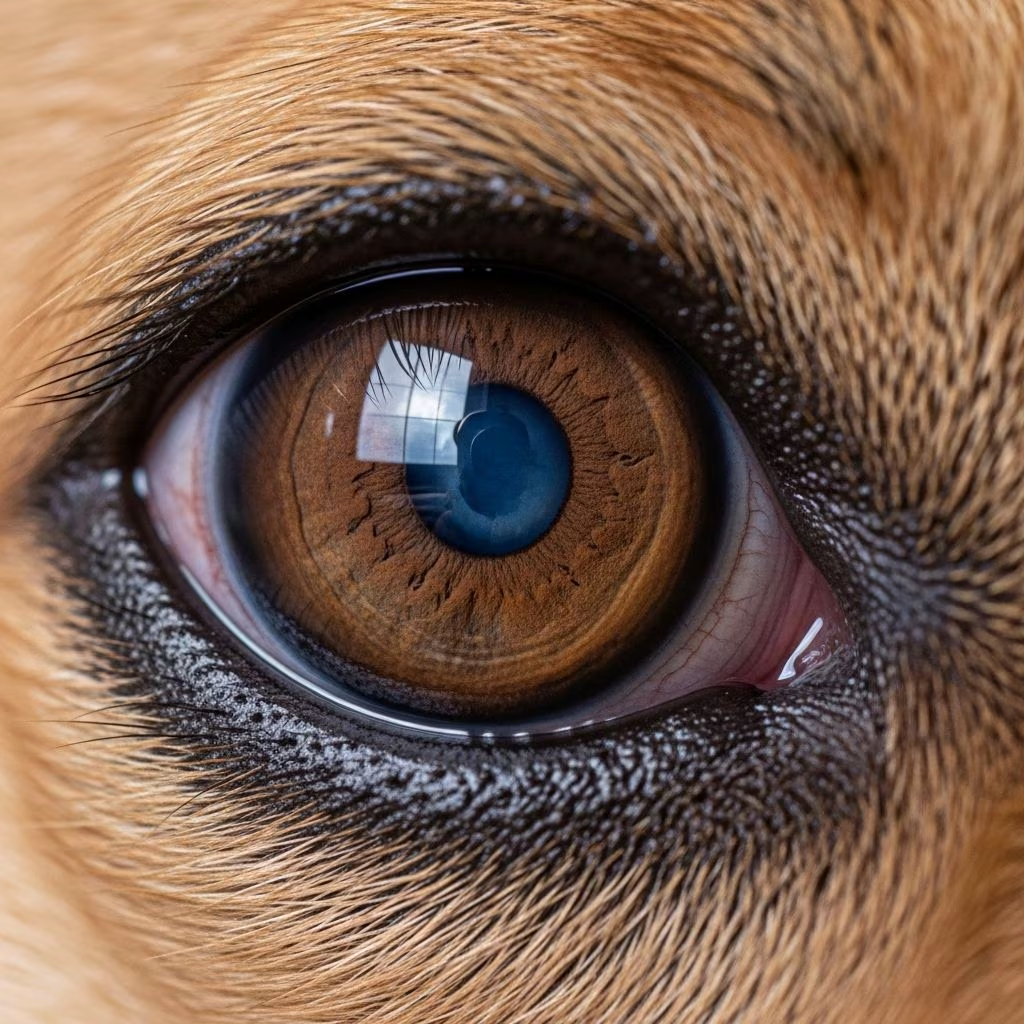
Nuclear sclerosis, also referred to as lenticular sclerosis, represents a typical physiological alteration in the lenses of older dogs, resulting in a subtle bluish haze without substantial vision impairment.
Understanding the Basics of Canine Eye Anatomy
The eye of a dog functions much like a camera, with the lens serving as the critical component that focuses incoming light onto the retina at the back of the eye. This transparent, flexible structure, positioned directly behind the pupil, adjusts its shape to enable clear vision of both near and distant objects. Throughout a dog’s life, the lens continuously produces new fiber cells that accumulate in layers. In younger dogs, this process maintains clarity, but as years pass, the fixed size of the eye capsule prevents expansion, leading to compression of inner layers.
This natural buildup contributes to the hardening observed in nuclear sclerosis. Veterinary sources note that the condition emerges symmetrically in both eyes, often becoming noticeable from a side view rather than straight on, especially when pupils are dilated.
Primary Causes Behind the Condition
Age stands as the predominant factor in the development of nuclear sclerosis. Most dogs exhibit early signs between 6 and 8 years old, with prevalence increasing markedly after age 8. The lens nucleus, or central core, densifies due to ongoing fiber deposition on the periphery, which squeezes older fibers inward. This compression alters light transmission, producing the characteristic opacity without fully blocking it.
Environmental influences, such as prolonged ultraviolet radiation from sunlight, may accelerate progression in some cases. However, no breed predispositions have been identified; it affects dogs universally as part of senescence.
Recognizing Key Symptoms in Your Senior Dog
Owners frequently spot the initial sign: a faint blue-gray tint centered in the pupils, progressing to a more pronounced cloudiness. This haze remains translucent, allowing visibility of underlying structures like the retina during exams.
- Subtle bilateral cloudiness, more evident from the side or in dilated pupils
- Mild depth perception deficits, causing hesitation on stairs or misjudging distances
- Occasional startling at sudden approaches or fumbling catches during play
- Slight far-sightedness, making close objects blurrier
- Potential sensitivity to bright lights or dim environments
Unlike more severe conditions, affected dogs maintain normal pupillary reflexes and show no signs of pain or inflammation.
Differentiating Nuclear Sclerosis from Cataracts
A frequent diagnostic challenge arises from the visual similarity to cataracts, where both present milky or bluish lenses. However, cataracts involve lens protein opacification that scatters light extensively, often leading to blindness.
| Feature | Nuclear Sclerosis | Cataracts |
|---|---|---|
| Appearance | Central, symmetric blue-gray haze; translucent | White/milky opacity; may be asymmetric |
| Vision Impact | Minimal; slight depth issues | Progressive blindness common |
| Progression | Stable after onset | Can worsen rapidly |
| Retina Visibility | Clear through ophthalmoscope | Obscured |
Accurate distinction requires professional evaluation, as cataracts may necessitate surgical intervention.
Diagnostic Approaches for Confirmation
Veterinarians conduct a comprehensive ophthalmic assessment, beginning with a penlight exam to gauge haze translucency. Pupil dilation enhances lens nucleus inspection, confirming central density without peripheral involvement.
Advanced tools like indirect ophthalmoscopy allow fundus visualization, a hallmark distinguishing it from cataracts. Tonometry measures intraocular pressure to rule out glaucoma, while fluorescein staining checks for ulcers. In ambiguous cases, ultrasound or electroretinography may assess retinal function.
Management Strategies and Daily Care Tips
No treatment reverses nuclear sclerosis, as it poses no threat and progresses minimally post-onset. Focus shifts to supportive measures enhancing quality of life:
- Maintain consistent home layouts to aid navigation amid minor depth changes
- Use ample lighting to counter low-light challenges
- Provide raised food bowls and non-slip mats for stability
- Opt for larger, slower-moving toys during fetch
- Schedule biannual vet checkups for concurrent issue monitoring
Antioxidant-rich diets or supplements like lutein may support overall eye health, though evidence specific to this condition remains anecdotal.
Long-Term Prognosis and Vision Expectations
Dogs adapt remarkably to nuclear sclerosis, with most retaining functional sight into advanced age. Subtle far-sightedness mimics human presbyopia, rarely hindering daily activities. Owners report pets navigating familiar spaces confidently, though novel environments may prompt caution.
Complications prove rare, but concurrent cataracts or retinal degeneration warrant vigilance. Lifespan remains unaffected, emphasizing proactive senior wellness.
Preventive Measures and Lifestyle Adjustments
While inevitable, delaying onset involves minimizing UV exposure via dog-specific sunglasses during peak sun hours and ensuring shaded outdoor time. Regular exercise promotes circulation, potentially benefiting lens integrity indirectly.
Nutrition plays a role: omega-3 fatty acids and vitamins A, C, E combat oxidative stress. Annual eye screenings from middle age facilitate early detection of coexisting pathologies.
Frequently Asked Questions (FAQs)
Is nuclear sclerosis painful for dogs?
No, it causes no discomfort, differing from inflammatory conditions.
At what age does it typically start?
Usually 6-8 years, becoming prominent post-8.
Can it lead to blindness?
Unlikely; vision changes are minor and stable.
Does breed matter?
No specific predispositions; all breeds affected equally.
Should I change my dog’s diet?
Eye-supportive nutrients help overall health, but consult a vet.
Monitoring Your Dog’s Eye Health Over Time
Tracking changes involves home observations like response to hand shadows or treat tracking. Prompt vet visits for asymmetry or behavioral shifts ensure timely intervention for unrelated issues. Embracing this as normal aging fosters informed companionship with senior dogs.
References
- Lenticular Sclerosis: How Do Dogs Get It and How Is It Treated? — PetMD. 2023. https://www.petmd.com/dog/conditions/eyes/lenticular-sclerosis
- Lenticular Sclerosis in Dogs – Symptoms, Causes, Diagnosis — WagWalking. 2023. https://wagwalking.com/condition/lenticular-sclerosis
- Lenticular Nuclear Sclerosis in Dogs: Symptoms & Treatment — Animal Eye Guys. 2024-05-30. https://www.animaleyeguys.com/site/blog/2024/05/30/nuclear-sclerosis-dogs
- Lenticular Sclerosis in Dogs – Causes, Treatment — Vetster. 2023. https://vetster.com/en/conditions/dog/lenticular-sclerosis
- Lenticular Sclerosis in Dogs — Kingsbrook Animal Hospital. 2023. https://kingsbrookvet.com/pdf/Lenticular%20Sclerosis%20in%20Dogs.pdf
- Nuclear Sclerosis in Dogs – Everything You Should Know — Northwest Animal Eye Clinic. 2023-11-15. https://www.northwestanimaleye.com/site/blog/2023/11/15/nuclear-sclerosis-dogs



