

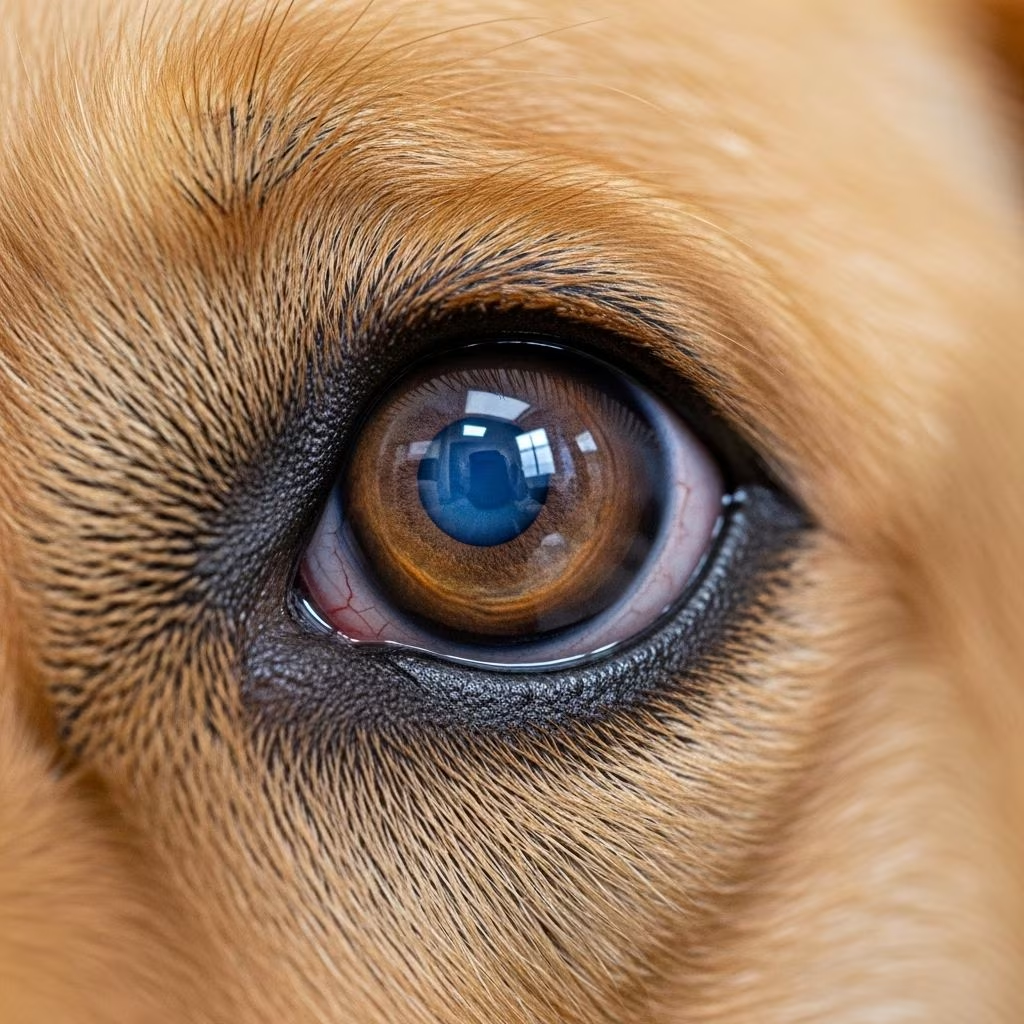
Nuclear sclerosis, also called lenticular sclerosis, is a frequent age-related alteration in the eyes of middle-aged and older dogs, resulting in a subtle blue-gray haze in the lens without major vision loss.
Understanding the Canine Eye Lens
The eye lens is a transparent, flexible structure behind the pupil that focuses light onto the retina for clear vision. In dogs, it consists of tightly packed fiber cells that adjust shape for near and far focus. As dogs age, these fibers accumulate and compress the lens nucleus, increasing density and altering light transmission, which produces the characteristic haze.
This process begins subtly, often unnoticed until the center of the lens shows a uniform bluish tint, visible from the side. Unlike disease processes, it represents normal maturation, affecting over 50% of dogs by age 10 and nearly all by 13.
Primary Causes and Risk Factors
Nuclear sclerosis stems from lifelong lens fiber production without size increase, compressing inner layers and hardening the core. It consistently appears in dogs over 7 years, regardless of breed.
- Age: Primary driver; rare under 6 years, universal in seniors.
- UV Exposure: Sunlight may accelerate onset by promoting fiber changes.
- Genetics: No breed predisposition, though some lines show earlier signs.
Studies confirm mild myopic shifts in advanced cases, but overall refractive changes remain minimal.
Recognizing Visible Changes and Symptoms
Owners often spot a central pupil haze, progressing from faint blue to denser gray. Vision impact is usually negligible, with dogs navigating normally.
| Symptom | Description | Frequency |
|---|---|---|
| Blue-gray lens center | Uniform haze, clear periphery | Common (100% in affected dogs) |
| Mild far-sightedness | Trouble with close objects | Rare |
| Depth perception issues | Hesitation on stairs, poor treat catching | Occasional in dense cases |
| Pain or redness | Absent | None |
Advanced nuclear sclerosis may subtly reduce contrast sensitivity or fine detail, but dogs adapt well, unlike humans needing correction.
Accurate Diagnosis by Veterinary Professionals
Veterinarians diagnose via direct ophthalmoscopy in a darkened room. Light passes through the lens to reveal a clear retina and tapetum lucidum, the reflective layer causing green eye shine.
- Dilate pupils if needed for better view.
- Use retroillumination: Shine light from afar; unobstructed tapetal glow confirms sclerosis over cataracts.
- Assess lens edges: Clear borders distinguish from opaque cataract wedges.
Owners cannot self-diagnose reliably; professional exams prevent mistaking it for treatable conditions.
Differentiating from Cataracts and Other Conditions
Cataracts involve lens protein clumping, creating white opacities blocking light and vision. Nuclear sclerosis haze allows retinal visibility.
| Feature | Nuclear Sclerosis | Cataracts |
|---|---|---|
| Appearance | Blue-gray center, clear edges | White/milky, irregular |
| Vision Impact | Minimal | Progressive blindness |
| Tapetal Glow | Visible | Blocked |
| Age Onset | 7+ years | Any age, often genetic/diabetic |
| Treatment | Monitoring | Surgery possible |
Other mimics include corneal edema or uveitis, ruled out by full ophthalmic checks.
Management Strategies Without Surgery
No cure exists; progression is natural. Focus on monitoring and support.
- Regular Vet Visits: Annual eye exams track changes, catch comorbidities like glaucoma.
- Environmental Aids: Bright lighting, consistent furniture, ramps for mobility.
- Nutrition: Antioxidant-rich diets (vitamins C/E, lutein) may slow lens changes; consult vets.
- Avoid Myths: No drops or supplements reverse sclerosis.
Surgery is inappropriate due to low vision risk and operative hazards.
Long-Term Prognosis and Vision Outlook
Dogs live comfortably with nuclear sclerosis; haze may intensify, but blindness is rare. Mild myopia in high-grade cases affects <1.5D, rarely warranting intervention.
Owner-reported behaviors like slower navigation improve quality of life awareness. Prompt checks for worsening haze detect cataracts early.
Preventive Measures for Eye Health
While unavoidable, delay via UV protection (dog goggles outdoors), balanced diets, and diabetes control (cataract trigger).
- Yearly senior wellness exams from age 7.
- Control systemic diseases.
- Monitor for bilateral symmetry; unilateral haze suggests other issues.
Frequently Asked Questions (FAQs)
Is nuclear sclerosis painful for dogs?
No, it causes no discomfort, only potential mild visual shifts.
Can my dog still see with hazy eyes?
Yes, most retain excellent functional vision.
How fast does it progress?
Gradually over years, symmetric in both eyes.
Should I worry if only one eye is affected?
Yes, seek vet evaluation for cataracts or injury.
Does breed matter?
No specific risks; all seniors affected equally.
Supporting Your Senior Dog’s Daily Life
Adapt home: Non-slip floors, elevated bowls, scent markers. Engage senses: Auditory toys, nose work games compensate minor deficits. Quality time strengthens bonds despite changes.
Consult veterinary ophthalmologists for concerns; early intervention maximizes years of joyful companionship.
References
- Lenticular Sclerosis: How Do Dogs Get It and How Is It Treated? — PetMD. 2023. https://www.petmd.com/dog/conditions/eyes/lenticular-sclerosis
- Nuclear Sclerosis in Dogs – Everything You Should Know — Northwest Animal Eye Specialists. 2023-11-15. https://www.northwestanimaleye.com/site/blog/2023/11/15/nuclear-sclerosis-dogs
- Nuclear Sclerosis in Dogs: Signs, Symptoms, Treatments — American Kennel Club (AKC). 2023. https://www.akc.org/expert-advice/health/nuclear-sclerosis-in-dogs/
- Quantifying refractive error in companion dogs – Nuclear sclerosis — PMC (PubMed Central), peer-reviewed. 2024. https://pmc.ncbi.nlm.nih.gov/articles/PMC10842750/
- Lenticular Sclerosis in Dogs — VCA Animal Hospitals. 2023. https://vcahospitals.com/know-your-pet/lenticular-sclerosis-in-dogs
- Canine Cataracts — Cornell University College of Veterinary Medicine (.edu). 2023. https://www.vet.cornell.edu/departments-centers-and-institutes/riney-canine-health-center/canine-health-topics/canine-cataracts



