
Novobiocin Sodium in Veterinary Medicine
Exploring the role, applications, and considerations of novobiocin sodium as an antibacterial agent in animal health management.
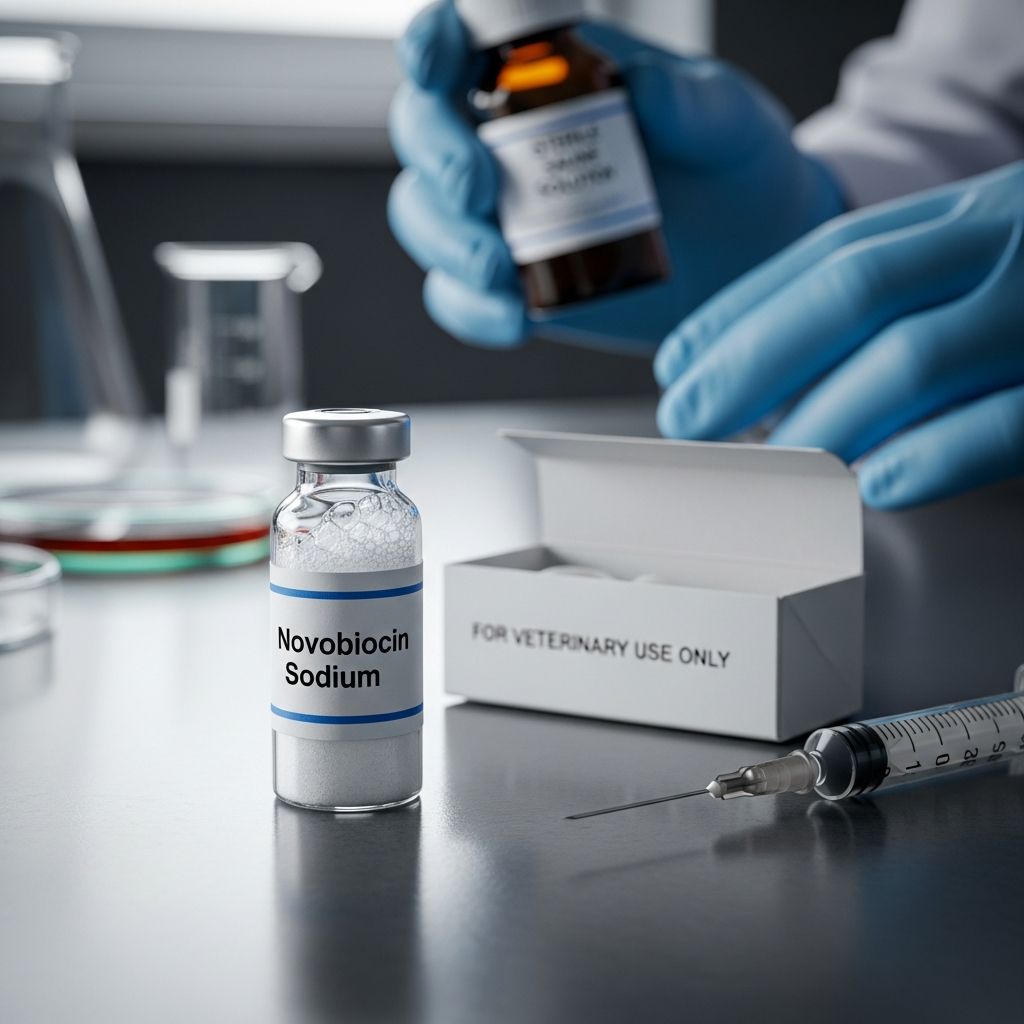
Novobiocin sodium stands as a specialized antibacterial agent primarily utilized in veterinary settings to combat specific infections in animals. Derived from certain bacterial strains, this compound targets bacterial DNA processes, making it valuable for treating conditions caused predominantly by gram-positive pathogens.
Understanding the Mechanism of Action
At its core, novobiocin sodium functions by interfering with bacterial DNA gyrase, an essential enzyme that helps manage DNA supercoiling during replication and transcription. By binding to the GyrB subunit, it disrupts energy transduction, halting bacterial growth and potentially leading to cell death at sufficient concentrations. This action renders it effective against select gram-positive organisms while showing limited impact on most gram-negatives.
The drug’s bacteriostatic or bactericidal nature depends on dosage and the target bacterium’s susceptibility. It exhibits synergy with tetracyclines, enhancing treatment outcomes when combined appropriately. However, its narrow spectrum necessitates precise diagnostic confirmation before use.
Historical Context and Regulatory Status
Initially developed in the mid-20th century, novobiocin sodium gained approval for veterinary applications, particularly in dairy cattle for mastitis control and in poultry for respiratory issues. While human formulations were withdrawn due to safety concerns, its veterinary use persists under strict labeling for specific indications. Regulatory bodies emphasize its role in food-producing animals with defined withdrawal periods to ensure residue-free products.
Primary Applications Across Animal Species
Veterinarians employ novobiocin sodium in targeted scenarios, leveraging its efficacy against staphylococcal and certain streptococcal infections.
Dairy Cattle: Intramammary Therapy for Mastitis
In lactating cows, novobiocin sodium is administered via intramammary infusion to address staphylococcal mastitis. This dry cow therapy prevents new infections during the non-lactating phase, reducing somatic cell counts and improving milk quality post-calving. Treatment involves infusing the udder post-milking, followed by a mandatory withholding period.
Companion Animals: Oral Administration in Canines
For dogs, oral dosing treats respiratory tract infections and soft tissue issues caused by susceptible staphylococci. Its absorption from the gastrointestinal tract peaks within hours, though food can slightly reduce bioavailability. Dosing typically ranges from 15-30 mg/kg daily, tailored to infection severity.
Poultry and Other Avians: Feed Additive Approach
In chickens, turkeys, ducks, and mink, novobiocin incorporates into medicated feed at 220-385 mg/kg to combat fowl cholera and staphylococcal infections. This method ensures uniform exposure, aiding flock-level management. Peak efficacy occurs with consistent intake over the treatment course.
Dosage Guidelines and Administration Methods
Proper dosing is critical to balance efficacy and safety. Below is a summary table of common protocols:
| Species | Indication | Dosage | Route | Frequency |
|---|---|---|---|---|
| Cattle | Staphylococcal mastitis | Label-specific infusion | Intramammary | Once at dry-off |
| Dogs | Susceptible infections | 15-30 mg/kg | Oral | q24h |
| Poultry | Fowl cholera, staph infections | 220-385 mg/kg feed | Feed additive | Daily during treatment |
Always consult product labels for exact volumes and durations, adjusting for animal weight and condition.
Pharmacokinetics in Animals
Following oral intake, novobiocin sodium absorbs readily from the gut, achieving plasma peaks in 1-4 hours. Metabolism occurs primarily in the liver, with excretion via bile and urine. In poultry, feed integration supports steady-state levels. Milk residues in treated cattle necessitate extended withdrawal times, typically 30 days for milk and meat.
Safety Profile and Adverse Reactions
While generally tolerated, novobiocin sodium can provoke reactions including gastrointestinal upset (vomiting, diarrhea), injection site irritation, and rare hypersensitivity. In cattle, udder edema may occur post-infusion. Poultry may show reduced feed intake at high doses. Contraindications include known allergies and use in neonates due to immature metabolic pathways.
- Gastrointestinal effects: Common in oral canine therapy.
- Local reactions: Swelling at intramammary sites.
- Allergic responses: Anaphylaxis in sensitized animals—monitor closely.
Resistance Concerns and Stewardship
Bacterial resistance to novobiocin develops readily, driven by efflux pumps and gyrase mutations. Overuse accelerates this, underscoring antimicrobial stewardship. Culture and sensitivity testing guides rational use, preserving efficacy for niche applications. Synergy with other classes like tetracyclines offers alternatives to monotherapy.
Drug Interactions and Contraindications
Novobiocin inhibits certain transporters, potentially altering clearance of drugs like methotrexate or bile acids. Avoid concurrent use with strong CYP inducers. Pregnancy category varies; caution in gestating animals due to fetal risks observed in studies.
Storage and Handling Best Practices
Maintain at room temperature in airtight containers, away from light and moisture. Intramammary suspensions require shaking before use. Discard expired products to prevent subpotent treatments.
Comparative Efficacy with Other Antibacterials
Versus broader-spectrum agents like penicillins, novobiocin excels in resistant staphylococci but lacks gram-negative coverage. Its niche role complements frontline therapies in veterinary protocols.
Future Directions in Veterinary Use
Ongoing research explores novobiocin’s scaffold for novel gyrase inhibitors, potentially revitalizing its utility amid rising resistance. Combination formulations may enhance spectrum and reduce resistance pressure.
Frequently Asked Questions (FAQs)
What animals can receive novobiocin sodium?
Primarily cattle, dogs, chickens, turkeys, ducks, and mink for labeled indications.
Is novobiocin safe for pregnant animals?
Use with caution; evidence suggests potential fetal risks—consult a veterinarian.
How long is the withdrawal period for treated cattle?
Typically 30 days for milk and slaughter to avoid residues.
Can novobiocin treat gram-negative infections?
Limited activity; most gram-negatives are resistant.
What if my animal shows side effects?
Discontinue and seek veterinary care immediately.
This comprehensive overview equips veterinarians and producers with essential knowledge for informed novobiocin sodium use, emphasizing judicious application to safeguard animal health and public safety.
References
- Novobiocin Sodium Use in Animals — MSD Veterinary Manual. 2026. https://www.msdvetmanual.com/pharmacology/antibacterial-agents/novobiocin-sodium-use-in-animals
- Novobiocin sodium for Chickens and Ducks — PoultryDVM. Accessed 2026. https://poultrydvm.com/drugs/novobiocin-sodium
- Novobiocin: Uses, Interactions, Mechanism of Action — DrugBank Online. Accessed 2026. https://go.drugbank.com/drugs/DB01051
- Novobiocin | Dosing & Uses — medtigo. Accessed 2026. https://medtigo.com/drug/novobiocin/
- Novobiocin | PubChem CID 54675769 — National Center for Biotechnology Information. Accessed 2026. https://pubchem.ncbi.nlm.nih.gov/compound/Novobiocin
Similar Articles








Read full bio of medha deb


