

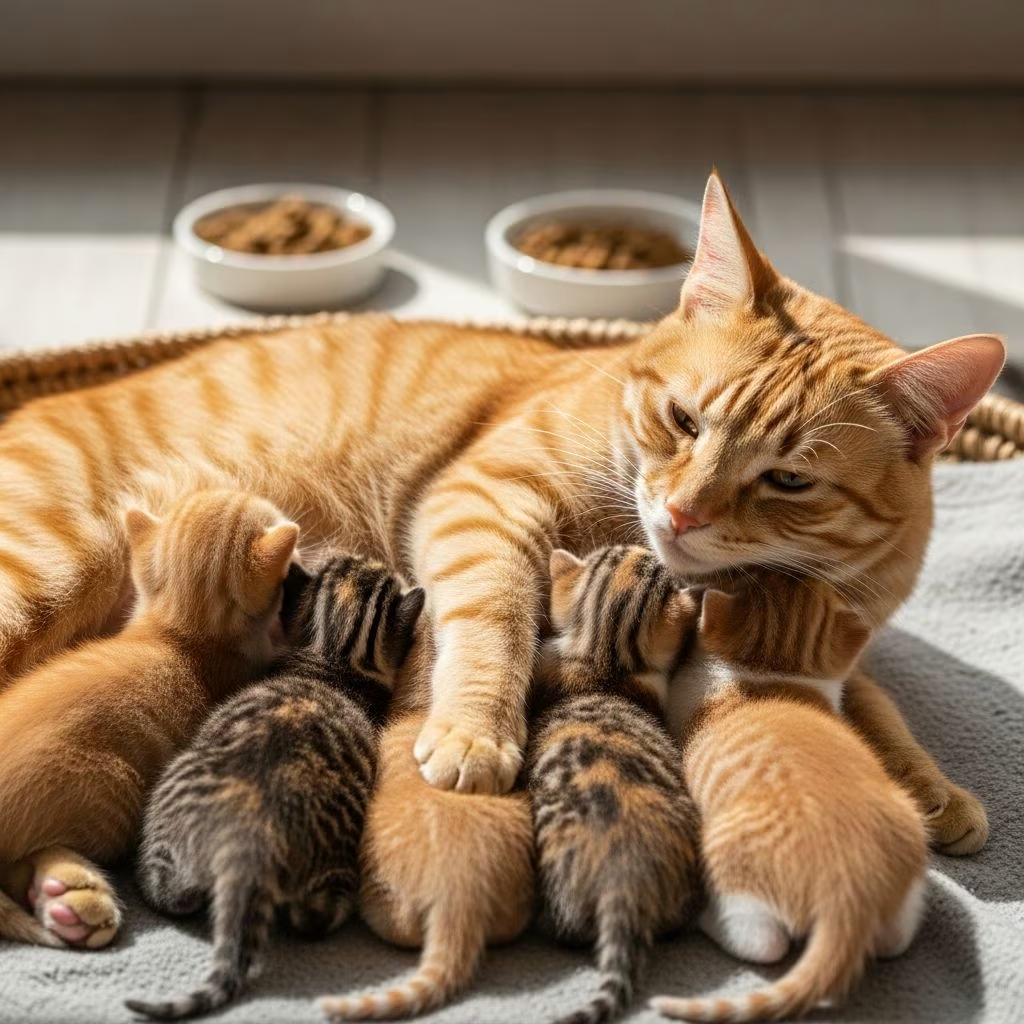
Supporting a mother cat through lactation demands careful attention to her heightened nutritional requirements. Nursing felines experience peak energy needs, often doubling or tripling their usual intake to produce milk for growing kittens. This guide explores optimal feeding practices, food selections, and care tips drawn from veterinary recommendations to promote robust health for both queen and litter.
The Surge in Energy Demands During Lactation
Lactation represents the most nutritionally intensive phase in a cat’s life cycle, surpassing even growth or gestation periods. Caloric requirements escalate based on litter size and lactation week, reaching a zenith around the third to sixth week postpartum when milk output peaks.
For a typical queen with four kittens, daily energy needs can climb to 2-3 times her maintenance level. Larger litters amplify this further, necessitating diets rich in digestible calories to prevent maternal weight loss despite abundant feeding.
- Week 1-2: Moderate increase, about 1.5-2x normal intake.
- Week 3-4: Peak milk production; up to 3x or more.
- Week 5-6: Highest demands before weaning begins.
Failure to meet these can lead to exhaustion, reduced milk quality, and kitten underdevelopment. Monitoring body condition—ribs faintly palpable, waist visible—is crucial.
Selecting the Ideal Diet for Lactating Queens
Opt for kitten formulas or all-life-stages foods, which boast elevated protein (30-40%), fat (20%+), and calorie density to accommodate limited stomach capacity amid nursing duties.
These diets supply taurine, DHA for kitten brain development, and antioxidants for immune support. Avoid adult maintenance foods, as they lack sufficient density.
| Nutrient | Lactation Needs | Why Essential |
|---|---|---|
| Protein | 30-40% | Builds milk proteins, supports kitten muscle growth. |
| Fat | 20-25% | High energy source; stores reserves against deficits. |
| Calories | 4000+ kcal/kg | Compensates volume limits with dense nutrition. |
| Carbs | Moderate | Sustained energy without excess. |
Consult packaging or a vet for specifics, as brands vary. Wet foods enhance palatability and hydration.
Feeding Frequency and Methods
Free-choice feeding—constant access to measured dry kibble—best suits nursing queens, allowing grazing amid kitten care. Supplement with 3+ wet meals daily for variety and moisture.
Track intake: Weigh daily offerings minus leftovers to ensure adequacy. A 5kg queen might consume 500-1000g dry food daily at peak.
- Combine wet (e.g., 1/2-1 can 3oz per meal x3) and dry (unlimited kitten kibble).
- Shallow bowls prevent spills; refresh water 2x daily.
- Avoid deep water dishes near neonates to mitigate drowning risks.
Multiple small meals aid digestion strained by expanded uterus remnants.
Hydration: The Unsung Hero of Milk Production
Queens require 2-4x normal water intake for milk, which is 87% water. Place multiple shallow bowls nearby; wet food boosts totals.
Dehydration signals include tacky gums, lethargy, or reduced nursing—prompt vet intervention. Aim for fountains to entice drinking.
Monitoring Maternal Health and Weight
Even with ample food, queens may lose 1-2% body weight weekly during peak lactation—normal if gradual. Post-weaning regain occurs naturally.
Watch for mastitis (swollen glands, fever), poor appetite, or flea burdens stressing reserves. Weekly weigh-ins guide adjustments.
Transitioning Kittens to Solid Foods
Around 3-4 weeks, introduce gruel: kitten kibble soaked in warm water (1:2 ratio initially).
Place near mum’s food; her nursing stimulates interest. By 5-6 weeks, firm to 2:1 food:water. Full weaning by 6-9 weeks separates diets.
- Weeks 3-4: Semi-liquid gruel 3-4x/day alongside nursing.
- Weeks 5-6: Thicker mixes; reduce milk reliance.
- Weeks 7+: Independent solid meals, mum on reduced intake.
For 4-week-olds: 1/4 can wet gruel 3-4x/day + soaked dry.
Weaning the Queen: Gradual Return to Maintenance
As kittens wean, separate progressively to taper milk. Day 1 post-weaning: 25% pre-breeding amount, ramp to 100% over 3 days.
Switch to adult food slowly over 7-10 days to avoid GI upset. Monitor for engorged mammary glands; cabbage leaf compresses soothe.
Common Pitfalls and Pro Tips
Pitfalls:
- Underfeeding: Leads to maternal catabolism.
- Ignoring water: Milk yield drops.
- Wrong food: Nutrient gaps harm litter.
Pro Tips:
- Mix wet/dry for engagement.
- Quiet feeding zones reduce stress.
- Vet check-ups at 2,4,6 weeks postpartum.
FAQs on Nursing Cat Nutrition
Q: How much more should a nursing cat eat?
A: 2-3x normal, peaking at 3x with large litters; free-choice best.
Q: Can I use human food supplements?
A: No—stick to balanced feline diets; extras risk imbalance.
Q: What if mum rejects kitten food?
A: Warm it, add broth; tempt with favorites, consult vet if persists.
Q: When do kittens start solids?
A: 3 weeks; gradual to 8 weeks full wean.
Q: Signs of undernutrition in queen?
A: Weight loss >5%, dull coat, weak kittens—vet ASAP.
Long-Term Benefits of Proper Lactation Feeding
Investing in nutrition now yields healthier adults: stronger immunity, optimal growth, fewer deficiencies. Queens recover faster, resuming cycles healthily.
Expand on this foundation with spay/neuter discussions post-weaning for population control.
References
- Feeding the Nursing Cat — VCA Animal Hospitals. 2023. https://vcahospitals.com/know-your-pet/feeding-the-nursing-cat
- How to Care For a Nursing Mama & Her Babies — Kitten Lady. 2023. https://www.kittenlady.org/mama
- How Much Should You Feed Your Cat? — SHEBA. 2024. https://www.sheba.com/lifestyle/how-much-should-you-feed-your-cat
- What to Feed a Pregnant And Nursing Cat — Hill’s Pet Nutrition. 2024. https://www.hillspet.com/cat-care/nutrition-feeding/what-to-feed-pregnant-and-nursing-cats
- Foster-Mom and Kitten Feeding Guidelines — SPCA Wake. 2022-08-01. https://spcawake.org/wp-content/uploads/2022/08/Foster-Mom-and-Kitten-Feeding-Guidelines.pdf
- Nutrition for Pregnant and Lactating Cats and Their Nursing Kittens — Purina Institute. 2023. https://www.purinainstitute.com/centresquare/life-stage-nutrition/nutrition-for-pregnant-and-lactating-cats-and-their-nursing
- After Birth — Cats Protection. 2024. https://www.cats.org.uk/help-and-advice/pregnancy-and-kitten-care/after-birth



