

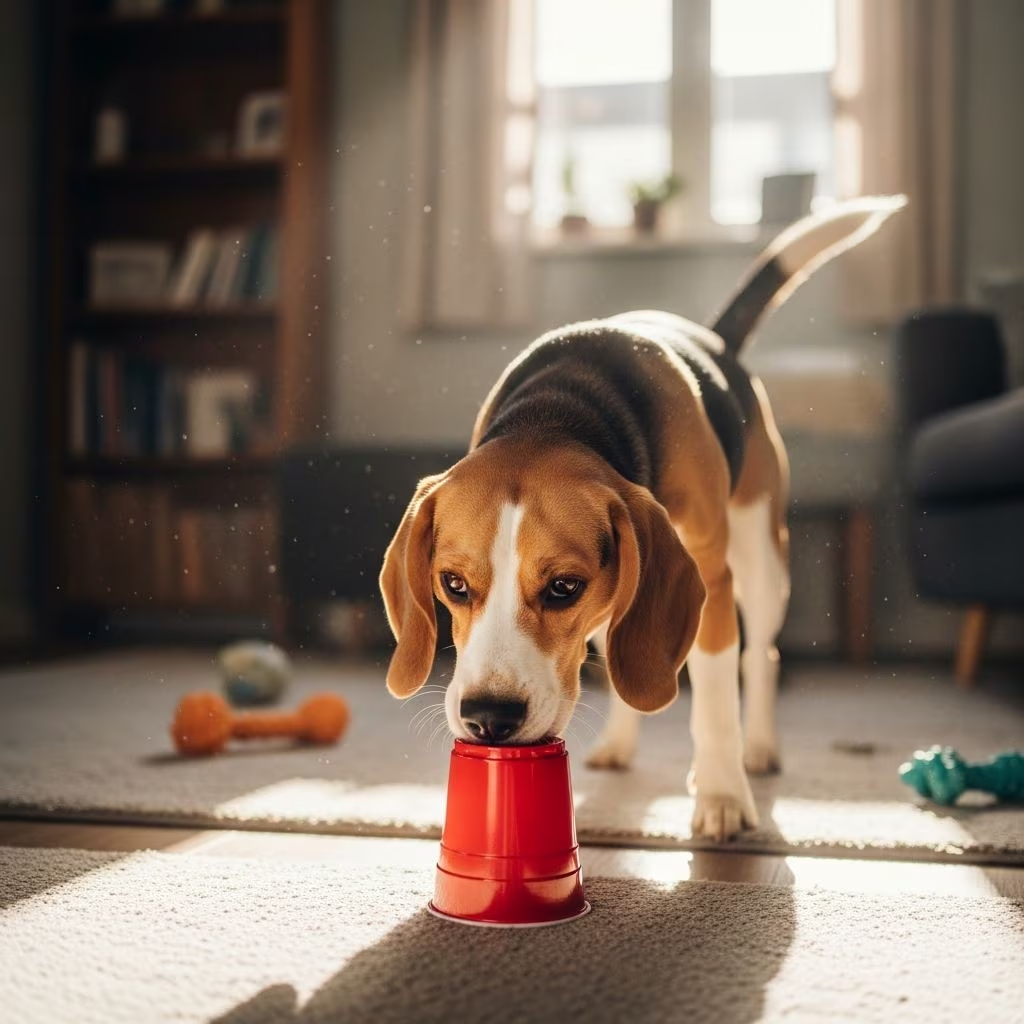
Your dog’s nose is its most powerful sense—up to 100,000 times more sensitive than yours. **Nosework**, also called scent work, channels this superpower into engaging games that provide mental stimulation equivalent to hours of physical exercise. Inspired by professional detection dogs, nosework is accessible for pet dogs of all ages, breeds, and abilities, requiring no prior training.
Whether your dog is high-energy, shy, or senior, nosework builds **confidence**, sharpens focus, reduces stress, and strengthens your bond. Sessions last just 3-5 minutes but deliver profound benefits. This guide covers everything from beginner games to advanced techniques, equipment needs, and competition options.
What Is Nosework?
Nosework is a search-and-scent activity where dogs use their noses to find hidden treats, toys, or specific odors in varied environments like rooms, vehicles, or outdoors. Originating from working detection dogs, it’s adapted for pets through programs like **K9 Nose Work®**, which starts with simple box searches and progresses to complex scenarios.
Dogs naturally sniff to gather information about their world. Nosework formalizes this instinct into structured games, teaching dogs to actively search while handlers learn to read subtle body language cues like changes in breathing or tail position.
- **Core principle**: Dogs work independently, relying solely on their nose—not handler cues.
- **Key benefit**: Provides low-impact mental exercise ideal for rainy days, injured dogs, or apartments.
- **Universal appeal**: Suitable for puppies as young as 8 weeks or seniors with mobility issues.
Benefits of Nosework for Dogs
Nosework isn’t just fun—it’s transformative. Research from canine cognition studies shows scent work activates the same brain reward centers as food or play, releasing endorphins that reduce anxiety and hyperactivity.
- **Mental fatigue**: A 5-minute session tires dogs more than a long walk, curbing destructive behaviors.
- **Confidence boost**: Shy or reactive dogs gain self-assurance through repeated successes.
- **Stress relief**: Sniffing lowers cortisol levels, mimicking natural foraging.
- **Physical health**: Encourages movement without high impact, aiding overweight or arthritic dogs.
- **Handler-dog bond**: Non-verbal communication deepens trust as you celebrate independent achievements.
For multi-dog homes, nosework prevents resource guarding by focusing dogs on their individual tasks. It’s also therapeutic for rescue dogs overcoming trauma.
How to Get Started with Nosework
Begin with food-based searches—no special equipment needed. Use high-value treats your dog loves, like dehydrated meat or cheese, to build excitement.
Step-by-Step Beginner Training
- Toss and Find (Session 1): Say “Find it!” and toss a treat in plain sight. Repeat 5-10 times until your dog anticipates sniffing.
- Double Up: Toss one treat, then quietly place a second while they’re retrieving the first. Cue “Find it!” again.
- Hide in Sight: Hide treats under a towel or in a box while your dog is out of view (use a stay or helper). Release to search.
- Increase Hides: Progress to multiple treats in larger areas. Keep sessions under 5 minutes.
**Pro Tip**: If your dog looks to you for help, show empty hands and casually move to encourage independent searching.
Common Beginner Mistakes to Avoid
- Advancing too quickly—ensure 100% success before hiding deeper.
- Long sessions—overstimulation leads to frustration.
- Low-value rewards—use irresistible treats to pair scent with joy.
Nosework Games for Every Skill Level
Keep training fresh with variations that mimic real-world scents.
Beginner Games
- **Shell Game**: Hide a treat under one of three cups, shuffle, and let your dog choose.
- **Find the Treats**: Scatter 3-5 treats around a room or yard.
- **Scent Trail**: Drag a treat along the ground, hide at the end, and follow on leash.
Intermediate Challenges
- **Box Searches**: Line up 4-6 boxes; hide odor in one. Dogs learn to methodically check each.
- **Vehicle Searches**: Hide treats in bumpers, seams, or tires.
- **Exterior Hides**: Under leaves, rocks, or low branches outdoors.
Advanced Techniques
Introduce target odors like birch (used in novice competitions by AKC and NACSW). Pair with tiny treats in a tin, then fade food to teach alert behaviors like sitting or pawing.
- **Odor Intro**: Place birch tin with food in open boxes; reward nose touches.
- **Proofing**: Hide in distractions like wind or novel areas.
- **Competition Prep**: Trial hides mimic AKC Scent Work trials.
Equipment for Nosework Training
Start free, then invest in quality tools for progression.
| Item | Purpose | Recommendation |
|---|---|---|
| High-Value Treats | Motivator | Dehydrated meats (odor-proof bags) |
| Birch Essential Oil | Target Odor | K9 Nose Work kits |
| Search Boxes | Structured Intro | Cardboard or birchwood |
| Leash/Harness | Safety | 6-ft leash, back-clip harness |
| Clicker | Optional for alert training |
Avoid birkenstocks or perfumes—use pure essential oils from reputable canine scent suppliers.
Tips for Successful Nosework Sessions
- Train in sets of 3 searches to avoid overload.
- Read your dog: Enthusiastic sniffs signal engagement; frustration means simplify.
- Proof in real life: Practice before meals to build drive.
- Multi-dog tip: Search one at a time to prevent competition.
- Weather-proof: Indoor sessions for winter; grassy yards for exteriors.
Advanced Nosework: Competitions and Classes
Join the sport! **K9 Nose Work®** and **AKC Scent Work** offer trials with levels from novice (birch) to elite (multiple odors). Classes teach handler skills like passive reading.
- Find local trials via AKC.org or K9NoseWork.com.
- Virtual options for remote training.
Benefits extend to therapy: Detection-trained dogs assist in search-and-rescue or medical alert work.
Frequently Asked Questions (FAQs)
Q: What age can I start nosework?
A: Puppies from 8 weeks; adapt for seniors with elevated hides.
Q: Do I need a special breed?
A: No—all dogs excel, especially hounds, herders, and mixes.
Q: How often should we train?
A: 3-5 sessions weekly, 3-5 minutes each for optimal engagement.
Q: Can nosework help anxious dogs?
A: Yes—success builds confidence; sniffing reduces stress hormones.
Q: What’s the difference between nosework and agility?
A: Nosework is mental/low-impact; agility is physical/team-based.
Why Nosework Changes Lives
From hyper puppies to shelter seniors, nosework unlocks potential. Owners report calmer homes, happier dogs, and deeper connections. Start today—your dog’s nose is waiting!
References
- Sniffing Away the Winter Blues: Intro to Nosework — Instinct Dog Training. 2023. https://www.instinctdogtraining.com/sniffing-away-the-winter-blues-intro-to-nosework/
- Nose Work Dog Training — K9 Connoisseur. 2024. https://k9connoisseur.com/blogs/news/nose-work-dog-training
- How to Train Your Dog for Scent Work (Nosework) in 3 Easy Steps — Baebea’s Dog Training (YouTube). 2022. https://www.youtube.com/watch?v=-fwPCf4b9pE
- K9 Nose Work — K9 Nose Work. Accessed 2026. https://k9nosework.com
- What is Nosework? — Leerburg. 2023. https://leerburg.com/nosework.htm
- The Beginner’s Guide to Scent Training for Dogs — Tug-E-Nuff. 2024. https://us.tug-e-nuff.com/blogs/news/scent-training-for-dogs
- How to Teach Your Dog Scent Work at Home — American Kennel Club. 2025-06-12. https://www.akc.org/expert-advice/training/how-to-teach-your-dog-scent-work/



