

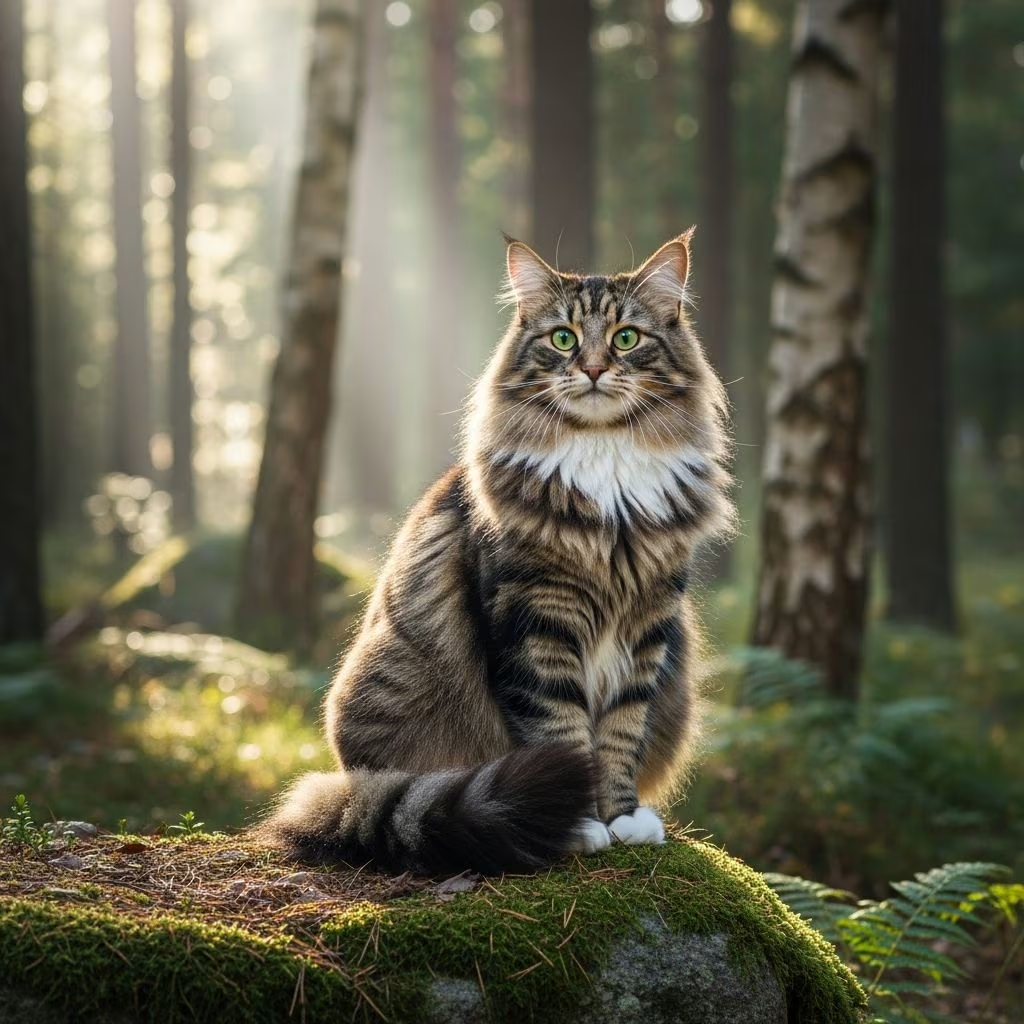
The Norwegian Forest Cat, often affectionately called the Wegie, is a majestic semi-longhaired breed renowned for its rugged beauty, independent spirit, and historical ties to Norway’s harsh winters. This large, muscular cat features a water-repellent double coat, tufted ears, and a bushy tail, making it resemble a miniature lynx. Originating as a natural breed that survived alongside Vikings, the Norwegian Forest Cat combines strength, intelligence, and sociability, thriving in cold climates and modern homes alike.
Norwegian Forest Cat Breed Overview
The Norwegian Forest Cat is a slow-maturing breed, reaching full size around 5 years of age. Adults are substantially built: females typically weigh 9-12 lbs (4-5.5 kg), while males range from 12-16 lbs (5.5-7.5 kg), with some reaching up to 20 lbs. Their sturdy frame, long legs (hind legs longer than front), and powerful chest give them an imposing yet elegant appearance suited for climbing and hunting.
- Height: 9-11 inches (23-28 cm) at shoulder
- Weight: Females 9-12 lbs, Males 12-20 lbs
- Coat Length: Semi-long, double coat with water-repellent guard hairs
- Eye Colors: Green, gold, copper, or odd-eyed
- Life Expectancy: 12-16 years with proper care
Recognized by major cat registries like The Cat Fanciers’ Association (CFA), this breed excels in shows due to its distinct triangular head, lynx-like ear tufts, and luxurious ruff.
History of the Norwegian Forest Cat
The Norwegian Forest Cat’s origins trace back over 1,000 years to Norway’s rugged forests, where these natural hunters survived brutal winters. Folklore links them to Viking ships, earning the nickname ‘skogkatt’ (forest cat), as they controlled vermin on long voyages. Hardy and self-sufficient, they adapted to Norway’s cold climate with their thick, insulating coats.
Nearly extinct by the 1970s due to crossbreeding with domestic cats and habitat loss, conservation efforts began in the 1930s. The first breed standard was established in 1972 by the Norwegian government, with formal recognition by the Fédération Internationale Féline (FIFe) in 1977 and CFA in 1993. Today, selective breeding preserves their wild type while enhancing temperament for companionship.
Norwegian Forest Cat Appearance & Standards
Norwegian Forest Cats embody natural elegance with a body built for endurance. Their head forms an equilateral triangle, with a straight nose profile, firm chin, and medium-large ears set high and wide, tipped with lynx-like tufts. The neck is short and muscular, supporting a broad chest and deep flanks.
The double coat is their hallmark: a dense woolly undercoat topped by a glossy, water-repellent overcoat longer on the back, sides, and tail. Seasonal ruffs and breeches add to their majestic look. Paws are large, round, and tufted for snow traction, with hind legs elevating the rump.
| Feature | Description |
|---|---|
| Head | Equilateral triangle, flat forehead, straight nose, no break |
| Ears | Medium-large, broad base, tufted tips, sideways cup |
| Body | Solidly muscled, long, broad chest, powerful without fat |
| Legs & Paws | Hind longer than front, heavily muscled, large tufted paws |
| Tail | Long, bushy, broader at base |
| Coat Colors | All colors including tabby, smoke, pointed; blue nose/paws desirable |
Disqualifiers include square/round heads, pinched muzzles, or insufficient coat density.
Norwegian Forest Cat Personality & Temperament
Independent yet affectionate, Norwegian Forest Cats are intelligent, friendly, and adaptable. They bond deeply with families but decide when to cuddle, often preferring to perch nearby rather than on laps. Known for chirping vocalizations and playful ‘bursts of energy,’ they hunt toys with Viking ferocity.
Social butterflies, they get along with children, dogs, and other cats, showing patience and gentleness. Their mellow demeanor suits relaxed homes, though they crave high perches and enrichment. Not overly demanding, they entertain themselves but thrive on interaction.
- Natural climbers loving cat trees and shelves
- Quiet with chirps, purrs, and trills
- Playful into adulthood, excellent hunters
- Gentle and patient with kids
- Loyal without clinginess
Norwegian Forest Cat Health & Wellness
Generally robust, Norwegian Forest Cats inherit hardy genes but face breed-specific risks. Common issues include:
- Hypertrophic Cardiomyopathy (HCM): Heart muscle thickening; screening recommended
- Glycogen Storage Disease (GSD IV): Rare genetic disorder affecting muscles/liver
- Patellar Luxation: Kneecap dislocation
- Obesity: Due to large size; monitor diet
Annual vet checkups, genetic testing for breeding, and a high-protein diet support longevity. They shed heavily in spring; watch for matting.
Norwegian Forest Cat Care & Grooming
Low-maintenance for their coat length, weekly brushing prevents tangles, increasing to daily during sheds. Use a slicker brush and comb for the undercoat. Bathe rarely; they self-groom well.
Provide tall cat trees, window perches, and puzzle toys for mental stimulation. Daily play mimics hunting. They adapt to indoors but enjoy cool weather and secure outdoor access.
- Nutrition: High-quality, protein-rich food; portion control
- Litter: Uncovered boxes; they prefer privacy
- Exercise: 20-30 min interactive play daily
Training Your Norwegian Forest Cat
Intelligent and food-motivated, Wegies respond to positive reinforcement. Litter training is instinctive; teach tricks like fetch or leash walking with treats and patience. Clicker training enhances bonding.
Socialize early for best temperament. They learn boundaries quickly but test limits playfully.
Nutrition & Feeding for Norwegian Forest Cats
Feed kitten food until 12 months, then adult formulas. Aim for 300-500 calories daily based on activity/weight. Wet food supports hydration; divide into 3-4 meals. Avoid obesity with measured portions.
Grooming Your Norwegian Forest Cat
The luxurious coat requires weekly sessions, focusing on ruff, breeches, and tail. Trim nails biweekly, clean ears monthly, and brush teeth daily. Their tufted paws shed fur between toes—check regularly.
Norwegian Forest Cat Kittens & Cost
Kittens cost $800-$2,500 from reputable breeders, reflecting pedigrees and health tests. Adopt from rescues for $100-300. Expect playful, curious babies maturing slowly—provide scratching posts early.
Norwegian Forest Cat FAQs
Are Norwegian Forest Cats good with kids?
Yes, their patient, gentle nature makes them excellent family pets when supervised.
Do Norwegian Forest Cats shed a lot?
Moderately year-round, heavily in spring; regular brushing manages it.
How big do Norwegian Forest Cats get?
Males up to 20 lbs, females 12 lbs; full maturity at 5 years.
Are Norwegian Forest Cats hypoallergenic?
No, their double coat produces dander; not suitable for severe allergies.
Can Norwegian Forest Cats go outside?
They love it but need secure enclosures to prevent escapes.
What’s the difference between Norwegian Forest Cat vs Maine Coon?
Norwegians have straighter profiles, woollier undercoats; Maine Coons are larger with squared muzzles.
References
- Norwegian Forest Cat Breed Standard — The Cat Fanciers’ Association. 2023. https://cfa.org/breed/norwegian-forest-cat/
- Norwegian Forest Cat — Wikipedia (primary sources referenced). 2024-01-10. https://en.wikipedia.org/wiki/Norwegian_Forest_Cat
- Norwegian Forest Cat Guide: Care, Personality & Health — Kanguro Seguro. 2023-05-15. https://www.kanguroseguro.com/post/norwegian-forest-cat-guide-care-personality-health
- Norwegian Forest Cat Breed — Hill’s Pet Nutrition. 2024. https://www.hillspet.com/cat-care/cat-breeds/norwegian-forest-cat
- Norwegian Forest Cat Breed Information — Purina UK. 2023-11-20. https://www.purina.co.uk/find-a-pet/cat-breeds/norwegian-forest
- Norwegian Forest Cat — VCA Animal Hospitals. 2023. https://vcahospitals.com/know-your-pet/cat-breeds/norwegian-forest-cat



