

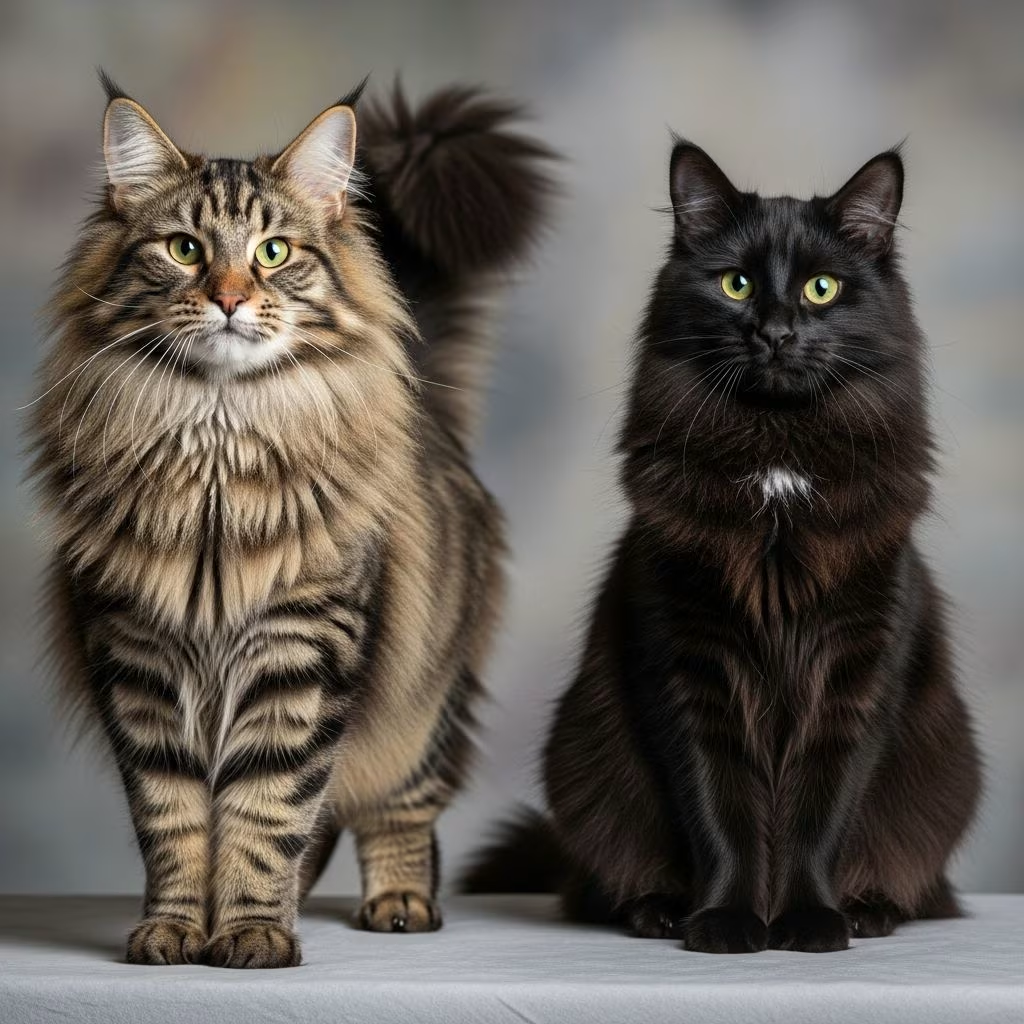
Norwegian Forest Cat vs Domestic Longhair: Understanding the Differences
Among the most striking and easily confused cats are the Norwegian Forest Cat and the Domestic Longhair. While both are longhaired felines that can captivate any cat lover, they differ significantly in breed standards, ancestry, appearance, and care requirements. Understanding these differences is essential for potential cat owners deciding which feline companion suits their lifestyle and living situation best. This comprehensive guide explores the key distinctions between these two beloved cats.
What Exactly Is a Domestic Longhair Cat?
Unlike the Norwegian Forest Cat, which is a purebred with defined characteristics, a Domestic Longhair is not an official breed at all. Instead, it is a classification for cats with mixed or ambiguous ancestry that carry the recessive gene for long hair. This means their genetic makeup can include multiple breed backgrounds, resulting in highly variable physical traits and temperaments.
The defining characteristic of a Domestic Longhair is their fur length, which typically grows between 2 and 6 inches in adulthood. Because these cats come from diverse genetic backgrounds, two Domestic Longhair littermates can look wildly different from each other—one might have a Persian-like flat snout while another displays Ragdoll-like pointed patterns. Some may even be born with short-haired siblings, demonstrating the unpredictable nature of their genetics.
Visual Differences: A Detailed Comparison
The physical differences between these two cats are substantial. Here’s a detailed comparison:
| Feature | Norwegian Forest Cat | Domestic Longhair |
|---|---|---|
| Average Height | 9-12 inches | 8-10 inches |
| Average Weight | 13-22 pounds | 10-15 pounds |
| Body Length | 12-18 inches (up to 36 inches with tail) | 15-20 inches (varies) |
| Lifespan | 12-16 years | 12-16 years |
| Coat Type | Water-resistant double coat | Long hair (2-6 inches, variable texture) |
| Head Shape | Triangular with straight profile | Varies by ancestry |
Norwegian Forest Cat Appearance
Norwegian Forest Cats, often called “Wegies,” are distinctly imposing in appearance. These cats feature a triangular head shape, almond-shaped eyes, and ears set lower on the head with distinctive ear tufts. Their signature trait is a water-resistant double coat with a woolly undercoat, evolved to protect them from Scandinavia’s harsh winters. The coat appears glossy and lies evenly across their muscular body. Their hind legs are noticeably longer than their front legs, giving them an excellent climbing ability. Norwegian Forest Cats also display a full, impressive ruff around their neck and substantial fur between their paw pads.
Domestic Longhair Appearance
Domestic Longhairs are far more variable in appearance. The only defining characteristic is their long hair, which they carry as a recessive genetic trait. These cats can display any color, pattern, or physical feature depending on their ancestry. Some may have the flat snout of a Persian ancestor, while others display the pointed coloring of Ragdoll heritage. Ear tufts and paw pad fur may or may not be present, depending on whether their lineage includes breeds adapted to snowy climates.
Understanding the Genetics of Long Hair
To understand why Domestic Longhairs are so variable, it’s important to comprehend the genetics behind coat length. The long hair trait is recessive, meaning a cat must inherit the long-hair allele from both parents to display long fur. A cat with one long-hair allele and one short-hair allele will have short hair, though it carries the hidden gene for length.
This genetic reality explains several fascinating phenomena:
- Two long-haired cats will always produce long-haired kittens
- Two short-haired cats can produce long-haired kittens if both carry the recessive allele
- A mixed litter from long-haired parents might include both long and short-haired siblings
- The origin of the long-hair allele in domestic cats remains scientifically unknown
Because of widespread crossbreeding and the recessive nature of the trait, countless cats with long hair but no defined breed ancestry have emerged, leading to the umbrella classification of “Domestic Longhair.”
Temperament and Personality
Norwegian Forest Cat Temperament
Norwegian Forest Cats possess distinct personality traits. These cats are intelligent, playful, and can be stubborn, reflecting their strong-willed nature. They thrive on interaction with their human companions and exhibit a sociable, affectionate demeanor. These active cats require significant mental and physical stimulation, often needing more than one hour of exercise daily. Their intelligence means they can be trained, but their stubborn streak requires experienced handling.
Domestic Longhair Temperament
Unlike Norwegian Forest Cats, Domestic Longhairs have no standardized temperament because they lack breed standards. Personality varies greatly depending on individual genetics and upbringing. Some may be outgoing and playful, while others are reserved or independent. This unpredictability means potential owners must meet and interact with individual cats before adoption, as behavior cannot be predicted by breed characteristics.
Exercise and Activity Requirements
Norwegian Forest Cats demand at least one hour of daily exercise, including climbing, jumping, and interactive play. Their large, muscular bodies and natural hunting instincts make physical activity essential for their wellbeing and behavioral health.
Domestic Longhair exercise needs vary considerably by individual. Some inherit the active traits of their ancestors and require substantial daily activity, while others are content with moderate play. Without knowing a cat’s ancestry, predicting its activity level is challenging.
Grooming and Coat Care
Both Norwegian Forest Cats and Domestic Longhairs require high grooming needs due to their long fur. However, their grooming requirements differ slightly:
Norwegian Forest Cat Grooming
Norwegian Forest Cats should be brushed several times each week to maintain their double coat’s health and prevent matting. Twice yearly, these cats undergo significant shedding periods when coat maintenance becomes even more critical. Regular grooming not only keeps their coat healthy but also provides bonding time, which these social cats genuinely enjoy.
Domestic Longhair Grooming
Domestic Longhairs with fur growing close to 6 inches in length require consistent coat maintenance. Their natural grooming abilities alone are insufficient to prevent tangles and matting. Regular brushing is essential, though the exact frequency may depend on the individual cat’s coat texture and density, influenced by their ancestral breeds.
Health Considerations
Norwegian Forest Cat Health
As a defined breed, Norwegian Forest Cats may be predisposed to certain hereditary health conditions. Responsible breeders screen for these issues and maintain health records. However, being aware of potential breed-specific concerns allows owners to monitor their cats appropriately and catch problems early.
Domestic Longhair Health
Domestic Longhairs are not associated with specific breed-related health problems because they are not a breed. However, their mixed ancestry means they could inherit health issues affecting any of their contributing breeds. Owners should remain vigilant about common feline health concerns applicable to all cats, including:
- Urinary crystals and urinary tract issues
- Eye infections and vision problems
- Dental disease
- Obesity and weight management issues
- Kidney and thyroid conditions
Identifying These Cats: Key Distinctions
Distinguishing between a Norwegian Forest Cat and a Domestic Longhair requires careful observation:
- Check for pedigree papers: Only official documentation from a reputable breeder confirms a purebred Norwegian Forest Cat
- Examine head shape: Norwegian Forest Cats have triangular heads with straight profiles, while Domestic Longhairs show variable head shapes
- Evaluate ear placement: Wegies have lower-set ears with prominent tufts, unlike the more variable ear placement in Domestic Longhairs
- Feel the coat: Norwegian Forest Cats have dense, water-resistant double coats; Domestic Longhairs have variable coat textures
- Assess body proportions: Norwegian Forest Cats have noticeably longer hind legs than front legs; Domestic Longhairs show variable proportions
- Observe size: Norwegian Forest Cats are typically larger and more muscular than average Domestic Longhairs
Which Cat Is Right for You?
Best Suited for Norwegian Forest Cats
Experienced cat owners with active lifestyles and considerable space best match with Norwegian Forest Cats. These cats require owners who can provide:
- At least one hour of daily exercise and enrichment
- Multiple grooming sessions per week
- Patient handling of their intelligent, sometimes stubborn personalities
- Climbing structures and environmental enrichment
- Willingness to engage with an active, demanding companion
Inexperienced cat owners may find Norwegian Forest Cats challenging, as their intelligence and strong will can steamroll less confident handlers.
Best Suited for Domestic Longhairs
Domestic Longhairs offer flexibility for various living situations, though individual cats vary widely. Their suitability depends entirely on the specific cat’s personality, energy level, and temperament. Potential owners must:
- Meet and interact with individual cats before adoption
- Be prepared for high grooming needs regardless of temperament
- Recognize that personality surprises may emerge after adoption
- Adapt their expectations based on the individual cat’s actual traits
Because breed standards don’t apply, Domestic Longhairs can suit various households, from active families to quiet, independent-minded owners.
Shared Care Requirements
Despite their differences, both Norwegian Forest Cats and Domestic Longhairs share essential care needs:
- Daily coat maintenance to prevent matting and promote coat health
- Regular veterinary care including vaccinations and health screenings
- Quality nutrition supporting their size and energy needs
- Litter box maintenance and environmental enrichment
- Dental care and attention to common feline health issues
Frequently Asked Questions
Q: Can a Domestic Longhair be as large as a Norwegian Forest Cat?
A: While some Domestic Longhairs with Maine Coon or Norwegian Forest Cat ancestry may be quite large, typical Domestic Longhairs are smaller and less muscular than purebred Norwegian Forest Cats. Individual variation is significant.
Q: How can I tell if my cat is a Norwegian Forest Cat or a Domestic Longhair?
A: The most reliable method is checking for pedigree papers from a reputable breeder. Physically, examine the head shape (triangular for Wegies), ear placement, coat density, and body proportions. Genetic testing can also confirm breed ancestry.
Q: Are Domestic Longhairs healthier than Norwegian Forest Cats?
A: Neither is inherently healthier. Norwegian Forest Cats may have known breed-specific concerns, while Domestic Longhairs’ health depends on their mixed ancestry. Both can live healthy lives with proper care.
Q: Do I need to groom my Domestic Longhair as much as a Norwegian Forest Cat?
A: Yes. Both require regular grooming to prevent matting and maintain coat health, especially as their fur grows to 6 inches in length. The exact frequency may vary based on coat texture and individual needs.
Q: Can Norwegian Forest Cats and Domestic Longhairs live together?
A: Yes, they can coexist harmoniously if properly introduced. Individual personality compatibility matters more than breed designation. Slow introductions and separate spaces initially ensure the best outcomes.
References
- Norwegian Forest Cat vs Domestic Longhair Cat: Main Differences — Catster. 2025. https://www.catster.com/cat-breeds/norwegian-forest-cat-vs-domestic-longhair/
- Norwegian Forest Cat Size: How Big Are They? — Litter-Robot. 2025. https://www.litter-robot.com/blog/norwegian-forest-cat-size/
- 15 Longhaired Cat Breeds — PetMD. 2025. https://www.petmd.com/cat/general-health/longhaired-cats
- Maine Coon, Forest Cat, Domestic Long Hair — Maine Coon Adventures. 2026-01-01. https://mainecoonadventures.com/2026/01/01/maine-coon-forest-cat-domestic-long-hair/



