
Norwegian Forest Cat: History, Traits & Care Guide
Discover the majestic Norwegian Forest Cat: A complete guide to this ancient Nordic breed's history, personality, and care requirements.
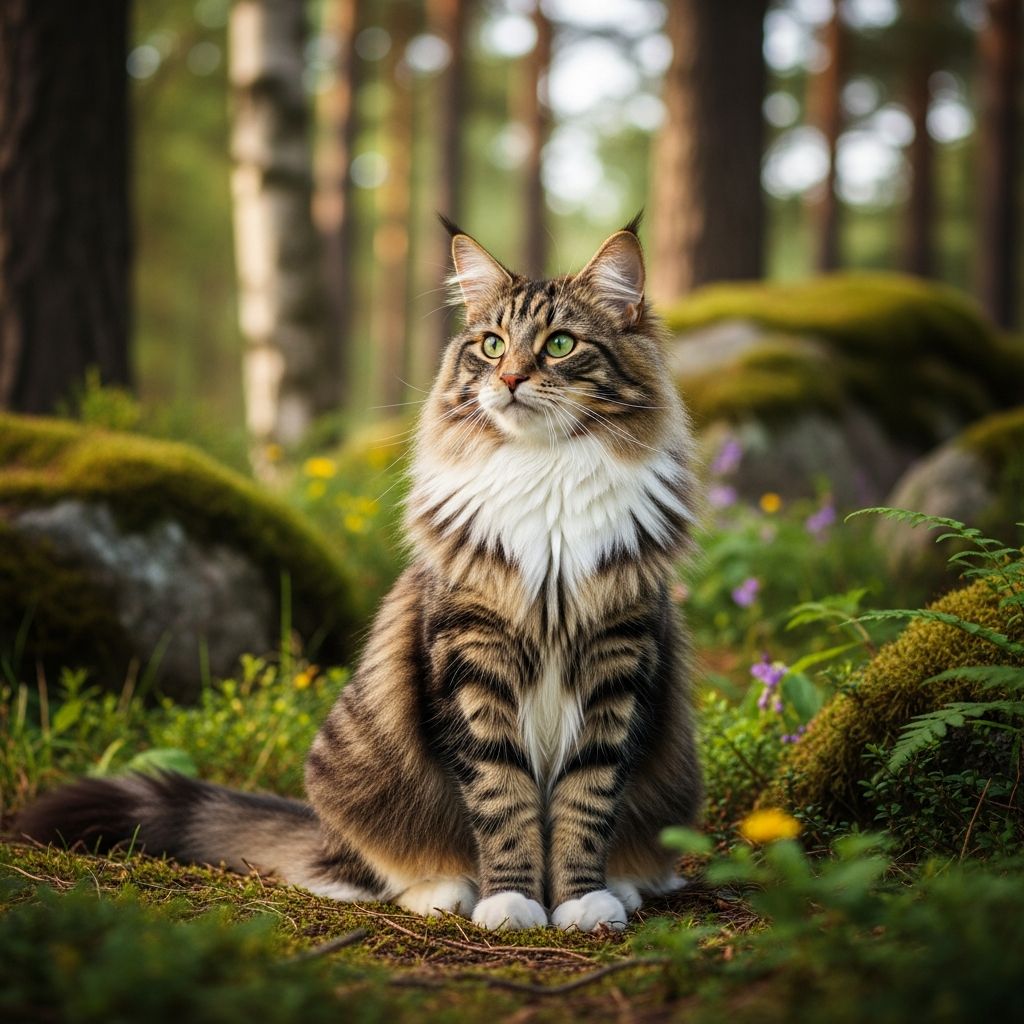
Norwegian Forest Cat Breed Guide
The Norwegian Forest Cat, known affectionately as the “Weegie” or in Norwegian as norsk skogkatt, is one of the most captivating and distinctive cat breeds in the world. These magnificent felines are a testament to centuries of natural adaptation to harsh Nordic climates, combining striking physical attributes with equally impressive personality traits. If you’re considering welcoming a Norwegian Forest Cat into your home, understanding this breed’s unique characteristics, history, and care requirements is essential.
Origin and History
The Norwegian Forest Cat’s lineage is deeply rooted in Scandinavian history and legend. The breed’s ancestors likely arrived in Norway around A.D. 1000, brought by Viking explorers who sailed the northern seas. These early felines were adapted short-haired cats, though Vikings may have also introduced long-haired varieties similar to those ancestral to modern Siberian and Turkish Angora breeds. Over more than a millennium, these cats naturally evolved to survive in Norway’s unforgiving forests and mountains, developing the distinctive physical characteristics that define the breed today.
What makes the Norwegian Forest Cat particularly unique is that it’s classified as a landrace breed—a naturally occurring variety shaped by geographic isolation and environmental pressures rather than selective human breeding. This heritage of self-sufficiency remains deeply embedded in the breed’s temperament and behavior today. The breed wasn’t formally recognized until the mid-20th century, though it had existed in Norwegian folklore and culture for centuries, often depicted in Viking sagas and Norse mythology.
Physical Characteristics
Size and Build
Norwegian Forest Cats are notably large and sturdy animals, substantially larger than the average domestic cat. Adult females typically weigh between 3.6 to 8 kilograms (7.9 to 17.6 pounds), while males are considerably more substantial, ranging from 4.5 to 9 kilograms (9.9 to 19.8 pounds). The breed doesn’t reach full maturity until approximately five years of age, making them one of the slower-maturing cat breeds. This prolonged growth period is accompanied by a slow but steady development of their distinctive muscular, athletic physique.
The body structure is built for climbing and survival in mountainous terrain. Norwegian Forest Cats possess a solidly muscled and well-balanced frame with substantial bone structure. Their legs are medium-length with hind legs noticeably longer than front legs, creating a distinctive body profile with the rump higher than the shoulders. This anatomical feature, combined with powerful thigh muscles and substantial lower legs, provides exceptional climbing ability and agility.
Coat and Coloring
One of the most striking features of the Norwegian Forest Cat is its luxurious double coat, specifically adapted for survival in cold climates. The coat consists of a long, thick, glossy, water-repellent outer layer combined with a woolly, insulating undercoat. This combination creates natural protection against harsh weather conditions. The coat is particularly thick around the legs, chest, head, and neck, where it forms a characteristic ruff.
The breed’s coat undergoes seasonal changes, with fuller growth during winter months and shedding during warmer seasons. The coat’s water-resistant properties and dense undercoat were essential evolutionary adaptations that enabled these cats to thrive in Scandinavian forests. Norwegian Forest Cats can display various color patterns and markings, including classic tabby, silver patina, blue-cream patterns, and smoke colorations.
Distinctive Facial Features
The Norwegian Forest Cat’s head is notably distinctive, shaped like an equilateral triangle with all sides measuring equally from the base of the ear to the chin point. The profile is generally straight, lacking the break or stop found in some other breeds. Key facial characteristics include a strong chin that aligns with the front of the nose, a medium-length muzzle, and large, widely-spaced ears positioned both on the side and top of the head. The ears feature characteristic tufts at the tips, reminiscent of a lynx, and are alert and forward-facing.
The eyes are almond-shaped and oblique, set to contribute to the breed’s alert, intelligent expression. Eye color can vary across the spectrum. The tail is notably long and bushy, broader at the base and tapering toward the tip, often appearing as a magnificent plume when raised.
Personality and Temperament
Social Characteristics
Norwegian Forest Cats are intelligent, friendly, and generally excellent with people and families. They possess a sweet, loving nature and genuinely appreciate human interaction and companionship. However, true to their heritage of self-sufficiency, they maintain strong independence and won’t appreciate being treated as clingy lap cats. These felines will seek out human company when they desire it, but the decision to sit on your lap remains entirely theirs.
The breed is notably sociable and gets along exceptionally well with other cats, dogs, and children. They are adaptable cats that enjoy being part of family activities but also appreciate their personal space. Norwegian Forest Cats will stay near you while you work or relax, sometimes “helping” with whatever you’re doing, until something more interesting captures their attention.
Activity Level and Behavior
These cats are moderately active with characteristic bursts of random energy. They entertain themselves with interactive play, running, hiding, and ambushing toys as if they were real prey—a reminder of their hunting heritage. Research comparing Norwegian Forest Cat kittens to other breeds found them to be more likely to explore their environment and attempt to escape, reflecting their adventurous nature.
The breed remains territorial and will patrol their domain multiple times daily to ensure everything is secure. They love high perches and vertical spaces, making tall cat trees and elevated surfaces essential environmental features. Many owners report their Norwegian Forest Cats become swift and effective hunters when provided outdoor access, though the breed adapts well to indoor living with adequate enrichment.
Vocalizations
One of the breed’s most charming characteristics is their unique vocal repertoire. Norwegian Forest Cats produce a variety of high-pitched sounds ranging from soft purrs to distinctive bird-like chirps when excited. These “chirping” vocalizations are particularly endearing and add personality to their interactions with their families.
Care Requirements
Grooming Needs
The luxurious double coat requires significant grooming commitment. Daily brushing is recommended to prevent matting, reduce shedding, and maintain coat health. The thick undercoat sheds seasonally, particularly during spring and fall transitions, so grooming becomes even more critical during these periods. Regular grooming not only keeps the coat beautiful but also provides an opportunity for bonding with your cat and monitoring for any skin issues or parasites.
Environmental Needs
Norwegian Forest Cats thrive with extensive outdoor space and high-level enrichment activities that simulate hunting and climbing. They require room to run, hide, ambush toys, and explore. Providing tall scratching posts or multi-level cat trees is essential—without these outlets, your cat may decide that the top of your kitchen cabinet is their favorite spot. They benefit tremendously from interactive play sessions that tap into their natural hunting instincts.
Nutrition and Weight Management
One of the breed’s admirable traits is their ability to self-regulate nutrition effectively. Norwegian Forest Cats naturally increase their exercise and reduce food intake when they feel it’s necessary, rarely requiring strict nutritional management. However, adequate play time and space to roam remain essential for maintaining healthy weight and psychological well-being.
Health and Longevity
Norwegian Forest Cats are generally healthy cats with good longevity. The breed’s large size means they mature slowly and require patient observation for growth-related issues. Like all breeds, they may be predisposed to certain conditions, so regular veterinary check-ups, a balanced diet, and appropriate exercise are vital. Their robust build and strong constitution, developed through centuries of natural selection for survival, contribute to overall good health.
Ideal Home Environment
These cats are best suited for homes that can provide space, enrichment, and respect for their independent nature. They thrive in relaxed household environments where their need for alone time is understood and respected. Norwegian Forest Cats can be left alone during the day but may seek companionship if left alone for extended periods. They’re considered great for experienced cat owners and work well in homes where their territorial and hunting instincts can be appropriately channeled.
Frequently Asked Questions
Q: Are Norwegian Forest Cats suitable for first-time cat owners?
A: Norwegian Forest Cats can be suitable for first-time owners willing to provide appropriate enrichment, space, and respect for their independence. However, they’re more suited for owners who appreciate independent cats rather than those seeking highly affectionate lap cats.
Q: How much grooming do Norwegian Forest Cats require?
A: Daily grooming is recommended to maintain their luxurious coat, prevent matting, and manage seasonal shedding. This commitment is essential for keeping the breed’s distinctive appearance and ensuring coat health.
Q: Can Norwegian Forest Cats live indoors successfully?
A: Yes, they can adapt to indoor life with adequate enrichment, interactive play, tall cat trees, and space to explore. However, they greatly benefit from outdoor access if safely provided through catios or supervised outdoor time.
Q: Do Norwegian Forest Cats get along with other pets?
A: Yes, they typically get along well with other cats, dogs, and children when properly socialized. Their sociable nature makes them compatible with multi-pet households.
Q: Why are Norwegian Forest Cats called “Wegies”?
A: “Weegie” is an affectionate shortened name for the breed, derived from “Norwegian.” Cat enthusiasts use this nickname as a term of endearment for these magnificent felines.
Q: How long do Norwegian Forest Cats typically live?
A: With proper care, nutrition, and veterinary attention, Norwegian Forest Cats typically live into their teens, with many reaching 14-16 years of age or beyond.
References
- Norwegian Forest Cat — Wikipedia. Accessed November 2025. https://en.wikipedia.org/wiki/Norwegian_Forest_Cat
- Norwegian Forest Cat Breed Standard — The Cat Fanciers’ Association (CFA). 2025. https://cfa.org/breed/norwegian-forest-cat/
- Norwegian Forest Cat Breed Information — Purina UK. Accessed November 2025. https://www.purina.co.uk/find-a-pet/cat-breeds/norwegian-forest
- Norwegian Forest Cat Breed Guide — Hill’s Pet Nutrition. Accessed November 2025. https://www.hillspet.com/cat-care/cat-breeds/norwegian-forest-cat
- Norwegian Forest Cat Breed Information — VCA Animal Hospitals. Accessed November 2025. https://vcahospitals.com/know-your-pet/cat-breeds/norwegian-forest-cat
Similar Articles








Read full bio of medha deb




