

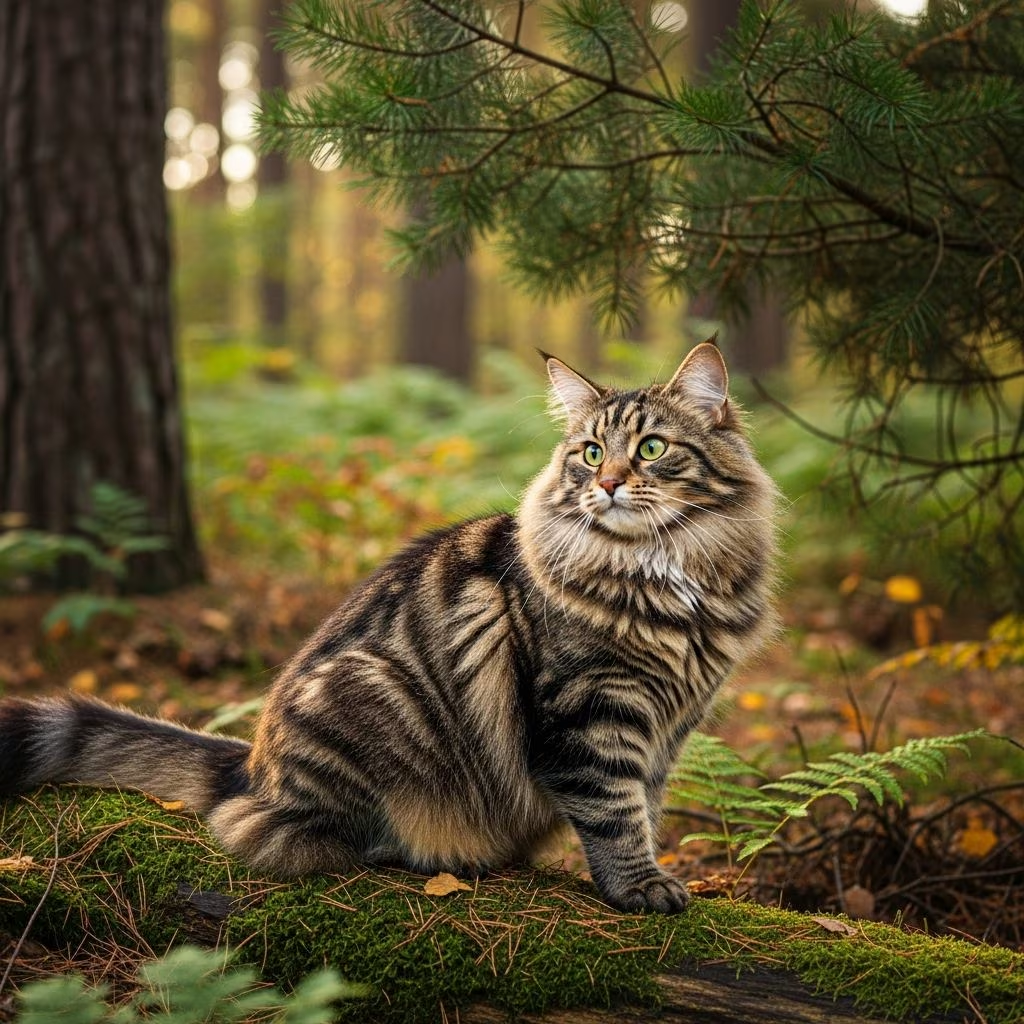
The Norwegian Forest Cat, often nicknamed the “Wegie,” stands out as a robust, semi-longhaired breed with deep roots in Scandinavia’s harsh climates. This natural landrace developed resilience through centuries of adaptation, making it a favored choice for those seeking a large, independent yet affectionate feline companion.
Origins and Historical Significance
Tracing back to Norway’s rugged landscapes, the Norwegian Forest Cat likely descends from short-haired cats introduced around A.D. 1000, possibly by Vikings who may have also carried long-haired varieties akin to Siberian or Turkish Angora ancestors. These cats evolved as a landrace, thriving in cold, snowy environments without selective human breeding until the 20th century.
Legends portray them as mythical companions to warriors, surviving Norway’s forests by hunting and climbing trees with ease. Recognition came later: the Norwegian government granted official status in 1977, followed by international bodies like the Cat Fanciers’ Association (CFA) and Fédération Internationale Féline (FIFe). Their slow maturation—reaching full size around five years—mirrors their wild heritage, emphasizing natural selection over rapid growth.
Physical Characteristics and Breed Standards
Norwegian Forest Cats impress with their substantial build, resembling Maine Coon or Siberian breeds. Males typically weigh 4.5–9 kg (9.9–19.8 lb), females 3.6–8 kg (7.9–17.6 lb), supported by a long, sturdy body, long legs (hind legs longer for a higher rump), and a bushy tail broader at the base.
The head forms an equilateral triangle, with a straight nose profile, firm chin aligned with the nose tip, and medium-large ears set high and wide, tipped with lynx-like tufts. Eyes are almond-shaped and expressive in any color. The paws are large, round, and tufted for snow navigation, often appearing slightly “toe-out” from the front.
Signature feature: a double coat with a glossy, water-repellent topcoat and woolly undercoat, densest on the chest (forming a ruff), legs, and belly. Colors range widely, including solids, smokes (e.g., cream smoke with white undercoat), tabbies (classic or mackerel with dense markings, butterfly shoulder patterns, and “M” forehead), and silver patched variants with red/cream patches.
| Feature | Description |
|---|---|
| Body Type | Solidly muscled, moderate length, broad chest, powerful flanks |
| Legs & Paws | Medium length, hind longer; large tufted paws |
| Coat | Double-layered, water-resistant; seasonal undercoat shed |
| Ears & Tail | Tufted ears; long, bushy tail |
Temperament and Behavioral Traits
Independent yet sociable, Norwegian Forest Cats balance self-sufficiency with family devotion. Intelligent and adaptable, they form strong bonds, often choosing a favorite person while welcoming all household members, including children, dogs, and other cats.
- Friendly Explorers: Moderately active with bursts of energy; love climbing high perches like cat trees or cabinets.
- Vocal Variety: Produce chirps, purrs, and high-pitched calls when excited, differing from typical meows.
- Playful Hunters: Self-entertain with toys, ambushing “prey”; excellent climbers due to strong claws.
- Social but Not Clingy: Seek companionship if alone too long but decide lap time themselves.
Studies show they explore more boldly than breeds like Siamese, reflecting outdoor prowess. Indoors, they adapt well but crave vertical space and interaction to prevent boredom.
Care and Grooming Essentials
Daily grooming prevents matting in their thick coat, especially during seasonal sheds. Use a slicker brush or wide-tooth comb, focusing on the ruff and hindquarters. Bathing is rare due to water resistance, but check ears weekly and trim nails monthly.
Nutrition suits active large breeds: high-protein kibble or wet food supporting muscle mass. Provide ample water; obesity risks low if exercised. Dental care via brushing or treats combats plaque.
- Enrichment: Tall scratching posts, window perches, puzzle feeders, interactive toys.
- Exercise: 20–30 minutes daily play mimics hunting.
- Litter: Uncovered boxes; they prefer privacy.
Not heat-tolerant; air-conditioned spaces in summer. Outdoor access ideal if secure (fencing, leashes) to channel natural instincts.
Health Considerations and Lifespan
Generally hardy, living 12–16 years, but genetic screening is crucial. Common issues include:
- Hypertrophic Cardiomyopathy (HCM): Heart muscle thickening; annual echos recommended.
- < Glycogen Storage Disease IV (GSD IV): Rare, fatal liver disorder; DNA testing advised.
- Hip Dysplasia: Joint malformation in some lines.
- Patellar Luxation: Kneecap slippage.
Choose breeders with health certifications from CFA/TICA. Regular vet visits, balanced diet, and weight management mitigate risks. Probiotics may ease stress-related issues.
Training and Daily Living Tips
Trainable due to intelligence: litter training is instinctive; harness walking possible with patience. Clicker training works for tricks like fetching. Socialize early for multi-pet homes.
Ideal for active singles, couples, or families; less suited to constant solitude or tiny apartments without vertical upgrades. They thrive in homes allowing supervised outdoor time.
Norwegian Forest Cat vs. Similar Breeds
| Breed | Size | Coat | Temperament | Climate Suitability |
|---|---|---|---|---|
| Norwegian Forest | Large | Double, water-repellent | Independent, chirpy | Cold-adapted |
| Maine Coon | Very large | Shaggy semi-long | Sociable, dog-like | Cold-tolerant |
| Siberian | Large | Triple coat | Playful, hypoallergenic | Extreme cold |
Bringing Home a Norwegian Forest Cat
Adopt from reputable breeders or rescues emphasizing health testing. Kittens mature slowly; prepare for 3–5 years of growth. Budget for grooming tools, large litter boxes, and vet costs (~$1,000–2,000 first year).
These cats reward with loyalty, beauty, and charm, blending wild elegance with domestic warmth.
Frequently Asked Questions (FAQs)
Are Norwegian Forest Cats good with kids?
Yes, their gentle, playful nature makes them excellent family pets, tolerant of children’s energy.
How often should I groom a Wegie?
Daily brushing during sheds; 2–3 times weekly otherwise to manage the dense coat.
Do they shed a lot?
Seasonally heavy, but regular grooming contains it; not truly hypoallergenic.
Can they live indoors only?
Yes, with ample climbing and play; they adapt but prefer outdoor access.
What is their average lifespan?
12–16 years with proper care and health monitoring.
References
- Norwegian Forest Cat Breed Standard — The Cat Fanciers’ Association. Accessed 2026. https://cfa.org/breed/norwegian-forest-cat/
- Norwegian Forest Cat — Wikipedia (sourced from primary breed registries). Accessed 2026. https://en.wikipedia.org/wiki/Norwegian_Forest_Cat
- Norwegian Forest Cat Breed Information — Purina UK. Accessed 2026. https://www.purina.co.uk/find-a-pet/cat-breeds/norwegian-forest
- Norwegian Forest Cat Breed Health and Care — PetMD. Accessed 2026. https://www.petmd.com/cat/breeds/norwegian-forest-cat
- Cat Breeds: Norwegian Forest Cat — VCA Animal Hospitals. Accessed 2026. https://vcahospitals.com/know-your-pet/cat-breeds/norwegian-forest-cat



