

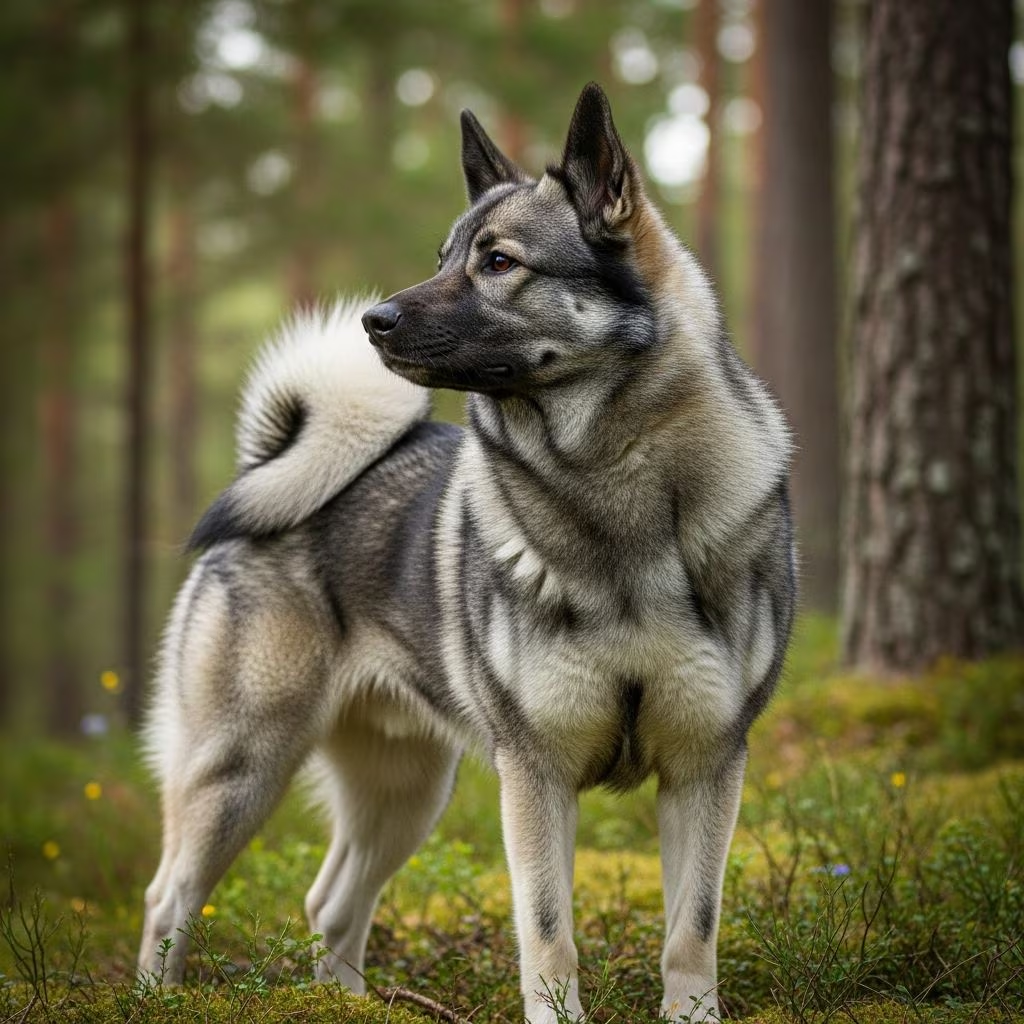
The Norwegian Elkhound stands as a testament to endurance and versatility, originating from the rugged landscapes of Norway where it has served as a vital hunting partner for millennia. This medium-sized Spitz breed combines a bold spirit with family-friendly loyalty, making it suitable for active households today.
Ancient Roots in Scandinavian Wilderness
Tracing back over 6,000 years, the Norwegian Elkhound’s history intertwines with Norway’s earliest inhabitants. Archaeological findings suggest these dogs accompanied migratory groups known as Veidefolket, who navigated forests in pursuit of large game like moose, or elg in Norwegian—hence the breed’s name, translating to “moose dog.”
During Viking eras around 5,000 B.C., Elkhounds hunted alongside warriors, guarding camps and tracking prey through harsh terrains. DNA evidence links them to ancient gray wolves from western Russia and central Europe, confirming their status as one of the oldest Spitz breeds. Burials at Viking sites, such as Svarthola in Jæren, Norway, include Elkhound remains, underscoring their cultural significance.
The 19th century’s “wolf period” from 1825 to 1845 tested the breed’s resilience. Wolves decimated livestock and game, nearly wiping out Elkhounds, but survivors were selectively bred to rebuild strong bloodlines. A pivotal dog, Gamle Bamse Gram (whelped 1865), became foundational to modern pedigrees. Formal recognition came in 1877 at Norway’s first benched dog show, where Elkhounds excelled among hunting breeds.
In Norway, champions must prove hunting prowess in trials, preserving the breed’s working heritage. Imported to the UK post-World War I and the US later, the Gray Elkhound predominates internationally, distinct from the rarer Black variant.
Distinct Physical Build for Northern Challenges
Norwegian Elkhounds exhibit a compact, square profile ideal for endurance hunting. Males stand 19.5 inches at the shoulder, females 18.5 inches, weighing 50-60 pounds and 40-55 pounds respectively. Their sturdy frame balances agility and power.
The hallmark double coat features a harsh, weather-resistant outer layer of straight guard hairs over a dense, insulating undercoat. Pepper-and-salt gray dominates, darkest at the saddle and lighter on legs and underbelly, with black tipping on richer hairs. Erect, triangular ears and a tightly curled tail complete the Spitz silhouette.
This coat adaptation is crucial for arctic hunts: the outer layer repels moisture, preventing ice buildup that could prove fatal in freezing conditions. Wide nostrils and dark, almond-shaped eyes enhance scent detection and terrain navigation.
| Physical Trait | Male Standard | Female Standard |
|---|---|---|
| Height | 19.5 inches | 18.5 inches |
| Weight | 50-60 lbs | 40-55 lbs |
| Coat Color | Gray with black tips | Gray with black tips |
| Build | Square, leggy | Square, leggy |
Leg length equals half the height from ground to withers, ensuring mobility without excess bulk—a point emphasized by breed experts to avoid short-legged variations.
Dynamic Temperament and Instincts
Bred for independence in the field, Norwegian Elkhounds display courage, alertness, and energy. They are friendly yet reserved with strangers, making vigilant guardians without undue aggression.
- Bold Hunter: Circles moose silently, barking to alert handlers, then resuming quiet pursuit—enduring hours over miles.
- Intelligent Companion: Eager to please owners while maintaining an aloof, self-assured demeanor often misread as stubbornness.
- Family Loyalist: Devoted to family, good-natured with children if socialized, though their hunting drive requires supervision around small pets.
Historically controlling wolves and bears, they contributed to predator balance, aiding moose repopulation. Today, they excel in agility, obedience, and herding, thriving with purposeful activity.
Essential Grooming and Coat Maintenance
The weatherproof coat sheds seasonally, demanding weekly brushing to manage undercoat buildup and distribute oils. Use a slicker brush and undercoat rake during spring and fall “blowouts.” Bath only as needed with mild shampoo to preserve natural protection.
Check ears weekly for infections, trim nails monthly, and maintain dental hygiene via brushing or chews. Their curled tail rarely mats but benefits from gentle cleaning. Minimal grooming suits busy owners, but neglect leads to matting or odor.
Exercise Demands for Peak Vitality
High-energy Elkhounds need 60-90 minutes daily of vigorous activity. Long hikes, runs, or off-leash play mimic hunting, preventing boredom-induced digging or barking.
- Trail running in varied terrain
- Canine sports like lure coursing
- Swimming for joint-friendly cardio
Puppies require controlled exercise to safeguard developing joints. Mental stimulation via puzzle toys or scent games channels their tracking instincts indoors.
Nutrition Tailored to Active Lifestyles
Feed high-quality, protein-rich kibble (25-30% protein) suited to working breeds. Adults need 1,200-1,800 calories daily, adjusted for activity. Divide into two meals to avoid bloat risk.
Fresh water always; monitor weight to maintain lean muscle. Seniors may shift to joint-support formulas with glucosamine. Avoid table scraps to prevent obesity, common in under-exercised Elkhounds.
Health Profile and Wellness Strategies
Robust with a 12-15 year lifespan, Elkhounds face breed-specific issues. Responsible breeding from health-tested lines mitigates risks.
| Common Concern | Prevalence | Prevention |
|---|---|---|
| Hip Dysplasia | Moderate | OFA testing, weight control |
| Elbow Dysplasia | Low-Moderate | Screened parents |
| Cystinuria | Moderate | Genetic testing |
| Progressive Retinal Atrophy | Low | Eye exams |
Annual vet checks, vaccinations, and parasite prevention are essential. Fanconi syndrome, a kidney disorder, warrants early screening in lines with history.
Training Methods for Independent Thinkers
Positive reinforcement excels with this smart, independent breed. Start early with short sessions, using treats and praise. Consistency counters their selective listening.
- Socialize broadly from 8 weeks
- Teach recall vital for hunters
- Leash training prevents pulling
Advanced obedience shines in Norwegian trials, blending utility and conformation. Crate training aids housebreaking; they mature slowly, full growth by 2 years.
Ideal Homes and Lifestyle Matches
Best for active families with space for roaming. They adapt to apartments if exercised adequately but flourish in rural settings. Not ideal for sedentary owners or tiny tots without supervision due to play vigor.
Cold climates suit their coat; provide cooling mats in heat. Excellent watchdogs, alerting via bark but trainable to discriminate threats.
Frequently Asked Questions
Are Norwegian Elkhounds good with kids?
Yes, when raised together, their gentle nature shines, though supervise active play.
How much do they shed?
Heavy during seasonal sheds; daily brushing helps.
Can they hunt modern game?
Absolutely; they track moose expertly in Norway today.
What’s the difference from Black Elkhounds?
Grays are standard; Blacks are rarer, used for smaller game.
Are they easy to train?
Intelligent but independent; patience yields results.
References
- History: Gray Elkhound of Norway — Showsight Magazine. Pre-2026. https://showsightmagazine.com/history-gray-elkhound-of-norway/
- Norwegian Elkhound History — American Kennel Club. Pre-2026. https://www.akc.org/expert-advice/dog-breeds/norwegian-elkhound-history/
- Norwegian Elkhound Dog Breed Guide — Bailey’s CBD. Pre-2026. https://baileyscbd.com/blogs/dog-breeds/norwegian-elkhound-distinct-canine-characteristics
- Breed Standards: Norwegian Elkhound — United Kennel Club. Pre-2026. https://www.ukcdogs.com/norwegian-elkhound
- Viking Dog: The Norwegian Elkhound — Sons of Norway. Pre-2026. https://www.sofn.com/blog/viking-dog-the-norwegian-elkhound/



