

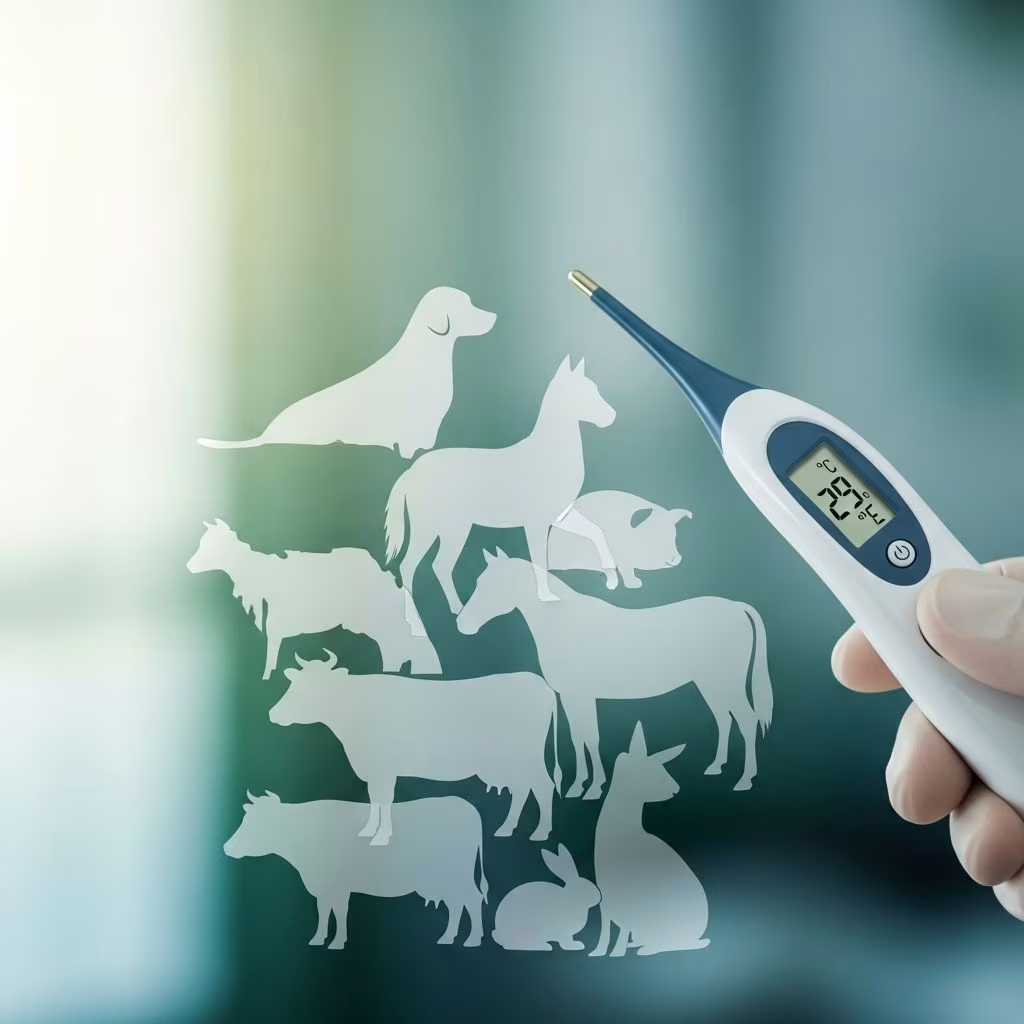
Monitoring rectal temperature is a fundamental aspect of animal health assessment, providing critical insights into physiological status. Unlike humans, many animals maintain higher baseline temperatures, and deviations can signal infections, stress, or environmental issues. This guide compiles verified ranges for various species, drawing from authoritative veterinary sources to aid pet owners, farmers, and clinicians in accurate monitoring.
Why Rectal Temperature Matters in Animal Care
Rectal thermometry offers the most reliable core body temperature reading in animals, surpassing oral or axillary methods in precision. It helps detect hyperthermia from infections or heatstroke, and hypothermia from exposure or shock. Early identification through routine checks can prevent severe conditions, especially in vulnerable groups like neonates or confined animals.
Factors such as age, activity, ambient conditions, and time of day influence readings. For instance, recent exercise elevates temperature temporarily, while confined animals in controlled environments may show lower averages.
Temperature Ranges for Companion Animals
Companion animals like dogs and cats are commonly checked at home or in clinics. Understanding their norms prevents misdiagnosis.
Dogs
Dogs typically exhibit rectal temperatures between 37.5–39.2°C (99.5–102.5°F). Some sources specify 37.9–39.9°C (100.2–103.8°F) under rested conditions at room temperature. Puppies may run slightly higher, up to 39.4°C (102.9°F), due to immature thermoregulation.
Cats
Recent studies on confined adult cats establish 36.7–38.9°C (98.1–102.1°F) as the reference interval in climate-controlled settings, lower than older estimates of 38.1–39.2°C (100.5–102.5°F). This adjustment reduces overdiagnosis of low temperatures. Means hover around 37.8°C (100.1°F).
Temperature Norms for Livestock and Farm Animals
Livestock monitoring ensures herd health, productivity, and welfare. Ranges vary by breed, production type, and sex.
| Species | Range (°C) | Range (°F) | Notes |
|---|---|---|---|
| Beef Cow | 36.7–39.1 | 98.0–102.4 | Lower in calm conditions |
| Dairy Cow | 38.0–39.3 | 100.4–102.8 | Higher during lactation |
| Sheep | 38.3–39.9 | 100.9–103.8 | Up to 104.9°F in some reports |
| Goat | 38.5–39.7 | 101.3–103.5 | Similar to sheep |
| Pig | 38.7–39.8 | 101.6–103.6 | Sensitive to stress |
Horses and Equines
Horses show 37.2–38.2°C (99.0–100.8°F), with mares slightly higher than stallions. Foals range 37.5–38.9°C (99.5–102.0°F). Post-exercise readings can exceed 40°C (104°F), normalizing after rest.
Exotic and Small Mammal Temperatures
Rabbits maintain 38.6–40.1°C (101.5–104.2°F), while chickens reach 40.6–43.0°C (105.0–109.4°F) in daylight, reflecting high metabolic rates.
- Rabbits: 38.5–39.5°C (101.3–103.3°F); stress elevates quickly.
- Guinea Pigs: 38.0–39.0°C (100.4–102.2°F).
- Alpacas: 37.5–38.9°C (99.5–102.0°F).
How to Measure Rectal Temperature Safely
Accurate measurement requires proper technique to avoid injury or stress.
- Prepare Tools: Use a digital rectal thermometer (fastest and safest), lubricant like petroleum jelly, and gloves.
- Position Animal: Calm the pet; for dogs/cats, stand or lie on side. Restrain gently if needed.
- Insert Carefully: Lubricate tip, insert 2–3 cm (1 inch) for small animals, deeper (5–7 cm) for large ones. Avoid forcing past resistance.
- Hold Steady: 20–60 seconds or until beep. Wipe clean post-use.
- Record and Monitor: Note time, activity, environment.
For uncooperative animals, consider ear or temporal scanners, though less precise for core temperature.
Factors Influencing Temperature Readings
Temperature varies due to:
- Environment: Ambient heat/cold; no correlation in controlled cat studies (20.3–30.8°C).
- Activity: Exercise raises by 1–2°C; wait 30 minutes post-activity.
- Age: Neonates higher; seniors stable or lower.
- Stress: Handling elevates temporarily.
- Diurnal Variation: Peaks afternoon, lower at night.
Interpreting Abnormal Temperatures
Hyperthermia (Fever): >39.4°C (103°F) dogs/cats; >40°C (104°F) horses. Causes: infection, inflammation. >41°C (106°F) is emergency.
Hypothermia: <37.2°C (99°F). Risks: cold exposure, sepsis. Severe <35°C (95°F).
Always assess with other vitals: heart rate, respiration. Isolated mild deviations may be normal; consult vets for persistence.
Practical Tips for Routine Monitoring
Incorporate checks during health exams:
- Pet owners: Weekly for seniors, daily if ill.
- Farmers: Pre-sale, post-transport for livestock.
- Clinics: Baseline on admission.
Track trends in logs for patterns. Vaccinations or medications can alter baselines temporarily.
Common Myths and Misconceptions
Myth: All animals match human 37°C (98.6°F). Reality: Most run hotter.
Myth: Oral equals rectal. Reality: Oral underestimates by 0.5–1°C.
Updated cat data challenges older texts, emphasizing evidence-based ranges.
FAQs on Animal Rectal Temperatures
Q: Can I use a human thermometer?
A: Yes, digital veterinary-grade preferred; human ones work if cleaned properly.
Q: What’s normal for a puppy?
A: 37.8–39.4°C (100–103°F), higher than adults.
Q: Does breed affect temperature?
A: Minimal; brachycephalics may overheat easier.
Q: When to worry about fever?
A: Above 39.4°C (103°F) with lethargy, vomiting.
Q: How often for livestock?
A: Daily in heatwaves, weekly routinely.
Advanced Considerations for Veterinarians
Reference intervals use 95% coverage; outliers exist. Serial measurements better than singles. Infrared tech emerging but validate against rectal. Research gaps: field vs. confined, breed-specific norms.
References
- Reference interval for rectal temperature in healthy confined adult cats — PMC/NCBI. 2024. https://pmc.ncbi.nlm.nih.gov/articles/PMC10816251/
- Normal Rectal Temperature Ranges – MSD Veterinary Manual — MSD Veterinary Manual. 2004 (adapted, authoritative physiology reference). https://www.msdvetmanual.com/reference-values-and-conversion-tables/reference-guides/normal-rectal-temperature-ranges
- Taking Your Pet’s Temperature — VCA Animal Hospitals. Recent update. https://vcahospitals.com/know-your-pet/taking-your-pets-temperature
- Normal Vital Parameters — McGee Equine Veterinary Clinic. Recent. https://www.mcgeeequine.com/normal-vital-parameters/
- Monitoring Livestock Vital Signs — Virginia Tech Extension. Recent. https://www.pubs.ext.vt.edu/APSC/APSC-169/APSC-169.html



