

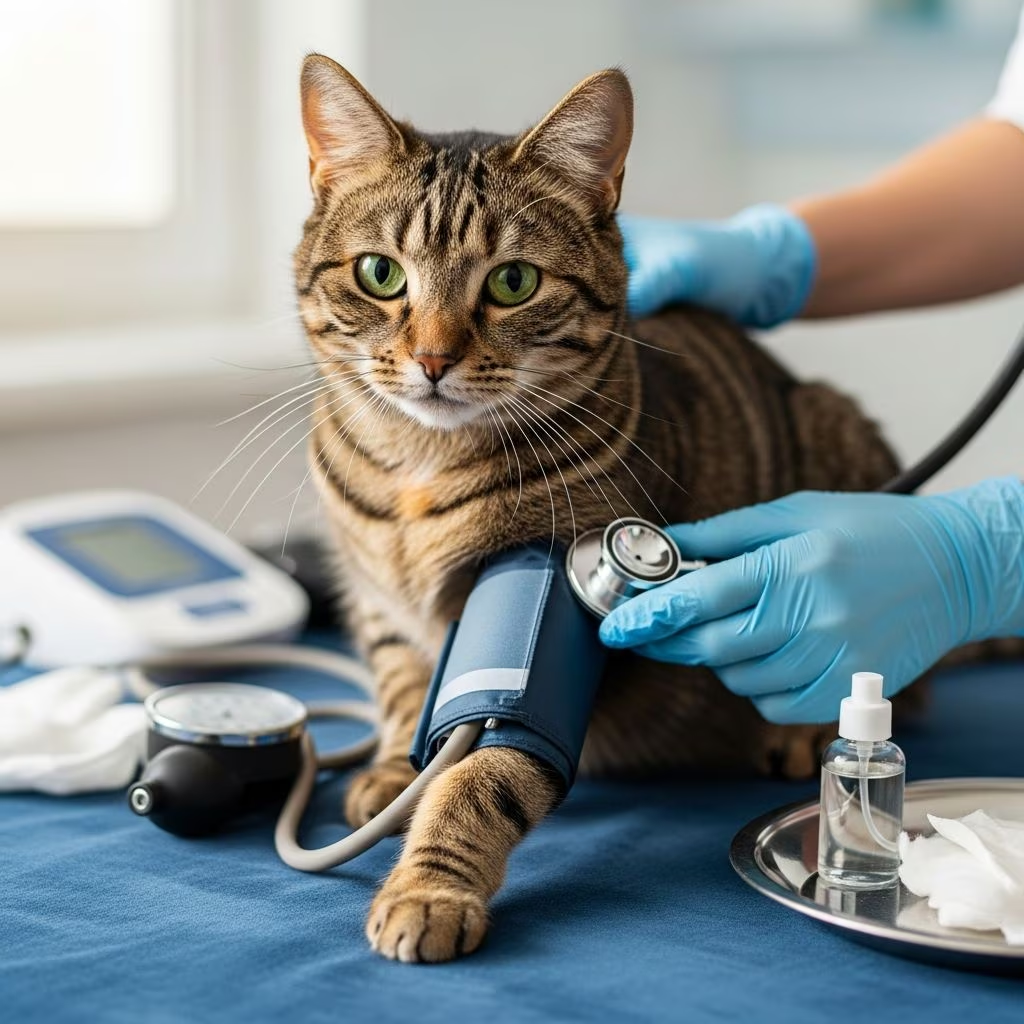
Healthy blood pressure in cats typically falls below 150 mmHg systolic, with many studies reporting averages around 120-140 mmHg in calm conditions. Maintaining these levels is crucial, as elevations can signal underlying issues leading to serious health complications if untreated.
Why Blood Pressure Matters for Feline Health
Blood pressure reflects the force exerted by blood against artery walls during heartbeats (systolic) and between beats (diastolic). In cats, systolic pressure is the primary focus due to its reliability in indirect measurements. Deviations from normal ranges can strain organs like the heart, kidneys, eyes, and brain, potentially causing irreversible damage over time.
Senior cats, those over 7 years, face heightened risks, with hypertension often linked to chronic kidney disease or hyperthyroidism. Early detection through routine checks allows for interventions that extend life quality and expectancy.
Defining Normal Ranges and Hypertension Stages
Veterinary guidelines categorize cat blood pressure as follows, primarily based on systolic readings:
| Systolic BP (mmHg) | Category | Risk Level |
|---|---|---|
| <150 | Normal | Minimal |
| 150-159 | Borderline/Prehypertension | Low |
| 160-179 | Hypertension | Moderate |
| ≥180 | Severe Hypertension | High |
These thresholds account for ‘white coat effect,’ where clinic stress elevates readings by 10-30 mmHg. Home monitoring often reveals lower baseline values, around 120 mmHg median in large healthy populations.
Research on 780 healthy cats showed a median systolic BP of 120.6 mmHg (IQR 110.4–132.4), confirming lower norms in relaxed settings. Direct arterial methods yield even tighter ranges near 125 mmHg, while indirect Doppler varies from 115-162 mmHg.
How Veterinarians Measure Cat Blood Pressure
Indirect methods dominate clinical practice for their non-invasiveness. Doppler ultrasonography detects blood flow vibrations under an inflating cuff on the limb or tail, providing audible signals converted to pressure readings.
- Cuff Selection: Size matters—cuff width should be 30-40% of limb circumference. Most cats use size 2 cuffs.
- Procedure: Cat is gently restrained in lateral or sternal recumbency. Multiple readings (5-7) are averaged after 5-10 minutes of acclimation to minimize stress.
- Oscillometric Devices: Less common in cats due to motion sensitivity but useful for at-home use.
Gold-standard direct intra-arterial measurement is reserved for research, as it requires catheterization. Owners can learn cuff techniques for home use, correlating well with vet results when trained properly.
Factors Influencing Blood Pressure Readings
Several variables affect measurements, emphasizing the need for context:
- Age: Juveniles average lower; seniors show 17.5 mmHg increases.
- Behavior: Calm cats: ~113 mmHg; nervous: up to 132 mmHg.
- Sex and Status: Males +3.9 mmHg, neutered +3.3 mmHg over baselines.
- Body Condition: Underweight cats lower than ideal or overweight.
- Environment: Clinic stress inflates values; repeats after treats help.
A multivariate model explains 29% of variations, with age and anxiety as strongest predictors.
Recognizing Signs of Abnormal Blood Pressure
Hypertension often progresses silently until target organ damage (TOD) appears. Watch for:
- Blindness or dilated pupils from retinal detachment.
- Neurologic issues: disorientation, seizures, circling.
- Heart murmurs, enlarged heart, or fluid in lungs.
- Kidney dysfunction: increased thirst, weight loss.
- Nosebleeds or blood in urine.
Subtle signs like lethargy or poor appetite warrant pressure checks, especially in at-risk cats.
Common Causes of Elevated Blood Pressure in Cats
Most cases (60-90%) are secondary to:
| Condition | Prevalence | Notes |
|---|---|---|
| Chronic Kidney Disease | High | Impaired filtration raises pressure. |
| Hyperthyroidism | High | Overactive thyroid accelerates heart rate. |
| Heart Disease | Moderate | Structural issues impair output. |
| Primary (Idiopathic) | Low | No underlying cause; treatable as standalone. |
Idiopathic hypertension mimics human essential hypertension, responsive to lifelong medication.
Strategies for Managing and Preventing Hypertension
Diagnosis requires three consistent elevated readings. Treatment targets causes and pressure control:
- Medications: Amlodipine (calcium channel blocker) lowers systolic by 30-60 mmHg; others like benazepril for kidney support.
- Diet: Renal diets reduce protein/phosphorus; omega-3s aid vascular health.
- Monitoring: Quarterly vet checks for seniors; home devices track trends.
- Lifestyle: Weight management, low-stress environments.
Reassess after 7-14 days of therapy; aim for <150 mmHg without hypotension. Untreated severe cases (>200 mmHg) risk acute TOD.
Home Monitoring: Empowering Cat Owners
Equip yourself with vet-approved cuffs (e.g., pet-specific oscillometric units). Practice on calm cats:
- Warm room, quiet time.
- Acclimate cuff 5 minutes prior.
- Average 3-5 readings, 1-minute intervals.
- Log with time, behavior notes.
Trends matter more than singles; share data with vets. Routine screening from age 7 detects issues early.
Frequently Asked Questions
What is a dangerous blood pressure for cats?
Systolic ≥180 mmHg poses high TOD risk; >200 mmHg is severe, needing immediate care.
Can stress affect my cat’s blood pressure reading?
Yes, ‘white coat syndrome’ raises it 20-30 mmHg; repeat measures or home checks clarify.
How often should I check my senior cat’s blood pressure?
Every 3-6 months, or sooner if symptoms appear.
Is high blood pressure curable in cats?
Often manageable lifelong; treat underlying causes for potential normalization.
What diet helps control cat hypertension?
Prescription renal or low-sodium formulas, per vet advice.
Key Takeaways for Cat Owners
Proactive blood pressure awareness safeguards your cat’s vitality. Normal systolic under 150 mmHg signals health; vigilance spots hypertension early, averting crises. Consult vets for tailored plans, leveraging reliable measurements for optimal outcomes.
References
- Hypertension (High Blood Pressure) in Cats — PetMD. 2023. https://www.petmd.com/cat/conditions/cardiovascular/c_ct_systemic_hypertension
- Does Your Cat Have High Blood Pressure? — Medivet Group. 2023. https://www.medivetgroup.com/pet-care/pet-advice/blood-pressure-in-cats/
- Blood Pressure Measurements in 780 Apparently Healthy Cats — PMC (NCBI). 2017-01-20. https://pmc.ncbi.nlm.nih.gov/articles/PMC5259628/
- Measuring Blood Pressure in Cats — Clinician’s Brief. 2023. https://www.cliniciansbrief.com/article/measuring-blood-pressure-cats
- Hypertension — Cornell University College of Veterinary Medicine. 2023. https://www.vet.cornell.edu/departments-centers-and-institutes/cornell-feline-health-center/health-information/feline-health-topics/hypertension
- Systemic Hypertension — CVCA Cardiac Care for Pets. 2023. https://www.cvcavets.com/patient-resources/cardiac-conditions/systemic-hypertension
- Measuring Blood Pressure — American Association of Feline Practitioners (catvets.com). 2023. https://catvets.com/resource/hypertension-toolkit-measuring-blood-pressure/



