

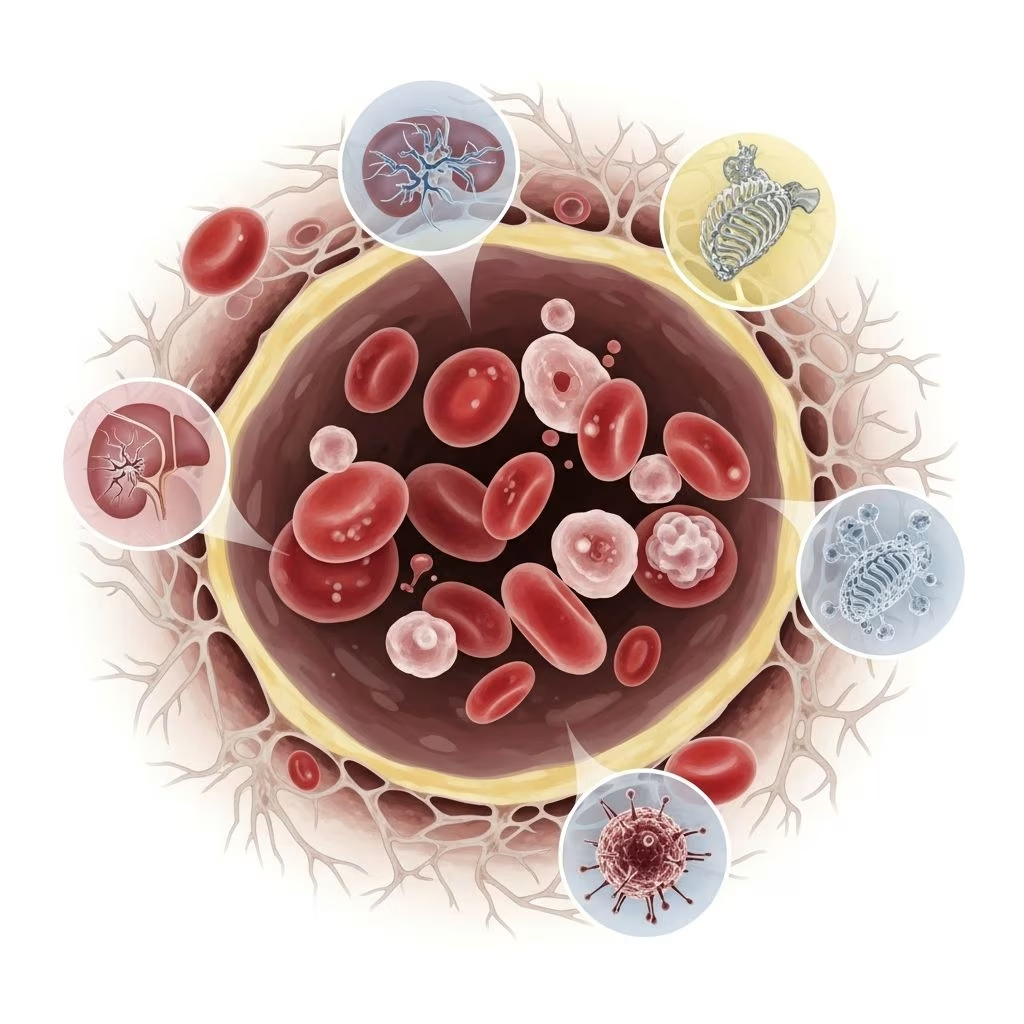
Nonregenerative anemias occur when the bone marrow fails to produce adequate red blood cells to compensate for losses or destruction, leading to persistent low red cell counts without reticulocyte response. These conditions affect various species, including dogs, cats, horses, and ruminants, often stemming from underlying health issues that suppress erythropoiesis.
Understanding the Basics of Red Blood Cell Production
Red blood cells, or erythrocytes, are vital for oxygen transport throughout the body. In healthy animals, the bone marrow continuously generates new erythrocytes from hematopoietic stem cells, stimulated by erythropoietin (EPO) primarily produced by the kidneys. When this process falters, resulting in a packed cell volume (PCV) below normal ranges—such as under 37% in dogs or 26% in cats without reticulocyte increase—it signals nonregenerative anemia.
This type of anemia differs from regenerative forms, where bone marrow ramps up production in response to blood loss or hemolysis. Acute blood loss initially appears nonregenerative for 3-4 days until regeneration kicks in; prolonged lack of response confirms the nonregenerative classification.
Primary Causes and Pathophysiology
Nonregenerative anemias arise from disruptions in erythropoiesis, categorized into decreased production or ineffective hematopoiesis. Common triggers include:
- Chronic diseases: Inflammatory, neoplastic, renal, hepatic, or endocrine disorders suppress marrow function via cytokines or EPO deficiency.
- Nutritional deficiencies: Lack of iron, folate, or cobalamin impairs erythrocyte maturation, often linked to malabsorption in breeds like Giant Schnauzers or Border Collies.
- Infections: Viruses such as feline leukemia virus (FeLV), feline immunodeficiency virus (FIV), or ehrlichiosis directly damage marrow precursors.
- Toxins and drugs: Estrogens, chemotherapeutic agents, chloramphenicol, or anticonvulsants induce marrow hypoplasia.
- Immune-mediated processes: Precursor-targeted immune-mediated anemia (PIMA) destroys developing erythroid cells.
In anemia of inflammatory disease (AID), hypercytokinemia from chronic inflammation inhibits iron utilization and EPO response, yielding mild-to-moderate anemia that rarely requires direct intervention beyond treating the root cause.
Species-Specific Manifestations
Dogs and cats exhibit distinct patterns. In dogs, ehrlichiosis causes thrombocytopenia alongside mild nonregenerative anemia, responding variably to doxycycline. Cats with FIV show bone marrow dysplasia and erythroid hyperplasia, worsened by FeLV coinfection leading to leukopenia.
| Species | Common Causes | Typical PCV Range | Associated Findings |
|---|---|---|---|
| Dogs | Ehrlichiosis, renal failure, AID | 20-37% | Thrombocytopenia, schistocytes |
| Cats | FeLV/FIV, PRCA, CKD | 14-26% | Lymphopenia, dysplastic marrow |
| Horses/Ruminants | Toxins, infections | Variable | Pancytopenia in aplastic cases |
Aplastic anemia, marked by pancytopenia and fatty marrow replacement, affects multiple species and is often idiopathic or toxin-induced.
Diagnostic Approach: Step-by-Step Evaluation
Diagnosis begins with history-taking to identify toxin exposure, medications, or travel history suggesting infections. Key tests include:
- Complete blood count (CBC) and smear: Confirms normocytic normochromic anemia, absence of reticulocytes, and abnormalities like schistocytes in microangiopathic cases.
- Reticulocyte count: Essential to distinguish nonregenerative from regenerative; no increase after 3-4 days post-acute event.
- Biochemical profile: Assesses renal/hepatic function, inflammation markers.
- Bone marrow aspiration/biopsy: Gold standard for aplastic anemia, PIMA, or dysplasia; reveals hypoplasia, hyperplasia, or immune infiltrates.
- Specific testing: FeLV/FIV serology, ehrlichia PCR, cobalamin/folate levels.
For profound anemia (PCV <15-20%), immediate transfusion stabilizes while diagnostics proceed.
Treatment Strategies and Management
Therapy targets the underlying cause while providing supportive care. Options include:
- Address primaries: Antibiotics for ehrlichiosis, cobalamin injections (1 mcg/kg SC weekly in cats), discontinue offending drugs.
- EPO therapy: Recombinant human or species-specific EPO for renal-associated anemia; monitor for antibody-induced pure red cell aplasia.
- Immunosuppression: Prednisone, cyclosporine for immune-mediated or aplastic cases.
- Supportive: Transfusions, broad-spectrum antibiotics to prevent sepsis in pancytopenic patients.
In chronic kidney disease, EPO dosing starts low (0.5-1 mcg/kg SC weekly in dogs) with weekly PCV monitoring. PIMA responds to immunosuppressants, confirmed by marrow response.
Prognosis and Long-Term Monitoring
Outcomes vary: AID often resolves with disease control; infectious causes improve with antimicrobials; primary marrow disorders like aplastic anemia carry guarded prognoses. Regular CBC/reticulocyte counts guide therapy adjustments. Early intervention prevents severe decompensation.
Preventive Measures for At-Risk Animals
- Vaccinate against FeLV in cats.
- Screen for breed-specific malabsorptions.
- Avoid toxin exposure, monitor chronic disease patients.
- Tick prevention to reduce ehrlichiosis risk.
Frequently Asked Questions (FAQs)
What is the difference between regenerative and nonregenerative anemia?
Regenerative anemia shows reticulocyte increase compensating for loss; nonregenerative lacks this due to production failure.
Can nonregenerative anemia be cured?
Yes, if underlying cause (e.g., infection, deficiency) is treatable; primary marrow diseases may require lifelong management.
Is blood transfusion always necessary?
No, only for severe cases (PCV <20%) causing clinical signs; mild cases focus on etiology.
How long does recovery take?
Varies: days for acute infections, weeks for EPO response, indefinite for chronic conditions.
Are certain breeds more prone?
Yes, e.g., Giant Schnauzers for cobalamin malabsorption.
References
- Chapter 30: Nonregenerative Anemias — Veterian Key. Accessed 2026. https://veteriankey.com/chapter-30-nonregenerative-anemias/
- Nonregenerative Anemias in Animals — MSD Veterinary Manual. Accessed 2026. https://www.msdvetmanual.com/circulatory-system/anemia/nonregenerative-anemias-in-animals
- Nonregenerative Anemia: Mechanisms of Decreased or Ineffective Erythropoiesis — SAGE Journals. 2014-04-07. https://journals.sagepub.com/doi/pdf/10.1177/0300985814529315
- Non-regenerative Anaemia in Cats and Dogs Fact Sheet — Vet Specialists. Accessed 2026. https://www.vetspecialists.co.uk/fact-sheets-post/non-regenerative-anaemia-in-cats-and-dogs/
- Feline non-regenerative anemia: Diagnostic and treatment — PMC (PubMed Central). Accessed 2026. https://pmc.ncbi.nlm.nih.gov/articles/PMC10814193/



