

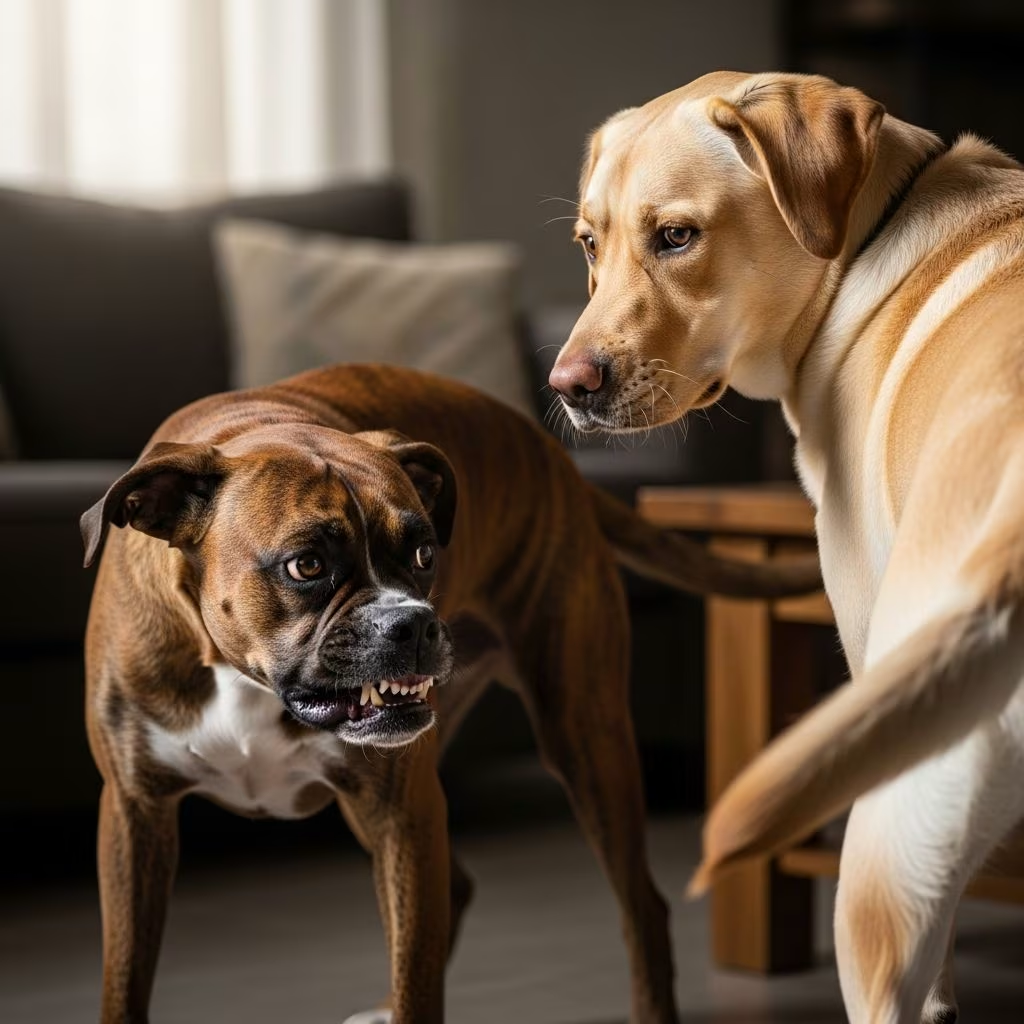
Picture this: two dogs circling each other, lips curled, teeth flashing, deep growls rumbling from their throats. Spit flies, bodies tense, and hackles rise. Your heart races as you brace for disaster. But then… nothing. No blood, no bites, just the dogs disengaging and trotting off as if nothing happened. What just occurred? Was it a fight? Or something else entirely?
This scenario confuses many dog owners. We’ve been conditioned to see growling and snapping as precursors to violence. Yet, in well-socialized dogs, these displays often serve a different purpose: communication without harm. Experts term these agonistic behaviors, a broad category encompassing threats, submissions, and play signals that help dogs navigate social dynamics peacefully.
Understanding these behaviors can transform how you view dog interactions. Instead of rushing in to separate pals mid-“argument,” you might step back, observe, and trust their innate diplomacy. This article delves into the nuances of non-aggressive fights, drawing from canine ethology to explain why dogs “fight without biting.” We’ll cover definitions, evolutionary roots, real-world examples, and practical tips for discerning safe spats from serious threats.
What Are Agonistic Behaviors?
Agonistic behaviors form the backbone of canine conflict resolution. Far from mindless aggression, they include a spectrum of actions designed to express emotions, assert boundaries, or invite play. According to behavioral studies, these encompass:
- Threats: Muzzle-puckering, growling, or stiff postures to warn others away.
- Submissive signals: Crouching, head-lowering, tail-tucking, or lip-licking to de-escalate.
- Offensive moves: Lunging or inhibited snapping without contact.
- Defensive reactions: Lip retraction to show teeth while avoiding engagement.
- Attacking (rarely harmful): Inhibited bites that pinch but don’t puncture.
Crucially, with the exception of puncturing bites, none indicate intent to injure. These behaviors reveal underlying emotions like fear or frustration, communicate intentions (e.g., “back off my toy”), or spice up play. A key study of 127 dog park interactions found zero injuries from agonistic encounters, underscoring their safety in socialized dogs.
To identify agonistic behavior objectively, focus on patterns: Does the interaction resolve quickly? Are injuries absent? Do the dogs resume friendly contact afterward? Jumping to “aggression” overlooks this communicative nuance.
So Why Do Dogs Growl If They’re Not Aggressive?
Growling, bared teeth—these seem like fight starters. Paradoxically, they’re often fight preventers. Dogs inherited this toolkit from wolves, their wild progenitors, who live in cooperative family packs. Like human families, wolf groups quarrel over food, status, or space, but severe injuries threaten pack survival. Ritualized signals allow safe resolution.
Wolves (and dogs) growl to say, “I’m displeased—stop or else.” The recipient submits, tension diffuses, and harmony returns. Dogs retain this motivation: one observation noted no injuries in monitored play fights. Evolution favors communicators over brawlers.
Consider human parallels: We yell during arguments but rarely fistfight. Dogs do the same, vocalizing to avert physical harm. Interrupting prematurely can confuse them, as they learn through these exchanges.
Real-Life Examples of Non-Aggressive “Fights”
Let’s examine scenarios from dog interactions, illustrating agonistic behavior in action.
Meadow and Denny: Discipline Meets Submission
Meadow, a larger female, stands over mounting-attempting Denny, growling sternly. Denny responds with curved-back ears, narrowed eyes, lip-licking, and pawing her mouth—classic appeasement. Meadow softens, steps away, and drops into a play bow. They romp like puppies. Lesson: Her growl enforced boundaries; his submission restored peace. No harm done.
Tex and Zelda: Temper Meets Tolerance
Tex repeatedly charges and growls at Zelda. Initially avoidant, Zelda stands firm as he blusters, then ignores him. Next day, they play for hours despite occasional Tex outbursts, which Zelda shrugs off. This mirrors human friendships with hotheads: tolerance builds bonds. Zelda’s calm prevented escalation.
These cases highlight context: Known dogs with good bite inhibition (soft-mouthed control from puppyhood) rarely injure during spats.
When Is It Not Just Arguing? Spotting True Aggression
Not all growls are harmless. Red flags include:
- Punctures or tears: Actual bites causing wounds.
- History of injury: Repeated harmful fights.
- Poor socialization: Dogs viewing strangers as enemies.
- Pain triggers: Sudden irritability from hidden injuries.
- Resource guarding escalating to bites: Beyond vocal warnings.
If unsure, prioritize safety: Separate and consult a certified behaviorist. Pain can mimic aggression; vets rule out medical issues first.
| Non-Aggressive Signs | True Aggression Signs |
|---|---|
| Quick resolution, no injuries | Bites causing punctures |
| Play bows, resumed play | Intense stare, rigid body |
| Submission accepted | Ignores appeasement signals |
| Between familiar dogs | Toward strangers/new dogs |
How to Foster Safe Interactions
Prevent misunderstandings with proactive steps:
- Socialize early: Expose puppies to varied dogs, teaching signals.
- Observe body language: Watch for stress (yawning, whale-eye) before intervening.
- Slow introductions: Leash walks at distance; reward calm.
- Train bite inhibition: Play with toys, not hands.
- Manage multi-dog homes: Separate resources; positive associations via “engage-disengage” games.
For reactive dogs, group classes with trainers monitor cues, resolving issues via training. Designated spaces reduce stress.
Frequently Asked Questions (FAQs)
Should I intervene in every growl?
No. With socialized dogs and no injury history, observe. Quick de-escalation signals safety.
Why did my friendly dog suddenly snap?
Check for pain, poor socialization, or triggers like mounting. Vet exam first.
Can puppies learn from these “fights”?
Yes, but supervised. Socialization counters viewing others as foes.
How do I stop real dog fights?
Separate safely; use positive training like engage-disengage to rebuild associations.
Is standing over another dog aggressive?
Often a reprimand for rudeness, not harm, if mouth open and no bite.
By recognizing agonistic behaviors, you’ll empower dogs to communicate effectively. Trust their wisdom—most “fights” are just spirited debates. For persistent issues, seek professional guidance to ensure harmony.
References
- Are Your Dogs Arguing With Each Other? Fighting Without Biting — Kinship.com. 2023. https://www.kinship.com/dog-behavior/non-aggressive-fights-between-dogs
- My dog used to be friendly with other dogs now he’s not — Redeeming Dogs. 2023. https://redeemingdogs.com/dog-used-friendly-dogs-now-hes-not/
- How to Prevent Dogs from Fighting with Positive Associations — Dog Gone Problems. 2023. https://www.doggoneproblems.com/arwen-pippen-luthian-stop-dog-fighting/
- Dog Fight or Reprimand? — Canine Behavior Counseling. 2023. https://caninebehaviorcounseling.com/dog-fight-reprimand/



