

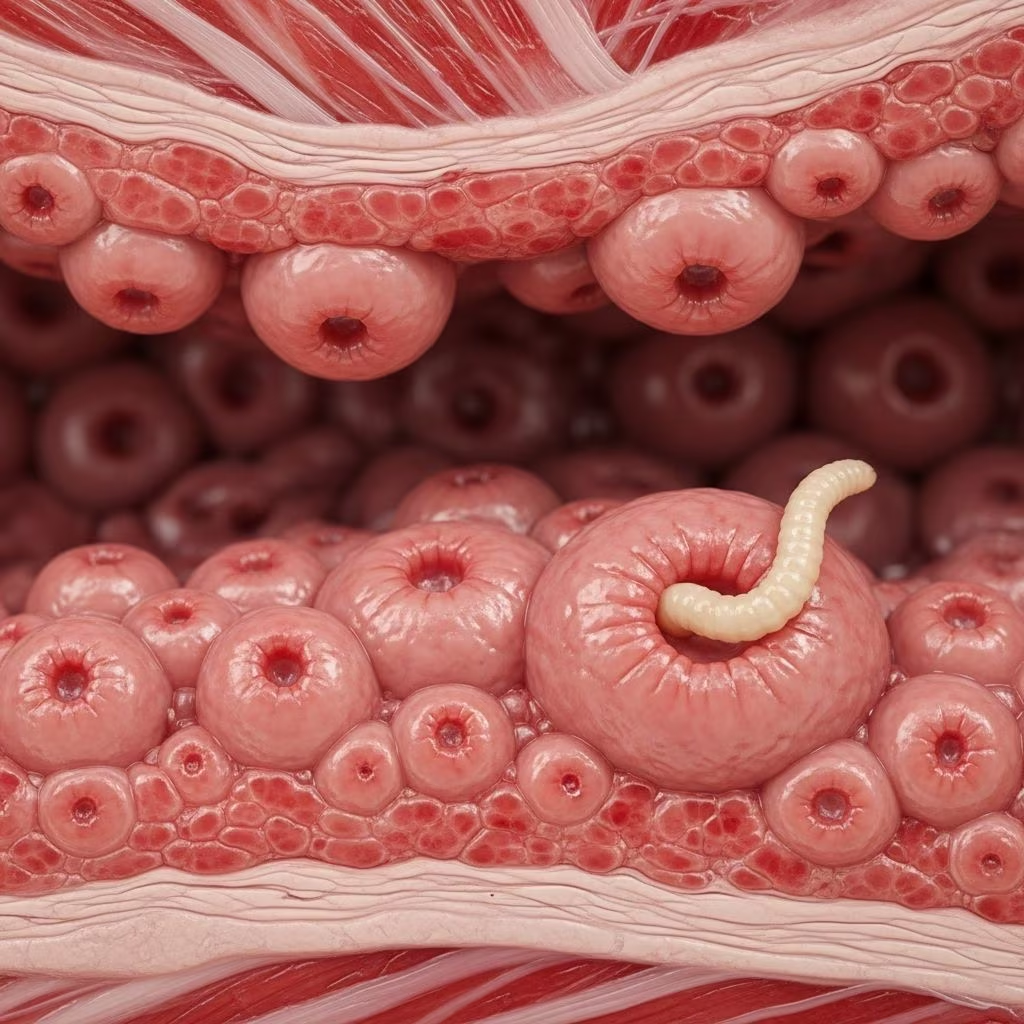
Nodular worm infections represent a significant parasitic challenge in swine production worldwide. These infections, caused by Oesophagostomum species, affect the gastrointestinal tract and can substantially impact pig productivity, growth rates, and overall herd health. Understanding the biology, clinical manifestations, and control strategies for these parasites is essential for farmers and veterinary professionals managing pig operations of any size.
Understanding the Parasite and Its Lifecycle
The nodular worm belongs to the genus Oesophagostomum and represents a significant threat to swine health across various production systems. These parasites establish themselves primarily in the large intestine, where they create characteristic inflammatory responses in the intestinal wall. The lifecycle of this parasite spans several critical phases that determine both transmission patterns and the timing of clinical disease manifestation.
The reproductive cycle of nodular worms operates on a relatively predictable timeline. From initial infection to the production of detectable eggs in fecal matter, the prepatent period typically extends between three to six weeks. This timeframe is crucial for understanding when infected pigs begin shedding infectious material into their environment and potentially contaminating other animals within the same facility.
After adult worms mature in the intestinal tract, they produce microscopic eggs that are approximately 66 to 80 micrometers in length and 38 to 47 micrometers in width. These eggs are shed in substantial quantities during patent infections, contaminating pastures, pens, and bedding materials. Outside the host, eggs undergo embryonation and develop into infective larvae that can survive in the environment for extended periods, waiting to be consumed by naive animals.
Clinical Manifestations and Disease Severity
The clinical presentation of nodular worm infections varies considerably depending on the intensity of parasitic burden and the immune status of affected animals. Interestingly, adult worms themselves cause relatively minimal direct damage to the intestinal mucosa, which explains why many infected pigs may display few or no obvious clinical signs despite harboring significant parasite populations.
However, the larval stage presents a different pathological picture. When larvae encyst within the intestinal wall in response to host immune mechanisms, they trigger fibrotic reactions that form nodules. These nodular lesions are visible upon postmortem examination and represent the hallmark pathological feature of this infection. The nodules vary in size depending on the specific species involved and the animal’s previous exposure history.
In heavily infected animals, the clinical consequences become more apparent. Affected pigs may develop:
- Anorexia, or complete loss of appetite, reducing feed intake and nutrient absorption
- Progressive emaciation and reduced body weight gain despite adequate feed availability
- Gastrointestinal disturbances including altered fecal consistency and digestive inefficiency
- Thickened and potentially necrotic intestinal walls visible at necropsy in severe cases
- Reduced lactation capacity in breeding sows, affecting piglet growth and development
It is important to note that death from nodular worm infection is uncommonly observed in pigs, distinguishing this parasitism from certain other swine pathogens. Nevertheless, the subacute effects on production parameters can be economically significant.
Special Considerations in Reproductive Animals
Pregnant and lactating sows demonstrate distinctive parasitological patterns that warrant particular attention. Research has documented a periparturient rise in worm egg output, meaning a notable increase in fecal egg shedding occurs from approximately two weeks before parturition through the weaning period. During this interval, heavily pregnant sows and nursing mothers show elevated parasite transmission to their environment and potentially to their offspring.
However, this periparturient phenomenon is considerably less consistent in pigs compared to other livestock species, particularly sheep, where it is a well-established and predictable occurrence. The epidemiological significance of this phenomenon in pig production remains somewhat uncertain, requiring further investigation to determine its practical importance for herd health management strategies.
Immunity and Age-Related Prevalence Patterns
The immune response mounted against nodular worm infections in pigs provides only moderate protection, creating a unique epidemiological pattern. Rather than declining with age as seen with certain other parasites, nodular worm prevalence actually tends to increase in older age groups. This counterintuitive pattern reflects incomplete immunity development, allowing older animals such as breeding sows and boars to accumulate higher parasite burdens over their lifetime.
This age-related prevalence pattern has important implications for herd management. Breeding animals, which represent a significant economic investment, may become increasingly parasitized yet remain clinically unremarkable. The chronic low-grade infection in these animals can still affect reproductive performance and colostrum quality, indirectly impacting piglet health and survival.
Diagnostic Approaches for Identifying Infections
Accurate diagnosis is foundational to implementing effective control measures. Multiple diagnostic methodologies exist, each offering particular advantages for different scenarios within swine operations.
Fecal Examination Methods: The most practical initial diagnostic approach involves microscopic examination of fecal samples. During patent infections, strongyle-type eggs are readily identified in fecal matter, often present in considerable numbers. However, morphological similarity exists between Oesophagostomum eggs and those of Hyostrongylus, another swine nematode. Larval culture techniques can differentiate between these species, providing species-specific identification when necessary for targeted control strategies.
Postmortem Evaluation: Direct visualization of worms and associated lesions during necropsy examination provides definitive diagnosis. The characteristic nodules in the cecal and colonic walls are readily apparent to trained observers. This approach is particularly valuable for confirming disease in animals that have died or shown severe clinical signs, and it allows assessment of infection intensity and lesion severity.
Imaging and Advanced Diagnostics: In some research or specialized clinical settings, abdominal ultrasound can reveal nodular lesions measuring several centimeters in diameter on intestinal walls, though this approach is not routine in standard swine practice.
Anthelmintic Treatment Options and Resistance Considerations
A diverse array of antiparasitic compounds have demonstrated efficacy against nodular worms. The selection of appropriate treatment depends on availability, regulatory approval within specific regions, and resistance profiles.
Available Treatment Classes:
| Drug Class | Examples | Effectiveness Status | Notes |
|---|---|---|---|
| Benzimidazoles | Fenbendazole | Resistance Reported | Historical use; monitor efficacy |
| Imidazothiazoles | Levamisole | Effective | Still widely used in some regions |
| Piperazines | Piperazine formulations | Resistance Reported | Variable efficacy depending on population |
| Organophosphates | Dichlorvos | Effective | Approved in multiple countries |
| Macrocyclic Lactones | Ivermectin, Doramectin | Effective | Broad-spectrum activity; premium pricing |
| Pyretantel Salts | Pyrantel tartrate | Resistance Reported | Emerging resistance issues documented |
A critical concern emerging in swine operations is the development of anthelmintic resistance. Benzimidazole resistance has been documented in field populations, as has resistance to pyrantel compounds. This resistance development necessitates judicious use of antiparasitic agents and regular monitoring of treatment efficacy through follow-up fecal examinations.
Complementary Management and Nutritional Strategies
Beyond pharmaceutical interventions, environmental and nutritional management practices contribute substantially to nodular worm control. A particular dietary approach that has gained recognition involves incorporating highly degradable carbohydrates into swine rations. Such carbohydrate sources create a gastrointestinal environment less favorable for parasite establishment and reproduction, potentially reducing parasite fecundity and the proportion of infective larvae that successfully establish infections.
This nutritional approach operates through modifying ruminal and colonic pH, altering fermentation patterns, and potentially affecting the availability of nutrient substrates the parasites depend upon. When combined with periodic anthelmintic treatments, dietary manipulation offers an integrated approach to parasite suppression that may reduce treatment frequency and delay resistance development.
Economic Impact and Production Consequences
The financial implications of nodular worm infections extend beyond visible clinical disease. Even subclinical parasitism, where animals show minimal external signs, significantly impacts production metrics. Infected pigs demonstrate reduced daily weight gains, less efficient feed conversion ratios, and poorer overall growth performance compared to parasite-free contemporaries.
In breeding herds, infections may reduce milk production in lactating sows, directly affecting piglet survival rates and early growth. Heavy infections in young pigs can substantially compromise their growth trajectory, with effects persisting even after parasite elimination through treatment. The cumulative impact across a production cycle can result in substantial economic losses when multiplied across herd size.
Prevention and Biosecurity Considerations
Preventing nodular worm infections requires attention to multiple management factors. Pasture rotation systems allow time for environmental contamination to diminish through weathering and natural degradation of infective larvae. In confinement systems, regular cleaning and sanitation reduce the parasite reservoir within facilities.
Quarantine and testing of incoming breeding stock prevents introduction of parasites from external sources. Segregating different age groups reduces exposure of young animals to high parasite burdens from chronically infected older animals. Strategic timing of anthelmintic treatments, particularly around parturition and during periods of increased fecal shedding, targets treatment when transmission risk is highest.
Frequently Asked Questions
Q: Can humans contract nodular worm infections from pigs?
A: Oesophagostomum species can potentially infect humans through consumption of undercooked pork or through environmental contamination, though this is rare in developed countries with strict food safety standards and sanitation practices.
Q: How long do infected pigs remain contagious?
A: Once patent infection is established, pigs shed infective eggs for extended periods, potentially for months or longer. Treatment with effective anthelmintics can eliminate adult worms relatively quickly, though residual larvae in nodules may persist temporarily.
Q: Is treatment always necessary if pigs show no clinical signs?
A: Even subclinical infections reduce growth performance and feed efficiency. Most swine operations benefit from treating all infected pigs to optimize production metrics, regardless of visible symptoms.
Q: What is the best treatment option to start with?
A: Selection depends on regional availability and resistance patterns. Macrocyclic lactones like ivermectin or doramectin offer broad-spectrum activity, though cost may be a consideration. Local veterinary recommendations should guide initial selection.
Conclusion
Nodular worm infections in pigs represent a multifaceted challenge requiring integration of diagnostic accuracy, strategic pharmaceutical application, and supportive management practices. While adult worms cause minimal direct mucosal damage, the larval stages and associated immune responses create pathological changes that compromise production efficiency. The moderate immunity generated against this parasite mandates ongoing vigilance and periodic treatment rather than reliance on natural resistance development. With emerging anthelmintic resistance in some populations, prudent use of available treatments combined with environmental management and nutritional optimization offers the most sustainable long-term control approach for swine operations.
References
- Oesophagostomum spp in Pigs – Digestive System — Merck Veterinary Manual. 2024. https://www.merckvetmanual.com/digestive-system/gastrointestinal-parasites-of-pigs/oesophagostomum-spp-in-pigs
- Gastro-intestinal nematodes — pigs — University of Saskatchewan, Western College of Veterinary Medicine. 2024. https://wcvm.usask.ca/learnaboutparasites/parasites/gastro-intestinal-nematodes-pigs.php
- Common Internal Parasites of Swine — University of Missouri Extension. 2024. https://extension.missouri.edu/publications/g2430
- Parasitism (Gastrointestinal) in Pigs – Digestive System — MSD Veterinary Manual. 2024. https://www.msdvetmanual.com/digestive-system/intestinal-diseases-in-pigs/parasitism-gastrointestinal-in-pigs
- Understanding Worms in Swine: A Practical Guide — Elanco Animal Health. 2024. https://farmanimal.elanco.com/au/insights-centre/understanding-worms-in-swine
- Broad-Spectrum Control of Worms — The Pig Site. 2024. https://www.thepigsite.com/articles/broadspectrum-control-of-worms
- DPDx – Oesophagostomiasis — Centers for Disease Control and Prevention. 2024. https://www.cdc.gov/dpdx/oesophagostomiasis/index.html



