

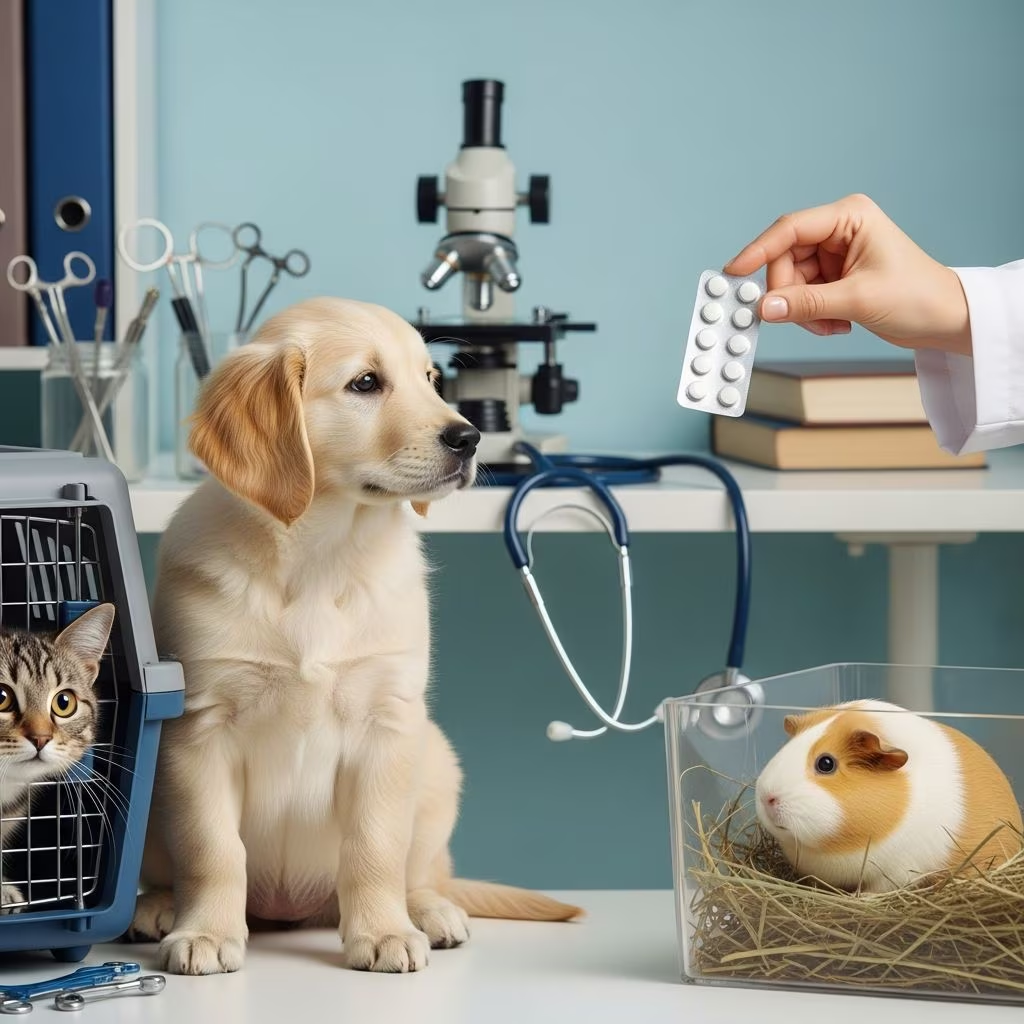
Nitrofurantoin for Pets: Complete Treatment Guide
Nitrofurantoin is an antibiotic medication used to treat bacterial urinary bladder infections in pets. As pet owners seek effective treatment options for their animals’ health concerns, understanding this medication’s proper use, benefits, and limitations becomes essential. This comprehensive guide covers everything you need to know about nitrofurantoin, from how it works to proper administration techniques and potential side effects.
What Is Nitrofurantoin?
Nitrofurantoin is an antibiotic belonging to the nitrofuran class of drugs. It is primarily used to treat lower urinary tract infections, particularly bacterial cystitis in dogs and cats. This medication has gained increased attention in veterinary medicine due to the growing concern about antibiotic resistance and the need for effective alternatives to broad-spectrum antibiotics. Nitrofurantoin is typically prescribed as a second-line antibiotic option when conventional broad-spectrum antibiotics have failed to clear the infection or when bacteria show resistance to first-line treatments.
The medication is used as an “off-label” or “extra-label” treatment in veterinary medicine, meaning it is prescribed in ways not specifically approved by regulatory agencies but is considered safe and effective by veterinary professionals. Many drugs are commonly prescribed off-label in veterinary practice, and pet owners should follow their veterinarian’s directions carefully when administering this medication.
How Nitrofurantoin Works
Nitrofurantoin operates through a unique mechanism that makes it particularly effective for urinary tract infections. The medication achieves high concentrations in the urine, making it especially potent against bacteria colonizing the bladder and lower urinary tract. Studies have demonstrated that nitrofurantoin achieves urinary concentrations exceeding 64 μg/mL for more than 50% of the dosing interval, which efficiently targets common pathogens like Escherichia coli and Staphylococcus pseudintermedius.
The drug’s activity is pH-dependent, meaning its effectiveness increases with more acidic urine and decreases as urine becomes more alkaline. Additionally, nitrofurantoin cannot be used to treat infections beyond the bladder, such as kidney infections, making it specifically suitable for lower urinary tract infections.
Bacterial Pathogens Treated by Nitrofurantoin
Nitrofurantoin demonstrates effectiveness against several common urinary pathogens found in companion animals. The medication is particularly useful for treating infections caused by multidrug-resistant bacteria, which have become increasingly problematic in veterinary medicine. Common susceptible bacteria include:
- Escherichia coli (E. coli)
- Staphylococcus pseudintermedius (including methicillin-resistant strains)
- Staphylococcus aureus
- Streptococcus pyogenes
- Some Enterococcus species
The medication’s broad spectrum of activity makes it valuable for treating resistant infections that may not respond to standard antibiotic therapy. However, susceptibility testing is essential, as some bacteria, particularly certain Proteus species, may develop resistance to nitrofurantoin during treatment.
Clinical Applications and Effectiveness
Nitrofurantoin has proven effective in treating recurrent urinary tract infections in dogs. Clinical studies have shown that in dogs with recurrent lower urinary tract infections caused by nitrofurantoin-susceptible pathogens, the medication achieved successful outcomes in approximately 86% of cases, including bacteriologic cure, clinical cure, and resolution of target bacteria. The medication’s popularity has increased significantly due to its effectiveness against multidrug-resistant bacteria such as methicillin-resistant Staphylococcus pseudintermedius (MRSP) and extended-spectrum beta-lactamase (ESBL) producing E. coli.
Beyond acute infection treatment, nitrofurantoin may also be considered for prophylactic use in dogs with recurrent infections. Research indicates that nightly nitrofurantoin therapy as antimicrobial prophylaxis resulted in infection-free intervals of median 268 days in studied dogs, with eight of thirteen dogs experiencing no positive urine cultures during therapy.
Dosage and Administration Guidelines
Proper dosing is crucial for nitrofurantoin’s effectiveness and safety. The standard dosing regimen recommended for treating active urinary tract infections in dogs is approximately 4.4 to 5 mg/kg administered orally three times daily, typically every 8 hours. The median dosage used in clinical practice is 4.3 mg/kg administered by mouth every 8 hours for a treatment duration of 14 days.
For prophylactic therapy in dogs with recurrent infections, a lower nightly dose of approximately 4.1 mg/kg administered orally every 24 hours has been used for extended periods, with median treatment lasting 166 days.
How to Give Nitrofurantoin to Your Pet
Administering nitrofurantoin correctly ensures optimal therapeutic benefit and reduces the risk of side effects. Follow these essential guidelines:
- Nitrofurantoin comes in capsule or liquid suspension forms
- Both liquid and capsule formulations are given orally (by mouth)
- Always administer this medication with food to improve absorption and reduce gastrointestinal upset
- Liquid medications must be measured carefully using provided measuring devices; contact your veterinarian if you have difficulty with measurement or administration
- Complete the entire prescribed course even if your pet appears to be feeling better
This medication is short-acting and should begin working within 1 to 2 hours of administration. The effects typically stop within 24 hours if a dose is missed.
Pharmacokinetics in Companion Animals
Understanding how nitrofurantoin behaves in your pet’s body helps explain why proper dosing and administration are important. The medication has a bioavailability of 38 to 120% in dogs when administered orally, with a short terminal half-life of 19 to 87 minutes in the serum. This short half-life explains why the medication must be given multiple times daily to maintain therapeutic concentrations in the urine.
In studies of dogs, the majority of urinary excretion occurs through glomerular filtration with some tubular secretion. There is also tubular absorption, which increases with urine acidification. This physiological process concentrates the medication in the urine, making it highly effective for treating bladder infections.
Potential Side Effects and Safety Considerations
While nitrofurantoin is generally well tolerated in companion animals, pet owners should be aware of potential side effects and safety concerns. Most adverse events reported in clinical studies were minor in nature. However, gastrointestinal side effects are possible, particularly with long-term administration.
Important safety considerations include:
- Long-term use is not recommended in companion animals due to limited comprehensive safety studies
- Treatment should be limited to singular therapeutic courses of 14 days or less
- The carcinogenic potential shown in other nitrofurans warrants caution with extended use
- Prophylactic application in canine UTIs could select for nitrofurantoin-resistant organisms
- Report any unusual symptoms or behavioral changes to your veterinarian immediately
Treatment Monitoring and Follow-up
Proper monitoring ensures treatment effectiveness and allows for early identification of treatment failures or complications. Urine bacterial culture and quantitative susceptibility testing are essential before initiating nitrofurantoin therapy, particularly in cases of recurrent infections or multidrug-resistant isolates.
During treatment, your veterinarian may recommend follow-up urine cultures to confirm bacterial elimination. After completing the prescribed course, some pets benefit from periodic monitoring to detect early signs of infection recurrence. This is especially important in dogs with a history of recurrent urinary tract infections.
When Nitrofurantoin May Not Be Appropriate
Despite its benefits, nitrofurantoin is not suitable for all urinary tract conditions. The medication cannot be used to treat infections beyond the lower urinary tract, including kidney infections (pyelonephritis). Additionally, treatment failures may occur when bacteria develop progressive nitrofurantoin resistance during therapy, particularly with Proteus species. If your pet does not respond to treatment or develops bacteriuria while on nitrofurantoin, your veterinarian may need to prescribe alternative antibiotics based on updated susceptibility testing.
Comparison with Other Urinary Antibiotics
| Antibiotic | Primary Use | Dosing Frequency | Resistance Profile | Long-term Use |
|---|---|---|---|---|
| Nitrofurantoin | Lower UTI, second-line option | 3x daily or once daily (prophylaxis) | Some Proteus resistance | Limited to short courses |
| Broad-spectrum antibiotics | First-line treatment | Varies | Increasing resistance | Varies |
| Fluoroquinolones | Various UTI types | 1-2x daily | Growing concerns | Limited due to resistance concerns |
Cost and Accessibility
Nitrofurantoin offers practical advantages that make it an attractive treatment option. The medication is relatively low-cost compared to many alternative antibiotics, and the oral suspension or capsule formulation makes administration convenient for most pet owners. These factors, combined with its effectiveness against multidrug-resistant pathogens, have contributed to increased interest in this antibiotic within veterinary medicine.
Resistance and Antibiotic Stewardship
As with all antibiotics, responsible use of nitrofurantoin is crucial to minimize the development of resistant organisms. Veterinarians recommend using this medication only when necessary for treatment of susceptible infections rather than for indefinite prophylaxis. Complete adherence to the prescribed treatment course and dose is essential to prevent the emergence of resistant bacteria that could limit future treatment options for both animals and humans.
Frequently Asked Questions About Nitrofurantoin
Q: Why is my veterinarian using nitrofurantoin as a second-line antibiotic?
A: Nitrofurantoin is reserved as a second-line option because broad-spectrum antibiotics are typically tried first. Once those fail or bacteria show resistance, nitrofurantoin becomes valuable because it achieves high concentrations in the urine and effectively treats multidrug-resistant pathogens.
Q: Can nitrofurantoin be used for kidney infections?
A: No, nitrofurantoin cannot be used for kidney infections. It is specifically indicated for lower urinary tract infections (bladder infections) only. Kidney infections require different antibiotic therapy.
Q: How quickly does nitrofurantoin start working?
A: Nitrofurantoin may start working within 1-2 hours of administration. However, the full course must be completed as prescribed, even if your pet appears better, to ensure complete bacterial elimination.
Q: What should I do if I miss a dose?
A: Contact your veterinarian for guidance. Generally, if you miss a dose, administer it as soon as you remember unless it is nearly time for the next scheduled dose. Do not double-dose.
Q: Can nitrofurantoin be given long-term?
A: Long-term continuous use is not recommended in companion animals without veterinary supervision. Treatment should typically be limited to 14-day courses due to potential gastrointestinal side effects and other safety concerns with extended use.
Q: Are there any drug interactions I should know about?
A: Always inform your veterinarian about all medications and supplements your pet is currently taking. Some medications may interact with nitrofurantoin, affecting its effectiveness or safety.
Q: Should nitrofurantoin be given with food?
A: Yes, nitrofurantoin should always be administered with food to improve absorption and reduce the likelihood of gastrointestinal upset.
References
- Administration of nitrofurantoin in dogs with lower urinary tract infections: A retrospective study — PubMed Central/NCBI. 2020. https://pubmed.ncbi.nlm.nih.gov/33107048/
- Assessing the urinary concentration of nitrofurantoin and its efficacy against canine urinary tract infection pathogens — Frontiers in Veterinary Science. 2023. https://www.frontiersin.org/journals/veterinary-science/articles/10.3389/fvets.2023.1189374/full
- Safety and efficacy of nightly nitrofurantoin as prophylaxis in dogs with recurrent urinary tract infections — Journal of Small Animal Practice. 2023. https://onlinelibrary.wiley.com/doi/10.1111/jsap.13611
- Nitrofurantoin — VCA Animal Hospitals. https://vcahospitals.com/know-your-pet/nitrofurantoin
- Nitrofurantoin: Mechanism of action and clinical use — Primary sources on nitrofuran pharmacology in veterinary medicine. https://en.wikipedia.org/wiki/Nitrofurantoin



