

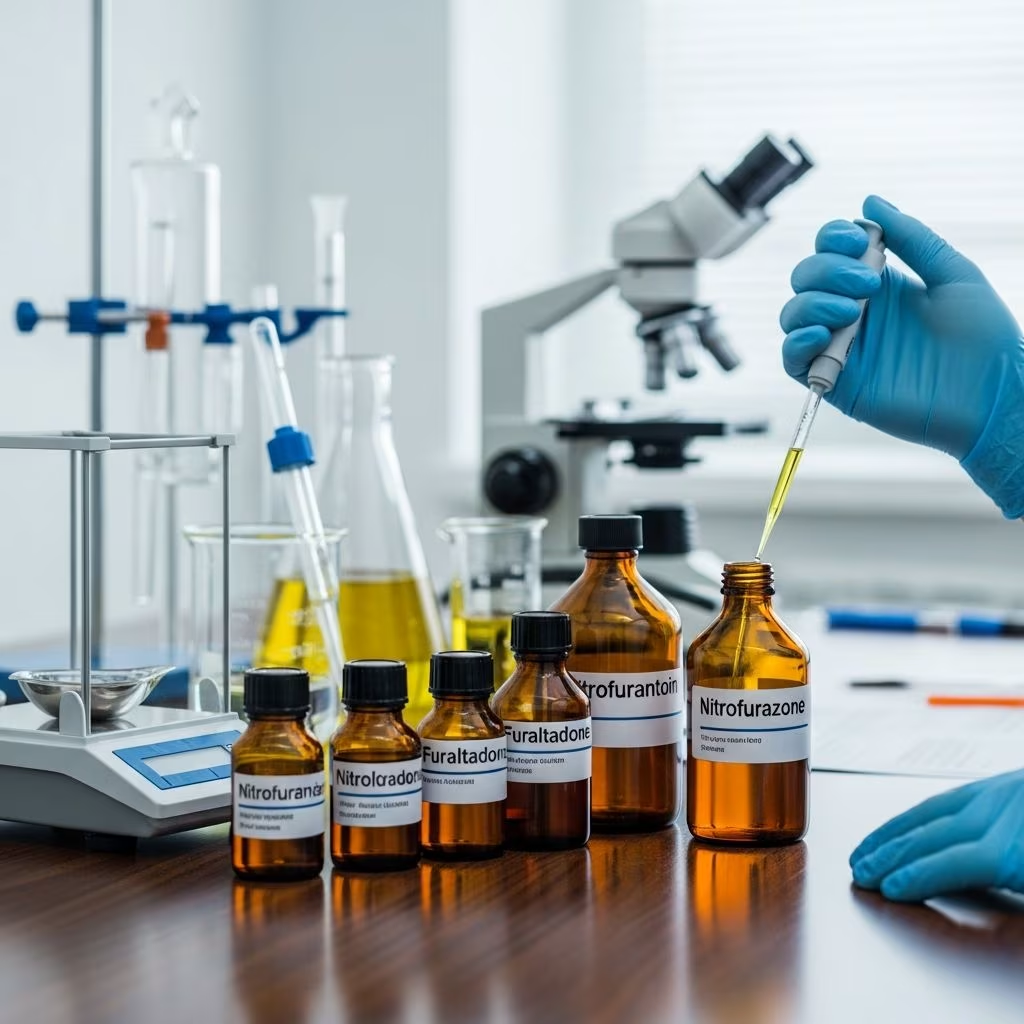
Nitrofurans represent a class of synthetic antimicrobial compounds valued in veterinary medicine for their wide-ranging effectiveness against bacterial pathogens in animals. These agents target both gram-positive and gram-negative bacteria, offering veterinarians tools for managing infections in various species.
Understanding the Core Properties of Nitrofurans
The defining feature of nitrofurans is their broad-spectrum activity, which extends beyond bacteria to include certain protozoa like Giardia species and trichomonads. Primarily bacteriostatic at standard concentrations, they shift to bactericidal effects at higher doses, making them versatile for different infection severities. Their efficacy peaks in acidic conditions, around pH 5.5, which is particularly relevant for urinary applications.
Resistance development is minimal, with rare mutant strains and slow clinical emergence. Notably, while nitrofurans exhibit complete cross-resistance within their class, they do not share this with other antibiotic families, preserving utility alongside alternative therapies.
Mechanisms Driving Antimicrobial Action
Nitrofurans operate through a distinctive process where bacterial enzymes reduce them into reactive intermediates. These disrupt multiple cellular processes, including protein synthesis, energy metabolism, nucleic acid replication, and cell wall formation. This multifaceted interference reduces the likelihood of resistance, as bacteria must overcome several simultaneous barriers.
In practical terms, this leads to high effectiveness in targeted environments like urine, where concentrations achieve bactericidal levels against susceptible organisms.
Key Nitrofuran Derivatives in Animal Care
Nitrofurantoin: Primary Choice for Urinary Issues
Nitrofurantoin stands out for its role in treating lower urinary tract infections (UTIs) in small animals such as dogs and cats. It excels against common culprits like Escherichia coli, Staphylococcus aureus, and certain streptococci, though organisms like Proteus species and Pseudomonas aeruginosa often resist it.
The drug concentrates in acidic urine, enhancing potency without crystallizing. Administration is typically oral at 4.4 mg/kg every 8 hours for 4-10 days, though parenteral options exist. Its extralabel status in pets underscores the need for veterinary oversight to ensure susceptibility.
Nitrofurazone: Topical Powerhouse for Wounds
Nitrofurazone, with properties akin to nitrofurantoin, is formulated for topical use in dogs, cats, and horses. It aids wound healing and manages conditions like contagious equine metritis. Its solubility in tissue fluids allows deep penetration, but efficacy drops in the presence of pus, blood, or milk.
This agent mirrors the class’s spectrum and low resistance profile, making it ideal for surface infections where systemic drugs might be excessive.
Other Notable Nitrofurans
- Furaltadone: Employed systemically, especially in poultry against salmonella, with good activity against staphylococci resistant to other drugs.
- Furazolidone: Used orally for gastrointestinal issues, though regulatory bans limit food animal applications.
These variants expand nitrofurans’ utility across species and infection sites.
Applications Across Animal Species
In companion animals, nitrofurantoin addresses recurrent UTIs, a common issue in older dogs and cats. For equine practice, nitrofurazone treats reproductive tract infections and skin wounds. Poultry and livestock historically benefited from feed additives, though restrictions now apply.
| Species | Primary Use | Example Drug | Dosage/Notes |
|---|---|---|---|
| Dogs/Cats | UTIs | Nitrofurantoin | 4.4 mg/kg PO q8h, 4-10 days |
| Horses | Wounds, Metritis | Nitrofurazone | Topical application |
| Poultry | Enteric infections | Furaltadone | Water medication (historical) |
This table summarizes targeted uses, highlighting species-specific adaptations.
Pharmacokinetics and Administration Guidelines
Nitrofurans achieve high local concentrations in intended sites. Nitrofurantoin’s urinary supersaturation in acid pH maximizes impact without toxicity. Topical nitrofurazone spreads via exudates, bypassing systemic absorption needs.
Oral forms suit systemic needs, while solutions and ointments serve external applications. Monitoring urine pH and culture sensitivity ensures optimal outcomes.
Safety Profile and Adverse Effects
Generally well-tolerated, nitrofurans can cause gastrointestinal upset or allergic reactions. High doses risk pulmonary or hepatic issues in sensitive animals. Topical use minimizes systemic exposure but requires clean application sites.
Contraindications include renal impairment for systemic forms, as clearance depends on kidney function.
Regulatory Landscape and Prohibitions
While effective, nitrofurans face bans in food-producing animals due to persistent metabolites posing human health risks. The EU and many regions prohibit their use in livestock, shrimp, and fish, enforcing zero-tolerance residue levels.
Veterinarians must adhere to label approvals, using them only in non-food animals or topically where permitted.
Resistance Patterns and Stewardship
The class’s unique mechanism fosters low resistance, but cross-resistance within nitrofurans necessitates judicious use. Culture-guided therapy prevents unnecessary exposure, aligning with antimicrobial stewardship principles.
Future Directions in Nitrofuran Research
Ongoing studies explore combinations, like nitrofurantoin with other agents against biofilms in chronic infections. Detection methods for metabolites improve regulatory compliance, while novel formulations may revive applications in restricted species.
Frequently Asked Questions (FAQs)
What animals can receive nitrofurans?
Approved for dogs, cats, and horses in topical or extralabel forms; prohibited in food animals.
Is nitrofurantoin safe for long-term use?
Limited to short courses (4-10 days) due to potential toxicity; vet monitoring required.
Why are nitrofurans banned in some countries?
Metabolites persist in tissues, raising carcinogenicity concerns for human consumers.
Can nitrofurans treat fungal infections?
Limited activity against some fungi and protozoa, but not primary antifungals.
How to test for nitrofuran susceptibility?
Standard culture and sensitivity panels; acidic media enhances accuracy.
Conclusion
Nitrofurans remain valuable in veterinary arsenals for specific infections, balancing efficacy with regulatory caution. Informed use ensures animal health without compromising food safety.
References
- Nitrofurans Use in Animals — Merck Veterinary Manual. 2023. https://www.merckvetmanual.com/pharmacology/antibacterial-agents/nitrofurans-use-in-animals
- Nitrofurans Use in Animals — MSD Veterinary Manual. 2023. https://www.msdvetmanual.com/pharmacology/antibacterial-agents/nitrofurans-use-in-animals
- The Nitrofurans in Veterinary Medicine — Journal of the South African Veterinary Association. 1965. https://journals.co.za/doi/pdf/10.10520/AJA00382809_910
- Does Nitrofurantoin Improve the Portfolio of Vets against Resistant Bacteria? — PMC (NCBI). 2023. https://pmc.ncbi.nlm.nih.gov/articles/PMC10215898/
- Nitrofurans: The Hidden Killer in Aquatic Products — Ringbio (technical press). 2023. https://www.ringbio.com/press-release/nitrofurans-hidden-killer
- Immunosensor of Nitrofuran Antibiotics and Their Metabolites — Frontiers in Chemistry. 2022-10-11. https://www.frontiersin.org/journals/chemistry/articles/10.3389/fchem.2022.813666/full
- Nitrofuran Antibiotics: A Review on Application, Prohibition — Veterinarni Medicina. 2008. https://www.agriculturejournals.cz/pdfs/vet/2008/09/02.pdf



